February 5, 2025

Pono [poh-noh] (Hawaiian for ‘proper’ or ‘righteousness’) was a portable digital media player and music download service for high-resolution audio. It was developed by musician Neil Young and his company PonoMusic, which raised money for development and initial production through a crowd-funding campaign on Kickstarter. Production and shipments to backers started in 2014, and shipments to the general public began in the first quarter of 2015.
Pono’s stated goal to present songs ‘as they first sound during studio recording sessions,’ using ‘high-resolution’ 24-bit 192kHz audio instead of ‘the compressed audio inferiority that MP3s offer’ received mixed reactions, with some describing Pono as a competitor to similar music services such as HDtracks, but others doubting its potential for success. Pono was discontinued in 2017, and alternative plans were later abandoned.
read more »
Posted in Art, Money, Technology |
Leave a Comment »
January 7, 2025

The Outrage Industrial Complex (OIC) is a combination of forces including media outlets, social media influencers, political fundraising messaging, and individuals in media, political leadership or advocacy that in the late 20th and early 21st centuries exploited differences of opinion and what was termed a culture of contempt drawn along political and social lines, increasing distrust of institutions and society, to advance their own desires for fame, wealth, higher office, or for geopolitical reasons.
The OIC creates and distributes outrage media, digital or print content specifically intended to provoke anger or outrage among its consumers to increase engagement. The complex includes media outlets, social media influencers, political fundraising messaging, and individuals in media, political leadership or advocacy who call out ‘outrages,’ hoping to generate what Richard Thompson Ford, writing for ‘The American Interest,’ calls a sense of ‘righteous indignation’ and rage borne of frustration in their readers or listeners, often for their own purposes of attracting advertisers or fame or to intentionally cause social disruption in a country or region.
read more »
Posted in Money, Politics |
1 Comment »
December 29, 2024

A meme coin is a cryptocurrency that originated from an Internet meme or has some other humorous characteristic. It is often used interchangeably with the term shitcoin, which typically refers to a cryptocurrency with little to no value, authenticity, or utility.
It may be used in the broadest sense as a critique of the cryptocurrency market in its entirety—those based on particular memes such as ‘doge coins,’ celebrities like Coinye, and pump-and-dump schemes such as BitConnect—or it may be used to make cryptocurrency more accessible. The term is often dismissive, comparing the value or performances of those cryptocurrencies to that of mainstream ones. Supporters, on the other hand, observe that some memecoins have acquired social currency and high market capitalizations.
read more »
Posted in Drugs, Humor, Money, Technology |
Leave a Comment »
December 9, 2024
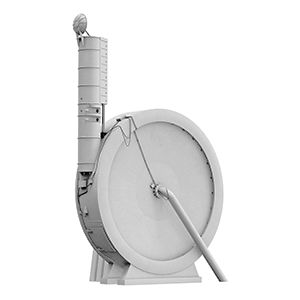
SpinLaunch is a spaceflight technology development company working on mass accelerator technology to move payloads to space.[3] As of September 2022, the company has raised US$150 million in funding, with investors including Kleiner Perkins, Google Ventures, Airbus Ventures, ATW Partners, Catapult Ventures, Lauder Partners, John Doerr, and the Byers Family.
SpinLaunch’s projected cost per kg of payload is approximately $1,250 – $2,500. This projection is significantly less expensive than SpaceX’s current price per kg of payload on the Falcon 9 of $6,000. SpaceX’s projected cost per kg on Starship, however, is less than $1,000 per kg. What real costs and prices for either SpinLaunch or Starship remains to be seen.
read more »
Posted in Money, Technology |
Leave a Comment »
November 13, 2024
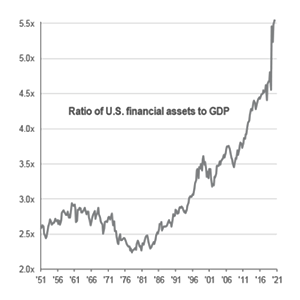
The Buffett Indicator, named after Warren Buffett, measures market valuation by dividing a country’s total stock market value by its GDP. A ratio of 100% suggests fair market. For example, if stocks are worth $50 trillion and GDP is $25 trillion, a 200% ratio would suggest the market is overvalued.
It was proposed as a metric by Buffett in 2001, who called it ‘probably the best single measure of where valuations stand at any given moment,’ and its modern form compares the capitalization of the US Wilshire 5000 index to US GDP. It is widely followed by the financial media as a valuation measure for the US market in both its absolute, and de-trended forms. The indicator set an all-time high during the so-called ‘everything bubble,’ crossing the 200% level in February 2021; a level that Buffett warned if crossed, was ‘playing with fire.’
read more »
Posted in Money |
Leave a Comment »
October 11, 2024

Slop is low-quality media—including writing and images—made using generative artificial intelligence technology. Coined in the 2020s, the term has a derogatory connotation akin to ‘spam.’ It has been variously defined as ‘digital clutter,’ ‘filler content produced by AI tools that prioritize speed and quantity over substance and quality,’ and ‘shoddy or unwanted AI content in social media, art, books and, increasingly, in search results.’ Jonathan Gilmore, a professor of philosophy at the City University of New York, describes the ‘incredibly banal, realistic style’ of AI slop as being ‘very easy to process.’
After Hurricane Helene, an AI-generated image of a girl holding a puppy while sitting in a boat floating on flooded waters circulated among Republicans, who used as evidence of failures or the Biden administration to respond to the disaster. U.S. Senator Mike Lee posted the image of the girl on social media before later deleting it. The image apparently originated on the Trump-centered Internet forum Patriots.win.
read more »
Posted in Language, Money, Technology |
Leave a Comment »
September 29, 2024

Tariff engineering refers to design and manufacturing decisions made primarily so that the manufactured good is classified at a lower rate for tariffs than it would have been absent those decisions. It is a loophole whereby an importer pays a lower tariff by changing the intended import such that the importer has a lesser tariff burden.
In contrast to tariff evasion, tariff engineering configures the design, material, or construction to legally achieve the desired classification rather than illegally misclassifying the product or good. For tariff engineering to be legal, the good being imported must be a ‘commercial reality,’ which means any tariff engineering must be a ‘genuine step in the manufacturing process’ or have a commercial use or identity as imported.
read more »
Posted in Money, Technology, World |
Leave a Comment »
April 19, 2024

The Kia Challenge is a viral TikTok trend to which a series of motor vehicle thefts is attributed, targeting Kia and Hyundai vehicles in the U.S. manufactured between 2011 and 2021. The trend, which began in October 2022, has led to eight fatalities, according to the National Highway Traffic Safety Administration.
Until 2011, most Kia vehicles were manufactured with immobilizers—electronic security devices that prevent the engine from being started unless a proper key is inserted—a system present in most Hyundai vehicles until 2016. In Kia Sportage models manufactured in 2010, the immobilizer system comprised a transponder in the ignition key, an antenna coil in the key cylinder, and a SMARTRA unit. Kia vehicles manufactured from 2011 to 2021 and Hyundai vehicles manufactured from 2016 to 2021 that use a steel key, in comparison to a key fob and a push-button start mechanism, lack immobilizers.
read more »
Posted in Money, Politics, Technology |
1 Comment »
March 11, 2024

The Sloot Digital Coding System is an alleged data sharing technique that its inventor claimed could store a complete digital movie file in 8 kilobytes of data — violating Shannon’s source coding theorem (which establishes the statistical limits to data compression) by many orders of magnitude. The alleged technique was developed in 1995 by Romke Jan Bernhard Sloot (1945-1999), a Dutch electronics engineer.
In 1999, just days before the conclusion of a contract to sell his invention, Sloot died suddenly of a heart attack. The source code was never recovered, and the technique and claim have never been reproduced or verified.
read more »
Posted in Money, Technology |
Leave a Comment »
February 22, 2024
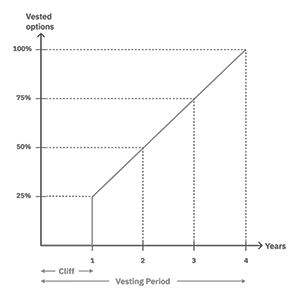
FYIFV (Fuck You, I’m Fully Vested) is a piece of early Microsoft jargon that has become an urban legend: the claim that employees whose stock options were fully vested (that is, could be exercised) would occasionally wear T-shirts or buttons with the initials FYIFV to indicate they were sufficiently financially independent to give their honest opinions and leave any time they wished.
In internal usage at Microsoft, it was meant metaphorically to describe intransigent co-workers. In press usage and popular culture, it was used to imply a predatory business culture reaching even to the programmers. Despite many third hand reports of Microsoft employees wearing FYIFV buttons or shirts, there is only one report of an actual FYIFV T-shirt, worn on the wearer’s last day at the company.
read more »
Posted in Humor, Money |
Leave a Comment »
February 13, 2024

In urban planning, Brusselization is ‘the indiscriminate and careless introduction of modern high-rise buildings into gentrified neighborhoods’ and has become a byword for ‘haphazard urban development and redevelopment.’
The notion applies to anywhere whose development follows the pattern of the uncontrolled development of Brussels in the 1960s and 1970s, that resulted from a lack of zoning regulations and the city authorities’ laissez-faire approach to city planning.
read more »
Posted in Money, Politics, World |
Leave a Comment »
January 6, 2024

EleutherAI is a grass-roots non-profit artificial intelligence (AI) research group. The group, considered an open-source version of OpenAI, was formed in a Discord server in July 2020 to organize a replication of GPT-3. In early 2023, it formally incorporated as the EleutherAI Foundation, a non-profit research institute. EleutherAI began as a Discord server on July 7, 2020 under the tentative name ‘LibreAI’ before rebranding to ‘EleutherAI’ later that month, in reference to eleutheria, an ancient greek term for liberty.
On December 30, 2020, EleutherAI released The Pile, a curated dataset of diverse text for training large language models.
read more »
Posted in Money, Politics, Technology |
Leave a Comment »


 The Daily Omnivore