November 27, 2013

Fictional brands are used in artistic works to imitate or satirize corporate brands, and/or to avoid trademark or copyright infringement.
Such a device may be required where real corporations are unwilling to license their brand names for use in the fictional work, particularly where the work holds the product in a negative light.
read more »
Posted in Art, Money, Politics |
Leave a Comment »
November 21, 2013

A cryptocurrency is a peer-to-peer, decentralized, digital currency whose implementation relies on the principles of cryptography to validate the transactions and generation of the currency itself. They often use a proof-of-work scheme to guard against digital counterfeiting. While over 30 different cryptocurrency specifications and protocols have been defined, most are similar to and derived from the first fully implemented cryptocurrency, Bitcoin, created in 2009 by pseudonymous developer Satoshi Nakamoto
Most cryptocurrencies are designed to gradually introduce new units of currency, placing an ultimate cap on the total amount of currency that will ever be in circulation. This is done both to mimic the scarcity (and value) of precious metals and to avoid hyperinflation. Cryptocurrencies are also less susceptible to seizure by law enforcement than traditional currencies. Early attempts to integrate cryptography with electronic money were made by David Chaum, via DigiCash and ecash, which used cryptography to anonymize electronic money transactions.
Posted in Money, Politics, Technology |
Leave a Comment »
November 18, 2013
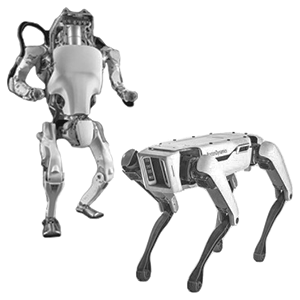
Boston Dynamics is an engineering and robotics company spun off from MIT in 1992 that is best known for the development of ‘BigDog,’ a quadruped robot designed for the US military with funding from Defense Advanced Research Projects Agency (DARPA), and ‘DI-Guy,’ software for realistic human simulation.
Early in the company’s history, it worked with the American Systems Corporation under a contract from the Naval Air Warfare Center Training Systems Division to replace naval training videos for aircraft launch operations with interactive 3D computer simulations.
read more »
Posted in Money, Technology, War |
Leave a Comment »
November 13, 2013

Soylent is a food substitute intended to supply all of a human body’s daily nutritional needs, made from powdered starch, rice protein, olive oil, and raw chemical powders. It was designed by software engineer Rob Rhinehart as a low cost alternative to traditional food that can be prepared and consumed very quickly.
Lacking background in chemistry or nutrition, Rhinehart developed the formula through research and self-experimentation. He named it after a fictional food from the novel ‘Make Room! Make Room!’, on which the 1973 film ‘Soylent Green’ was loosely based.
read more »
Posted in Food, Health, Money |
Leave a Comment »
November 8, 2013
A bar bet is a wager between patrons at a drinking establishment. It is widely believed that the creation of Scientology was the result of a bar bet between science fiction authors L. Ron Hubbard and Robert A. Heinlein. One night over bridge (which they played regularly, with generous libations) Hubbard bet Heinlein $1 that he could create a better sci-fi religion.
Heinlein eventually conceded the bet, admitting the ‘Church of All Worlds’ from his 1961 novel ‘Stranger in a Strange Land’ was inferior to Hubbard’s ‘Scientology’, which by then had a strong following. There is no supporting evidence for the story, but several of Heinlein’s autobiographical pieces, as well as biographical pieces written by his wife, claim repeatedly that the bet did indeed occur.
read more »
Posted in Games, Humor, Money |
Leave a Comment »
November 7, 2013
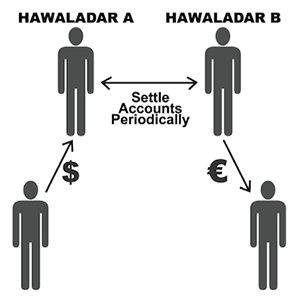
Hawala [ha-wah-lah] (Arabic: ‘transfer’) is an informal value transfer system based on the performance and honor of a huge network of money brokers, primarily located in the Middle East, North Africa, the Horn of Africa, and the Indian subcontinent, operating outside of, or parallel to, traditional banking, financial channels, and remittance systems.
The system is believed to have arisen in the financing of long-distance trade around the emerging capital trade centers in the early medieval period. In South Asia, it appears to have developed into a fully-fledged money market instrument, which was only gradually replaced by the instruments of the formal banking system in the first half of the 20th century. Today, hawala is probably used mostly for migrant workers’ remittances to their countries of origin.
read more »
Posted in Money, Philosophy, World |
Leave a Comment »
November 4, 2013

A hashtag is a word or a phrase prefixed with the hash symbol: #. It is a form of metadata tag, for example, short messages on microblogging and social networking services such as Twitter or Instagram may be tagged by putting ‘#’ before important words, either as they appear in a sentence, or appended to it.
Hashtags provide a means of grouping such messages, since one can search for the hashtag and get the set of messages that contain it.
read more »
Posted in Language, Money, Technology |
1 Comment »
October 31, 2013

Seawise Giant, later ‘Happy Giant,’ ‘Jahre Viking,’ ‘Knock Nevis,’ ‘Oppama,’ and finally ‘Mont,’ was an Ultra Large Crude Carrier (ULCC) supertanker and the longest ship ever built. She possessed the greatest deadweight tonnage ever recorded.
Fully laden, her displacement was 724,239 tons, the heaviest ship of any kind, and with a draft of 81 ft (the distance between the waterline and the bottom of the hull), she was incapable of navigating the English Channel, the Suez Canal or the Panama Canal. Overall, she was generally considered the largest ship ever built, as well as the largest self-propelled human-made object ever built.
read more »
Posted in Money, Technology, World |
Leave a Comment »
October 29, 2013

Patrice Wilson is a Nigerian singer and songwriter who goes by the stage names Pato and Fat Usher. He got his start in music as a backup singer with Malian-Slovak pop star Ibrahim Maiga (and learned to speak fluent Slovak while touring Eastern Europe).
Wilson moved to the US in 2001, where he took his flavor of Nigerian music, along with eastern Europe pop, and combined it with hip-hop. In 2010 he co-founded ARK Music Factory in partnership with Clarence Jey, an Australian record producer, songwriter and multi-instrumentalist musician. Jey left the following year, with Wilson remaining the CEO of the company. He co-authored and co-produced alongside Jey the song ‘Friday’ sung by Rebecca Black.
read more »
Posted in Humor, Money |
Leave a Comment »
October 25, 2013

Wiki-PR is a public relations firm that markets its ability to edit Wikipedia. Its practices have contradicted Wikipedia practices, including those on sockpuppetry (using an online identity for purposes of deception) and conflict-of-interest editing, leading to hundreds of blocked accounts.
Wiki-PR was created in 2010 by Darius Fisher, its current COO, and Jordan French, its current CEO. Clients have included Viacom and Priceline. The firm claimed having administrator access enabling it to manage the Wikipedia presence of more than 12,000 clients. Wiki-PR uses aggressive email marketing to acquire new customers.
Posted in Money, Politics, Technology |
1 Comment »
October 17, 2013
La Sape, an abbreviation based on the phrase ‘Société des Ambianceurs et des Personnes Élégantes’ (‘The Society for the Advancement of Elegant People’) is a social movement centered in Brazzaville, the capital of the Republic of Congo. It embodies the elegance in style and manners of colonial predecessor dandies as a means of resistance.
A dandy is a man unduly concerned with his appearance in fashion and manners. The word ‘sape’ means ‘dress’ and it corresponds to the intransitive verb ‘se saper’ which mean ‘to dress fashionably.’ This term made its first appearance in French vocabulary in 1926 and referred to the Parisian socialites and the ‘fashion energy’ they displayed during the Roaring Twenties.
read more »
Posted in Money, Politics, World |
Leave a Comment »
October 11, 2013
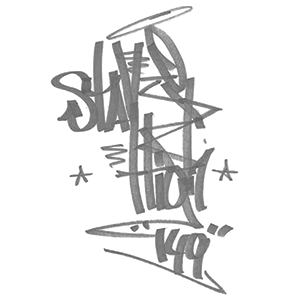
5 Pointz: The Institute of Higher Burnin’ or the 5Pointz Aerosol Art Center, Inc. is an outdoor art exhibit space in Long Island City, New York, considered to be the world’s premiere ‘graffiti Mecca,’ where aerosol artists from around the globe paint colorful pieces on the walls of a 200,000-square-foot factory building.
The complex was first established as the ‘Phun Phactory’ in 1993 by Pat DiLillo under a program called ‘Graffiti Terminators’ to discourage graffiti vandalism by encouraging artists to display their work in a formal showcase. In 2002, Jonathan Cohen, a graffiti artist operating under the name ‘Meres’ began curating the work. If he is not familiar with an artist, Cohen will ask for a sample of their work; if it is a mural, he will ask for a layout as well.
read more »
Posted in Art, Money |
Leave a Comment »


 The Daily Omnivore