December 13, 2023
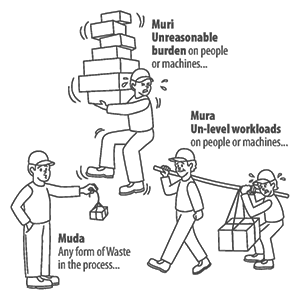
Muda [moo-duh] is a Japanese word meaning ‘futility,’ ‘uselessness,’ or ‘wastefulness,’ and is a key concept in lean process thinking such as in the Toyota Production System (TPS), denoting one of three types of deviation from optimal allocation of resources. The other types are known by the Japanese terms ‘mura’ (‘unevenness’) and ‘muri’ (‘overload’). Waste in this context refers to the wasting of time or resources rather than wasteful by-products.
From an end-customer’s point of view, value-added work is any activity that produces goods or provides a service for which a customer is willing to pay; muda is any constraint or impediment that causes waste to occur.
read more »
Posted in Money, Technology, World |
Leave a Comment »
July 9, 2023

Muntzing is reducing the components inside an electronic appliance to the minimum required for it to function in most operating conditions, reducing design margins above minimum requirements toward zero.
The term is named after Earl “Madman” Muntz, a car and electronics salesman, who was not formally educated or trained in any science or engineering discipline. Muntz built a low part TV in the 1950s.
read more »
Posted in Language, Money, Technology |
Leave a Comment »
May 11, 2023

Plate smashing is a Greek custom involving the intentional smashing of plates or glasses during celebratory occasions. While it occurs more rarely today, it continues to be seen on certain occasions, such as weddings, although plaster plates are more likely to be used. The custom probably derives from an ancient practice of ritually ‘killing’ plates on mourning occasions, as a means of dealing with loss.
Breaking plates may also be related to the ancient practice of conspicuous consumption, a display of one’s wealth, as plates or glasses are thrown into a fireplace following a banquet instead of being washed and reused. 1969, the autocratic military dictatorship of Georgios Papadopoulos, banned plate smashing. Another modern variation on the custom is for diners at small Greek restaurants or tavernas to buy trays of flowers that they can throw at singers and each other.
Posted in Money, World |
Leave a Comment »
April 25, 2023

The clear craze was a marketing fad from the late 1980s to early 2000s, often equating transparency with purity. Inspired by Ivory’s ’99 and 44/100 percent pure’ campaign for bath soap, and by low-calorie or ‘light’ beverages, sodas were redesigned in the 1980s and 1990s as being free of artificial dyes, such as the caffeine-free and preservative-free Crystal Pepsi. Personal hygiene products were then relaunched as clear dye-free gels, and many electronics had transparent cases.
Gillette released versions of its existing deodorants and shaving creams in a clear gel form, which have continued indefinitely. Through the 1990s, the clear trend included transparent watches, staplers, calculators, handheld gaming devices such as the Nintendo Game Boy, and computers such as Apple’s iMac G3.
read more »
Posted in Money, Technology |
Leave a Comment »
April 16, 2023

Philanthrocapitalism or philanthropic capitalism is a way of doing philanthropy, which mirrors the way that business is done in the for-profit world. It may involve venture philanthropy that actively invests in social programs to pursue specific philanthropic goals that would yield return on investment over the long term, or in a more passive form whereby ‘social investors’ benefit from investing in socially-responsible programs.
The term was coined by Matthew Bishop and Michael Green in their book ‘Philanthrocapitalism: How the Rich Can Save The World.’ The book was endorsed by Bill Clinton, who wrote in its foreword that this concept drives the Clinton Foundation. The shift in implementing business models in charity is not a new concept – John D. Rockefeller and Andrew Carnegie sought to apply their business strategies in their philanthropy in the 20th century. Since then, a significant increase in charity spending by other organizations such as the Bill & Melinda Gates Foundation and Chan Zuckerberg Initiative, both described as examples of philanthrocapitalism, has been noted.
read more »
Posted in Money, Politics |
Leave a Comment »
February 25, 2023

Pseudolaw consists of statements, beliefs, or practices that are claimed to be based on accepted law or legal doctrine, but which deviate significantly from most conventional understandings of law and jurisprudence, or which originate from non-existent statutes or legal principles the advocate or adherent incorrectly believes exist.
Canadian legal scholar Donald J. Netolitzky defined pseudolaw as ‘a collection of legal-sounding but false rules that purport to be law,’ a definition that distinguishes pseudolaw from arguments that fail to conform to existing laws such as novel arguments or an ignorance of precedent in case law.
read more »
Posted in Language, Money, Politics |
1 Comment »
February 16, 2023

$100 hamburger is aviation slang for the excuse a general aviation pilot might use to fly. A $100 hamburger trip typically involves flying a short distance (less than two hours), eating at an airport restaurant, and then flying home. In Perth, Western Australia, a similar mentality resulted in the ‘Rotto Bun Run’. A group of pilots who had run out of hot cross buns on Good Friday decided to fly to the closest open bakery on Rottnest Island. The run is now an annual charity event.
$100′ originally referred to the approximate cost of renting or operating a light general aviation aircraft, such as a Cessna 172, for the time it took to fly round-trip to a nearby airport. However, increasing fuel prices have since caused an increase in hourly operating costs for most airplanes, and a Cessna 172 now costs US$95–$180 per Hobbs hour to rent, including fuel.
Posted in Humor, Money |
1 Comment »
January 1, 2023
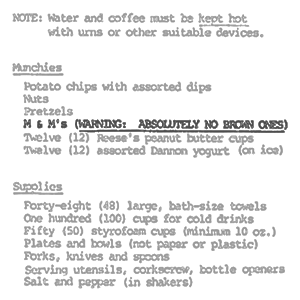
In theater, dance, and live musical performances, a rider is a set of requests or demands that a performer sets as criteria for performance, which are typically fulfilled by the hosting venue. Some rider requirements are attempts to avoid specific problems from previous shows. Some venues cut corners to save expense, leaving the touring crew with inedible food, etc. ‘Unreasonable requests’ (if legal) can be contractual obligations. Failure to meet such terms can compel performance fees to be paid without a performance.
Riders typically include hospitality and technical sections. Since the 2010s, inclusion riders, which provide for certain levels of diversity in casting and production staff, are used in the film and television industry.
read more »
Posted in Art, Money, Politics |
1 Comment »
September 29, 2022
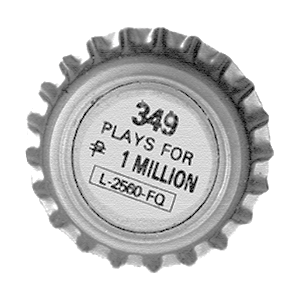
Pepsi Number Fever, also known as the 349 incident, was a promotion held by PepsiCo in the Philippines in 1992, which led to riots and the deaths of at least five people.
In February 1992, Pepsi Philippines (PCPPI) announced that they would print numbers, ranging from 001 to 999, inside the caps (crowns) of Pepsi, 7-Up, Mountain Dew, and Mirinda bottles. Certain numbers could be redeemed for prizes, which ranged from 100 pesos (about US$4) to 1 million pesos for a grand prize (roughly US$40,000 in 1992), equivalent to 611 times the average monthly salary in the Philippines at the time. Pepsi allocated a total of US$2 million for prizes. Marketing specialist Pedro Vergara based Pepsi Number Fever on similar, moderately successful promotions that had been held previously in Vergara’s geographic area of expertise, Latin America.
read more »
Posted in Death, Games, Money |
3 Comments »
July 28, 2022

Trek Bicycle Corporation is a bicycle and cycling product manufacturer and distributor under brand names Trek, Electra Bicycle Company, Bontrager, and Diamant Bikes. The company has previously manufactured bikes under the Gary Fisher, LeMond Racing Cycles, Klein, and Villiger Bikes brand names.
With its headquarters in Waterloo, Wisconsin, Trek bicycles are marketed through 1,700 independently owned bicycle shops across North America, subsidiaries in Europe, Asia, South Africa, as well as distributors in 90 countries worldwide. Most Trek bicycles are manufactured outside the U.S. in countries including the Netherlands, Germany, Taiwan, and China.
read more »
Posted in Games, Money |
Leave a Comment »
July 18, 2022
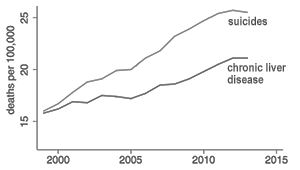

Shit life syndrome (SLS) is a phrase used by physicians to describe the effect that a variety of poverty or abuse-induced disorders can have on patients.
Journalist Sarah O’Connor’s 2018 article for the ‘Financial Times’ ‘Left behind: can anyone save the towns the economy forgot?’ on shit life syndrome in the English coastal town of Blackpool won the 2018 Orwell Prize for Exposing Britain’s Social Evils. O’Connor wrote: ‘Blackpool exports healthy skilled people and imports the unskilled, the unemployed, and the unwell. As people overlooked by the modern economy wash up in a place that has also been left behind, the result is a quietly unfolding health crisis.”
read more »
Posted in Health, Money |
Leave a Comment »
June 21, 2022
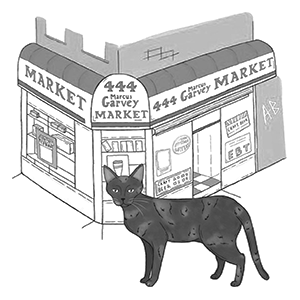
A bodega [boh-dey-guh] cat is a type of working cat that inhabits a bodega, which in New York City English refers to a convenience store or deli. Much like farm cats, library cats, and ship cats, a bodega cat is typically a mixed breed cat kept as a form of biological pest control to manage or prevent rodent infestations.
A bodega cat may be a domesticated cat that is kept by the bodega owner, or a semi-feral cat that the bodega owner attracts to the store through regular feeding. Public health departments typically prohibit bodega cats under food codes that ban live animals from establishments where consumable goods are sold.
read more »
Posted in Food, Money |
1 Comment »


 The Daily Omnivore