November 29, 2012

In economics, the tragedy of the commons is the depletion of a shared resource by individuals, acting independently and rationally according to each one’s self-interest, despite their understanding that depleting the common resource is contrary to their long-term best interests.
In 1968, ecologist Garrett Hardin explored this social dilemma in ‘The Tragedy of the Commons,’ published in the journal ‘Science.’ Central to Hardin’s article is an example (first sketched in an 1833 pamphlet by William Forster Lloyd) involving medieval land tenure in Europe, of herders sharing a common parcel of land, on which they are each entitled to let their cows graze.
read more »
Posted in Money, Politics, World |
Leave a Comment »
November 28, 2012

Game Boy Micro is a handheld game console developed and manufactured by Nintendo. It was first released in 2005. The system is the last console of the Game Boy line. The Game Boy Micro is the size of a typical Nintendo Entertainment System controller and a typical Famicom controller. The console retains some of the functionality of the Game Boy Advance SP, but with an updated form factor. It is unable to play original Game Boy and Game Boy Color games due to design changes. Even though it still has the required Z80 processor and graphics hardware necessary to run the old games, it is missing other circuitry necessary to be compatible with the old Game Boy cartridges.
It is officially incompatible with the Nintendo e-Reader and some other peripherals due to design issues. Additionally, it features a backlit screen with the ability to adjust the brightness so as to adapt to lighting. The Game Boy Micro features a removable face plate that allows consumers to purchase alternative designs. This device can play MP3 and digital video files from SD cards. The system retailed for US$99, compared to US$79 for the Game Boy Advance SP. Generally, the Game Boy Micro did not sell well, and failed to reach the company’s aim of units sold.
Posted in Games, Money, Technology |
Leave a Comment »
November 28, 2012

Plex is a partially open-source freeware media player software with a 10-foot user interface (optimized for use with a TV), with a matching closed source media server (Plex Media Server) software, which is available for Windows, Mac, and Linux. Its media player source code was initially forked from XBMC, a free media player, in 2008. Plex’s front end media player, Plex Media Center, allows the user to manage and playback video, photos, music, and podcasts from a local or remote computer running Plex Media Server.
In addition, the integrated Plex Online service provides the user with a growing list of community-driven plugins for online content including Hulu, Netflix, and CNN video. Plex began as a freeware hobby project but since 2010 has evolved into a commercial software business that is owned and developed by a single for-profit startup company, (Plex, Inc.).
read more »
Posted in Money, Technology |
Leave a Comment »
November 28, 2012

SIGGRAPH (short for Special Interest Group on GRAPHics and Interactive Techniques) is the name of the annual conference on computer graphics started in 1974. The conference is attended by tens of thousands of computer professionals. Some highlights of the conference are its Animation Theater and Electronic Theater presentations, where recently created CG films are played. There is a large exhibition floor, where several hundred companies set up elaborate booths and compete for attention and recruits. Most of the companies are in the engineering, graphics, motion picture, or video game industries.
There are also many booths for schools which specialize in computer graphics or interactivity. Dozens of research papers are presented each year, and SIGGRAPH is widely considered the most prestigious forum for the publication of computer graphics research. In 1984, under LucasFilm Computer Group, John Lasseter’s first computer animated short, ‘The Adventures of André & Wally B.,’ premiered at SIGGRAPH. Pixar’s first computer animated short, ‘Luxo, Jr.’ debuted in 1986, and Pixar has debuted numerous shorts at the conference since. Since 2008, a second yearly SIGGRAPH conference has been held in Asia. The first SIGGRAPH Asia conference was held in Singapore; the second one in Yokohama, Japan in the period in 2009; and the third in Seoul, Korea in 2010.
Posted in Art, Money, Technology |
Leave a Comment »
November 21, 2012
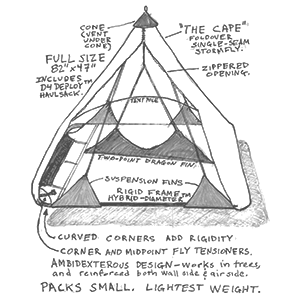
A portaledge is a deployable hanging tent system designed for rock climbers who spend multiple days and nights on a big wall climb. An assembled portaledge is a fabric-covered platform surrounded by a metal frame that hangs from a single point and has adjustable suspension straps. A separate cover, called a ‘stormfly,’ covers the entire system in the event of bad weather.
The first portaledges used in Yosemite were non-collapsible cots purloined from Housekeeping Camp, a Yosemite Valley campground that featured primitive metal framed bunks for the campers. These heavy cots were used on multi-day climbs on granite monoliths like El Capitan, and then sometimes tossed off the summit for later retrieval.
read more »
Posted in Games, Money, Technology |
Leave a Comment »
November 20, 2012

In Karl Marx’s critique of capitalism, commodity fetishism is theory that objects are imagined to dictate the social activities that produce them. When the social relationships among people are expressed with objectified economic relationships, the subjective, abstract aspects of economic value are transformed into objective, real things that people believe have intrinsic value (reification).
In a capitalist society, social relations between people—who makes what, who works for whom, the production-time for a commodity, et cetera—are perceived as economic relations among objects, that is, how valuable a given commodity is when compared to another commodity. Therefore, the market exchange of commodities masks the true economic character of the human relations of production, between the worker and the capitalist.
read more »
Posted in Money, Philosophy |
3 Comments »
November 19, 2012

Long drive is a competitive sport where success is derived by hitting a golf ball the farthest by driving. A small but dedicated talent base of golfers populate the world of Long-Drive, with the top talent competing professionally in various events and exhibitions. Professional long drivers can average over 350 yards in competition, compared with 300 yard averages from the top PGA Tour drivers and 200 yards for an average amateur.
Some shots in competitions surpass 400 yards. The world record recognized by Guinness Records as the longest drive in a competition is 515 yards by 64 year old Mike Austin in 2002 at the US National Open Qualifier with a 43.5″ steel shafted persimmon wood driver. The current all-time record holder is Mike Dobbyn with 551 yards.
read more »
Posted in Games, Money |
Leave a Comment »
November 17, 2012

Feminist pornography is pornography produced by and with feminist women. It is a small but growing segment of the pornography industry. Since 2006, there has been a Feminist Porn Awards held annually in Toronto, sponsored by a local feminist sex toy shop, Good for Her.
They have three guiding criteria: A woman had a hand in the production, writing, direction, etc. of the work; It depicts genuine female pleasure; and It expands the boundaries of sexual representation on film and challenges stereotypes that are often found in mainstream porn.
read more »
Posted in Money, Politics, Sex |
Leave a Comment »
November 11, 2012


Appropriation [uh-proh-pree-ey-shuhn] in the arts is the use of pre-existing objects or images with little or no transformation applied to them. The use of appropriation has played a significant role in the history of the arts (literary, visual, and musical).
Appropriation can be understood as ‘the use of borrowed elements in the creation of a new work.’ In the visual arts, to appropriate means to properly adopt, borrow, recycle, or sample aspects (or the entire form) of man-made visual culture. Most notable in this respect are the ‘Readymades’ of Marcel Duchamp (are ordinary manufactured objects that the artist selected and modified, as an antidote to what he called ‘retinal art’).
read more »
Posted in Art, Money, Politics |
Leave a Comment »
November 10, 2012
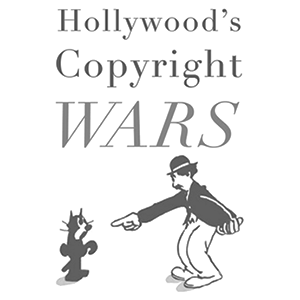
Scène à faire (French for ‘scene to be made’ or ‘scene that must be done’) is a scene in a book or film which is almost obligatory for a genre of its type. In the U.S. it also refers to a principle in copyright law in which certain elements of a creative work are held to be not protected when they are mandated by or customary to the genre.
For example, a spy novel is expected to contain elements such as numbered Swiss bank accounts, a femme fatale, and various spy gadgets hidden in wristwatches, belts, shoes, and other personal effects. These elements are not protected by copyright, though specific sequences and compositions of them can be.
read more »
Posted in Art, Money, Politics |
Leave a Comment »
November 10, 2012


Fair use is a limitation and exception to the exclusive right granted by copyright law to the author of a creative work. Examples of fair use include commentary, search engines, criticism, news reporting, research, teaching, library archiving, and scholarship.
It provides for the legal, unlicensed citation or incorporation of copyrighted material in another author’s work under a four-factor balancing test (Purpose and character; Nature of the copied work; Amount and substantiality; and Effect upon work’s value). Along with Public Domain, Fair use is one of the ‘Traditional Safety Valves’ (techniques that balance the public’s interest in open access with the property interest of copyright owners)
read more »
Posted in Money, Politics, Technology |
Leave a Comment »
November 9, 2012

Reverse graffiti, also known as clean tagging or grime writing, is often done by removing dirt/dust with the fingertip(s) from windows or other dirty surfaces, such as writing ‘wash me’ on a dirty vehicle. Others, such as English artist Paul Curtis (aka Moose), use a cloth or a high power washer to remove dirt on a larger scale.
The first large scale reverse graffiti art piece was made by Alexandre Orion in 2006, the intervention ‘Ossario’ with over 1000 foot is washed by the municipality of São Paulo in the end of the video.
read more »
Posted in Art, Money, Politics |
Leave a Comment »



