October 12, 2012

Perfecto is a brand of ‘lancer fronted’ leather motorcycle jackets designed by Irving Schott and manufactured by American clothing company Schott NYC. The company was founded in 1913, and was the first company to put a zipper on a jacket. In 1928 Irving Schott designed and produced the first ever leather motorcycle jacket, he named it the ‘Perfecto’ after his favorite cigar.
The jackets were made out of horsehide, had a belted front, D-pocket, flap change pocket, zippered sleeve cuffs and shoulder epaulets This classic motorcycle jacket was a double riders jacket design which meant that one part of the front zipper was located a couple of inches in. When zipped up this created a seal where no air would pass through when riding a motorcycle.
read more »
Posted in Money |
Leave a Comment »
October 11, 2012
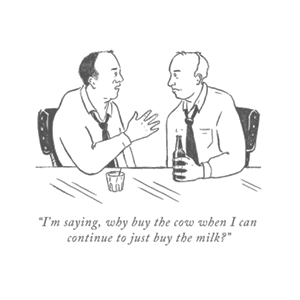
Sexual economy refers to the resources men offer to women in order to acquire sex. In this sense the heterosexual community is considered as a marketplace where sex is bought and sold. The marketplace is defined by gender roles, and in the sex economy men are the buyers, and women are the sellers.
Couples and their sexual activities are loosely interrelated by a marketplace; the decisions made regarding sex by each couple may be influenced by conditions in the market. As with all economic principles, price is determined by supply and demand, product variety, complicity among sellers, competition between sellers, as well as other factors. The price of sex is not limited to money, it has a wide conception of resources including, respect, love, time, gifts, affection, or commitment.
read more »
Posted in Love, Money, Sex |
1 Comment »
October 11, 2012

In Marxist theory, human society consists of two parts: the base and superstructure; the base comprehends the forces and relations of production — employer-employee work conditions, the technical division of labor and property relations — into which people enter to produce the necessities and amenities of life.
These relations determine society’s other relationships and ideas, which are described as its superstructure: its culture, institutions, political power structures, roles, rituals, and state. The base determines (conditions) the superstructure, yet their relation is not strictly causal, because the superstructure often influences the base; the influence of the base, however, predominates. In Orthodox Marxism, the base determines the superstructure in a one-way relationship. However, in more advanced forms and variations of Marxist thought their relationship is not strictly one-way, as some theories claim that just as the base influences the superstructure, the superstructure also influences the base.
read more »
Posted in Money, Politics |
Leave a Comment »
October 10, 2012
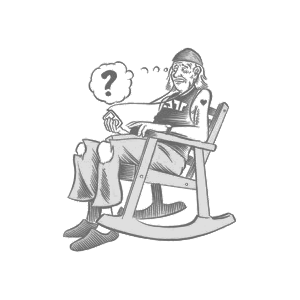
Rockism is a term referring to perceived biases in popular music criticism, coined by UK singer songwriter Pete Wylie in the early 1980s. The fundamental tenet of rockism is that some forms of popular music, and some musical artists, are more authentic than others. While there are many vague interpretations of it, rockism is essentially believed to treat rock music as normative.
From a rockist view, rock is the standard state of popular music. Interestingly, it is not entirely rockist to love rock, or to write about it. One may also care about R&B or norteño or bubblegum pop, but discuss them in a rockist way. The idea is built into the way people talk informally about what kinds of popular music interest them. Rockism is often suspicious of the use of computer-based production systems.
read more »
Posted in Art, Language, Money |
1 Comment »
October 10, 2012

The Adventures of Tintin: Breaking Free is an anarchist parody of the popular Tintin series of comics. An exercise in detournement (turning expressions of the capitalist system and its media culture against itself), the book was written under the pseudonym J. Daniels and published by Attack International in 1988. It has recently been re-printed by anarchist publishers Freedom Press which includes for the first time Tintin’s earlier adventures during the Wapping dispute as told in ‘The Scum,’ a 1986 pamphlet which was produced in solidarity with the printworkers.
The story features a number of characters based on those from the original series by Hergé, notably Tintin himself and Captain Haddock (referred to only as ‘the Captain’ and depicted here as being Tintin’s uncle), but not the original themes or plot. Snowy is featured on the cover – being especially visible on the first edition’s cover – but not in the narrative. The story tracks Tintin’s development from a disaffected, shoplifting youth to a revolutionary leader.
read more »
Posted in Humor, Money, Politics |
Leave a Comment »
October 10, 2012
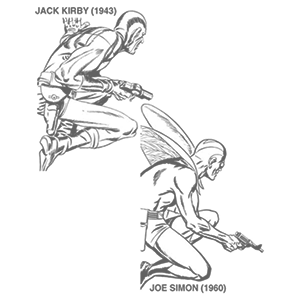
Swipe is a comics term that refers to the intentional copying of a cover, panel, or page from an earlier comic book or graphic novel without crediting the original artist.
Artists Jack Kirby, Neal Adams, Hergé, and Jim Lee are common targets of swipes (though even ‘The King’ is not above reproach: Kirby was known to have swiped from Hal Foster early in his career, as were many Golden Age artists — many of whom kept ‘swipe files’ of material to be copied as needed).
read more »
Posted in Art, Language, Money |
Leave a Comment »
October 10, 2012

In music, sampling is the act of taking a portion, or sample, of one sound recording and reusing it as an instrument or a sound recording in a different song or piece. Sampling was originally developed by experimental musicians working with musique concrète and electroacoustic music, who physically manipulated tape loops or vinyl records on a phonograph.
In the late 1960s, the use of tape loop sampling influenced the development of minimalist music and the production of psychedelic rock and jazz fusion. In the 1970s, DJs manipulating vinyl on turntables gave birth to hip hop music, the first popular music genre based originally around the art of sampling.
read more »
Posted in Money, Politics, Technology |
Leave a Comment »
October 9, 2012
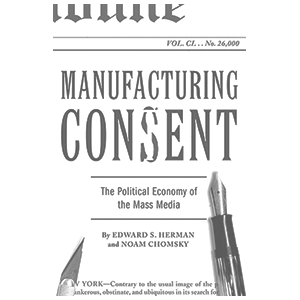
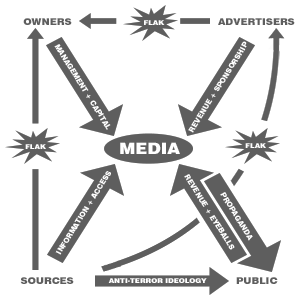
The propaganda model is a conceptual model in political economy advanced by Edward S. Herman and Noam Chomsky that states how propaganda, including systemic biases, function in mass media. The model seeks to explain how populations are manipulated and how consent for economic, social and political policies is ‘manufactured’ in the public mind due to this propaganda. The theory posits that the way in which news is structured (through advertising, media ownership, government sourcing and others) creates an inherent conflict of interest which acts as propaganda for undemocratic forces.
First presented in their 1988 book ‘Manufacturing Consent: The Political Economy of the Mass Media,’ the ‘propaganda model’ views the private media as businesses interested in the sale of a product—readers and audiences—to other businesses (advertisers) rather than that of quality news to the public. Describing the media’s ‘societal purpose,’ Chomsky writes, ‘… the study of institutions and how they function must be scrupulously ignored, apart from fringe elements or a relatively obscure scholarly literature.’
read more »
Posted in Language, Money, Politics |
3 Comments »
October 9, 2012
‘Manufacturing Consent: The Political Economy of the Mass Media’ (1988), by Edward S. Herman and Noam Chomsky, is an analysis of the news media, arguing that the mass media of the United States ‘are effective and powerful ideological institutions that carry out a system-supportive propaganda function by reliance on market forces, internalized assumptions, and self-censorship, and without overt coercion.’
The title derives from the phrase ‘the manufacture of consent’ that essayist–editor Walter Lippmann employed in the book ‘Public Opinion’ (1922). Chomsky has said that Australian social psychologist Alex Carey, to whom the book was dedicated, was in large part the impetus of his and Herman’s work. The book introduced the propaganda model of the media. A film, ‘Manufacturing Consent: Noam Chomsky and the Media,’ was later released based on the book.
read more »
Posted in Language, Money, Politics |
1 Comment »
October 9, 2012
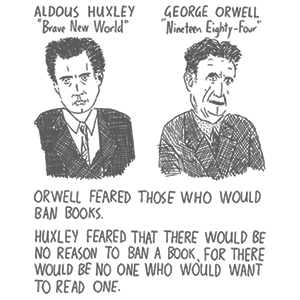
‘Amusing Ourselves to Death: Public Discourse in the Age of Show Business’ (1985) is a book by educator Neil Postman. The book’s origins lie in a talk Postman gave to the Frankfurt Book Fair in 1984. He was participating in a panel on Orwell’s ‘1984’ and the contemporary world. In the introduction to his book Postman said that the contemporary world was better reflected by Aldous Huxley’s ‘Brave New World,’ whose public was oppressed by their addiction to amusement, than by Orwell’s ‘Nineteen Eighty-Four,’ where they were oppressed by state control. It is regarded as one of the most important texts of media ecology (the study of how communication processes affect human perception).
Postman distinguishes the Orwellian vision of the future, in which totalitarian governments seize individual rights, from that offered by Aldous Huxley in ‘Brave New World,’ where people medicate themselves into bliss, thereby voluntarily sacrificing their rights. Drawing an analogy with the latter scenario, Postman sees television’s entertainment value as a present-day ‘soma,’ by means of which the consumers’ rights are exchanged for entertainment. (Note that there is no contradiction between an intentional ‘Orwellian’ conspiracy using ‘Huxleyan’ means)
read more »
Posted in Language, Money |
Leave a Comment »
October 9, 2012

Edupunk is an approach to teaching and learning practices that result from a do it yourself (DIY) attitude. ‘The New York Times’ called it ‘an approach to teaching that avoids mainstream tools like PowerPoint and Blackboard, and instead aims to bring the rebellious attitude and D.I.Y. ethos of ’70s bands like The Clash to the classroom.’
The term was first used in 2008 by Jim Groom in his blog, and covered less than a week later in the ‘Chronicle of Higher Education.’ Edupunk arose in objection to the efforts of government and corporate interests in reframing and bundling emerging technologies into cookie-cutter products with pre-defined application—somewhat similar to traditional punk ideologies.
Posted in Education, Money, Politics |
Leave a Comment »
October 8, 2012

The free culture movement is a social movement that promotes the freedom to distribute and modify creative works in the form of free content by using the Internet and other forms of media. The movement objects to overly-restrictive copyright laws. Many members of the movement argue that such laws hinder creativity. They call this system ‘permission culture.’ ‘Creative Commons’ is a well-known website which was started by legal activist Lawrence Lessig. It lists licenses that permit sharing under various conditions, and also offers an online search of various creative-commons-licensed productions.
The free culture movement, with its ethos of free exchange of ideas, is of a whole with the free software movement. Richard Stallman, the founder of the GNU project (a free UNIX competitor, and free software activist, advocates free sharing of information. He famously stated that free software means free as in ‘free speech,’ not ‘free beer.’ Today, the term stands for many other movements, including hacker computing, the access to knowledge movement, and the copyleft movement. The term ‘free culture’ was originally the title of a 2004 book by Lawrence Lessig, a founding father of the free culture movement.
read more »
Posted in Money, Politics, Technology |
2 Comments »



