June 21, 2012
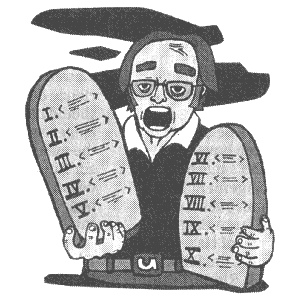
Information pollution is the contamination of information supply with irrelevant, redundant, unsolicited and low-value information. The spread of useless and undesirable information can have a detrimental effect on human activities. It is considered one of the adverse effects of the information revolution. Pollution is a large problem and is growing rapidly in e-mail, instant messaging (IM), and RSS feeds.
The term acquired particular relevance in 2003 when Jakob Nielsen, a leading web usability expert, published a number of articles discussing the topic. However, as early as 1971 researchers were expressing doubts about the negative effects of having to recover ‘valuable nodules from a slurry of garbage in which it is a randomly dispersed minor component.’
read more »
Posted in Money, Politics, Technology |
1 Comment »
June 20, 2012
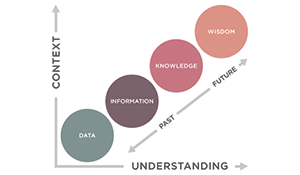

The term information revolution describes current economic, social, and technological trends beyond the Industrial Revolution. Many competing terms have been proposed that focus on different aspects of this societal development.
The British polymath crystallographer J. D. Bernal introduced the term ‘scientific and technical revolution’ in his book ‘The Social Function of Science’ (1939) in order to describe the new role that science and technology are coming to play within society. He asserted that science is becoming a ‘productive force,’ using the Marxist Theory of Productive Forces (a widely-used concept in communism placing primary emphasis on technical advances and strong productive forces in a nominally socialist economy before real communism, or even real socialism, can have a hope of being achieved).
read more »
Posted in Money, Politics, Technology |
Leave a Comment »
June 20, 2012

Technological unemployment is unemployment primarily caused by technological change. Since the early 1800’s, the observation of economists has been that technology has had a positive influence on employment: as technological change increased productivity, prices for commodities fell, resulting in increased demand, thereby increasing demand for labor. Machines freed workers from simple manual work but created new better paying jobs requiring more specialized skills.
However, some technologists claim that modern capabilities of pattern recognition, machine learning, and global networking are steadily eliminating the skilled work of large swaths of the middle income workforce. The warning is that technology is no longer creating jobs at the rate that it is making others obsolete. The notion of technological unemployment leading to structural unemployment (and being macroeconomically injurious) is often dismissed as the ‘Luddite fallacy.’
read more »
Posted in Money, Politics, Technology |
2 Comments »
June 19, 2012

A credit boom-bust cycle is an episode characterized by a sustained increase in several economics indicators followed by a sharp and rapid contraction. Commonly the boom is driven by a rapid expansion of credit to the private sector accompanied with rising prices of commodities and stock market index.
Following the boom phase, asset prices collapse and a credit crunch arises, where access to financing opportunities are sharply reduced below levels observed during normal times. The unwinding of the boom phase brings a considerably large reduction in investment and fall in consumption and an economic recession may follow. The recession following the burst of the episode is oftentimes short-lived, GDP and consumption growth usually resume within a year.
read more »
Posted in Money, Politics, World |
Leave a Comment »
June 19, 2012

A Malthusian catastrophe [mal-thoo-zee-uhn] would be a forced return to subsistence-level conditions due to population growth outpacing agricultural production. Population and growth size has a negative impact on the environment. Later formulations consider economic growth limits as well. The term is also commonly used in discussions of oil depletion. Based on the work of political economist Thomas Malthus (1766–1834), theories of Malthusian catastrophe are very similar to the Iron Law of Wages (real wages always tend toward the minimum wage necessary to sustain the life of the worker).
The main difference is that the Malthusian theories predict what will happen over several generations or centuries, whereas the Iron Law of Wages predicts what will happen in a matter of years and decades. The Industrial Revolution enabled the modern world to break out of the Malthusian growth model, however, various limited resources which may soon limit human population growth because of a widespread belief in the importance of prosperity for every individual and the rising consumption trends of large developing nations such as China and India.
read more »
Posted in Food, Money, World |
Leave a Comment »
June 19, 2012

The Iron Law of Wages is a proposed law of economics that asserts that real wages always tend, in the long run, toward the minimum wage necessary to sustain the life of the worker. The theory was first named by Ferdinand Lassalle in the mid-nineteenth century.
Karl Marx attributed the doctrine to Lassalle (notably in ‘Critique of the Gotha Programme’), crediting the idea to Thomas Malthus in his work, ‘An Essay on the Principle of Population,’ and the terminology to Goethe’s ‘great, eternal iron laws’ in ‘Das Göttliche’ (‘On the Divine’).
read more »
Posted in Money, Politics |
Leave a Comment »
June 19, 2012

The Malthusian trap [mal-thoo-zee-uhn], named after political economist Thomas Robert Malthus, suggests that for most of human history, income was largely stagnant because technological advances and discoveries only resulted in more people, rather than improvements in the standard of living.
It is only with the onset of the Industrial Revolution in about 1800 that the income per person dramatically increased, and they broke out of the Trap; it has been shown, however, that the escape from the Malthusian trap can also generate serious political upheavals.
read more »
Posted in Money, Technology, World |
Leave a Comment »
June 14, 2012
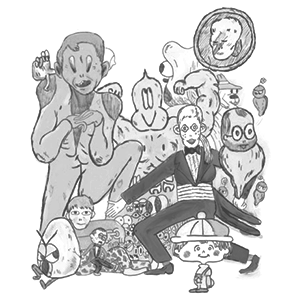
The Copycat Building is a Baltimore landmark containing artists’ live/work/paint spaces. The building was originally occupied in 1905 by the Crown Cork & Seal Company (originators of the modern bottle cap).
It is home to many young artists, musicians, filmmakers, and professionals looking for a large space to live, create, study, and live in the city. The cost of rent is 50 cents per square foot. The building is used for the set of the talk show, ‘It’s a Remarckable Time Who Cares.’
read more »
Posted in Art, Money |
Leave a Comment »
June 13, 2012
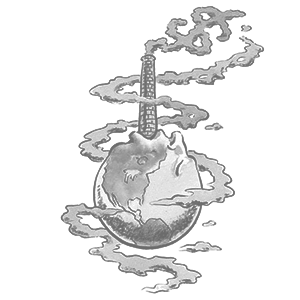
Carbon pricing is the generic term for placing a price on carbon through either subsidization, taxation, or emissions trading (‘cap-and-trade’). Release of carbon dioxide to the atmosphere causes climate change, according to the consensus theory of anthropogenic (produced by humans) global warming.
Greenhouse gas emissions result from fossil fuel-based electricity generation. As a means of avoiding dangerous climate change, associating an approximate cost to damage such as from increasing extreme weather, carbon pricing may incentivize a reduction of carbon emissions and the discovery or implementation of low-emission technologies.
read more »
Posted in Money, Politics, World |
Leave a Comment »
June 13, 2012
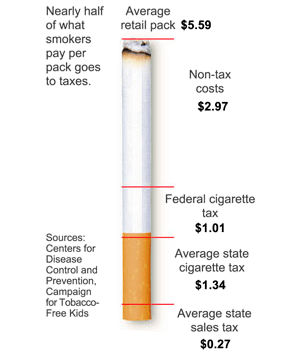
A Pigovian [pig-oh-vee-ahn] tax is a levy on a market activity that generates negative externalities (a cost not transmitted through prices that is incurred by a party who did not agree to the action causing it). For example, a tax on cigarettes might be intended to recoup public healthcare costs resulting from smoking. The tax is intended to correct the market outcome, which is not efficient and may lead to overconsumption of the product.
In the presence of positive externalities (public benefits from a market activity) those who receive the benefit do not pay for it and the market may under-supply the product. Similar logic suggests the creation of Pigovian subsidies to make the users pay for the extra benefit and spur more production. Pigovian taxes are named after British economist Arthur Pigou who also developed the concept of economic externalities. William Baumol was instrumental in framing Pigou’s work in modern economics.
read more »
Posted in Money, Politics |
Leave a Comment »
June 13, 2012

A fat tax is a surcharge placed upon fattening foods, beverages, or individuals. As an example of Pigovian taxation (a tax levied on a market activity that generates negative externalities), a fat tax aims to discourage unhealthy diets and offset the economic costs of obesity. A related idea is to tax foods that are linked to increased risk of coronary heart disease. Numerous studies suggest that as the price of a food decreases, individuals gets fatter. In fact, eating behavior may be more responsive to price increases than to nutritional education. Estimates suggest that a 1 cent per ounce tax on sugar-sweetened beverages may reduce the consumption of those beverages by 25%.
However, there is also evidence that obese individuals are less responsive to changes in the price of food than normal-weight individuals. To implement a fat tax, it is necessary to specify which food and beverage products will be targeted. This must be done with care, because a carelessly chosen food tax can have surprising and perverse effects. For instance, consumption patterns suggest that taxing saturated fat would induce consumers to increase their salt intake, thereby putting themselves at greater risk for cardiovascular related death. Taxation of sodium has been proposed as a way of reducing salt intake and the resulting health problems.
read more »
Posted in Food, Health, Money, Politics |
Leave a Comment »
June 13, 2012

A soda tax is a surcharge on soft drinks. It may focus on sugar-sweetened beverages (soda sweetened with sugar, corn syrup, or other caloric sweeteners and other carbonated and uncarbonated drinks, and sports and energy drinks). As an example of Pigovian taxation (a tax levied on a market activity that generates negative externalities), it may aim to discourage unhealthy diets and offset the economic costs of obesity.
France is in the process of introducing a tax on sugary drinks for 2012; following introduction, soft drinks are estimated to be up to 3.5% more expensive. The city of Richmond, California has placed a soda tax on its 2012 ballot. Soda consumption has been noted as a contributing factor to the obesity epidemic and medical costs related to obesity. In 1994, an early soda tax was introduced by Kelly D. Brownell, Director of the Rudd Center for Food Policy and Obesity at Yale. In 2009, 33 US states had a sales tax on soft drinks. Support for a soda tax has been higher when pollsters say the money will go towards health care.
read more »
Posted in Food, Health, Money, Politics |
Leave a Comment »


 The Daily Omnivore