June 19, 2012

The Malthusian trap [mal-thoo-zee-uhn], named after political economist Thomas Robert Malthus, suggests that for most of human history, income was largely stagnant because technological advances and discoveries only resulted in more people, rather than improvements in the standard of living.
It is only with the onset of the Industrial Revolution in about 1800 that the income per person dramatically increased, and they broke out of the Trap; it has been shown, however, that the escape from the Malthusian trap can also generate serious political upheavals.
read more »
Posted in Money, Technology, World |
Leave a Comment »
June 14, 2012
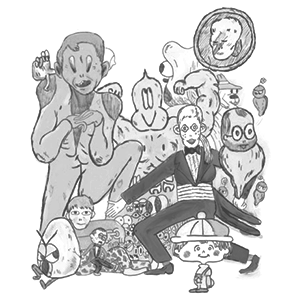
The Copycat Building is a Baltimore landmark containing artists’ live/work/paint spaces. The building was originally occupied in 1905 by the Crown Cork & Seal Company (originators of the modern bottle cap).
It is home to many young artists, musicians, filmmakers, and professionals looking for a large space to live, create, study, and live in the city. The cost of rent is 50 cents per square foot. The building is used for the set of the talk show, ‘It’s a Remarckable Time Who Cares.’
read more »
Posted in Art, Money |
Leave a Comment »
June 13, 2012
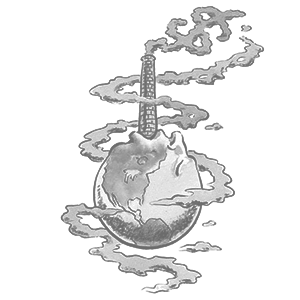
Carbon pricing is the generic term for placing a price on carbon through either subsidization, taxation, or emissions trading (‘cap-and-trade’). Release of carbon dioxide to the atmosphere causes climate change, according to the consensus theory of anthropogenic (produced by humans) global warming.
Greenhouse gas emissions result from fossil fuel-based electricity generation. As a means of avoiding dangerous climate change, associating an approximate cost to damage such as from increasing extreme weather, carbon pricing may incentivize a reduction of carbon emissions and the discovery or implementation of low-emission technologies.
read more »
Posted in Money, Politics, World |
Leave a Comment »
June 13, 2012
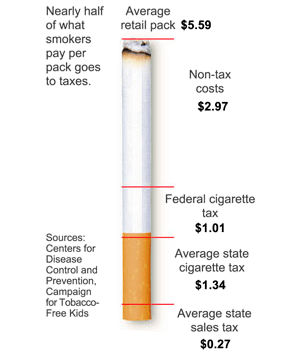
A Pigovian [pig-oh-vee-ahn] tax is a levy on a market activity that generates negative externalities (a cost not transmitted through prices that is incurred by a party who did not agree to the action causing it). For example, a tax on cigarettes might be intended to recoup public healthcare costs resulting from smoking. The tax is intended to correct the market outcome, which is not efficient and may lead to overconsumption of the product.
In the presence of positive externalities (public benefits from a market activity) those who receive the benefit do not pay for it and the market may under-supply the product. Similar logic suggests the creation of Pigovian subsidies to make the users pay for the extra benefit and spur more production. Pigovian taxes are named after British economist Arthur Pigou who also developed the concept of economic externalities. William Baumol was instrumental in framing Pigou’s work in modern economics.
read more »
Posted in Money, Politics |
Leave a Comment »
June 13, 2012

A fat tax is a surcharge placed upon fattening foods, beverages, or individuals. As an example of Pigovian taxation (a tax levied on a market activity that generates negative externalities), a fat tax aims to discourage unhealthy diets and offset the economic costs of obesity. A related idea is to tax foods that are linked to increased risk of coronary heart disease. Numerous studies suggest that as the price of a food decreases, individuals gets fatter. In fact, eating behavior may be more responsive to price increases than to nutritional education. Estimates suggest that a 1 cent per ounce tax on sugar-sweetened beverages may reduce the consumption of those beverages by 25%.
However, there is also evidence that obese individuals are less responsive to changes in the price of food than normal-weight individuals. To implement a fat tax, it is necessary to specify which food and beverage products will be targeted. This must be done with care, because a carelessly chosen food tax can have surprising and perverse effects. For instance, consumption patterns suggest that taxing saturated fat would induce consumers to increase their salt intake, thereby putting themselves at greater risk for cardiovascular related death. Taxation of sodium has been proposed as a way of reducing salt intake and the resulting health problems.
read more »
Posted in Food, Health, Money, Politics |
Leave a Comment »
June 13, 2012
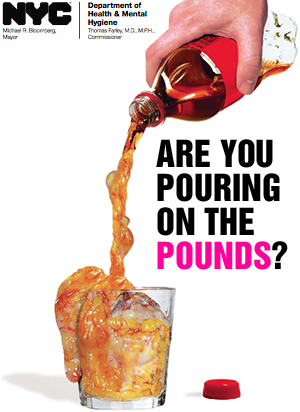
A soda tax is a surcharge on soft drinks. It may focus on sugar-sweetened beverages (soda sweetened with sugar, corn syrup, or other caloric sweeteners and other carbonated and uncarbonated drinks, and sports and energy drinks). As an example of Pigovian taxation (a tax levied on a market activity that generates negative externalities), it may aim to discourage unhealthy diets and offset the economic costs of obesity.
France is in the process of introducing a tax on sugary drinks for 2012; following introduction, soft drinks are estimated to be up to 3.5% more expensive. The city of Richmond, California has placed a soda tax on its 2012 ballot. Soda consumption has been noted as a contributing factor to the obesity epidemic and medical costs related to obesity. In 1994, an early soda tax was introduced by Kelly D. Brownell, Director of the Rudd Center for Food Policy and Obesity at Yale. In 2009, 33 US states had a sales tax on soft drinks. Support for a soda tax has been higher when pollsters say the money will go towards health care.
read more »
Posted in Food, Health, Money, Politics |
Leave a Comment »
June 6, 2012

The Neo Geo is an arcade system board and home video game console released in 1990 by Japanese game company SNK. The MVS (Multi Video System), as the Neo Geo was known to the coin-operated arcade game industry, offered arcade operators the ability to put up to six different arcade titles into a single cabinet, a key economic consideration for operators with limited floorspace.
With its games stored on self-contained cartridges, a game-cabinet could be exchanged for a different game-title by swapping the game’s ROM-cartridge and cabinet artwork. Several popular franchise-series, including ‘Fatal Fury,’ ‘The King of Fighters,’ ‘Metal Slug,’ and ‘Samurai Shodown,’ were released for the platform. The Neo Geo system was also marketed as a very costly home console, commonly referred to today as the AES (Advanced Entertainment System).
read more »
Posted in Games, Money, Technology |
Leave a Comment »
June 6, 2012

Sanwa Denshi (‘Three Harmonies Electronics Company’) is a general electronics manufacturer, but is best known internationally as a leading manufacturer of arcade parts; i.e. joysticks, buttons, coin feeds etc.
Its parts are commonly used in Japanese arcade machines and held in high regard by custom builders (especially in the fighting game community).
read more »
Posted in Games, Money, Technology |
Leave a Comment »
June 5, 2012

Matt Mullican (b. 1951) is a American artist and son of abstract painter Lee Mullican. He received his BFA from CalArts in 1974, and rose to prominence as a member of the ‘Pictures Generation,’ a group of artists know for their appropriation of images from the consumer and media saturated age in which they grew to maturity.
Mullican’s work is concerned with systems of knowledge, meaning, language, and signification. Mullican also works with the relationship between perception and reality, between the ability to see something and the ability to represent it. Mullican has taught and lectured at Columbia University, The Rijksakademie (Amsterdam), The London Institute, Chelsea College of Art and Design, and The School of Visual Arts (NY).
Posted in Art, Money |
Leave a Comment »
June 5, 2012

Kenny Scharf (b. 1958) is an American painter who lives in Brooklyn, whose works consist of popular culture based art with made up science-related backgrounds.
Scharf came to prominence in the 80s interdisciplinary art scene making sparkly, pop-ed, and monstrous paintings and installations.
read more »
Posted in Art, Humor, Money |
Leave a Comment »
June 4, 2012

The Family Trade is the first book of a British writer of science fiction and fantasy writer Charles Stross’ alternate history series ‘The Merchant Princes.’
The first novel introduces us to journalist Miriam Beckstein, who finds herself in a parallel world in which her extended family holds power.
read more »
Posted in Language, Money, Technology |
Leave a Comment »
June 4, 2012
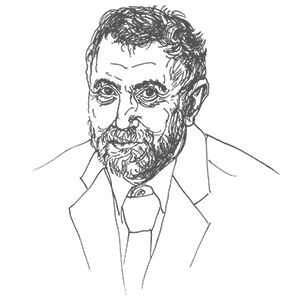
‘The Theory of Interstellar Trade‘ is a paper written in 1978 by economist Paul Krugman. The paper was first published in 2010 in the journal ‘Economic Inquiry.’ He described the paper as something he wrote to cheer himself up when he was an oppressed assistant professor, caught up in the academic rat race.
Krugman analyzed the question of how interest rates on goods in transit should be computed when the goods travel at close to the speed of light. This is a problem because the time taken in transit will appear less to an observer traveling with the goods than to a stationary observer.
read more »
Posted in Humor, Money, Technology |
1 Comment »



