June 26, 2012


The mudflap girl is an iconic silhouette of a woman with an hourglass body shape, sitting, leaning back on her hands, with her hair being blown in the wind. The icon is typically found on mudflaps, clothing, and other items associated with trucking in the United States. The image is sometimes also known as trucker girl, trucker lady or seated lady. This famous design was created in the 1970s by Bill Zinda of Wiz Enterprises in Long Beach, California, to promote his line of truck and auto accessories. It is variously claimed to be modeled on Leta Laroe, a famous exotic dancer at the time, or on Rachel Ann Allen, a friend’s wife, and mother of Ed Allen, the trademark’s owner.
As a parody, Wyoming Libraries use a mudflap girl holding a book, in an effort to attract readers. In another parody the feminist blog Feministing uses a version depicting the mudflap girl holding up her middle finger as an ironic logo. Optimus Prime has been portrayed as having a mudflap with the silhouette of Elita One (leader of the female autobots). At McMurdo Station, Antarctica, the mudflap girl is depicted on a utility vehicle, but wearing more appropriate attire for Antarctic environment.
Posted in Humor, Money, Sex |
Leave a Comment »
June 26, 2012

Kappa is an Italian manufacturer of sports clothes and accessories, that started as a sock and underwear manufacturer in 1916 in Turin. Its logo, known as ‘Omini,’ is a silhouette of a man (left) and woman (right) sitting back to back in the nude. It was created in 1969 by mere accident.
After a photo shoot for a bathing suit advertisement, a man and a woman were sitting back-to-back, naked, with the outlines of their bodies traced by the back lighting. The photographers knew they had something, and the idea grew into what is now the logo, which symbolizes the mutual support between man and woman, and their completion.
Posted in Games, Money, World |
Leave a Comment »
June 26, 2012

Umbro is an English sportswear and football equipment supplier, and a subsidiary of Nike since 2008. Umbro designs, sources, and markets sport-related apparel, footwear, and equipment. Its products are sold in over 90 countries. The company was founded in 1924 by Harold Humphreys, along with his brother Wallace in a small workshop, inspired by the growing interest in football witnessed nationwide.
The word ‘Umbro’ is an acronym derived from Humphreys Brothers Clothing. Umbro’s major debut was in the 1934 FA Cup final, when both teams Manchester City and Portsmouth wore uniforms designed and manufactured by the company. Other teams supplied by Umbro during the 1930s and 1940s were Sheffield United and Preston North End, Manchester United, and Blackpool. In 1952, the British team at the Summer Olympics wore Umbro, tailored for the needs of their individual sports. Umbro would be a major supplier to the British Olympics team for the next 20 years.
read more »
Posted in Games, Money, World |
Leave a Comment »
June 26, 2012

Brine, Corp. is a US sporting goods manufacturer (lacrosse, soccer, volleyball, and field hockey equipment). It markets its products under its own brand as well as ‘In The Crease’ for goals and goal accessories. The company was founded by W.H. Brine in 1922 as the W.H. Brine Company. It was privately owned by the Brine family and named Brine, Inc. before it was acquired by New Balance in 2006.
It started as a small sports equipment and uniform company. They sold to private schools and regional camps, quickly growing to a major manufacturer of lacrosse and soccer equipment.
read more »
Posted in Games, Money, Technology |
1 Comment »
June 25, 2012

Equality of outcome is a controversial political concept which describes a state in which people have approximately the same material wealth or, more generally, in which the general conditions of their lives are similar. Achieving this requires reducing or eliminating material inequalities between individuals or households in a society. This could involve a transfer of income and/or wealth from wealthier to poorer individuals, or adopting other institutions designed to promote equality of condition from the start.
The concept is central to some political ideologies and is used regularly in political discourse, often in contrast to the term equality of opportunity. A related way of defining equality of outcome is to think of it as ‘equality in the central and valuable things in life.’ After the Russian Revolution of 1917, the political structure of the Soviet Union tried to emphasize equality of outcome as a primary goal.
read more »
Posted in Money, Philosophy, Politics |
Leave a Comment »
June 21, 2012

Hyperreality, according to French sociologist Jean Baudrillard is, ‘A real without origin or reality.’ Italian philosopher called it, ‘The authentic fake.’ More recently, Hungarian filmmaker Pater Sparrow forwarded the term ‘virtual irreality.’ The term is used in semiotics (the study of symbols) and postmodern philosophy to describe an inability of consciousness to distinguish reality from a simulation of reality, especially in technologically advanced post-modern societies. Hyperreality is a way of characterizing what our consciousness defines as ‘real’ in a world where a multitude of media can radically shape and filter an original event or experience. Most aspects of the concept can be thought of as ‘reality by proxy.’
Baudrillard in particular suggests that the world we live in has been replaced by a copy world, where we seek simulated stimuli and nothing more. He borrows, from Jorge Luis Borges’ ‘On Exactitude in Science’ (which borrowed from Lewis Carroll), the example of a society whose cartographers create a map so detailed that it covers the very things it was designed to represent. When the empire declines, the map fades into the landscape and there is neither the representation nor the real remaining – just the hyperreal. Baudrillard’s idea of hyperreality was heavily influenced by phenomenology, semiotics, and Marshall McLuhan.
read more »
Posted in Money, Philosophy, Science |
Leave a Comment »
June 21, 2012
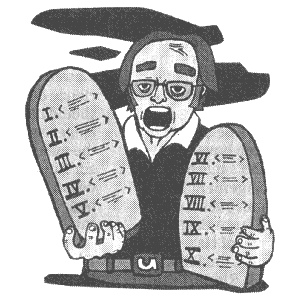
Information pollution is the contamination of information supply with irrelevant, redundant, unsolicited and low-value information. The spread of useless and undesirable information can have a detrimental effect on human activities. It is considered one of the adverse effects of the information revolution. Pollution is a large problem and is growing rapidly in e-mail, instant messaging (IM), and RSS feeds.
The term acquired particular relevance in 2003 when Jakob Nielsen, a leading web usability expert, published a number of articles discussing the topic. However, as early as 1971 researchers were expressing doubts about the negative effects of having to recover ‘valuable nodules from a slurry of garbage in which it is a randomly dispersed minor component.’
read more »
Posted in Money, Politics, Technology |
1 Comment »
June 20, 2012
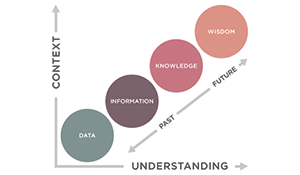

The term information revolution describes current economic, social, and technological trends beyond the Industrial Revolution. Many competing terms have been proposed that focus on different aspects of this societal development.
The British polymath crystallographer J. D. Bernal introduced the term ‘scientific and technical revolution’ in his book ‘The Social Function of Science’ (1939) in order to describe the new role that science and technology are coming to play within society. He asserted that science is becoming a ‘productive force,’ using the Marxist Theory of Productive Forces (a widely-used concept in communism placing primary emphasis on technical advances and strong productive forces in a nominally socialist economy before real communism, or even real socialism, can have a hope of being achieved).
read more »
Posted in Money, Politics, Technology |
Leave a Comment »
June 20, 2012

Technological unemployment is unemployment primarily caused by technological change. Since the early 1800’s, the observation of economists has been that technology has had a positive influence on employment: as technological change increased productivity, prices for commodities fell, resulting in increased demand, thereby increasing demand for labor. Machines freed workers from simple manual work but created new better paying jobs requiring more specialized skills.
However, some technologists claim that modern capabilities of pattern recognition, machine learning, and global networking are steadily eliminating the skilled work of large swaths of the middle income workforce. The warning is that technology is no longer creating jobs at the rate that it is making others obsolete. The notion of technological unemployment leading to structural unemployment (and being macroeconomically injurious) is often dismissed as the ‘Luddite fallacy.’
read more »
Posted in Money, Politics, Technology |
2 Comments »
June 19, 2012

A credit boom-bust cycle is an episode characterized by a sustained increase in several economics indicators followed by a sharp and rapid contraction. Commonly the boom is driven by a rapid expansion of credit to the private sector accompanied with rising prices of commodities and stock market index.
Following the boom phase, asset prices collapse and a credit crunch arises, where access to financing opportunities are sharply reduced below levels observed during normal times. The unwinding of the boom phase brings a considerably large reduction in investment and fall in consumption and an economic recession may follow. The recession following the burst of the episode is oftentimes short-lived, GDP and consumption growth usually resume within a year.
read more »
Posted in Money, Politics, World |
Leave a Comment »
June 19, 2012

A Malthusian catastrophe [mal-thoo-zee-uhn] would be a forced return to subsistence-level conditions due to population growth outpacing agricultural production. Population and growth size has a negative impact on the environment. Later formulations consider economic growth limits as well. The term is also commonly used in discussions of oil depletion. Based on the work of political economist Thomas Malthus (1766–1834), theories of Malthusian catastrophe are very similar to the Iron Law of Wages (real wages always tend toward the minimum wage necessary to sustain the life of the worker).
The main difference is that the Malthusian theories predict what will happen over several generations or centuries, whereas the Iron Law of Wages predicts what will happen in a matter of years and decades. The Industrial Revolution enabled the modern world to break out of the Malthusian growth model, however, various limited resources which may soon limit human population growth because of a widespread belief in the importance of prosperity for every individual and the rising consumption trends of large developing nations such as China and India.
read more »
Posted in Food, Money, World |
Leave a Comment »
June 19, 2012

The Iron Law of Wages is a proposed law of economics that asserts that real wages always tend, in the long run, toward the minimum wage necessary to sustain the life of the worker. The theory was first named by Ferdinand Lassalle in the mid-nineteenth century.
Karl Marx attributed the doctrine to Lassalle (notably in ‘Critique of the Gotha Programme’), crediting the idea to Thomas Malthus in his work, ‘An Essay on the Principle of Population,’ and the terminology to Goethe’s ‘great, eternal iron laws’ in ‘Das Göttliche’ (‘On the Divine’).
read more »
Posted in Money, Politics |
Leave a Comment »



