April 27, 2012

Lisa Frank is an American commercial artist and founder of Lisa Frank Incorporated, headquartered in Tucson, Arizona. The artist’s work appears on various commercial elementary and middle-school products, mostly school supplies. Also common among Lisa Frank-related items are stickers and a variety of other merchandise such as clothing and toys marketed towards young girls. Frank founded the company in 1979 at the age of 24, and her success resulted from her sticker line.
The company’s headquarters is easily visible because of the bright hearts, stars, and music notes decorating the side of the building. There is currently a quarterly magazine also named ‘Lisa Frank.’ Her corporation’s artwork features extremely bright and vibrant colors, and round, smooth, reflective surfaces. A number of characters recur on ‘Lisa Frank’ branded items, such as a Hollywood Bear, and Markie the unicorn. Rainbows and especially the color purple are abundant in Lisa Frank’s art.
Posted in Art, Humor, Money |
2 Comments »
April 26, 2012

Vocaloid is a singing synthesizer. Its signal processing part was developed through a joint research project led by Kenmochi Hideki at the Pompeu Fabra University in Spain in 2000. Backed by the Yamaha Corporation it was developed into a commercial product, which was first released in 2004. The software enables users to synthesize singing by typing in lyrics and melody. It uses synthesizing technology with specially recorded vocals of voice actors or singers. A piano roll type interface is used to input the melody and the lyrics can be entered on each note. The software can change the stress of the pronunciations, add effects such as vibrato, or change the dynamics and tone of the voice.
Each Vocaloid is sold as ‘a singer in a box’ designed to act as a replacement for an actual singer. The software was originally only available in English and Japanese, but as of Vocaloid 3, Spanish, Chinese, and Korean have been added. The software is intended for professional musicians as well as light computer music users and has so far sold on the idea that the only limits are the users’ own skills. Japanese musical groups Livetune and Supercell have released their songs featuring Vocaloid as vocals. Japanese record label Exit Tunes of Quake Inc. also have released compilation albums featuring Vocaloids. Artists such as Mike Oldfield have also used Vocaloids within their work for back up singer vocals and sound samples.
read more »
Posted in Language, Money, Technology |
Leave a Comment »
April 26, 2012

Don Buchla (b. 1937) is a pioneer in the field of sound synthesizers, releasing his first units months after Robert Moog’s first synthesizers. Buchla formed his electronic music equipment company, Buchla and Associates, in 1962 in Berkeley, California. Buchla was commissioned by avant garde music composers Morton Subotnick and Ramon Sender, both of the San Francisco Tape Music Center (which studies the incorporation of electric sound production into compositional practice), to create an electronic instrument for live performance. Under a grant from the Rockefeller Foundation Buchla completed his first modular synthesizer in 1963. The result was the Buchla Series 100, which he began selling in 1966. Buchla’s synthesizers experimented in control interfaces, such as touch-sensitive plates. In 1969 the Series 100 was sold to CBS, who soon after dropped the line, not seeing the synthesizer market as a profitable area.
In 1970 the Buchla 200 series Electric Music Box was released and was manufactured until 1985. Buchla created the Buchla Series 500, the first digitally controlled analog synthesizer, in 1971. Shortly after, the Buchla Series 300 was released, which combined the Series 200 with microprocessors. The Music Easel, a small, portable, all-in-one synthesizer was released in 1972. The Buchla 400 was released in 1982, which featured a video display. In 1987 the fully MIDI enabled Buchla 700 was released. Beginning in the 1990s, Buchla began designing alternative MIDI controllers, such as the Thunder, Lightning, and Marimba Lumina. With the recent resurgence of interest in analog synthesizers Buchla has released a revamped 200 series called the 200e.
Posted in Art, Money, Technology |
Leave a Comment »
April 26, 2012

Suzanne Ciani [cha-nee] (b. 1946) is an Italian American pianist and music composer who found early success with innovative electronic music. She received classical music training at Wellesley College and obtained her M.A. in music composition in 1970 at University of California, Berkeley where she met and was influenced by the synthesizer designer, Don Buchla. She studied computer generated music with John Chowning and Max Mathews at Stanford’s Artificial Intelligence Labs in the early 1970s.
In 1974 she formed her own company, Ciani/Musica, and, using a Buchla Analog Modular Synthesizer, composed scores for television commercials for corporations such as Coca-Cola, Merrill Lynch, AT&T, and General Electric. Besides music, her specialty was reproducing sound effects on the synthesizer that recording engineers had found difficult to record properly; the sound of a bottle of Coca-Cola being opened and poured was one of Ciani’s most widely recognized works, and was used in a series of radio and television commercials in the late 1970s.
read more »
Posted in Art, Money, Technology |
1 Comment »
April 23, 2012

The Blue Banana (also known as the Hot Banana, European Megalopolis or European Backbone) is a discontinuous corridor of urbanization in Western Europe, with a population of around 110 million. It stretches approximately from North West England to Milan.
The curvature of this corridor (hence the ‘banana’ in the name) takes in cities such as Leeds, Liverpool, Manchester, Birmingham, London, Amsterdam, The Hague, Rotterdam, Brussels, Antwerp, Eindhoven, the Ruhr, Düsseldorf, Cologne, Frankfurt am Main, Luxembourg, Strasbourg, Stuttgart, Munich, Zürich, Turin, Milan, Venice, and Genoa and covers one of the world’s highest concentrations of people, money and industry.
read more »
Posted in Money, Politics, World |
Leave a Comment »
April 22, 2012
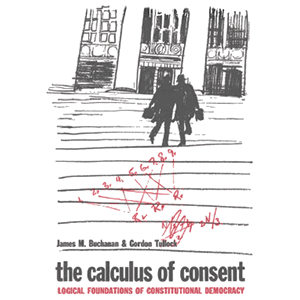
Rational ignorance occurs when the cost of educating oneself on an issue exceeds the potential benefit that the knowledge would provide. Ignorance about an issue is said to be ‘rational’ when the cost of educating oneself about the issue sufficiently to make an informed decision can outweigh any potential benefit one could reasonably expect to gain from that decision, and so it would be irrational to waste time doing so.
This has consequences for the quality of decisions made by large numbers of people, such as general elections, where the probability of any one vote changing the outcome is very small. The term is most often found in economics, particularly public choice theory, but also used in other disciplines which study rationality and choice, including philosophy (epistemology) and game theory. The term was coined by Anthony Downs in ‘An Economic Theory of Democracy’ (1957).
read more »
Posted in Money, Philosophy, Politics |
1 Comment »
April 22, 2012

The Pebble E-Paper Watch, known now as the Pebble Classic, is an American smartwatch developed by Pebble Technology Corporation, and is the first generation of the Pebble watch lineup. The smartwatch was pledged from a Kickstarter campaign, proving massively successful, collecting around $10 million for development of the smartwatch.
Pebble connects to both Android and iOS phones, so they can display notifications from the phone, control music, view calendar events, and create reminders. An online app store makes the Pebble compatible with apps tailored for them from many third party sellers, for many purposes especially sports. In 2015, Pebble Technology released its second-generation Time, with a color e-paper display, microphone, and updated design.
Posted in Money, Technology |
Leave a Comment »
April 19, 2012


Superfood is an unscientific marketing term used in various contexts. For example, it is sometimes used to describe food with high nutrient or phytochemical content that may confer health benefits, with few properties considered to be negative, such as being high in saturated fats or artificial ingredients, food additives, or contaminants. An often-cited example of a superfruit is blueberries which contain moderate-rich concentrations of anthocyanins, vitamin C, manganese, dietary fiber, pterostilbene (an undefined phytochemical under preliminary research), and low calorie content.
Other examples of superfoods include broccoli, spinach, pumpkin, and tomatoes which are rich in various nutrients. All these fruits and vegetables contain a variety of nutrients and phytochemicals in varying amounts as do common plant foods like bananas, pineapples and potatoes which have only rarely been called superfoods. Fish may be considered a superfood due to their omega-3 fatty acids which may promote cognitive development.
read more »
Posted in Food, Health, Money |
Leave a Comment »
April 18, 2012

Keep Austin Weird is the slogan adopted by the Austin Independent Business Alliance to promote small businesses in Austin, Texas. The phrase has long been believed to have been coined in 2000 by Red Wassenich, who says he made the comment after giving a pledge to an Austin radio station. He later began printing bumper stickers, and now operates the website keepaustinweird.com and published ‘Keep Austin Weird: A Guide to the Odd Side of Town.’ Despite a challenge from Wassenich, the slogan was later trademarked by Outhouse Designs and used to market T-shirts, hats, and mugs. A recently released book on the topic, ‘Weird City,’ discusses the cultural evolution of the movement as well as its commercialization and socio-political significance.
Austin is the self-proclaimed ‘live music capital of the world’ and the people of Austin reflect a friendly, accepting culture of artistic and individual expression that maintains the city as a vibrant and eclectic creative center and haven for an LGBT community, intellectual community, community of naturalists and environmentalists, and for subcultures and people(s) who are not mainstream. In a mostly conservative Texas, Austin is ‘Weird’ because of that and because it continues to be liberal and progressive politically, socially, in culture, in the arts and in music, among other things. ‘Keep Austin Weird’ moves beyond a mere slogan, to reflect the dynamics that encompass Austin.
Posted in Humor, Money, Politics |
Leave a Comment »
April 18, 2012


Slow Food is an international movement founded by Carlo Petrini in 1986. Promoted as an alternative to fast food, it strives to preserve traditional and regional cuisine and encourages farming of plants, seeds and livestock characteristic of the local ecosystem. It was the first established part of the broader Slow movement, and has since expanded globally. Its goals of sustainable foods and promotion of local small businesses are paralleled by a political agenda directed against globalization of agricultural products.
Slow Food began in Italy with the founding of its forerunner organization, Arcigola, in 1986 to resist the opening of a McDonald’s near the Spanish Steps in Rome. In 1989, the founding Manifesto of the international Slow Food movement was signed in Paris by delegates from 15 countries. This was done not so much a protest against the restaurant chain as a protest against big international business interests. The movement has expanded to include chapters in over 150 countries.
read more »
Posted in Food, Money |
Leave a Comment »
April 18, 2012

Rooftop farming is the practice of cultivating food on the rooftop of buildings. Rooftop farming is usually done using green roof, hydroponics, aeroponics, or air-dynaponics systems or container gardens. Besides using the already present space at the roof itself, additional platforms could possibly be created between high-rise buildings called ‘aero-bridges.’ Besides the decorative benefit, roof plantings may provide food, temperature control, hydrological benefits, and habitats for wildlife.
‘In an accessible rooftop garden, space becomes available for localized small-scale urban agriculture, a source of local food production.’ At Trent University in Ontario, there is currently a working rooftop garden which provides food to the student café and local citizens.
read more »
Posted in Food, Money, Technology |
Leave a Comment »
April 18, 2012

Vertical farming is a concept that argues that it is economically and environmentally viable to cultivate plant or animal life within skyscrapers, or on vertically inclined surfaces.
The idea of a vertical farm has existed at least since the early 1950s and built precedents are well documented by John Hix in his canonical text ‘The Glass House.’
read more »
Posted in Food, Money, Technology |
1 Comment »




 The Daily Omnivore