April 17, 2012

Prison–industrial complex is a term used to attribute the rapid expansion of the US inmate population to the political influence of private prison companies and businesses that supply goods and services to government prison agencies. The term is analogous to the military–industrial complex that President Dwight D. Eisenhower warned of in his famous 1961 farewell address.
Such groups include corporations that contract prison labor, construction companies, surveillance technology vendors, lawyers, and lobby groups that represent them. Activists have described the prison industrial complex as perpetuating a belief that imprisonment is a quick fix to underlying social problems such as homelessness, unemployment, drug addiction, mental illness, and illiteracy.
read more »
Posted in Money, Politics |
Leave a Comment »
April 16, 2012

The Bling Ring, sometimes called the ‘Hollywood Hills Burglar Bunch,’ were a group, mostly of teenagers based in and around Calabasas, California, who burglarized the homes of several celebrities in 2008 – 2009. In total, their activities resulted in the theft of about $3 million in cash and belongings, most of it from Paris Hilton, whom they robbed several times. However, over 50 homes were reportedly targeted for potential burglary.
The alleged ringleader of the group, Rachel Lee is the daughter of divorced Korean immigrants. Both parents own successful businesses. Lee lived in Calabasas with her mother, who owns a franchise of Kumon, a tutoring company. Her father is based in Las Vegas. Lee and her older sister Candace had a privileged upbringing, and she drove an Audi A4 to school, where she was named ‘Best Dressed’ in the 2007 yearbook. A year after graduation, she was fined and put on probation for a petty theft incident in which she and a friend, Diana Tamayo, stole $85 of merchandise from a Sephora cosmetics store.
read more »
Posted in Money |
Leave a Comment »
April 13, 2012

Sager Midern Computer, Inc., is an American OEM (original equipment manufacturer) computer manufacturer specializing in laptop computers. Sager laptops are manufactured by Clevo which are also sold under many other brand names. Sager is the biggest Clevo retailer. In addition to selling physical hardware, Sager also offers support and repair services for all Clevo based Laptops. This service is offered even if the laptop was not ordered through Sager, although in that case the user must pay in full for all services provided.
The company was founded in 1985 by Shung Song Yuan in City of Industry, California. While ‘A-brands’ such as Dell, Toshiba, IBM, or HP are manufactured on a contract basis where so-called contract manufacturers assemble laptop computers as specified by the brand, Sager instead purchases finished and generic chassis designed and built by Original Design Manufacturers or ODMs (such as Clevo). Sager then assembles the laptop with parts chosen by the final customer, puts its logo on the chassis and sells them under the brand Sager. Sager then provides support to these computers.
Posted in Games, Money, Technology |
Leave a Comment »
April 13, 2012

Clevo is a Taiwanese OEM/ODM (original equipment and design manufacturer) computer manufacturer which exclusively produces laptop computers. They manufacture and sell complete laptops under their own brand; they also sell laptop chassis to other OEMs who build laptops on the chassis, often customized for each customer.
Companies which rebrand Clevo chassis or have in the past include Sager, iBuypower, and OriginPC. Alienware also used to sell rebranded Clevo notebooks, although it is unclear whether they still do.
Posted in Money, Technology, World |
Leave a Comment »
April 13, 2012

Mole [moh-ley] (from the Aztec word for ‘sauce’) is the generic name for a number of sauces used in Mexican cuisine, as well as for dishes based on these sauces. Outside of Mexico, it often refers to a specific sauce which is known in Spanish by the more specific name ‘mole poblano.’ In contemporary Mexico, the term is used for a number of sauces, some quite dissimilar to one another, including black, red, yellow, colorado, green, almendrado, and pipián. The sauce is most popular in the central and southern regions of the country, but eaten nationwide, particularly during celebrations.
In Mexico, to say ‘to go to a mole’ (‘ir a un mole’) means to go to a wedding. Three states in Mexico claim to be the origin of mole, Puebla, Oaxaca, and Tlaxcala. The states with the best known moles are Puebla and Oaxaca, but other regions in Mexico also make various types of mole sauces. Moles come in various flavors and ingredients, with chili peppers as the common factor. A classic mole poblano is a dark red or brown sauce served over meat. Mole has a strong flavor, especially the dark ones, and is considered to be an acquired taste for most. This has spawned another saying, ‘en su mero mole,’ which means something like ‘one’s cup of tea.’
read more »
Posted in Food, Money, World |
1 Comment »
April 12, 2012


User innovation refers to innovation by intermediate users (e.g. user firms) or consumer users (individual end-users or user communities), rather than by suppliers (producers or manufacturers).
Eric von Hippel of MIT and others observed that many products and services are actually developed or at least refined, by users, at the site of implementation and use. These ideas are then moved back into the supply network. This is because products are developed to meet the widest possible need; when individual users face problems that the majority of consumers do not, they have no choice but to develop their own modifications to existing products, or entirely new products, to solve their issues. Often, user innovators will share their ideas with manufacturers in hopes of having them produce the product, a process called free revealing.
read more »
Posted in Money, Technology |
Leave a Comment »
April 12, 2012

Amateur professionalism is a socioeconomic concept that describes a blurring of the distinction between professional and amateur within any endeavour or attainable skill that could be labelled professional, whether it is in the field of writing, computer programming, music, film, etc. The idea is distinct from the sports term ‘pro–am’ (professional–amateur), though related to and ultimately derived from it.
The concept and terms have been used, since 2004, as a descriptor for an emerging sociological and economic trend of ‘people pursuing amateur activities to professional standards,’ as described by Demos, a British think tank, in the 2004 book ‘The Pro-Am Revolution’ co-authored by eclectic writer Charles Leadbeater. Leadbeater has evangelized the idea (in ‘amateur professional’ order this time) by presenting it at TEDGlobal 2005.
read more »
Posted in Games, Money, Technology |
Leave a Comment »
April 12, 2012

Egoboo is a colloquial expression for the pleasure received from public recognition of voluntary work. The term was in use in science fiction fandom no later than 1947, when it was used (spelled ‘ego boo’) in a letter from Rick Sneary published in the letter column of ‘Thrilling Wonder Stories.’
It was originally simply used to describe the ‘ego boost’ someone feels on seeing their name in print. As a reliable way for someone to get their name in print was to do something worth mentioning, it became caught up with the idea of voluntary community participation. As a result of this, in later years, the term grew to mean something akin to an ephemeral currency, e.g., ‘ got a lot of egoboo for editing that newsletter.’
read more »
Posted in Language, Money |
Leave a Comment »
April 12, 2012

Good Copy Bad Copy is a documentary about copyright and culture in the context of Internet, peer-to-peer file sharing and other technological advances, directed by Andreas Johnsen, Ralf Christensen, and Henrik Moltke. It features interviews with copyright lawyers, producers, artists, and filesharing service providers.
A central point of the documentary is that ‘creativity itself is on the line’ and that a balance needs to be struck, or that there is a conflict, between protecting the right of those who own intellectual property and the rights of future generations to create. Artists interviewed include Girl Talk and Danger Mouse, popular musicians of the mashup scene who cut and remix sounds from other songs into their own. The interviews with these artists reveal an emerging understanding of digital works and the obstacle to their authoring copyright presents.
read more »
Posted in Money, Politics, Technology |
1 Comment »
April 11, 2012

Vidding is the fan labor practice in media fandom of creating music videos from the footage of one or more visual media sources, thereby exploring the source itself in a new way. The creator may explore a single character, support a particular romantic pairing between characters, criticize or celebrate the original text, or point out an aspect of the TV show or film that they find under-appreciated. The creators refer to themselves as ‘vidders,’ their product as ‘vids,’ ‘fanvids,’ or ‘songvids,’ and the act itself as ‘vidding.’
Vidding can occur within a fandom; however, it is also often considered its own fandom, as vidding fans will often watch vids simply because they are vids. (This is distinct from fan fiction readers and other fans, for instance, who tend to choose what to engage based on source text more than form.) Accordingly, vidding has its own dedicated fan convention, Vividcon. Fan videos within the world of anime fandom are distinct from the videos created by vidders. A fan-made music video using anime footage fans is called an anime music video or AMV, not a fanvid. While a large number of anime video makers are male, the bulk of vidders in media fandom are women.
read more »
Posted in Art, Money, Technology |
1 Comment »
April 11, 2012

‘Free Culture: How Big Media Uses Technology and the Law to Lock Down Culture and Control Creativity’ is a 2004 book by law professor Lawrence Lessig that was released on the Internet under the Creative Commons Attribution/Non-commercial license.
The book documents how copyright power has expanded substantially since 1974 in five critical dimensions: duration (from 32 to 95 years), scope (from publishers to virtually everyone), reach (to every view on a computer), control (including “derivative works” defined so broadly that virtually any new content could be sued by some copyright holder as a ‘derivative work’ of something), and concentration and integration of the media industry.
read more »
Posted in Money, Politics, Technology |
Leave a Comment »
April 11, 2012
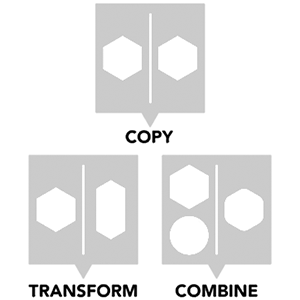
Remix culture is a term used to describe a society which allows and encourages derivative works. Remix is defined as combining or editing existing materials to produce a new product. A Remix Culture would be, by default, permissive of efforts to improve upon, change, integrate, or otherwise remix the work of copyright holders.
In his 2008 book, ‘Remix,’ Lawrence Lessig presents this as a desirable ideal and argues, among other things, that the health, progress, and wealth creation of a culture is fundamentally tied to this participatory remix process.
read more »
Posted in Money, Politics, Technology |
Leave a Comment »