March 20, 2012

Auto-Tune is an audio processor created by Antares Audio Technologies, which uses proprietary software to alter pitch in vocal and instrumental performances. It was originally intended to disguise off-key inaccuracies, allowing vocal tracks to be perfectly tuned despite originally being slightly off-key. The processor slightly blends pitches to the nearest true semitone (to the exact pitch of the nearest tone in traditional equal temperament). Auto-Tune can also be used as an effect to distort the human voice when pitch is raised or lowered significantly. The overall effect to the discerning ear can be described as hearing the voice leap from note to note stepwise, like a synthesizer.
Auto-Tune was initially created by Andy Hildebrand, an engineer working for Exxon. Hildebrand developed methods for interpreting seismic data and subsequently realized that the technology could be used to detect, analyze, and modify pitch. Auto-Tune was used to produce the prominent altered vocal effect on Cher’s ‘Believe.’ Recorded in 1998, ‘Believe’ was the first commercial recording to use the software for this purpose. In an early interview, the producers claimed that they had used a Digitech Talker FX pedal, in an attempt to preserve a trade secret. After the success of the single, the technique became known as the ‘Cher Effect.’ The use of Auto-Tune as a musical effect was revived in the late-2000s by R&B singer T-Pain, who elaborated on the effect and made active use of Auto-Tune in his songs.
Posted in Art, Money, Technology |
Leave a Comment »
March 20, 2012
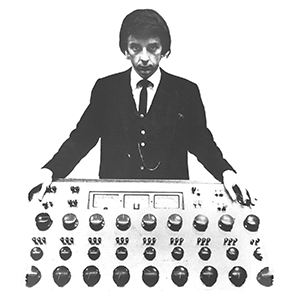
Overproduction is the excessive use of audio effects, layering, or digital manipulation in music production. Common traits include: audio processing effects such as reverb, delay, or dynamic range compression; heavy layering or multi-tracking (in the context of pop and rock music, this may refer to the addition of elements such as chorused vocals or backing strings).
Other modifications include pitch correction, time correction, and quantization (correcting to perfect notes). Records are sometimes overseen by a producer who ‘imposes’ his or her own distinctive ‘sound’ or techniques on a band or artist (producers frequently accused of this kind of ‘overproduction’ include Phil Spector and Mutt Lange). The term ‘overproduction’ implies that a producer or mastering engineer has made ‘unnecessary’ additions or changes to a record in the production process, and in doing so has decreased the quality or enjoyability of the music.
Posted in Art, Money, Technology |
Leave a Comment »
March 20, 2012
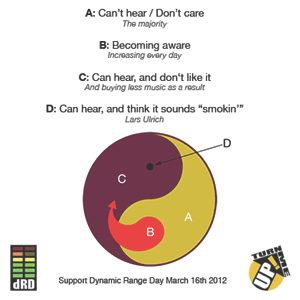
The loudness war is a pejorative term for the apparent competition to digitally master and release recordings with increasing loudness. Older music typically has a very diverse dynamic, that is, there are quiet parts of the track and much louder parts. For example, acoustic interludes leading up to the body of a song might be produced at a very quiet level, with some of the loudest sounds being snare drums and other kinds of percussion.
While the rationale for the loudness war is often described as an attempt to make the quieter parts of music more accessible to a listener, the overall effect is that that dynamic between sounds becomes leveled out, with no sound standing out from the track as a much louder sound. This results in a loss of clarity, where it’s no longer possible to experience music as a distinct interplay of louder and quieter parts.
read more »
Posted in Art, Money, Technology |
Leave a Comment »
March 19, 2012

The Centurion Card, known informally as the ‘black card,’ is a charge card first issued by American Express in 1999. The card was initially only available to select users of the Platinum Card. Cardholders are required to pay an annual fee, and in some countries also an initiation fee. In addition to a variety of exclusive benefits, the card itself is made of anodized titanium (although the plastic version is still available in some markets).
American Express created the card line amid rumors and urban legends in the 1980s that it produced an ultra-exclusive black card for elite users who could purchase anything with it.
read more »
Posted in Money |
1 Comment »
March 19, 2012


Kleptocracy (‘rule by thieves’) is a form of political and government corruption where the government exists to increase the personal wealth and political power of its officials and the ruling class at the expense of the wider population, often without pretense of honest service. This type of government corruption is often achieved by the embezzlement of state funds.
Kleptocracy is most common in third world countries where the economy (often as a legacy of colonialism) is dominated by resource extraction. Such incomes constitute a form of economic rent and are therefore easier to siphon off without causing the income itself to decrease (for example, due to capital flight as investors pull out to escape the high taxes levied by the kleptocrats).
read more »
Posted in Money, Politics, World |
1 Comment »
March 19, 2012

The Banana Wars were a series of occupations, police actions, and interventions involving the United States in Central America and the Caribbean. This period started with the Spanish-American War in 1898 and the subsequent Treaty of Paris, which gave the United States control of Cuba and Puerto Rico. Between the time of the war with Spain and 1934, the US conducted military operations and occupations in Panama, Honduras, Nicaragua, Mexico, Haiti, and the Dominican Republic. The series of conflicts ended with the withdrawal of troops from Haiti and President Franklin D. Roosevelt’s Good Neighbor Policy in 1934. Reasons for these conflicts were varied but were largely economic in nature.
The term ‘Banana Wars’ arises from the connections between these interventions and the preservation of American commercial interests in the region. Most prominently, the United Fruit Company had significant financial stakes in production of bananas, tobacco, sugar cane, and various other products throughout the Caribbean, Central America and Northern South America. The U.S. was also advancing its political interests, maintaining a sphere of influence and controlling the Panama Canal which it had recently built, critically important to global trade and naval power.
read more »
Posted in Money, Politics, War |
Leave a Comment »
March 19, 2012

Banana republic is a pejorative name for a country which has an unstable government, high corruption and which largely depends on agriculture, such as growing bananas. There are subject to frequent coups. The ‘original Banana republic is Honduras. In the early 20th century the United Fruit Company had much influence in the country, even deposing a president and installing a new one over taxes.
The first known use of the term was by American author O. Henry in his 1904 book of linked short stories, ‘Cabbages and Kings.’ The book is based on Henry’s 1896-97 stay in Honduras, while hiding from federal authorities for embezzlement in the United States. O.Henry used the term to refer to a ‘servile dictatorship’ which directly supported large-scale plantation agriculture in return for payments or gifts.
read more »
Posted in Food, Money, Politics |
Leave a Comment »
March 19, 2012
Mike Daisey (b. 1976) is an American monologist, author, and actor best known for his full-length extemporaneous monologues, particularly ‘The Agony and the Ecstasy of Steve Jobs.’ The story was subsequently retracted following allegations that many of the events were fabricated. ‘The Agony and the Ecstasy of Steve Jobs’ (2010) is a one-man show. It debuted at Portland’s TBA Festival in 2010
. It purports to examine globalization by exploring the exploitation of Chinese workers through the lens of ‘the rise and fall and rise of Apple, industrial design, and the human price we are willing to pay for our technology, woven together in a complex narrative.’ Excerpts from the show were presented as an exposé of conditions at a Foxconn factory in China on the Public Radio International show ‘This American Life’ in 2012. After it was retracted, Daisey apologized for presenting his work as journalism, saying it is actually theater, but refused to acknowledge that he had lied — even in the face of obvious discrepancies.
Posted in Art, Money, Politics |
Leave a Comment »
March 19, 2012
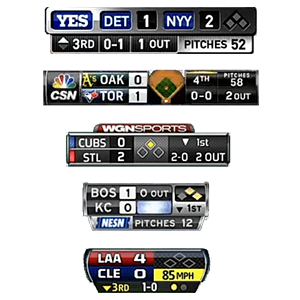
A score bug (or, in an expanded form, a score banner or scorebar) is a digital on-screen graphic which is displayed at either the top or lower third bottom of a television screen during the broadcast of a sports game in order to display the current score and other statistics. The first television network in the United States to produce a score bug (digital on-screen graphic) was ABC, which used one on the telecast of the 1994 Purolator 500 NASCAR event. A transparent digit counted down the number of laps remaining in the race.
ABC also incorporated the Sports Bug for their 1994 World Cup coverage, providing the time and score on the game as well as enabling advertiser sponsorship to broadcast games without interruptions. Later that fall, Fox introduced a full-score bug for its NFL coverage, known as the ‘FoxBox,’ as did cable network ESPN. ABC expanded theirs to ‘Monday Night Football’ in 1997. CBS introduced theirs upon returning to the NFL in the fall of 1998, and NBC in 2001 during its coverage of the XFL.
Posted in Games, Money, Technology |
Leave a Comment »
March 18, 2012

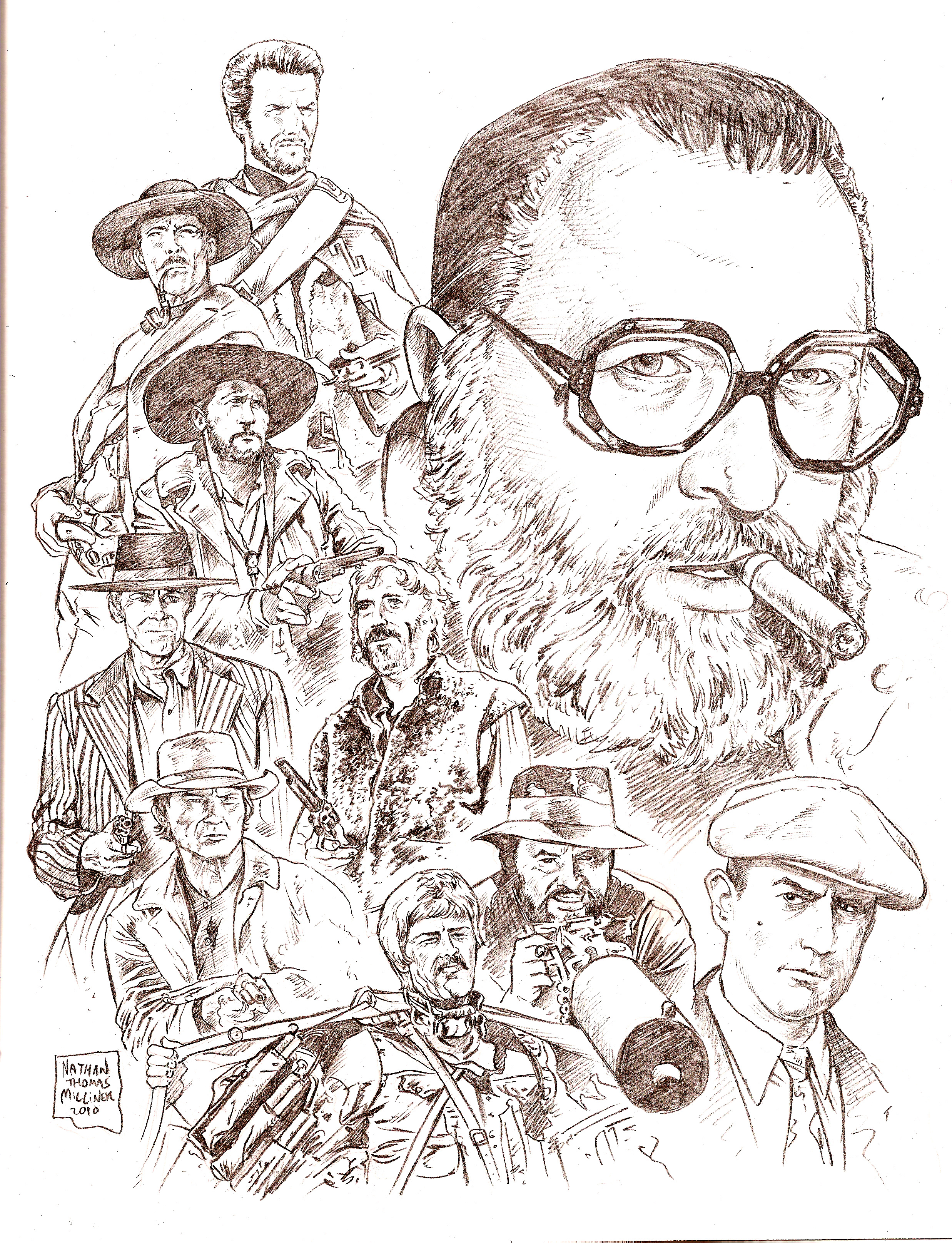
Sergio Leone [lee-oh-nee] (1929 – 1989) was an Italian film director, producer and screenwriter most associated with the ‘Spaghetti Western’ genre. Leone’s film-making style includes juxtaposing extreme close-up shots with lengthy long shots. His movies include ‘The Last Days of Pompeii,’ ‘The Colossus of Rhodes,’ the Dollars Trilogy (‘A Fistful of Dollars,’ ‘For a Few Dollars More,’ and ‘The Good, the Bad and the Ugly’), Once ‘Upon a Time in the West,’ ‘Duck, You Sucker!’, and ‘Once Upon a Time in America.’
Born in Rome, Leone was the son of the cinema pioneer Vincenzo Leone (known as director Roberto Roberti) and the silent film actress Edvige Valcarenghi (Bice Waleran). During his schooldays, Leone was a classmate of his later musical collaborator Ennio Morricone for a time. After watching his father work on film sets, Leone began his own career in the film industry at the age of 18 after dropping out of law studies at the university.
read more »
Posted in Art, Money, World |
Leave a Comment »
March 17, 2012

‘Boneless lean beef trimmings,’ occasionally referred to as pink slime, are made from meat trimmings passed through a centrifuge then squeezed through a tube the size of a pencil, during which time it is exposed to ammonia gas. The combination of the gas with water in the meat results in a reaction that increases the pH (lowering acidity) and killing any pathogens such as E. coli. At the end of the process, the beef is at least 90 percent lean.
The typical beef production process results in beef trimmings, consisting of fat and meat, that frequently had been cooked down to recover the oils from the trim because it was not profitable to otherwise separate the meat from the trimmings. However, today much of these beef trimmings are sent as USDA-approved cuts of meat to special separation plants, where centrifuges separate the beef from the fat. The production process was pioneered by Eldon Roth, who in the 1980s founded Beef Products Inc.
Posted in Food, Health, Money |
Leave a Comment »
March 16, 2012

The Black List is a survey published every year on the second Friday of December since 2004. The survey includes the top screenplays that went unproduced.
The website claims that it is not necessarily ‘the best,’ but rather ‘the most liked,’ since it is voted on by studio and production company executives. Some of the screenplays are then selected off of the Blacklist to be put into production such as ‘The Social Network’ and ‘Cedar Rapids.’
Posted in Art, Language, Money |
Leave a Comment »


 The Daily Omnivore