March 16, 2012

Vale tudo [val-ay / too-doe] (Portuguese: ‘anything goes’) are full-contact unarmed combat events, with a limited number of rules, that became popular in Brazil during the 20th century. While Vale Tudo uses techniques from many martial art styles, making it similar to modern mixed martial arts competitions, it is a distinct style in its own right. Fighting sideshows, termed ‘Vale Tudo,’ became popular in Brazilian circuses during the 1920s.
Examples of such bouts were described in the ‘Japanese-American Courier’ in 1928: ‘One report from São Paulo declares that Jiu Jitsu is truly an art and that in an interesting exhibition in the side tent to the big circus a Bahian of monstrous dimensions met his waterloo at the hands of a diminutive Japanese wrestler. The man was an expert at capoeira, an old South American style of fighting, but after putting the Japanese on his back and trying to kick his head … the little oriental by the use of a Jiu Jitsu hold threw the Bahian and after a short struggle he was found sitting on the silent frame of the massive opponent.
read more »
Posted in Games, Money, World |
Leave a Comment »
March 16, 2012


Mixed martial arts (MMA) is a full contact combat sport that allows the use of both striking and grappling techniques, both standing and on the ground, including boxing, wrestling, Brazilian jiu-jitsu, muay Thai, kickboxing, taekwondo, karate, judo and other styles. The roots of modern mixed martial arts can be traced back to the ancient Olympics where one of the earliest well documented systems of codified full range unarmed combat was utilized in the sport of Pankration.
Various mixed style contests also took place throughout Europe, Japan and the Pacific Rim during the early 1900s. The combat sport of Vale Tudo that had developed in Brazil from the 1920s was brought to the United States by the Gracie family in 1993 with the founding of the Ultimate Fighting Championship (UFC), which is currently the largest MMA promotion company worldwide. Prior to the UFC, professional MMA events had also been held in Japan by Shooto since 1989.
read more »
Posted in Games, Money, Politics |
Leave a Comment »
March 16, 2012
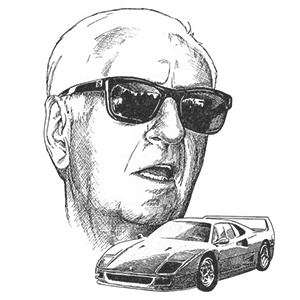
Enzo Ferrari (1898 – 1988) was an Italian race car driver and entrepreneur, the founder of the Scuderia Ferrari Grand Prix motor racing team, and subsequently of the Ferrari car manufacturer.
He was often referred to as ‘il Commendatore.’ Ferrari’s management style was autocratic and he was known to pit driver against driver in the hope of improving performance. He did not often get close to his drivers. Enzo Ferrari spent a reserved life, and rarely granted interviews.
read more »
Posted in Games, Money, Technology |
1 Comment »
March 15, 2012


White trash is an American English pejorative term referring to poor white people in the United States, suggesting lower social class and degraded living standards. The term suggests outcasts from respectable society living on the fringes of the social order who are seen as dangerous because they may be criminal, unpredictable, and without respect for authority whether it be political, legal, or moral.
The term is usually a slur, but may also be used self-referentially by whites to jokingly describe their origins. In the humorous book ‘The White Trash Mom Handbook: Embrace Your Inner Trailerpark, Forget Perfection, Resist Assimilation into the PTA, Stay Sane, and Keep Your Sense of Humor’ by Michelle Lamar and Molly Wendland (2008) is one such example. In common usage ‘white trash’ overlaps in meaning with cracker (regarding Georgia and Florida), hillbilly (regarding Appalachia), Okie (regarding Oklahoma origins), and redneck.
read more »
Posted in Language, Money, Politics |
Leave a Comment »
March 15, 2012


The term young fogey was humorously applied, in British context, to some younger-generation, rather buttoned-down writers and journalists, such as Simon Heffer, Charles Moore and, for a while, A. N. Wilson. The term is attributed to Alan Watkins writing in 1984 in ‘The Spectator.’ Young fogey is still used to describe conservative young men (aged approximately between 15 and 40) who dress in a vintage style (usually that of the 1920s-1950s, also known as the ‘Brideshead’ look – after the influence of ‘Brideshead Revisited’, by Evelyn Waugh), and who tend towards erudite, conservative cultural pursuits.
The young fogey is sometimes confused with the ‘Sloane Ranger’ (a stereotype in London of young, upper class or upper-middle-class people who live near Sloane Square in Chelsea), but this is incorrect; whilst there is some crossover between the two in clothing styles, the young fogey tends toward reserved, intellectual and cultured pursuits, and avoids heartiness. The young-fogey style of dress also has some surface similarity with the preppy style, but it is essentially an anglo-centric style, restricted to the United Kingdom and the more anglicized areas of the British Commonwealth such as Australia and New Zealand.
Posted in Humor, Money, World |
1 Comment »
March 14, 2012

The term Sloane Ranger refers to a stereotype in the UK of young, upper class or upper-middle-class women, or men who share distinctive and common lifestyle traits. The term is a punning combination of ‘Sloane Square,’ a location in Chelsea, London famed for the wealth of residents and frequenters, and the television Westerns character ‘The Lone Ranger.’
Initially the term was used mostly in reference to women, a particular archetype being Lady Diana Spencer before marrying The Prince of Wales, when she was an aristocrat from the Spencer family. However, the term now usually includes men. Male Sloanes have also been referred to as ‘Ra Ra Ruperts’ (or, simply, ‘Rah’ for short) and ‘Hooray Henrys.’ The term Sloane Ranger has similar related terms in other countries: in France they are called ‘BCBG’ (‘bon chic, bon genre’ – ‘good style’ ‘good attitude’). The Preppy of the United States can appear similar to the Sloane Ranger at first glance, but in fact they are different in their ideologies and aspirations.
read more »
Posted in Money, Politics, World |
Leave a Comment »
March 14, 2012
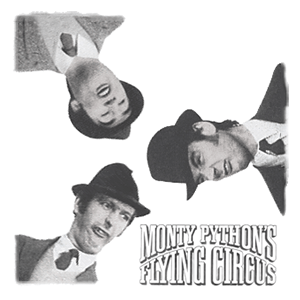
The Upper Class Twit of the Year is a classic comedy sketch that was seen on the TV show ‘Monty Python’s Flying Circus,’ and also in a modified format as the finale of the movie ‘And Now For Something Completely Different.’ It is notable for its savage satire on dim-witted members of the English upper class. The sketch features horse race style commentary by John Cleese about an obstacle-course race among five stereotypical, upper-class twits (imbeciles), to determine the 127th Annual Upper-Class Twit of the Year.
The obstacles include: Kicking The Beggar (the Twits must approach a beggar with a tray and kick him until he falls over); Reversing Into The Old Lady (the Twits must get into their sports cars and reverse them into a cardboard cut-out of an old lady, then speed off; into Waking The Neighbor (the Twits must drive their cars forward and then try to wake up a neighbor (who is attempting to get some sleep) by slamming their doors, tooting their horns, etc. Finally, the Twits approach a table with five revolvers on it. The winner is the first Twit to shoot himself. The three coffins of the winning Twits are placed on the medal rostrum and medals are draped around them. Cleese ends his commentary by remarking that ‘there’ll certainly be some car door slamming in the streets of Kensington tonight.’
Posted in Art, Humor, Money |
Leave a Comment »
March 14, 2012


The Methuselah [muh-thoo-zuh-luh] Foundation studies methods of extending lifespan. It is a non-profit volunteer organization, co-founded by Aubrey de Grey and David Gobel, based in Virginia. Activities of the foundation include ‘My Bridge 4 Life,’ a community tool designed to help people deal with the different diseases of aging; the Mprize, a monetary prize given to anyone who efficiently rejuvenates and/or extends the healthy lifespan of mice, and various collaborative projects under the umbrella concept of MLife Sciences. The foundation takes it name from the Biblical character whose name is commonly used to refer to any living organism reaching great age.
In 2003, de Grey and Gobel cofounded The Mprize (known then as the ‘Methuselah Mouse Prize’), a prize designed to accelerate research into effective life extension interventions by awarding monetary prizes to researchers who extend the healthy lifespan of mice to unprecedented lengths. Regarding this, de Grey stated in 2005, ‘if we are to bring about real regenerative therapies that will benefit not just future generations, but those of us who are alive today, we must encourage scientists to work on the problem of aging.’ The prize is currently $4 million. The foundation believes that if reversing of aging can be exhibited in mice, an enormous amount of funding would be made available for similar research in humans, potentially including a massive government project similar to the Human Genome Project, or by private for-profit companies.
Posted in Death, Health, Money |
Leave a Comment »
March 14, 2012

The rice and chessboard problem is a mathematical problem: If a chessboard were to have rice placed upon each square such that one grain were placed on the first square, two on the second, four on the third, and so on (doubling the number of grains on each subsequent square), how many grains of rice would be on the chessboard at the finish? The answer is 18,446,744,073,709,551,615, which would be a heap of rice larger than Mount Everest.
This problem (or a variation of it) demonstrates the quick growth of exponential sequences. In technology strategy, ‘the second half of the chessboard’ is a phrase, coined by Ray Kurzweil, in reference to the point where an exponentially growing factor begins to have a significant economic impact on an organization’s overall business strategy. While the number of grains on the first half of the chessboard is large, the amount on the second half is vastly larger. The first square of the second half alone contains more grains than the entire first half.
read more »
Posted in Money, Science |
Leave a Comment »
March 14, 2012

Metcalfe’s law states that the value of a telecommunications network is proportional to the square of the number of connected users of the system. First formulated in this form by George Gilder in 1993, and attributed to Robert Metcalfe in regard to Ethernet, Metcalfe’s law was originally presented, circa 1980, not in terms of users, but rather of ‘compatible communicating devices’ such as telephones.
Only more recently with the launch of the internet did this law carry over to users and networks, in line with its original intent. The law has often been illustrated using the example of fax machines: a single fax machine is useless, but the value of every fax machine increases with the total number of machines in the network, because the total number of people with whom each user may send and receive documents increases. Likewise, in social networks, the greater number of users with the service, the more valuable the service becomes to the community.
Posted in Money, Technology, World |
Leave a Comment »
March 13, 2012


A multi-core CPU is a single computing component with two or more independent actual processors (called ‘cores’), which are the units that read and execute program instructions. Multiple cores can run multiple instructions at the same time, increasing overall speed for programs amenable to parallel computing.
Processors were originally developed with only one core. After a certain point, multi-processor techniques are no longer efficient, largely because of issues with congestion in supplying instructions and data to the many processors. The threshold is roughly in the range of several tens of cores; above this threshold network on chip technology is advantageous. Tilera processors feature a switch in each core to route data through an on-chip mesh network to lessen the data congestion, enabling their core count to scale up to 100 cores.
read more »
Posted in Money, Technology |
Leave a Comment »
March 13, 2012

A Hello world program is a computer program that outputs ‘Hello, world’ on a display device. Because it is typically one of the simplest programs possible in most programming languages, it is by tradition often used to illustrate to beginners the most basic syntax of a programming language, or to verify that a language or system is operating correctly (called a sanity test). In a device that does not display text, a simple program to produce a signal, such as turning on an LED, is often substituted for ‘Hello world’ as the introductory program. Itis also used by computer hackers as a proof of concept that arbitrary code can be executed through an exploit where the system designers did not intend code to be executed—for example, on Sony’s PlayStation Portable. This is the first step in using homemade content (‘home brew’) on such a device.
While small test programs existed since the development of programmable computers, the tradition of using the phrase ‘Hello, world!’ as a test message was influenced by an example program in the seminal book ‘The C Programming Language.’ The example program from that book prints ‘hello, world’ (without capital letters or exclamation mark), and was inherited from a 1974 Bell Laboratories internal memorandum by Brian Kernighan, ‘Programming in C: A Tutorial.’
Posted in Language, Money, Technology |
Leave a Comment »


 The Daily Omnivore