March 8, 2012

The Intelligent Investor by Benjamin Graham, first published in 1949, is a widely acclaimed book on value investing, an investment approach Graham began teaching at Columbia Business School in 1928 and subsequently refined with David Dodd. Value investing generally refers to buying securities whose shares appear underpriced. Graham’s favorite allegory is that of Mr. Market, an obliging fellow who turns up every day at the shareholder’s door offering to buy or sell his shares at a different price. Often, the price quoted by Mr. Market seems plausible, but sometimes it is ridiculous.
The investor is free to either agree with his quoted price and trade with him, or ignore him completely. Mr. Market doesn’t mind this, and will be back the following day to quote another price. The point of this anecdote is that the investor should not regard the whims of Mr. Market as a determining factor in the value of the shares the investor owns. He should profit from market folly rather than participate in it. The investor is advised to concentrate on the real life performance of his companies and receiving dividends, rather than be too concerned with Mr. Market’s often irrational behavior.
Posted in Language, Money |
Leave a Comment »
March 8, 2012

Game Over is a message in video games which signals that the game has ended, often due to a negative outcome – although the phrase sometimes follows the end credits after successful completion of a game. In certain uses; particularly during conversation, ‘Game Over’ is sometimes shortened to the first two letters: ‘GO’ with each letter pronounced individually. The phrase was used as early as the 1950s in devices such as electromechanical pinball machines, which would light up the phrase with a light bulb.
Before the advent of video game consoles and personal computing, arcades were the predominant platform for playing games which required users to deposit a token or coin into an arcade game machine in order to play. Players would usually be given a finite number of lives (or attempts) to progress through the game which when expended would usually result in the display of the message ‘Game Over’ indicating that the game had ended. The phrase might also be followed by the message ‘Continue?’ and a prompt asking the player to insert additional tokens to prevent the game from terminating and allowing the player to continue their progress.
read more »
Posted in Games, Money, Technology |
1 Comment »
March 7, 2012

Selvage denim [sel-vij] is a type of denim which forms a clean natural edge that does not unravel. It is commonly presented in the unwashed or raw state. Typically, the selvage edges will be located along the out-seam of the trousers, making it visible when cuffs are worn. The word ‘selvage’ comes from the phrase ‘self-edge,’ the natural edge of a roll of fabric. As applied to denim, it means that which is made on old-style shuttle looms.These looms weave fabric with one continuous cross thread (the weft) that is passed back and forth all the way down the length of the bolt. As the weft loops back into the edge of the denim it creates this ‘self-edge’ or selvage.
Selvage is desirable because the edge cannot fray like denim made on a projectile loom that has separate wefts, which leave an open edge that must be stitched. This advantage is only realized on one edge of the fabric, however, as the fabric has to be cut to shape and anywhere it is cut the self-edge is lost. Shuttle looms weave a narrower piece of fabric, and thus a longer piece of fabric is required to make a pair of jeans (approximately 3 yards). To maximize yield, traditional jean makers use the fabric all the way to the selvedge edge. When the cuff is turned up, the two selvedge edges (where the denim is sewn together) can be seen.
Posted in Money, Technology |
Leave a Comment »
March 7, 2012


Milton Glaser (b.1929 is an American graphic designer, best known for the ‘I Love New York logo,’ his ‘Bob Dylan’ poster, the ‘DC bullet’ logo used by DC Comics from 1977 to 2005, and the ‘Brooklyn Brewery’ logo. He also founded ‘New York Magazine’ with Clay Felker in 1968. Glaser was born into a Hungarian Jewish family in New York. He was educated at Manhattan’s High School of Music & Art (now Fiorello H. LaGuardia High School of Music & Art and Performing Arts), graduated from the Cooper Union in 1951 and later, via a Fulbright Scholarship, the Academy of Fine Arts in Bologna under Giorgio Morandi. He was greatly inspired by his sister’s partner, who had studied typography in great depth.
In 1954 Glaser was a founder, and president, of Push Pin Studios formed with several of his Cooper Union classmates. Glaser’s work is characterized by directness, simplicity and originality. He uses any medium or style to solve the problem at hand. His style ranges wildly from primitive to avant garde in his countless book jackets, album covers, advertisements and direct mail pieces and magazine illustrations. Milton Glaser, Inc. was established in 1974 in Manhattan, and is still producing work in a wide range of design disciplines, including: corporate identities, environmental and interior design, packaging, and product design.
Posted in Art, Money |
Leave a Comment »
March 6, 2012

Seymour Chwast (b.1931) an American graphic designer, illustrator, and type designer. Chwast was born in the Bronx, and graduated with a Bachelor of Fine Arts from Cooper Union in 1951. With Milton Glaser, Edward Sorel, and Reynold Ruffins, he founded Push Pin Studios in 1954.
The bi-monthly publication ‘The Push Pin Graphic’ was a product of their collaboration. Chwast is famous for his commercial artwork, which includes posters, food packaging, magazine covers, and publicity art. Often referred to as ‘the left-handed designer,’ Chwast’s unique graphic design melded social commentary and a distinctive style of illustration. Today, he continues to work and is principal at The Pushpin Group, Inc. in New York City.
Posted in Art, Money |
Leave a Comment »
March 6, 2012

In political jargon, a self-licking ice cream cone is a self-perpetuating system that has no purpose other than to sustain itself. The phrase appears to have been first used in 1992, in ‘On Self-Licking Ice Cream Cones,’ a paper by Pete Worden about NASA’s bureaucracy.
It has come to be used as a metaphor for any similar system, particularly in contexts such as the War on Terror and the military-industrial complex.
Posted in Money, Politics |
1 Comment »
March 6, 2012

‘Asshole: How I Got Rich and Happy by Not Giving a Shit About You’ is a 2008 spoof self-help book and memoir by American author Martin Kihn. The first line of the book, is ‘I was the nicest guy in the world and it was killing me.’ Kihn, who worked for a marketing company, was told by his boss that unless he started ‘playing hardball,’ they were going to demote him and upgrade a colleague Kihn calls ‘The Nemesis’ to a window office. So to save his career, Kihn decided to turn himself into an asshole, and in telling his story, he describes exactly how the reader can can follow his lead.
To become an asshole, Kihn builds a team, consisting of an acting coach, life coach and both personal and dog trainer – to help ‘master the art of assholism.’ Kihn then creates a ten-step “assholism’ program which involves ‘ignoring other peoples’ feelings, never saying sorry, dressing in black silk and only eating red meat.’ Other tasks saw Kihn signing up to the National Rifle Association, learning kickboxing, screaming at colleagues and eating garlic bagels on public transport. Additionally, Kihn takes inspiration from famous figures whom he considers ‘assholes’ such as: Donald Trump, Rudy Giuliani, Martha Stewart, David Letterman, Nicole Kidman, Machiavelli, Scarface and Paris Hilton. He also takes inspiration from Ayn Rand’s ‘The Fountainhead’ and ‘The Virtue of Selfishness.’
Posted in Humor, Language, Money |
1 Comment »
March 6, 2012

Creative consultant is a credit that has been given to screenwriters who have ‘doctored’ a movie screenplay. It is often given by producers in lieu of official credit. Those given this credit in the television field work closely with an Executive Producer, Head Writer/showrunner, and Casting Director. They are involved in the writing process (proposing and editing story outlines/scripts), casting roles, and hiring/firing writers, producers, directors, and other crew members.
Sometimes they are given the credit of Executive Consultant. A Story Consultant is strictly involved in the writing process, and has no influence in the hiring and firing of writers or other crew members. A Script Consultant is only involved in the proposal and execution of a script. The Writers Guild of America disapproves of the credit.
Posted in Art, Language, Money |
Leave a Comment »
March 6, 2012

A buzzword (also fashion word and vogue word) is a term of art, salesmanship, politics, or technical jargon that is used in the media and wider society outside of its originally narrow technical context. Buzzwords differ from jargon in that jargon is esoteric but precisely defined terminology used for ease of communication between specialists in a given field, whereas a buzzword (which often develops from the appropriation of technical jargon) is often used in a more general way. Buzzwords are used as a form of thought-control via intentional vagueness.
In management, by stating organization goals with opaque words of unclear meaning; their positive connotations prevent questioning of intent, especially when many buzzwords are used. they also are used to inflate the trivial to something of importance and stature, to impress a judge or an examiner by seeming to know a topic, by name-dropping it, or to camouflage chit-chat while saying nothing. Examples include: ‘Going forward,’ ‘Leverage,’ ‘Long tail,’ ‘Next generation,’ ‘Paradigm,’ and ‘Incentivize.’
Posted in Language, Money, Politics |
1 Comment »
March 6, 2012


Management fad is a term used to characterize a change in philosophy or operations implemented by a business or institution.The term tends to be used in a pejorative sense, as it implies that such a change is being implemented (often by management on its employees, with little or no input from them) solely because it is (at the time) popular within managerial circles, not due to any real desire for organizational change. The term further implies that once the underlying philosophy is no longer popular, it will be replaced by the newest ‘popular idea, in the same manner and for the same reason as the previous idea.
Several authors have argued that new management ideas should be subject to greater critical analysis, and for the need for greater conceptual awareness of new ideas by managers. A key determinant of whether any management idea is a management fad may be the number and timing of published articles on the idea. If an idea has been discussed for around 3-5 years and the number of articles on the idea in a given year decreases significantly (similar to the right-hand side of a bell curve), then the idea is most likely a ‘management fad.’
Posted in Money |
Leave a Comment »
March 6, 2012
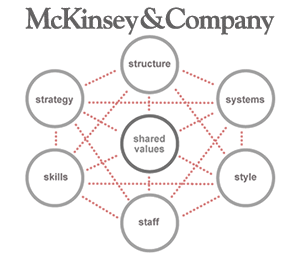

Management consulting refers to both the industry and the practice of helping organizations to improve their performance, primarily through the analysis of existing organizational problems and development of plans for improvement.
Organizations may draw upon the services of management consultants for a number of reasons, including gaining external (and presumably objective) advice and access to the consultants’ specialised expertise. As a result of their exposure to and relationships with numerous organizations, consulting firms are also said to be aware of industry ‘best practices,’ although the transferability of such practices from one organization to another may be limited by the specific nature of situation under consideration.
read more »
Posted in Money, Technology, World |
Leave a Comment »
March 6, 2012

Martin Kihn (b. 1950) is an American writer and digital marketer. Martin Kihn was born in Zambia, where his parents met while working in a hospital. His South African-born father is a doctor, and his Scottish mother, a former actress, is now a drama teacher. He grew up in Michigan. He has earned a BA in Theater Studies from Yale, and in the late 1990s was Head Writer for the popular television program ‘Pop-Up Video’ on MTV Networks and was nominated for an Emmy for Writing. He lost to ‘Win Ben Stein’s Money,’ decided to quit writing and got into business school. He received an MBA from Columbia Business School.
Kihn’s first book was an expose of the consulting agencies called ‘House of Lies: How Management Consultants Steal Your Watch and Then Tell You the Time’ (2005), based on the three years he spent working for a large consultancy, Booz Allen. It was adapted by Showtime as a series with Don Cheadle playing Marty Kaan, an ‘outside the box’ management consultant, loosely based on Marty Kihn himself. Kihn reemerged a few years later with a satirical memoir called ‘Asshole: How I Got Rich and Happy by Not Giving a Shit About You’ (2008).
Posted in Art, Language, Money |
Leave a Comment »




 The Daily Omnivore