January 15, 2012

A hoodie is a sweatshirt with a hood. They often include a muff sewn onto the lower front, and a drawstring to adjust the hood opening, and may have a vertical zipper down the center similar to a windbreaker style jacket.
The garment’s style and form can be traced back to Medieval Europe when the formal wear for monks included a long, decorative hood called cowl worn a tunic or robes. The modern clothing style was first produced by Champion in the 1930s and marketed to laborers who endured freezing temperatures in upstate New York.
read more »
Posted in Money, Politics, World |
Leave a Comment »
January 15, 2012

Burning Man is a week-long annual event held in the Black Rock Desert in northern Nevada. The event starts on the Monday before Labor Day, and ends on the holiday itself. It takes its name from the ritual burning of a large wooden effigy on Saturday evening. The event is described by many participants as an experiment in community, radical self-expression, and radical self-reliance.
Burning Man is organized by Black Rock City, LLC. In 2010, 51,515 people attended Burning Man. In 2011, attendance was capped at 50,000 participants. In 2011, Larry Harvey announced that the Org had begun the process of transitioning management of the festival over to a new non-profit called the ‘Burningman Project.’
read more »
Posted in Art, Money |
Leave a Comment »
January 12, 2012

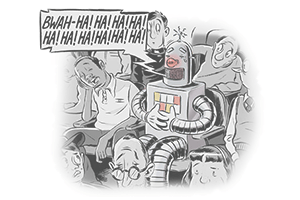
A claque [klak] (French for ‘clap’) is an organized body of professional applauders in French theatres and opera houses. Members of a claque are called ‘claqueurs.’
Hiring people to applaud dramatic performances was common in classical times. For example, when the emperor Nero acted, he had his performance greeted by an encomium (speech of praise) chanted by five thousand of his soldiers. This inspired the 16th-century French poet Jean Daurat to develop the modern claque. Buying a number of tickets for a performance of one of his plays, he gave them away in return for a promise of applause.
read more »
Posted in Art, Humor, Money |
1 Comment »
January 12, 2012

A peanut gallery is an audience that heckles the performer. The term originated in the days of vaudeville (1880s) as a nickname for the cheapest (and ostensibly rowdiest) seats in the theater; the least expensive snack served at the theater would often be peanuts, which the patrons would sometimes throw at the performers on stage to show their disapproval.
The phrases ‘no comments from the peanut gallery’ or ‘quiet in the peanut gallery’ are extensions of the name. ‘Peanut gallery’ may also refer to a social network audience that passively observes a syndicated web feed.
read more »
Posted in Humor, Language, Money |
Leave a Comment »
January 12, 2012
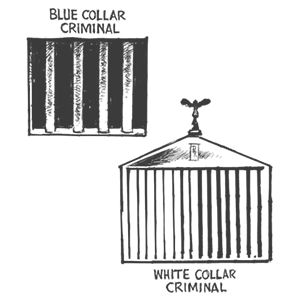
Gold collar worker is a neologism which has been used to describe either young, low-wage workers who invest in conspicuous luxury, or highly-skilled knowledge workers, traditionally classified as white collar, but who have recently become essential enough to business operations as to warrant a new classification.
The term was coined by management consultant Robert Earl Kelley in 1985.
read more »
Posted in Money, Politics |
1 Comment »
January 12, 2012
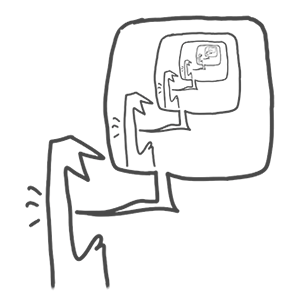
The echo chamber effect refers to any situation in which information, ideas or beliefs are amplified or reinforced by transmission inside an ‘enclosed’ space. Observers of journalism describe an echo chamber effect in media discourse. One purveyor of information will make a claim, which many like-minded people then repeat, overhear, and repeat again (often in an exaggerated or otherwise distorted form) until most people assume that some extreme variation of the story is true.
A media conglomerate that owns multiple media outlets can produce the same story among ‘different’ outlets, creating an illusion that a media consumer is getting information from different sources.
read more »
Posted in Language, Money, Technology |
Leave a Comment »
January 12, 2012
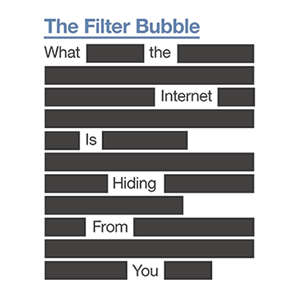
A filter bubble is a concept developed by Internet activist Eli Pariser in his book by the same name to describe a phenomenon in which websites use algorithms to selectively guess what information a user would like to see based on information about the user like location, past click behavior and search history. As a result websites tend to show only information which agrees with the user’s past viewpoint. Prime examples are Google’s personalized search results and Facebook’s personalized news stream. According to Pariser, users get less exposure to conflicting viewpoints and are isolated intellectually in their own informational bubble.
Pariser related an example in which one user searched Google for ‘BP’ and got investment news about British Petroleum while another searcher got information about the Deepwater Horizon oil spill and that the two search results pages were ‘strikingly different.’ The bubble effect may have negative implications for civic discourse, according to Pariser, but there are contrasting views suggesting the effect is minimal.
read more »
Posted in Language, Money, Technology |
1 Comment »
January 12, 2012

‘The End of The Line: How Overfishing Is Changing the World And What We Eat is a 2004 book by journalist Charles Clover about overfishing. Clover, an environment editor of the ‘Daily Telegraph,’ describes how modern fishing is destroying ocean ecosystems. He concludes that current worldwide fish consumption is unsustainable. The book provides details about overfishing in many of the world’s critical ocean habitats, such as the New England fishing grounds, west African coastlines, the European North Atlantic fishing grounds, and the ocean around Japan.
The book was made into a documentary film of the same name in 2009, featuring Clover, along with tuna farmer turned whistle blower Roberto Mielgo, top scientists from around the world, indigenous fishermen and fisheries enforcement officials, who predict that seafood could potentially extinct in 2048. The film also challenges the notion that farmed fish is a solution. Furthermore, it advocates consumer responsibility to purchase sustainable seafood and for no-take zones in the sea to protect marine life.
Posted in Food, Money, Politics |
Leave a Comment »
January 12, 2012
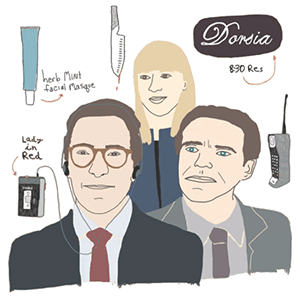
The term ‘winders‘ was originally coined in 2008 by the sociologist John W. Leigh, in his article ‘Moving towards new forms of social success.’
The term (a contraction of the expression ‘windy winners’) goes back to the original way of experiencing social success by individuals uninhibited with regards to their own success, not looking as much to reconcile rival existential expectations (such as the bobos – bohemian bourgeois, for example) but rather to juxtapose them in a way which is not seeking to constitute a system.
Posted in Language, Money, Politics |
Leave a Comment »
January 11, 2012

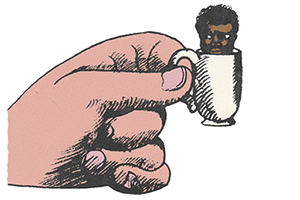
Limousine liberal is a pejorative American political term used to illustrate perceived hypocrisy by a political liberal of upper class or upper middle class status; including calls for the use of mass transit while frequently using limousines or private jets, claiming environmental consciousness but driving low MPG sports cars or SUVs, or ostensibly supporting public education while actually sending their children to private schools.
Democratic New York City mayoral hopeful Mario Procaccino coined the term to describe incumbent Republican Mayor John Lindsay and his wealthy Manhattan backers during a heated 1969 campaign.
read more »
Posted in Language, Money, Politics |
Leave a Comment »
January 11, 2012


‘Bobos in Paradise: The New Upper Class and How They Got There’ is a book by David Brooks, first published in 2000. The word ‘bobo,’ Brooks’s most famous coinage, is a portmanteau of the words bourgeois and bohemian.
The term is used by Brooks to describe the 1990s descendants of the yuppies. Often of the corporate upper class, they claim highly tolerant views of others, purchase expensive and exotic items, and believe American society to be meritocratic.
read more »
Posted in Language, Money, Politics |
Leave a Comment »
January 11, 2012
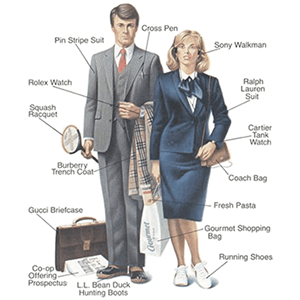
Yuppie [yuhp-ee] (short for ‘young urban professional’ or ‘young upwardly mobile professional’) is a term that refers to a member of the upper middle class or upper class in their 20s or 30s. It first came into use in the early-1980s and largely faded from American popular culture in the late-1980s, due to the 1987 stock market crash and the early 1990s recession. However it has seen a small revival in the 2000s and 2010s.
Yuppies are derided for their conspicuous personal consumption and hunger for attention social status among their peers. Cornell University economist Robert H. Frank, author of ‘Luxury Fever,’ has remarked, ‘When people were denouncing yuppies, they had considerably lower incomes than yuppies, so the things yuppies spent their money on seemed frivolous and unnecessary from their vantage point.’ Pro-skateboarder and businessman Tony Hawk has said that yuppies give ‘us visions of bright V-neck sweaters with collars underneath, and all that was vile in the eighties,’ and he has remarked as well as that a ‘bitchin’ tattoo cannot hide your inner desire to be Donald Trump.’
read more »
Posted in Humor, Language, Money |
1 Comment »


 The Daily Omnivore