January 11, 2012


Sidney Frank (1919 – 2006) was an American businessman who became a billionaire through his promotion of Grey Goose vodka and Jägermeister. He attended Brown University, but left because he could only afford one year of tuition. He later made enormous gifts to the university to ensure that no student would ever be forced to leave Brown because of inability to pay tuition. During World War II, Frank worked for Pratt and Whitney as an aircraft engine mechanic in the South Pacific.
Frank’s first wife, Louise Rosenstiel, was the daughter of Lewis Rosenstiel, founder of Schenley Industries, one of the largest American distiller and spirit importers. Frank joined Schenley after his marriage and rose to the company presidency, but was forced out in a family dispute in 1970. In 1973 his wife died and he started his own company, Sidney Frank Importing Company, where he served as chairman and chief executive officer. The company is based in New Rochelle, New York where Frank lived part of the year (he had a home in Rancho Santa Fe, California as well).
read more »
Posted in Drugs, Food, Money |
Leave a Comment »
January 11, 2012
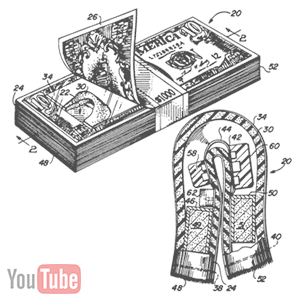
A dye pack is a radio-controlled incendiary device used by some banks to preemptively foil a bank robbery by causing stolen cash to be permanently marked with red dye shortly after a robbery. In most cases, a dye pack is placed in a hollowed-out space within a stack of banknotes, usually $10 or $20 bills. This stack of bills looks and feels similar to a real one, with new technology allowing for the manufacturing of flexible dye packs which are difficult to detect by handling the stack.
When the marked stack of bills is not used, it is stored next to a magnetic plate near a bank cashier, in standby or safe mode, ready to be handed over to a potential robber by a bank employee. When it is removed from the magnetic plate, the pack is armed, and once it leaves the building and passes through the door frame, a radio transmitter located at the door will trigger a timer (typically 10 seconds), after which the dye pack will explode and release an aerosol (sometimes tear gas, but usually of Disperse Red 9, a dye used in smoke grenades) intended to permanently stain and destroy the stolen money and mark the robber’s body with a bright red color. The chemical reaction causing the explosion of the pack and the release of the dye creates high temperatures of about 400 degrees Fahrenheit which further discourages a criminal from touching the pack or removing it from the bag or getaway vehicle.
Posted in Money, Politics, Technology |
Leave a Comment »
January 11, 2012

The New York Pizza Connection, or Pizza Principle, is a humorous but generally historically accurate ‘economic law’ proposed by native New Yorker Eric M. Bram. He noted in 1980 that from the early 1960s the price of a slice of pizza ‘matched, with uncanny precision, the cost of a New York City Subway ride.’ The term ‘Pizza Connection’ referring to this phenomenon was coined in early 2002 by ‘New York Times’ columnist Clyde Haberman. He predicted the cost of a slice of pizza would increase by as high as two dollars in midtown Manhattan.
In 2003 ‘The New Yorker’ magazine proclaimed the validity of the Pizza Connection (which they renamed the pizza principle) in accurately predicting the rise of the subway fare to $2.00 the week before. They also quoted Mr. Bram (by then a patent attorney) as warning that since the New York City Transit Authority had announced the discontinuation of the subway token itself in favor of the variable-fare cost MetroCard, the direct correlation between the cost of an off-the-street slice of cheese pizza and the cost of a subway token might not continue to hold. However, in 2005, and again in 2007, Haberman noted the price of a slice was again rising, and, citing the Pizza Connection, worried that the subway fare might soon rise again. The fare did indeed rise to $2.25 in 2009 and again in 2011 to $2.50.
Posted in Food, Humor, Money |
Leave a Comment »
January 10, 2012

Surrogacy [sur-uh-guh-see] is an arrangement in which a woman carries and delivers a child for another couple or person. This woman, the surrogate mother, may be the child’s genetic mother (called traditional surrogacy), or she may be biologically unrelated to the child (called gestational surrogacy).
If the surrogate receives compensation beyond the reimbursement of medical and other reasonable expenses, the arrangement is called commercial surrogacy, otherwise it is often referred to as altruistic surrogacy.
read more »
Posted in Money, Politics, Sex |
Leave a Comment »
January 5, 2012


Emergent gameplay refers to complex situations in video games, board games, or role-playing games that emerge from the interaction of relatively simple game mechanics. More recently game designers have attempted to encourage emergent play by providing tools to players such as placing web browsers within the game engine, providing programming languages, and fixing exchange rates.
These cases constitute intentional emergence, where creative uses of the game are intended by the designers. Since the 1970s and 1980s board games and table top role playing games such as ‘Dungeons & Dragons’ have featured intentional emergence as a primary game function by supplying players with relatively simple rules or frameworks for play that intentionally encourage them to explore creative strategies or interactions and exploit them toward victory or goal achievement.
read more »
Posted in Games, Money, Technology |
Leave a Comment »
January 5, 2012
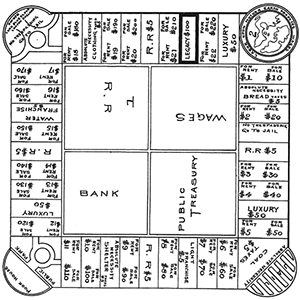
The Landlord’s Game is a board game patented in 1904 by Elizabeth Magie. It is a realty and taxation game, which is considered to be a direct inspiration for the board game ‘Monopoly.’
Though many similar home-made games were played at the beginning of the 20th century, it is the first of its kind to have an attested patent. Magie designed the game to be a ‘practical demonstration of the present system of land grabbing with all its usual outcomes and consequences.’
read more »
Posted in Games, Money, Politics |
Leave a Comment »
January 5, 2012

Wardrobing [wawr-droh-bing] is the practice of purchasing an item, using it, and then returning it to the store for a refund. It is most often done with expensive clothing – hence the name – but the practice is also common with tools, electronics, and even computers.
Perhaps one of the most notorious examples of wardrobing comes from the film ‘My Date With Drew,’ which was filmed entirely on a wardrobed video camera. The filmmaker purchased the camera from Circuit City, used it for 30 days to film his movie, and then returned the camera for a full refund.
Posted in Money, Politics |
Leave a Comment »
January 5, 2012
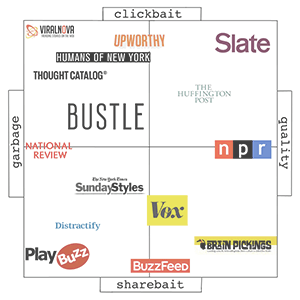
Betteridge’s Law of Headlines is an adage that states, ‘Any headline which ends in a question mark can be answered by the word ‘no.” It is based on a point made by journalist Ian Betteridge about sensational headlines that end in a question mark: ‘The reason why journalists use that style of headline is that they know the story is probably bullshit, and don’t actually have the sources and facts to back it up, but still want to run it.’ The maxim trends towards being universally true because of a simple principle of headline writing: if a story has enough sources to have a high chance of accuracy, a headline will be assertive. If sources are weak, or only a single source is found, headline writers will hedge their bets by posing the headline as a question.
It was among UK journalist Andrew Marr’s suggestions for how to read a newspaper if you really want to know what is going on: ‘If the headline asks a question, try answering ‘no.’ Is This the True Face of Britain’s Young? (Sensible reader: No.) Have We Found the Cure for AIDS? (No; or you wouldn’t have put the question mark in.) Does This Map Provide the Key for Peace? (Probably not.) A headline with a question mark at the end means, in the vast majority of cases, that the story is tendentious or over-sold. It is often a scare story, or an attempt to elevate some run-of-the-mill piece of reporting into a national controversy and, preferably, a national panic. To a busy journalist hunting for real information a question mark means ‘don’t bother reading this bit.”
Posted in Humor, Language, Money |
Leave a Comment »
January 4, 2012


The Missionary Church of Kopimism is a congregation of file sharers which hold that copying information as a sacred virtue. The sect, which is based in Sweden, is petitioning the Swedish government to have their church officially recognized as a religion.
The sect’s followers are called Kopomists from ‘copy me.’ According to the church, ‘In our belief, communication is sacred.’
Posted in Humor, Money, Philosophy |
Leave a Comment »
January 4, 2012


The OP-1 is a synthesizer, sampler, and sequencer designed and manufactured by the Stockholm-based company Teenage Engineering. The OP-1 is Teenage Engineering’s first product; it was released in 2011. The OP-1 is well known for its unconventional design, OLED display, and eight synthesizer engines. It has received some criticism for its physical limitations; however, according to Teenage Engineering cofounder Jesper Kouthoofd, these limitations were programmed into the synthesizer in order to stimulate the design process and the creativity of the user.
The design of the OP-1 was influenced by the VL-Tone, a synthesizer and pocket calculator manufactured by Casio in 1980 that is known for its toy-like novelty sounds and cheap build quality, as well as its inorganic design. In an interview with Damian Kulash of OK Go, Kouthoofd explained that he worked in a music store when he was young, and he was inspired by Japanese synthesizers of the 1980s. He has also stated that ‘limitations are OP-1’s biggest feature.’ The synthesizer’s designers attempted to use the limitation of physical hardware to encourage the unit to stimulate creativity, which might become unfocused in a limitless environment, such as a digital audio workstation.
Posted in Art, Money, Technology |
Leave a Comment »
January 3, 2012

Yayoi [yah-yoy] Kusama [koo-sah-muh] (b. 1929) is a Japanese artist whose paintings, collages, soft sculptures, performance art and environmental installations all share an obsession with repetition, pattern, and accumulation (she has described herself as an ‘obsessive artist’). Kusama’s work is based in Conceptual art (in which the concepts or ideas involved in the work take precedence over traditional aesthetic and material concerns) and shows some attributes of feminism, minimalism, surrealism, Art Brut, pop art, and abstract expressionism, and is infused with autobiographical, psychological, and sexual content.
Kusama is also a published novelist and poet, and has created notable work in film and fashion design. She has long struggled with mental illness, and has experienced hallucinations and severe obsessive thoughts since childhood, often of a suicidal nature. She claims that as a small child she suffered physical abuse by her mother. In 2008, a work by her sold for $5.1 million, a record for a living female artist.
read more »
Posted in Art, Health, Money |
1 Comment »
January 2, 2012
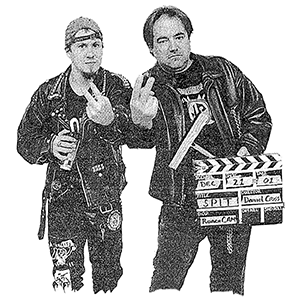
A squeegee [skwee-jee] man is a person who, washcloth and squeegee in hand, wipes windshields of cars stopped in traffic and then solicits money from drivers. While squeegee men are a feature of life in many cities around the world, the phenomenon first became prevalent in New York City in the 1980s.
Although some merely provided a service, in other cases the windshield-washing would be carried out without asking, often perfunctorily, and with subsequent demands for payment, sometimes with added threats of smashing the car’s windshield if their demands were not met. Upon his election, mayor Rudy Giuliani famously embarked on a crusade against squeegee men as part of his quality-of-life campaign, claiming that their near-ubiquitous presence created an environment of disorder that encouraged more serious crime to flourish.
Posted in Money, Politics, World |
Leave a Comment »



 The Daily Omnivore