January 5, 2012
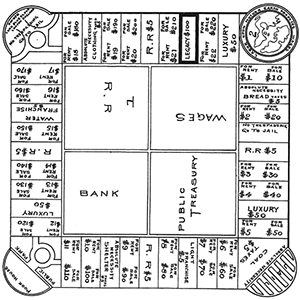
The Landlord’s Game is a board game patented in 1904 by Elizabeth Magie. It is a realty and taxation game, which is considered to be a direct inspiration for the board game ‘Monopoly.’
Though many similar home-made games were played at the beginning of the 20th century, it is the first of its kind to have an attested patent. Magie designed the game to be a ‘practical demonstration of the present system of land grabbing with all its usual outcomes and consequences.’
read more »
Posted in Games, Money, Politics |
Leave a Comment »
January 5, 2012

Wardrobing [wawr-droh-bing] is the practice of purchasing an item, using it, and then returning it to the store for a refund. It is most often done with expensive clothing – hence the name – but the practice is also common with tools, electronics, and even computers.
Perhaps one of the most notorious examples of wardrobing comes from the film ‘My Date With Drew,’ which was filmed entirely on a wardrobed video camera. The filmmaker purchased the camera from Circuit City, used it for 30 days to film his movie, and then returned the camera for a full refund.
Posted in Money, Politics |
Leave a Comment »
January 5, 2012
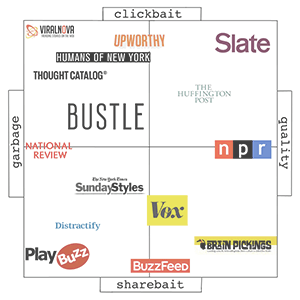
Betteridge’s Law of Headlines is an adage that states, ‘Any headline which ends in a question mark can be answered by the word ‘no.” It is based on a point made by journalist Ian Betteridge about sensational headlines that end in a question mark: ‘The reason why journalists use that style of headline is that they know the story is probably bullshit, and don’t actually have the sources and facts to back it up, but still want to run it.’ The maxim trends towards being universally true because of a simple principle of headline writing: if a story has enough sources to have a high chance of accuracy, a headline will be assertive. If sources are weak, or only a single source is found, headline writers will hedge their bets by posing the headline as a question.
It was among UK journalist Andrew Marr’s suggestions for how to read a newspaper if you really want to know what is going on: ‘If the headline asks a question, try answering ‘no.’ Is This the True Face of Britain’s Young? (Sensible reader: No.) Have We Found the Cure for AIDS? (No; or you wouldn’t have put the question mark in.) Does This Map Provide the Key for Peace? (Probably not.) A headline with a question mark at the end means, in the vast majority of cases, that the story is tendentious or over-sold. It is often a scare story, or an attempt to elevate some run-of-the-mill piece of reporting into a national controversy and, preferably, a national panic. To a busy journalist hunting for real information a question mark means ‘don’t bother reading this bit.”
Posted in Humor, Language, Money |
Leave a Comment »
January 4, 2012


The Missionary Church of Kopimism is a congregation of file sharers which hold that copying information as a sacred virtue. The sect, which is based in Sweden, is petitioning the Swedish government to have their church officially recognized as a religion.
The sect’s followers are called Kopomists from ‘copy me.’ According to the church, ‘In our belief, communication is sacred.’
Posted in Humor, Money, Philosophy |
Leave a Comment »
January 4, 2012
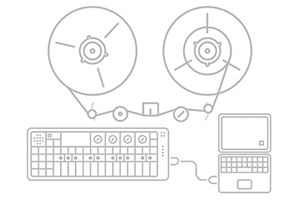

The OP-1 is a synthesizer, sampler, and sequencer designed and manufactured by the Stockholm-based company Teenage Engineering. The OP-1 is Teenage Engineering’s first product; it was released in 2011. The OP-1 is well known for its unconventional design, OLED display, and eight synthesizer engines. It has received some criticism for its physical limitations; however, according to Teenage Engineering cofounder Jesper Kouthoofd, these limitations were programmed into the synthesizer in order to stimulate the design process and the creativity of the user.
The design of the OP-1 was influenced by the VL-Tone, a synthesizer and pocket calculator manufactured by Casio in 1980 that is known for its toy-like novelty sounds and cheap build quality, as well as its inorganic design. In an interview with Damian Kulash of OK Go, Kouthoofd explained that he worked in a music store when he was young, and he was inspired by Japanese synthesizers of the 1980s. He has also stated that ‘limitations are OP-1’s biggest feature.’ The synthesizer’s designers attempted to use the limitation of physical hardware to encourage the unit to stimulate creativity, which might become unfocused in a limitless environment, such as a digital audio workstation.
Posted in Art, Money, Technology |
Leave a Comment »
January 3, 2012
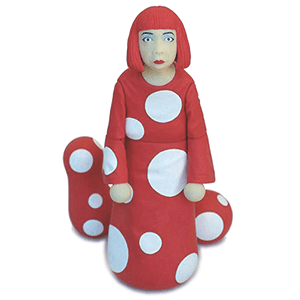
Yayoi [yah-yoy] Kusama [koo-sah-muh] (b. 1929) is a Japanese artist whose paintings, collages, soft sculptures, performance art and environmental installations all share an obsession with repetition, pattern, and accumulation (she has described herself as an ‘obsessive artist’). Kusama’s work is based in Conceptual art (in which the concepts or ideas involved in the work take precedence over traditional aesthetic and material concerns) and shows some attributes of feminism, minimalism, surrealism, Art Brut, pop art, and abstract expressionism, and is infused with autobiographical, psychological, and sexual content.
Kusama is also a published novelist and poet, and has created notable work in film and fashion design. She has long struggled with mental illness, and has experienced hallucinations and severe obsessive thoughts since childhood, often of a suicidal nature. She claims that as a small child she suffered physical abuse by her mother. In 2008, a work by her sold for $5.1 million, a record for a living female artist.
read more »
Posted in Art, Health, Money |
1 Comment »
January 2, 2012
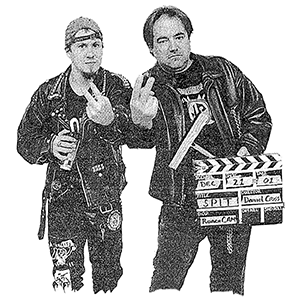
A squeegee [skwee-jee] man is a person who, washcloth and squeegee in hand, wipes windshields of cars stopped in traffic and then solicits money from drivers. While squeegee men are a feature of life in many cities around the world, the phenomenon first became prevalent in New York City in the 1980s.
Although some merely provided a service, in other cases the windshield-washing would be carried out without asking, often perfunctorily, and with subsequent demands for payment, sometimes with added threats of smashing the car’s windshield if their demands were not met. Upon his election, mayor Rudy Giuliani famously embarked on a crusade against squeegee men as part of his quality-of-life campaign, claiming that their near-ubiquitous presence created an environment of disorder that encouraged more serious crime to flourish.
Posted in Money, Politics, World |
Leave a Comment »
January 2, 2012
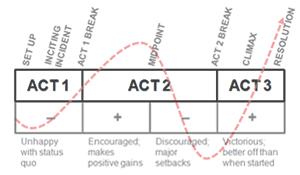
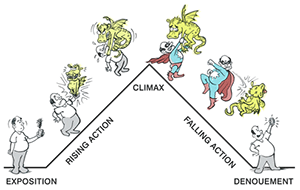
Act structure explains how a plot of a film story is composed. Just like plays (Staged drama) have ‘Acts,’ critics and screenwriters tend to divide films into acts; though films don’t require to be physically broken down as such in reality.
Whereas plays are actual performances that need ‘breaks’ in the middle for change of set, costume, or for the artists’ rest; films are recorded performances shown mechanically and therefore don’t need actual breaks. Still they are divided into acts for reasons that are in aesthetic and structural conformation with the original idea of Act in theater.
read more »
Posted in Art, Language, Money |
Leave a Comment »
December 31, 2011

Poverty pimp is a pejorative label used to convey that an individual or group is benefiting unduly by acting as an intermediary on behalf of the poor, the disadvantaged, or some other ‘victimized’ groups. Those who use this appellation suggest that those so labeled profit unduly from the misfortune of others, and therefore do not really wish the societal problems that they appear to work on to be eliminated permanently, as it is not in their own interest for this to happen.
The most frequent targets of this accusation are those receiving government funding or that solicit private charity to work on issues on behalf of various disadvantaged individuals or groups, but who never seem to be able to show any amelioration of the problems experienced by their target population. Some even suggest that that if profit were eliminated as a factor, greater steps in the alleviation of the oppressive situations could begin to truly occur.
Posted in Money, Politics |
Leave a Comment »
December 31, 2011

A welfare queen is a pejorative phrase used in the United States to describe people who are accused of collecting excessive welfare payments through fraud or manipulation. Reporting on welfare fraud began during the early 1960s, appearing in general interest magazines such as ‘Readers Digest.’
The term entered the American lexicon during Ronald Reagan’s 1976 presidential campaign when he described a ‘welfare queen’ from Chicago’s South Side. Since then, it has become a stigmatizing label placed on recidivist poor mothers, with studies showing that it often carries gendered and racial connotations. Although American women can no longer stay on welfare indefinitely due to the Personal Responsibility and Work Opportunity Act, the term continues to shape American dialogue on poverty.
read more »
Posted in Language, Money, Politics |
Leave a Comment »
December 28, 2011

Wife Acceptance Factor (WAF) refers to design elements that increase the likelihood a wife will approve the purchase of expensive consumer electronics products such as home theater systems and personal computers. Stylish, compact, unobtrusive forms and appealing colors are commonly considered WAF. The term is a tongue-in-cheek play on electronics jargon such as ‘form factor’ and ‘power factor’ and derives from the gender stereotype that men are predisposed to appreciate gadgetry and performance criteria whereas women must be wooed by visual and aesthetic factors.
Larry Greenhill first used the term in 1983, writing for ‘Stereophile’ magazine, but Greenhill credited fellow reviewer and music professor Lewis Lipnick with the coining of the term. Lipnick himself traces the origin to the 1950s when hi-fi loudspeakers were so large that they overwhelmed most living rooms. Lipnick’s wife, actress Lynn-Jane Foreman, arrived at a different term: Marriage Interference Factor (MIF). Foreman suggested that audiophile husbands should balance their large and ugly electronic acquisitions with gifts to the wife made on the basis of similar expense, with opera tickets, jewelry and vacations abroad among the suggestions.
Posted in Humor, Money, Technology |
1 Comment »
December 23, 2011


The Schreiber theory is a writer-centered approach to film criticism which holds that the principal author of a film is generally the screenwriter rather than the director. The term was coined by David Kipen, Director of Literature at the US National Endowment for the Arts. In his 2006 book ‘The Schreiber Theory: A Radical Rewrite of American Film History,’ Kipen argues that the influential 1950s-era Auteur theory has wrongly skewed analysis towards a director-centered view of film. In contrast, Kipen believes that the screenwriter has a greater influence on the quality of a finished work and that knowing who wrote a film is ‘the surest predictor’ of how good it will be.
Kipen acknowledges that his writer-centered approach is not new, and pays tribute to earlier critics of Auteur theory such as Pauline Kael and Richard Corliss. He believes that the Auteurist approach remains dominant, however, and that films have suffered as a result of the screenwriter’s role being undervalued. Kipen refers to his book as a ‘manifesto’ and in an interview with the magazine ‘SF360’ stated that he wished to use Schreiber theory as ‘a lever to change the way people think about screenwriting, and movies in general.’ In seeking a name for his theory, Kipen chose the Yiddish word for writer – ‘schreiber’ – in honor of the many early American screenwriters who had Yiddish as their mother tongue.
Posted in Art, Language, Money |
1 Comment »




