December 23, 2011

In film criticism, auteur theory holds that a director’s film reflects the director’s personal creative vision, as if they were the primary ‘auteur’ (the French word for ‘author’). In spite of—and sometimes even because of—the production of the film as part of an industrial process, the auteur’s creative voice is distinct enough to shine through all kinds of studio interference and through the collective process.
In law, the film is treated as a work of art, and the auteur, as the creator of the film, is the original copyright holder. Under European Union law, the film director is considered the author or one of the authors of a film, largely as a result of the influence of auteur theory.
read more »
Posted in Art, Language, Money |
2 Comments »
December 23, 2011

The Radium Girls were female factory workers who contracted radiation poisoning from painting watch dials with glow-in-the-dark paint at the United States Radium factory in Orange, New Jersey around 1917.
The women, who had been told the paint was harmless, ingested deadly amounts of radium by licking their paintbrushes to sharpen them. Some also painted their fingernails and teeth with the glowing substance. Five of the women challenged their employer in a court case that established the right of individual workers who contract occupational diseases to sue their employers.
read more »
Posted in Death, Money, Politics |
1 Comment »
December 23, 2011
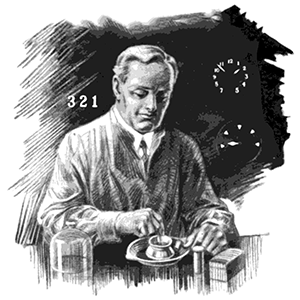
Undark was a trade name for luminous paint made with a mixture of radioactive radium and zinc sulfide, as produced by the U.S. Radium Corporation between 1917 and 1938. It was used primarily in watch dials.
The people working in the industry who applied the radioactive paint became known as the Radium Girls, because many of them became ill and some died from exposure to the radiation emitted by the radium contained within the product. The product was the direct cause of Radium jaw in the dial painters. Undark was also available as a kit for general consumer use and marketed as glow-in-the-dark paint.
Posted in Health, Money, Technology |
Leave a Comment »
December 23, 2011

Market failure occurs in economics when the allocation of goods and services by a free market is not efficient. In such cases the pursuit of pure self-interest leads to results that can be improved upon from the societal point-of-view. The first known use of the term by economists was in 1958, but the concept has been traced back to the Victorian philosopher Henry Sidgwick.
A market failure can occur for three main reasons: if the market is monopolized (a small group of businesses hold significant market power), if production of the good or service results in an externality (a cost or benefit that affects an unaffiliated third party), or if the good or service is a ‘public good’ (a non-excludable good like air).
read more »
Posted in Money, Politics |
Leave a Comment »
December 20, 2011
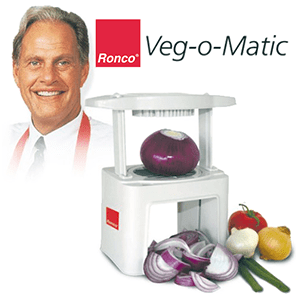
Ron Popeil (b. 1935) is an American inventor and marketing personality, best known for his direct response marketing company Ronco. He is well known for his appearances in infomercials for the Showtime Rotisserie (‘Set it, and forget it!’) and for using the phrase, ‘But wait, there’s more!’ on television as early as the mid-1950s. Popeil learned his trade from his father, Samuel, who was also an inventor and carny salesman of kitchen-related gadgets such as the Chop-O-Matic and the Veg-O-Matic. The Chop-O-Matic retailed for US$3.98 and sold over two million units.
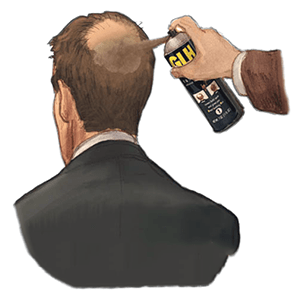
The success of the product caused a problem that marked the entrance of Ron Popeil into television. Chop-O-Matic was efficient at chopping vegetables, but it was impractical for salesmen to carry vegetables for demonstrations. The solution was to tape the demonstration; it was a short step to broadcasting the demonstration as a commercial. Some of his better-known products include: Mr. Microphone (a short-range hand-held radio transmitter that broadcast over FM radios), Showtime Rotisserie (a small rotisserie oven designed for cooking smaller sized portions of meat such as whole chicken and lamb),GLH-9 Hair in a Can Spray, and an Electric Food Dehydrator.
Posted in Money |
Leave a Comment »
December 20, 2011
Ronco is an American company that manufactures and sells a variety of items and devices, most commonly those used in the kitchen. Ron Popeil founded the company in 1964, and commercials for the company’s products soon became pervasive and memorable, in part thanks to Popeil’s personal sales pitches. The names ‘Ronco’ and ‘Popeil’ and the suffix ‘-O-Matic’ (used in many early product names) became icons of American popular culture and were often referred to by comedians introducing fictional gadgets.
In the beginning, the company chiefly sold inventions developed by Popeil’s father, Samuel ‘S.J.’ Popeil. Products include the Veg-O-Matic and the Popeil Pocket Fisherman. During the 1970s, Ron Popeil began developing products on his own to sell through Ronco. Ronco became a household name with its commercials for kitchen products including the Ginsu knife and Armorcote non-stick pans. Aired frequently, especially during off-hour TV viewing times, these commercials became known for their catchphrases such as ‘…but wait, there’s more!’, ’50-year guarantee’ (later expanded to a ‘lifetime guarantee’), and ‘…now how much would you pay?’
Posted in Money |
Leave a Comment »
December 20, 2011


‘Monkey Tennis‘ is a British pop culture phrase, first used in the late 1990s and popular throughout the 2000s. Originating as a joke in a television sitcom, it has come to be commonly used as an example of the hypothetical lowest common denominator television program that it is possible to make.
The term originates from the opening episode of the sitcom ‘I’m Alan Partridge,’ originally broadcast on BBC Two in 1997. In one scene the eponymous character of Partridge, a failed chat show host, desperately attempts to pitch program ideas to uninterested BBC executive who cancelled his first series. After failing to interest him in ideas plucked from thin air such as ‘Arm Wrestling With Chas & Dave,’ ‘Youth Hostelling with Chris Eubank,’ ‘Inner-City Sumo’ and ‘Cooking in Prison,’ Partridge comes up with a final spur-of-the-moment suggestion, ‘Monkey Tennis?,’ which is met with similar disdain.
Posted in Art, Humor, Money |
Leave a Comment »
December 20, 2011

A horse opera, or hoss opera, is a western movie or television series that is extremely clichéd or formulaic (in the manner of a soap opera). The term, which was originally coined by silent film-era Western star William S. Hart, is used variously to convey either disparagement or affection.
The name “horse opera” was also derived in part from the musical sequences frequently featured in these films and TV series which depicted a cowboy singing to his horse on-screen. The term “horse opera” is quite loosely defined; it does not specify a distinct sub-genre of the western (as “space opera” does with regard to the science fiction genre).
Posted in Art, Money |
Leave a Comment »
December 19, 2011

Taubman Sucks is an award-winning short documentary about a precedent-setting intellectual property lawsuit. The documentary was written and directed by filmmaker Theo Lipfert. The six-minute film explores Taubman v. WebFeats, a lawsuit that involved the complex relationships between domain names, trademarks, and free speech.
As the first ‘sucks.com’ case to reach the level of the United States Court of Appeals, the decision in Taubman v. WebFeats established precedents concerning the non-commercial use of trademarks in domain names.
Posted in Money, Politics, Technology |
Leave a Comment »
December 19, 2011

Article spinning is a search engine optimization technique by which blog or website owners post a unique version of relevant content on their sites by rewriting and replacing elements to provide a slightly different perspective on the topic. Many article marketers believe that article spinning helps avoid the feared penalties in the Search Engine Results pages (SERP) for using duplicate content. If the original articles are plagiarized from other websites or if the original article was used without the copyright owner’s permission, such copyright infringements may result in the writer facing a legal challenge, while writers producing multiple versions of their own original writing need not worry about such things.
Website owners may pay writers to perform spinning manually, rewriting all or parts of articles. Writers also spin their own articles, manually or automatically, allowing them to sell the same articles with slight variations to a number of clients or to use the article for multiple purposes (e.g. content and marketing). There are also a number of software applications which will automatically replace words or phrases in articles.
Posted in Money, Politics, Technology |
Leave a Comment »
December 19, 2011


In computing, spamdexing (also known as search spam or Search Engine Poisoning) is the deliberate manipulation of search engine indexes. The earliest known reference to the term is by Eric Convey in 1996 in an article, ‘Porn sneaks way back on Web,’ for ‘The Boston Herald.’ It involves a number of methods, such as repeating unrelated phrases, to manipulate the relevance or prominence of resources indexed in a manner inconsistent with the purpose of the indexing system.
Common spamdexing techniques can be classified into two broad classes: content spam (or term spam) and link spam. Content spam methods include keyword stuffing, hidden or invisible text, meta-tag stuffing, doorway pages, scraper sites, and article spinning. Link spamming methods include link farms, hidden links, Sybil attacks, spam blogs, page hijacking, buying lapsed domains (cybersquatting), and cookie stuffing.
read more »
Posted in Money, Technology |
Leave a Comment »
December 19, 2011

Brandjacking is an activity whereby someone acquires or otherwise assumes the online identity of another entity for the purposes of acquiring that person’s or business’s brand equity. The term combines the notions of ‘branding’ and ‘hijacking’, and has been used since at least 2007 when it appeared in a Business Week article. The tactic is often associated with use of individual and corporate identities on social media or Web 2.0 sites.
While similar to cybersquatting, identity theft, and phishing, brandjacking is usually particular to a politician, celebrity or business and more indirect in its nature. A brandjacker may attempt to use the reputation of its target for selfish reasons or seek to damage the reputation of its target for malicious or for political reasons. These reasons may not be directly financial, but the effects on the original brand-holder may often include financial loss – for example, negative publicity may result in the termination of a celebrity’s sponsorship deal, or, for a corporation, potentially lead to lost sales or a reduced share price.
Posted in Money, Politics, Technology |
1 Comment »



