December 14, 2011


Atari Democrat, a phrase first popularized during the early 1980s, references both the video game brand Atari and Democratic legislators who suggested that the support and development of high tech and related businesses would stimulate the economy and create jobs. A 1984 article for ‘The Philadelphia Inquirer,’ defined the term as ‘a young liberal trying to push the party toward more involvement with high-tech solutions.’ Other commentators discussed a generation gap which developed during the 1980s between older liberals who maintained an interest in traditional visions of social liberalism and Atari Democrats who attempted to find a middle ground:
‘When the Atari Democrats first emerged in the early Reagan years, their commitments to free markets and investment won them much criticism from older liberals, who considered their neo-liberalism as warmed-over Reaganism. Mr. Leahy, who combines his environmentalism with an old-fashioned commitment to social programs, argues that the cutbacks of the Reagan years suggested that it had been a mistake for members of his Congressional class to take the old programs for granted. But some of the Atari Democrats argue that their commitment to innovative uses of markets and to the environment are complementary. Mr. Wirth, for example, has sought to bring his two passions together by arguing that market forces can be harnessed to protect the environment and work better than ‘command-and-control regulations.’
Posted in Games, Money, Politics |
Leave a Comment »
December 13, 2011

Billboard Utilising Graffitists Against Unhealthy Promotions, or B.U.G.A. U.P. is an Australian subvertising artistic movement that detourns or modifies with graffiti billboard advertising that promotes something they deem unhealthy. The movement started in inner-city Sydney in 1979 and has been active ever since, although the late 70’s and early-mid 1980s is considered their most prolific period. The movement’s founder was Bill Snow, who continues to be active in anti-smoking and littering campaigns.
The movement aimed mainly at Cigarette and Alcohol advertising, often blanking out letters and adding others to promote their view that the product is unhealthy. Cola and soft drink ads were also targeted.
Posted in Money, Politics, World |
Leave a Comment »
December 13, 2011

The Billboard Liberation Front practices culture jamming (a tactic used by anti-consumerist social movements to disrupt or subvert mainstream cultural institutions, including corporate advertising) by altering billboards by changing key words to radically alter the message, often to an anti-corporate message.
It started in San Francisco in 1977 as an outgrowth of the Cacophony Society, a secret society responsible for a number of anarchic pranks.
Posted in Humor, Money, Politics |
Leave a Comment »
December 13, 2011

‘Carts of Darkness‘ is a 2008 National Film Board of Canada documentary film by Murray Siple about a group of homeless men in North Vancouver, who use shopping carts to collect bottles and cans to return for money and also race down the city’s steep slope for thrills. The subjects in the film control the carts using only their weight and one foot, during descents that cross intersections, with top speeds claimed to be as high as 70 km/h.
Siple, a former director of extreme sports videos and avid skateboarder and snowboarder, became a quadriplegic after a car accident in 1996. His first film after his accident, ‘Carts of Darkness’ allowed the filmmaker to regain the excitement he had experienced with extreme sports as well as relate to a fellow group of outsiders.
Posted in Art, Games, Money |
1 Comment »
December 12, 2011

The Copyright Term Extension Act (CTEA) of 1998 extended copyright terms in the United States by 20 years. Since the Copyright Act of 1976, copyright would last for the life of the author plus 50 years, or 75 years for a work of corporate authorship. The Act extended these terms to life of the author plus 70 years and for works of corporate authorship to 120 years after creation or 95 years after publication, whichever endpoint is earlier. Copyright protection for works published prior to 1978, was increased by 20 years to a total of 95 years from their publication date.
This law, also known as the Sonny Bono Act, or as the Mickey Mouse Protection Act, effectively ‘froze’ the advancement date of the public domain in the United States for works covered by the older fixed term copyright rules. Under this Act, additional works made in 1923 or afterwards that were still protected by copyright in 1998 will not enter the public domain until 2019 or afterward (depending on the date of the product) unless the owner of the copyright releases them into the public domain prior to that or if the copyright gets extended again. Unlike copyright extension legislation in the European Union, the Sonny Bono Act did not revive copyrights that had already expired.
read more »
Posted in Money, Politics |
Leave a Comment »
December 12, 2011

The Stop Online Piracy Act (SOPA), also known as H.R.3261 was a proposed American law to stop copyright infringement on the Internet. The Internet community had major discussion over it, but the bill was not passed. The supporters claimed that current copyright laws are not effective in shutting down piracy websites. The opponents argued the law amounted to a broad censorship tool over the internet.
In protest, several major sites went dark on January 18, 2012. News aggregator site Reddit blocked access first and then others joined the movement. Wikipedia masked most of its pages with a banner to spotlight the value of open access to information on the Internet. Google put up a black censor board in front of its logo.
Posted in Money, Politics, Technology |
Leave a Comment »
December 12, 2011

The term First World Problems refers to issues perceived as difficult to those residing in the more developed nations in the global arena (i.e., the First World), but which are banal when compared to the difficulties encountered by those in the less developed Third World. First World Problems is often used in a derisive manner towards those who complain about the problems they experience in the ‘First World’ on a regular basis. However, it is also routinely used by scholars and economists in studying the relationship between the Third World and the First World.
The exact provenance of the term is uncertain, although some believe that it originated with comedic author David Rakoff, whose 2005 book ‘Don’t Get Too Comfortable’ is subtitled ‘The Indignities of Coach Class, the Torments of Low Thread Count, the Never-Ending Quest for Artisanal Olive Oil, and Other First World Problems.’ Many computer games, notably, provide a fascinating degree of First World escapism via a simulation of Third World Problems. For example, the infamous 1980s ASCII-based dungeon crawler ‘Rogue’ provided those First World denizens who had overcome the First World Problem of not owning a computer to experience such Third World Problems as starvation, existential ennui, and life-or-death hand-to-hand combat.
Posted in Money, Politics, World |
Leave a Comment »
December 8, 2011

Dwolla is a United States-only e-commerce company that provides an online payment system and mobile payments network by the same name. The company was founded in 2008 with services based only in Iowa. After raising $1.31 million in funding, Dwolla launched nationally in 2009 with founders Ben Milne (CEO) and Shane Neuerburg (CTO), in Des Moines, Iowa, United States, with a few small banks and retailers. Transactions using Dwolla surpassed $1 million a week and its Iowa user-base was overtaken in 2011, with 20,000 users. The company began with two employees and has approximately 15 employees as of June 2011.
The main pull for Dwolla is its low transaction fees. From its onset, Dwolla charged 25 cents per transaction, less than its main rival Paypal, which for several years has charged 30 cents, plus 1.9-2.9% of each transaction. The name Dwolla is a conjunct of ‘dollar’ and ‘web.’ Dwolla is notable for its interest among users of Bitcoin, a digital currency. Some Bitcoin exchanges allow users to buy Bitcoins with dollars transferred to the exchange via Dwolla, and allow users to sell Bitcoins and have the proceeds transferred back to them using Dwolla. Although Dwolla representatives have said that they saw growth due to Bitcoin users, they do not offer any official endorsement of Bitcoins.
Posted in Money, Technology |
Leave a Comment »
December 8, 2011
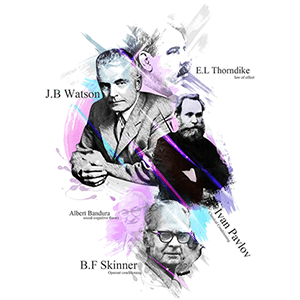
John B. Watson (1878 – 1958) was an American psychologist who established the psychological school of behaviorism. Through his behaviorist approach, Watson conducted research on animal behavior, child rearing, and advertising. In 1920 Johns Hopkins University asked Watson to leave his faculty position because of publicity surrounding the affair he was having with his graduate student-assistant Rosalie Rayner.
In addition, he and Rayner conducted the controversial ‘Little Albert’ experiment. After his divorce was finalized, Watson and Rayner married in 1921. They remained together until her death in 1935. In his post academic career, Watson worked for many years for J. Walter Thompson, a leading American advertising agency. He is credited with popularizing the ‘coffee break’ during an ad campaign for Maxwell House coffee.
read more »
Posted in Health, Money, Science |
1 Comment »
December 8, 2011

Pteridomania [tuh-rid-uh-mey-nee-uh] or Fern-Fever was a craze for ferns. Victorian decorative arts presented the fern motif in pottery, glass, metal, textiles, wood, printed paper, and sculpture, with ferns ‘appearing on everything from christening presents to gravestones and memorials.’
The term, a compound of ‘Pteridophytes’ and ‘mania,’ was coined in 1855 by Charles Kingsley in his book ‘Glaucus, or the Wonders of the Shore’: ‘Your daughters, perhaps, have been seized with the prevailing ‘Pteridomania’…and wrangling over unpronounceable names of species (which seem different in each new Fern-book that they buy)…and yet you cannot deny that they find enjoyment in it, and are more active, more cheerful, more self-forgetful over it, than they would have been over novels and gossip, crochet and Berlin-wool.’
read more »
Posted in Games, Money, Science |
Leave a Comment »
December 6, 2011


Molybdenite [mo-lib-de-nite] is a mineral (molybdenum disulfide, MoS2). Similar in appearance and feel to graphite, molybdenite has a lubricating effect that is a consequence of its layered structure, which consists of a sheet of molybdenum atoms sandwiched between sheets of sulfur atoms. The Mo-S bonds are strong, but the interaction between the sulfur atoms at the top and bottom of separate sandwich-like tri-layers is weak, resulting in easy slippage as well as cleavage planes.
Molybdenite occurs in high temperature hydrothermal ore deposits. Important deposits include the disseminated porphyry molybdenum deposits at Questa, New Mexico and the Henderson and Climax mines in Colorado. Molybdenite flakes are being researched for their potential use in low power semiconductors.
Posted in Money, Technology |
2 Comments »
December 6, 2011

The Tweel (a portmanteau of tire and wheel) is an experimental tire design developed by the French tire company Michelin. The tire uses no air, and therefore cannot burst or become flat.
Instead, the Tweel’s hub connects to flexible polyurethane spokes which are used to support an outer rim and assume the shock-absorbing role of a traditional tire’s pneumatic properties.
read more »
Posted in Money, Technology |
Leave a Comment »



