December 15, 2011
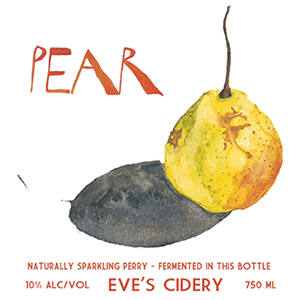
Perry is an alcoholic beverage made from fermented pears. Perry has been common for centuries in Britain, and in parts of south Wales; and France, especially Normandy and Anjou. In more recent years, commercial perry has also been referred to as ‘pear cider.’ Perry pears often have higher levels of sugar than cider apples, including unfermentable sugars such as sorbitol, which can give the finished drink a residual sweetness. They also have a very different tannin content to cider apples, with a predominance of astringent over bitter flavors. The presence of sorbitol can give perry a mild laxative effect, seen in the names of some perry pear varieties such as the ‘Lightning Pear’; reputed to go straight through ‘like lightning.’
As with apples specifically grown to make cider, special pear cultivars are used: in the UK the most commonly used variety of perry pear is the Blakeney Red. They produce fruit that is not of eating quality, but that produces superior perry. Like commercial pale lager and commercial cider, commercial perry is highly standardized, and today often contains large quantities of cereal adjuncts such as corn syrup or invert sugar. It is also generally of lower strength, and sweeter, than traditional perry, and is artificially carbonated to give a sparkling finish. However, unlike traditional perry it is a consistent product: the nature of perry pears means that it is very difficult to produce traditional perry in commercial quantities. Traditional perry was overwhelmingly a drink made on farms for home consumption, or to sell in small quantities either at the farm gate or to local inns.
Posted in Drugs, Food, Money |
Leave a Comment »
December 15, 2011

Beer glassware comprises the drinking vessels made of glass designed or commonly used for drinking beer. Different styles of glassware exist for a number of reasons: national traditions; legislation regarding serving measures; practicalities of stacking, washing and avoiding breakage; promotion of commercial breweries; or they may be folk art, novelty items or used in drinking games.
They also may complement different styles of beer for a variety of reasons, including enhancing aromatic volatiles, showcasing the appearance, and/or having an effect on the beer head. Several kinds of beer glassware have a stem which serves to prevent the body heat of the drinker’s hand from warming the beer. Beer glasses include German steins, old English tankards, and Belgian novelty glassware.
read more »
Posted in Art, Food, Money |
Leave a Comment »
December 14, 2011

Mello Yello is a caffeinated, citrus-flavored soft drink produced and distributed by The Coca-Cola Company. It was introduced in 1979 to compete with PepsiCo’s Mountain Dew. There have been three flavored variants: Mello Yello Cherry was released in response to Mountain Dew Code Red, and the other two variants were Mello Yello Afterglow (peach-flavored) and Mello Yello Melon.
Mello Yello was featured in the 1990 NASCAR-based movie ‘Days Of Thunder,’ in which Tom Cruise’s character, Cole Trickle, drove a Mello Yello-sponsored car to victory in the Daytona 500, although the product name itself is never verbally mentioned in the movie. That livery went on to become a real NASCAR paint scheme the following year, when driver Kyle Petty drove with Mello Yello sponsorship in the Winston Cup Series.
Posted in Food, Money |
Leave a Comment »
December 14, 2011
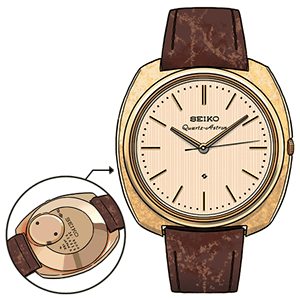
The Quartz Crisis is a term used in the watchmaking industry to refer to the economic upheavals caused by the advent of quartz watches in the 1970s and early 1980s, which largely replaced mechanical watches. It caused a decline of the Swiss watchmaking industry, which chose to remain focused on traditional mechanical watches, while the majority of world watch production shifted to Asian companies who embraced the new technology.
During World War II, Swiss neutrality permitted the watch industry to continue making consumer time keeping apparatus while the major nations of the world shifted timing apparatus production to timing devices for military ordnance. As a result, the Swiss watch Industry enjoyed a well-protected monopoly. The industry prospered in the absence of any real competition. Thus, prior to the 1970s, the Swiss watch industry had 50% of the world watch market.
read more »
Posted in Money, Technology, World |
Leave a Comment »
December 14, 2011
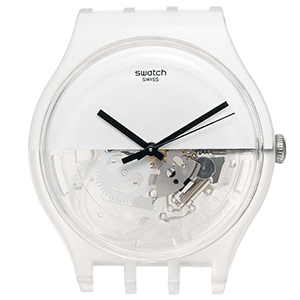
Swatch is a brand name for a line of wrist watches from the Swatch Group, a Swiss conglomerate with vertical control of the production of Swiss watches and related products. Swatch Group is the world’s largest watch company, and the Group has accelerated its acquisition of Swiss luxury brands in recent years, and currently owns: Breguet, Blancpain, Glashütte Original, Omega, Tiffany & Co., Rado, Longines, Tissot, and Hamilton. In 1984,
Swatch was conceived and it was introduced to the market in Switzerland the following year. This concept was realize with a small team of enthusiastic watch engineers led by Elmar Mock and Jacques Müller, who had had the idea to use the case back as a movement main plate (platine), as it had been done to design the thinnest watch in the world, the Delirium which made it to market in 1979. It was also designed for easy assembling.
read more »
Posted in Money, Technology |
Leave a Comment »
December 14, 2011


Stratolaunch Systems is a space transportation venture specializing in air launch to orbit, with its corporate headquarters located in Huntsville, Alabama. It was founded in 2011 by Microsoft co-founder Paul G. Allen and Scaled Composites founder Burt Rutan, who had previously collaborated on the creation of SpaceShipOne (which won the Ansari X-Prize by reaching 100 kilometers in altitude). The newly envisioned launch system will use similar components to that of Virgin Galactic though it will be made for orbital launch instead of suborbital.
The startup will build a mobile launch system with three primary components; a carrier aircraft to be build by Scaled Composites, A multi-stage launch vehicle built by Space Exploration Technologies, and a mating and integration system to be built by Dynetics. Allen and Rutan stated that the carrier craft would have a wingspan of 385 feet (117 m), making it the largest aircraft ever to fly, and will weigh in at over 1,200,000 pounds (540,000 kg). The aircraft will be powered by six turbine engines, sourced from a Boeing 747. It will use a 12,000 feet (3,700 m) long runway and is expected to test fly in 2016.
Posted in Money, Technology |
Leave a Comment »
December 14, 2011

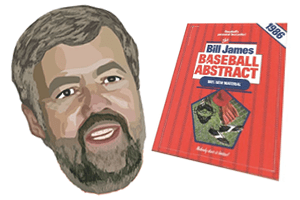
Sabermetrics is the specialized analysis of baseball through objective, empirical evidence, specifically baseball statistics that measure in-game activity. The term is derived from the acronym SABR, which stands for the ‘Society for American Baseball Research.’ It was coined by Bill James, who is one of its pioneers and is often considered its most prominent advocate and public face.
‘The Sabermetric Manifesto’ by David Grabiner (1994) begins: ‘Bill James defined sabermetrics as ‘the search for objective knowledge about baseball.’ Thus, sabermetrics attempts to answer objective questions about baseball, such as ‘which player on the Red Sox contributed the most to the team’s offense?’ or ‘How many home runs will Ken Griffey hit next year?’
read more »
Posted in Games, Money, Science |
1 Comment »
December 14, 2011

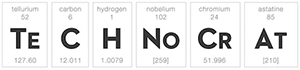
Atari Democrat, a phrase first popularized during the early 1980s, references both the video game brand Atari and Democratic legislators who suggested that the support and development of high tech and related businesses would stimulate the economy and create jobs. A 1984 article for ‘The Philadelphia Inquirer,’ defined the term as ‘a young liberal trying to push the party toward more involvement with high-tech solutions.’ Other commentators discussed a generation gap which developed during the 1980s between older liberals who maintained an interest in traditional visions of social liberalism and Atari Democrats who attempted to find a middle ground:
‘When the Atari Democrats first emerged in the early Reagan years, their commitments to free markets and investment won them much criticism from older liberals, who considered their neo-liberalism as warmed-over Reaganism. Mr. Leahy, who combines his environmentalism with an old-fashioned commitment to social programs, argues that the cutbacks of the Reagan years suggested that it had been a mistake for members of his Congressional class to take the old programs for granted. But some of the Atari Democrats argue that their commitment to innovative uses of markets and to the environment are complementary. Mr. Wirth, for example, has sought to bring his two passions together by arguing that market forces can be harnessed to protect the environment and work better than ‘command-and-control regulations.’
Posted in Games, Money, Politics |
Leave a Comment »
December 13, 2011
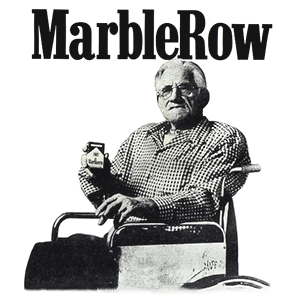
Billboard Utilising Graffitists Against Unhealthy Promotions, or B.U.G.A. U.P. is an Australian subvertising artistic movement that detourns or modifies with graffiti billboard advertising that promotes something they deem unhealthy. The movement started in inner-city Sydney in 1979 and has been active ever since, although the late 70’s and early-mid 1980s is considered their most prolific period. The movement’s founder was Bill Snow, who continues to be active in anti-smoking and littering campaigns.
The movement aimed mainly at Cigarette and Alcohol advertising, often blanking out letters and adding others to promote their view that the product is unhealthy. Cola and soft drink ads were also targeted.
Posted in Money, Politics, World |
Leave a Comment »
December 13, 2011

The Billboard Liberation Front practices culture jamming (a tactic used by anti-consumerist social movements to disrupt or subvert mainstream cultural institutions, including corporate advertising) by altering billboards by changing key words to radically alter the message, often to an anti-corporate message.
It started in San Francisco in 1977 as an outgrowth of the Cacophony Society, a secret society responsible for a number of anarchic pranks.
Posted in Humor, Money, Politics |
Leave a Comment »
December 13, 2011

‘Carts of Darkness‘ is a 2008 National Film Board of Canada documentary film by Murray Siple about a group of homeless men in North Vancouver, who use shopping carts to collect bottles and cans to return for money and also race down the city’s steep slope for thrills. The subjects in the film control the carts using only their weight and one foot, during descents that cross intersections, with top speeds claimed to be as high as 70 km/h.
Siple, a former director of extreme sports videos and avid skateboarder and snowboarder, became a quadriplegic after a car accident in 1996. His first film after his accident, ‘Carts of Darkness’ allowed the filmmaker to regain the excitement he had experienced with extreme sports as well as relate to a fellow group of outsiders.
Posted in Art, Games, Money |
1 Comment »
December 12, 2011

The Copyright Term Extension Act (CTEA) of 1998 extended copyright terms in the United States by 20 years. Since the Copyright Act of 1976, copyright would last for the life of the author plus 50 years, or 75 years for a work of corporate authorship. The Act extended these terms to life of the author plus 70 years and for works of corporate authorship to 120 years after creation or 95 years after publication, whichever endpoint is earlier. Copyright protection for works published prior to 1978, was increased by 20 years to a total of 95 years from their publication date.
This law, also known as the Sonny Bono Act, or as the Mickey Mouse Protection Act, effectively ‘froze’ the advancement date of the public domain in the United States for works covered by the older fixed term copyright rules. Under this Act, additional works made in 1923 or afterwards that were still protected by copyright in 1998 will not enter the public domain until 2019 or afterward (depending on the date of the product) unless the owner of the copyright releases them into the public domain prior to that or if the copyright gets extended again. Unlike copyright extension legislation in the European Union, the Sonny Bono Act did not revive copyrights that had already expired.
read more »
Posted in Money, Politics |
Leave a Comment »


 The Daily Omnivore