November 19, 2011
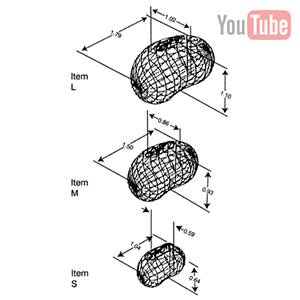
Neuticles are prosthetic testicular implants for neutered dogs and other domestic animals. Creator Gregg Miller won the 2005 Ig Nobel Prize in Medicine, a parody of the real Nobel Prize, for his invention. As of 2007, more than 240,000 pairs of the patented product had been sold, in all 50 U.S. states and 49 countries. Miller developed the idea for Neuticles in 1993, after his bloodhound Buck caught the scent of a bitch in heat, disappeared and turned up days later 30 miles away. Miller had Buck neutered to stop his wandering. Following the procedure, when Buck went to clean himself, he realized something was wrong and acted ‘extremely depressed’ for three days.
The first commercial Neuticles were implanted in 1995. Neuticles are made from Food and Drug Administration–approved materials and are designed to replicate the weight and feel of the animal’s natural testicles. They are made of solid silicone and are not gel-filled and therefore cannot leak. Several companies have tried to copy the patented prosthetic. CTI Corporation, which manufactures Neuticles, cited an investigation revealing that companies in New York and California were pirating Neuticles. CTI warned of health risks to the animals getting the pirate product.
Posted in Humor, Money, Sex |
1 Comment »
November 19, 2011
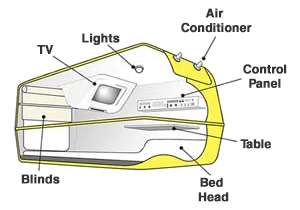

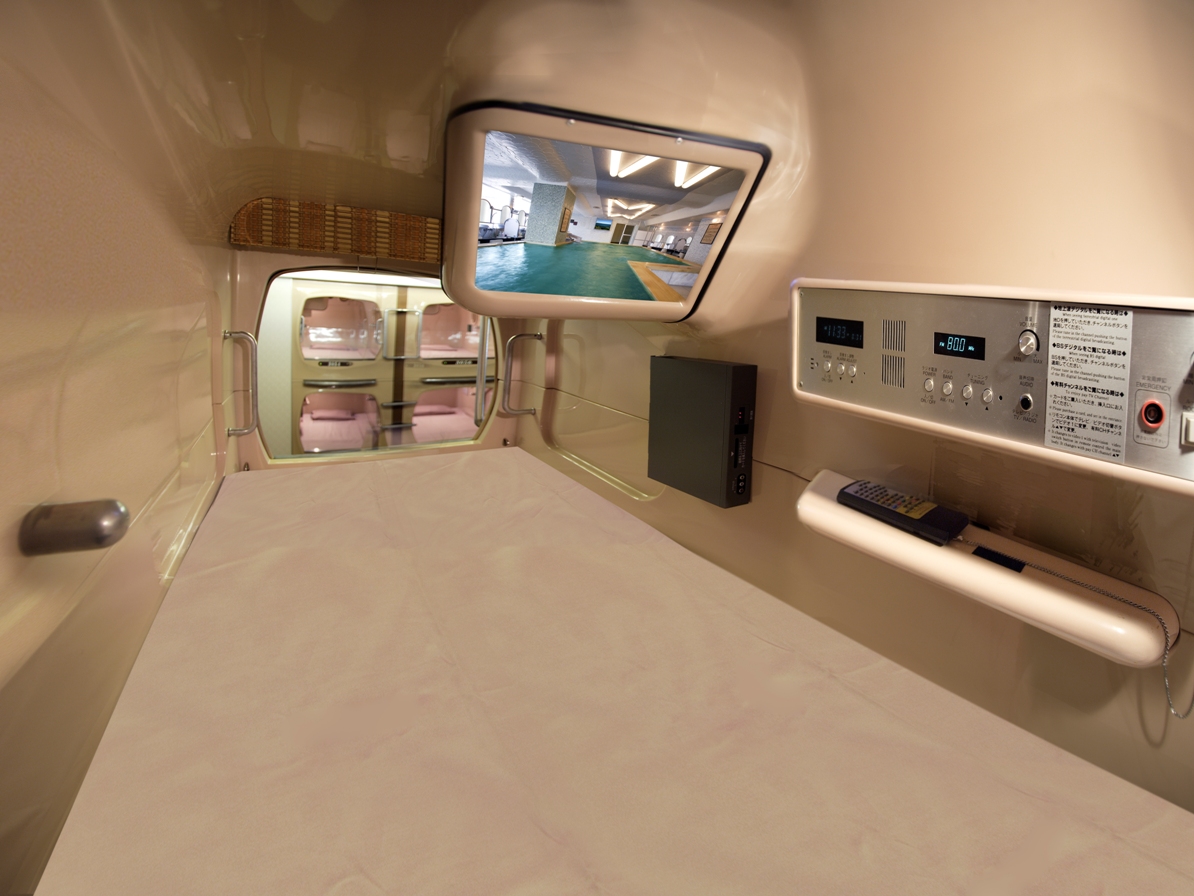
A capsule hotel is a type of hotel with a large number of extremely small ‘rooms’ (capsules) intended to provide cheap and basic overnight accommodation for guests not requiring the services offered by more conventional hotels. The guest space is reduced in size to a modular plastic or fiberglass block roughly 2 m by 1 m by 1.25 m. Most include a television, an electronic console, and wireless internet connection. Capsules are stacked side by side and two units top to bottom, with steps providing access to the second level rooms. Luggage is stored in a locker. Privacy is ensured by a curtain or a fiberglass door at the open end of the capsule. Washrooms are communal and some hotels include restaurants (or at least vending machines), pools, and other entertainment facilities.
This style of hotel accommodation was developed in Japan and has not gained popularity outside of the country, although Western variants known as ‘Pod hotels’ with larger accommodations and often private baths are being developed. Guests are asked not to smoke or eat in the capsules. Capsule hotels vary widely in size, some having only fifty or so capsules and others over 700. Many are used primarily by men. There are also capsule hotels with separate male and female sleeping quarters. Clothes and shoes are sometimes exchanged for a yukata (a casual summer kimono) and slippers on entry. A towel may also be provided. The benefit of these hotels is convenience and price, usually around ¥2000-4000 (US$26–52) a night.
Posted in Money, Technology, World |
Leave a Comment »
November 19, 2011
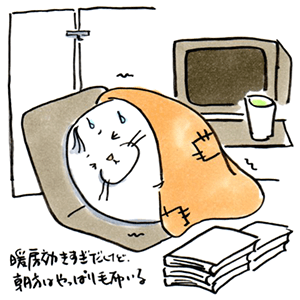
Net cafe refugees, also known as cyber-homeless, is a term for a growing class of people in Japan who do not own or rent a residence and thus have no permanent address and sleep in 24 hour Internet or manga cafés. Goods and services offered at these establishments has grown to include food, undergarments and other personal items, and showers. They are often used by commuters who miss the last train, but a growing number of people use net cafes as a temporary shelter. The fee of 1400-2400 yen (US $18-31) for a night—which may include free soft drinks, TV, comics and internet access—is less than for capsule hotels. Some cyber-homeless may also be freeters, a Japanese expression for people between the ages of 15 and 34 who lack full time employment or are unemployed, excluding housewives and students.
According to a Japanese government survey, those staying have little interest in manga or the Internet, and are instead using the place because of the low price relative to any of the competition for temporary housing, business hotels, capsule hotels, hostels, or any other option besides sleeping on the street. It was also estimated that about half of those staying have no job, while the other half work in low-paid temporary jobs, which paid around 100,000 yen ($1000) per month – lower than what is needed to rent an apartment and pay for transportation in a city like Tokyo.
Posted in Money, Technology, World |
Leave a Comment »
November 18, 2011


A fictional currency is some form of defined or alluded currency in works of fiction. The names of such units of currency are sometimes based on extant or historic currencies (e.g. ‘Altairian dollars’ or ‘Earth yen’) while others, such as ‘Kalganids’ in Asimov’s ‘Foundation’ series, may be wholly invented. A particularly common type, especially in science fiction, is electronically managed ‘credits.’ In some works of fiction, exchange media other than money are used. These are not currency as such, but rather nonstandard media of exchange used to avoid the difficulties of ensuring ‘double coincidence of wants’ in a barter system.
Authors have to take care when naming fictional currencies because of the associations between currency names and countries; recognizable names for currencies of the future may be used to imply how history has progressed, but would appear out of place in an entirely alien civilization. Historical fiction may need research. Writers need not explain the exact value of their fictional currencies or provide an exchange rate to modern money; they may rely on the intuitive grasp of their readers, for instance that one currency unit is probably of little value, but that millions of units will be worth a lot.
read more »
Posted in Art, Language, Money |
Leave a Comment »
November 18, 2011
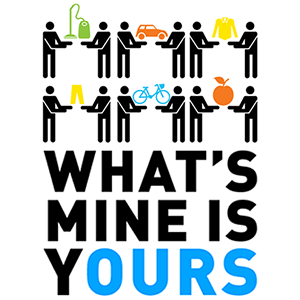
The term collaborative consumption is used to describe an economic model based on sharing, swapping, bartering, trading or renting access to products as opposed to ownership. Technology and peer communities are enabling these old market behaviors to be reinvented in ways and on a scale never possible before.
From enormous marketplaces such as eBay and Craigslist, to emerging sectors such as social lending (Zopa), peer-to-peer travel (CouchSurfing, Airbnb) and car sharing (Zipcar or peer-to-peer RelayRides), Collaborative Consumption is disrupting outdated modes of business and reinventing not just what people consume but how they consume it.
read more »
Posted in Money, Technology |
Leave a Comment »
November 17, 2011

A zoot suit is a suit with high-waisted, wide-legged, tight-cuffed, pegged trousers, and a long coat with wide lapels and wide padded shoulders. This style of clothing was popularized by African, Mexican, and Italian Americans during the late 1930s and the 1940s. It started during the Jazz Age in Harlem and slowly spread throughout other ethnic-neighborhoods across America. Malcolm X was known to have loved zoot suits in his early days as Detroit Red, a Harlem drug dealer, racketeer, and pimp. In Britain the bright-colored suits with velvet lapels worn by Teddy Boys (young men wearing clothes inspired by dandies) bore a slight resemblance to zoot suits in the length of the jacket. Often zoot suiters wear a felt hat with a long feather and pointy, French-style shoes. A young Malcolm X described the zoot suit as: ‘a killer-diller coat with a drape shape, reet pleats and shoulders padded like a lunatic’s cell.’ Zoot suits usually featured a watch chain dangling from the belt to the knee or below, then back to a side pocket.
The amount of material and tailoring required made them luxury items, so much so that the U.S. War Production Board said that they wasted materials that should be devoted to the World War II war effort. This extravagance, which many considered unpatriotic in wartime, was a factor in the Zoot Suit Riots, a series of riots in 1943 that erupted in Los Angeles between white sailors and Marines stationed throughout the city and Latino youths, who were recognizable by the zoot suits they favored. Wearing the oversized suit was a declaration of freedom and self-determination, even rebelliousness. The word zoot probably comes from a reduplication of suit. The creation and naming of the zoot suit have been variously attributed to Harold C. Fox, a Chicago clothier and big-band trumpeter; Louis Lettes, a Memphis tailor; and Nathan (Toddy) Elkus, a Detroit retailer. Zoot suits were initially called drapes.
Posted in Art, Money, Politics |
Leave a Comment »
November 16, 2011
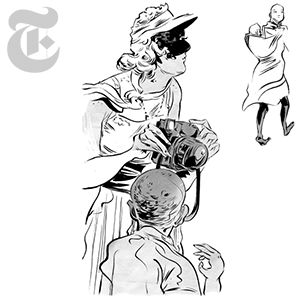
Slum tourism is a type of tourism that involves visiting impoverished areas, which has become increasingly prominent in several developing countries like India, Brazil, Kenya, and Indonesia. The Oxford English Dictionary found the first use of the word ‘slumming’ in 1884. In London, people visited neighborhoods such as Whitechapel or Shoreditch to see how the poor lived. In 1884 the concept moved to New York City to the Bowery and the Five Points area of the Lower East Side were visited to see ‘how the other half lives.’ In the 1980s in South Africa ‘township tours’ were organized to educate local governments on how the black population lived. It then attracted international tourists that wanted to support and learn more about apartheid. Prior to the release of ‘Slumdog Millionaire’ in 2008, Mumbai was a slum tourist destination.
Critics say slum tourism, like poorism, is likened to a kind of voyeurism, exploiting people less fortunate, snapping pictures and leaving nothing in return. Some tours do use portions of the profits to help out however. They have also courted controversy because of disputes about their safety, and fears that they misrepresent local culture.
Posted in Money, Politics, World |
Leave a Comment »
November 16, 2011

Plastic shaman [shey-muhn] is a pejorative colloquialism applied to individuals who are attempting to pass themselves off as shamans, holy people, or other traditional spiritual leaders, but who have no genuine connection to the traditions or cultures they claim to represent. In some cases, the ‘plastic shaman’ may have some genuine cultural connection, but is seen to be exploiting that knowledge for ego, power or money.
They are believed by their critics to use the mystique of these cultural traditions, and the legitimate curiosity of sincere seekers, for personal gain. In some cases, exploitation of students and traditional culture may involve the selling of fake ‘traditional’ spiritual ceremonies, fake artifacts, fictional accounts in books, illegitimate tours of sacred sites, and often the chance to buy spiritual titles. In Nepal, the term ‘Chicken Shaman’ is used.
read more »
Posted in Money, Philosophy, Sex |
Leave a Comment »
November 13, 2011
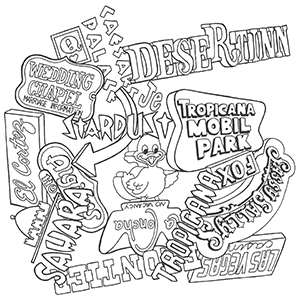
The Neon Museum in Las Vegas features signs from old casinos and other businesses displayed outdoors on over 6 acres. The museum is restoring the La Concha Motel lobby as its visitor center. For many years, the Young Electric Sign Company stored many of these old signs in their ‘boneyard.’ The signs were slowly being destroyed by exposure to the elements. The museum is restoring the signs and placing them around the Fremont Street Experience. The Neon Museum maintains twelve restored signs throughout Downtown Las Vegas. Some can be seen on a self-guided visitors walk through the Fremont Street Experience. Three others have been added in recent years to the median of Las Vegas Boulevard in front of the eventual site for the Neon Museum itself.
The Neon Museum is located on Las Vegas Boulevard and Bonanza, across the street from Cashman Center and along the Las Vegas downtown museum corridor. The boneyard preserves over 150 neon signs from the Nevada area. While the core of the collection is from the old Yesco Boneyard, private donations and loans have expanded the collection to the current size. Important historical pieces in the boneyard include the signage from the Moulin Rouge Hotel, the Stardust, Desert Inn and Caesar’s Palace as well as many others. Not just neon signage, the museum also houses fiberglass sculptures including a giant skull from the Treasure Island among others.
Posted in Art, Money, Technology |
Leave a Comment »
November 13, 2011
Young Electric Sign Company (YESCO) is a privately owned manufacturer of electric signs based in Salt Lake City. The company was founded by Thomas Young in 1920 and today has divisions and branches in 10 western states, as well as in Louisiana, Mississippi and Texas. YESCO offers a comprehensive range of services for electronic signs, including design, fabrication, installation and ongoing maintenance.
Many notable sign projects have been produced by YESCO. These include the NBC Experience globe in New York City, the historic El Capitan Theatre and Wax Museum marquees in Hollywood, the most recent incarnation of the Reno Arch and numerous icons in Las Vegas, such as Vegas Vic, the Fremont Street Experience, the Astrolabe in The Venetian and the recent Wynn Las Vegas resort sign.
read more »
Posted in Art, Money, Technology |
Leave a Comment »
November 13, 2011

The Stardust was a casino resort located on the Las Vegas Strip, which opened in 1958, although most of the modern casino complex (including the main 32-story tower) was built in 1991. The Stardust officially closed in 2006, after operating continuously for 48 years. It was imploded a year later, and was the youngest undamaged high-rise building to ever be demolished at the time. Construction started immediately for Echelon Place, which was planned to replace The Stardust, but development was suspended in 2008, and remains suspended as 2011.
The famed Stardust sign became a symbol of Las Vegas. Young Electric Sign Company was hired to fabricate the sign. Kermit Wayne’s design was selected for both the façade and the roadside signs. Although Moe Dalitz (bootlegger, racketeer, and philanthropist who was one of the major figures who helped shape Las Vegas), who took over from original developer Tony Cornero upon his death, said it was from his original plans, the sign was really part of Cornero’s original concept.
read more »
Posted in Games, Money, Politics |
1 Comment »
November 12, 2011
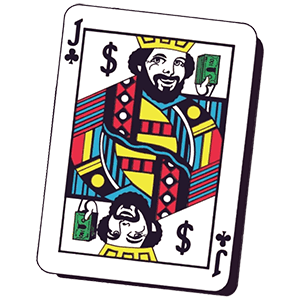
Hole carding refers to obtaining knowledge of cards that are supposed to be hidden from view in card games. The term is usually applied to blackjack but can apply to other games with hidden hole cards, like three card poker and Caribbean stud poker.
So long as it does not involve the use of a device like a mirror or actions like touching the dealer’s cards, in most jurisdictions hole carding is a legal form of advantage gambling. In other games, like stud poker, casinos normally have rules against ‘rubbernecking’ (having a confederate stand behind an opponent to signal hole cards).
read more »
Posted in Games, Money |
Leave a Comment »



 The Daily Omnivore