November 23, 2011
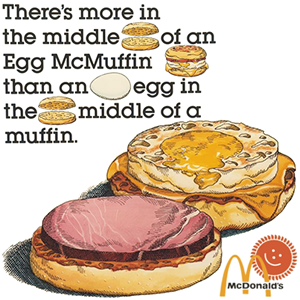
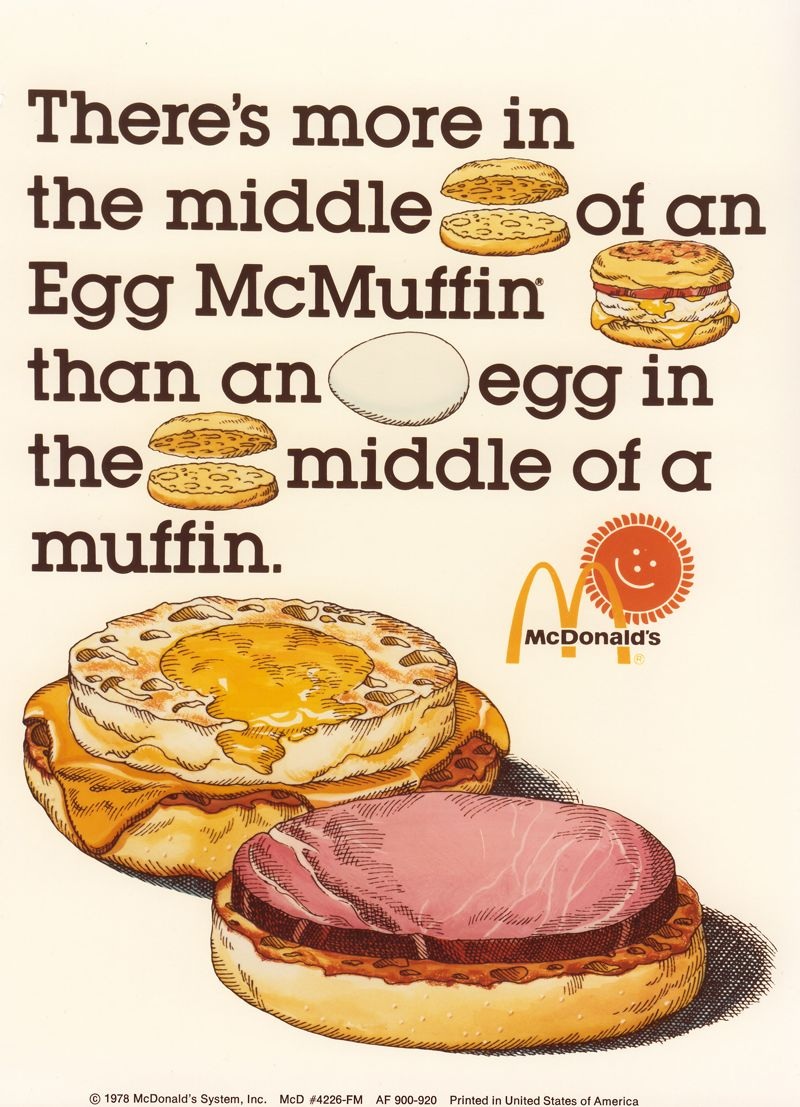
The McMuffin is a family of breakfast sandwiches in various sizes and configurations, sold by the fast-food restaurant chain McDonald’s. It was invented by the late McDonald’s franchisee Herb Peterson in the late 1960s and was introduced nationwide in 1972. In the US and Canada the standard McMuffin consists of a slice of Canadian bacon, a griddle-fried egg, and a slice of American cheese on a toasted and buttered English muffin. The round shape of the egg is made by cooking it in a teflon coated ring. Peterson first presented the Egg McMuffin at a Santa Barbara franchise without the knowledge of McDonald’s Corporate, which at the time served only lunch and dinner at all their locations.
When Corporate discovered Mr. Peterson’s unauthorized breakfast offerings, it initially reprimanded him and threatened him with a number of penalties for breaking the franchise agreement. Today, several countries like Hong Kong serve Egg McMuffins around the clock, due to the prominent use of the egg in meals other than breakfast in those regions. US restaurants usually restrict the item to the breakfast menu. This is due mainly because the grill temperature for the beef patties and the eggs are significantly different from each other.
Posted in Food, Money |
Leave a Comment »
November 22, 2011
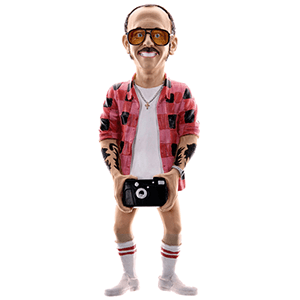
Terry Richardson (b. 1965) is an American fashion photographer. Richardson was born in New York City, the son of Bob Richardson, a fashion photographer who struggled with schizophrenia and drug abuse. Richardson was raised in Hollywood. He was shy as a teenager and at some times deemed ‘completely lacking in social skills.’ He played bass guitar in the punk rock band The Invisible Government for 5 years. Richardson began photography when the band broke up and his mother introduced him to Tony Kent, a photographer who hired him as an assistant.
Richardson’s photographs often contain graphic sexual subject matter. Richardson has shot advertisements for fashion designers and editorial photographs. His alleged attitude towards models has been criticized by Danish model and filmmaker Rie Rasmussen and others, who have accused Richardson of exploiting and sexually abusing the models he photographs.
Posted in Art, Money, Sex |
Leave a Comment »
November 22, 2011

Glamorama is a novel by American writer Bret Easton Ellis, published in 1998. Unlike Ellis’ previous novels, Glamorama is set in and satirizes the 1990s, specifically celebrity culture and consumerism. Ellis wanted to write a Stephen King-style ghost story novel (which would eventually become ‘Lunar Park’); finding it difficult at the time, he began work on the other novel which he had in mind, a Robert Ludlum-style thriller, with the intention of using one of his own vapid characters who lack insight as the narrator. The novel is a satire of modern celebrity culture, featuring models-turned-terrorists.
A character remarks, ‘basically, everyone was a sociopath…and all the girls’ hair was chignoned.’ (A chignon is an arrangement of long hair in a roll or knot at the back of the head). The novel plays upon the conspiracy thriller conceit of someone ‘behind all the awful events,’ to dramatize the revelation of a world of random horror. The lack of resolution contributes to Ellis’ artistic effect. The obsession with beauty is reflected in consistent namedropping; this satirizes Victor’s obsession with looks, and perhaps is indicative of the author’s own attraction to glamor.
read more »
Posted in Art, Language, Money |
Leave a Comment »
November 22, 2011

A motivational poster (or affirmation poster or inspirational poster) is a type of poster commonly designed for use in schools and offices. The intent of motivational posters is to make people achieve more, or to think differently about the things that they may be learning or doing. Motivational posters can have behavioral effects. For example, the University of Glasgow found in one study that their placement of a motivational poster that promotes stair use in front of an escalator and a parallel staircase, in an underground station, doubled the amount of stair use.
This kind of poster has been repeatedly parodied, and parody motivational posters have become an Internet meme. One famous motivational poster features a kitten hanging from a tree branch along with the phrase ‘Hang in There, Baby!’ This has been the target of various reproductions and parodies, such as an appearance on ‘The Simpsons’ episode ‘The Twisted World of Marge Simpson’ where Marge Simpson notices the copyright date (1968) and comments, ‘…determined or not, that cat must be long dead. That’s kind of a downer.’ Despair, Inc. has made a business out of such parody and cynical posters, with ‘demotivational posters’ ranging from a picture of a tree bent over by wind with the caption ‘ADVERSITY: That which does not kill me postpones the inevitable.’ to a picture of a sinking ship with the caption ‘MISTAKES: It could be that the purpose of your life is only to serve as a warning to others.’
Posted in Humor, Language, Money |
Leave a Comment »
November 21, 2011
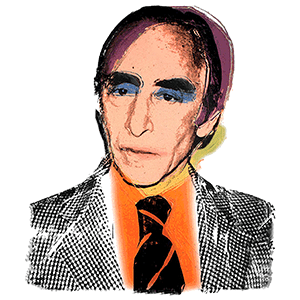
Leo Castelli (1907 – 1999), born Leo Krausz, was an American art dealer whose gallery showcased cutting edge Contemporary art for five decades. Castelli showed Surrealism, Abstract Expressionism, Neo-Dada, Pop Art, Op Art, Color field painting, Hard-edge painting, Lyrical Abstraction, Minimal Art, Conceptual Art, and Neo-expressionism, among other movements. Leo Castelli was born at Trieste, of Italian and Austro-Hungarian Jewish origin. Castelli’s first American curatorial effort was the famous Ninth Street Show of 1951, a seminal event of Abstract Expressionism.
In 1957, he opened the Leo Castelli Gallery in a townhouse on 77th Street between Madison and Fifth Avenues. Initially the gallery showcased European Surrealism, Wassily Kandinsky, and other European artists. However the gallery also exhibited American Abstract Expressionism. Jackson Pollock and Willem de Kooning were some artists who were included in group shows. In 1958, Robert Rauschenberg and Jasper Johns joined the gallery, signaling a turning away from Abstract Expressionism, towards Pop Art, Minimalism and Conceptual Art. From the early 1960s through the late 70s, Frank Stella, Roy Lichtenstein, Andy Warhol, and Ed Ruscha joined the stable of Castelli artists.
Posted in Art, Money |
Leave a Comment »
November 20, 2011

Famous for being famous, in popular culture terminology, refers to someone who attains celebrity status for no particular identifiable reason, or who achieves fame through association with a celebrity. The term is a pejorative, suggesting that the individual has no particular talents or abilities. Even when their fame arises from a particular talent or action on their part, the term will sometimes still apply if their fame is perceived as disproportionate to what they earned through their own talent or work.
The term originates from an analysis of the media dominated world called ‘The Image: A Guide to Pseudo-events in America’ (1961), by historian and social theorist Daniel J. Boorstin. In it, he defined the celebrity as ‘a person who is known for his well-knownness.’ He further argued that the graphic revolution in journalism and other forms of communication had severed fame from greatness, and that this severance hastened the decay of fame into mere notoriety. Over the years, the phrase has been glossed as ‘a celebrity is someone who is famous for being famous’.
read more »
Posted in Humor, Language, Money |
1 Comment »
November 19, 2011

The term shunpiking comes from the word shun, meaning ‘to avoid,’ and pike, a term referring to turnpikes, which are roads that require payment of a toll to travel on them. People who often avoid toll roads sometimes call themselves shunpikers. Shunpiking has also come to mean an avoidance of major highways (regardless of tolls) in preference for bucolic and scenic interludes along lightly traveled country roads.
The word ‘shunpike’ may have its origins in post-colonial New Hampshire: When the ‘Turnpike’ was built, around 1810 or so, by the Hampton Causeway Turnpike Corporation, a toll was charged to cross it at Taylor’s River. Not content with the payment of a toll, some of the residents got together and built a slight bridge called the ‘Shunpike’ across the River, some distance west of the Turnpike bridge, where travelers and teamsters could cross without charge. This continued on until 1826, when the toll on the Turnpike was discontinued and has remained a free road to this day
read more »
Posted in Language, Money, World |
Leave a Comment »
November 19, 2011
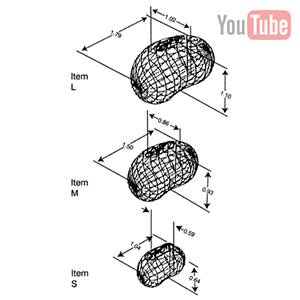
Neuticles are prosthetic testicular implants for neutered dogs and other domestic animals. Creator Gregg Miller won the 2005 Ig Nobel Prize in Medicine, a parody of the real Nobel Prize, for his invention. As of 2007, more than 240,000 pairs of the patented product had been sold, in all 50 U.S. states and 49 countries. Miller developed the idea for Neuticles in 1993, after his bloodhound Buck caught the scent of a bitch in heat, disappeared and turned up days later 30 miles away. Miller had Buck neutered to stop his wandering. Following the procedure, when Buck went to clean himself, he realized something was wrong and acted ‘extremely depressed’ for three days.
The first commercial Neuticles were implanted in 1995. Neuticles are made from Food and Drug Administration–approved materials and are designed to replicate the weight and feel of the animal’s natural testicles. They are made of solid silicone and are not gel-filled and therefore cannot leak. Several companies have tried to copy the patented prosthetic. CTI Corporation, which manufactures Neuticles, cited an investigation revealing that companies in New York and California were pirating Neuticles. CTI warned of health risks to the animals getting the pirate product.
Posted in Humor, Money, Sex |
1 Comment »
November 19, 2011
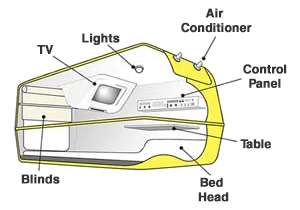

A capsule hotel is a type of hotel with a large number of extremely small ‘rooms’ (capsules) intended to provide cheap and basic overnight accommodation for guests not requiring the services offered by more conventional hotels. The guest space is reduced in size to a modular plastic or fiberglass block roughly 2 m by 1 m by 1.25 m. Most include a television, an electronic console, and wireless internet connection. Capsules are stacked side by side and two units top to bottom, with steps providing access to the second level rooms. Luggage is stored in a locker. Privacy is ensured by a curtain or a fiberglass door at the open end of the capsule. Washrooms are communal and some hotels include restaurants (or at least vending machines), pools, and other entertainment facilities.
This style of hotel accommodation was developed in Japan and has not gained popularity outside of the country, although Western variants known as ‘Pod hotels’ with larger accommodations and often private baths are being developed. Guests are asked not to smoke or eat in the capsules. Capsule hotels vary widely in size, some having only fifty or so capsules and others over 700. Many are used primarily by men. There are also capsule hotels with separate male and female sleeping quarters. Clothes and shoes are sometimes exchanged for a yukata (a casual summer kimono) and slippers on entry. A towel may also be provided. The benefit of these hotels is convenience and price, usually around ¥2000-4000 (US$26–52) a night.
Posted in Money, Technology, World |
Leave a Comment »
November 19, 2011
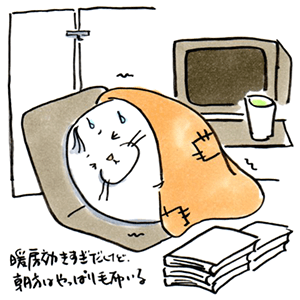
Net cafe refugees, also known as cyber-homeless, is a term for a growing class of people in Japan who do not own or rent a residence and thus have no permanent address and sleep in 24 hour Internet or manga cafés. Goods and services offered at these establishments has grown to include food, undergarments and other personal items, and showers. They are often used by commuters who miss the last train, but a growing number of people use net cafes as a temporary shelter. The fee of 1400-2400 yen (US $18-31) for a night—which may include free soft drinks, TV, comics and internet access—is less than for capsule hotels. Some cyber-homeless may also be freeters, a Japanese expression for people between the ages of 15 and 34 who lack full time employment or are unemployed, excluding housewives and students.
According to a Japanese government survey, those staying have little interest in manga or the Internet, and are instead using the place because of the low price relative to any of the competition for temporary housing, business hotels, capsule hotels, hostels, or any other option besides sleeping on the street. It was also estimated that about half of those staying have no job, while the other half work in low-paid temporary jobs, which paid around 100,000 yen ($1000) per month – lower than what is needed to rent an apartment and pay for transportation in a city like Tokyo.
Posted in Money, Technology, World |
Leave a Comment »
November 18, 2011


A fictional currency is some form of defined or alluded currency in works of fiction. The names of such units of currency are sometimes based on extant or historic currencies (e.g. ‘Altairian dollars’ or ‘Earth yen’) while others, such as ‘Kalganids’ in Asimov’s ‘Foundation’ series, may be wholly invented. A particularly common type, especially in science fiction, is electronically managed ‘credits.’ In some works of fiction, exchange media other than money are used. These are not currency as such, but rather nonstandard media of exchange used to avoid the difficulties of ensuring ‘double coincidence of wants’ in a barter system.
Authors have to take care when naming fictional currencies because of the associations between currency names and countries; recognizable names for currencies of the future may be used to imply how history has progressed, but would appear out of place in an entirely alien civilization. Historical fiction may need research. Writers need not explain the exact value of their fictional currencies or provide an exchange rate to modern money; they may rely on the intuitive grasp of their readers, for instance that one currency unit is probably of little value, but that millions of units will be worth a lot.
read more »
Posted in Art, Language, Money |
Leave a Comment »
November 18, 2011
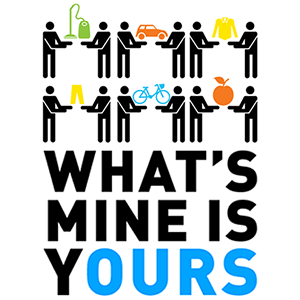
The term collaborative consumption is used to describe an economic model based on sharing, swapping, bartering, trading or renting access to products as opposed to ownership. Technology and peer communities are enabling these old market behaviors to be reinvented in ways and on a scale never possible before.
From enormous marketplaces such as eBay and Craigslist, to emerging sectors such as social lending (Zopa), peer-to-peer travel (CouchSurfing, Airbnb) and car sharing (Zipcar or peer-to-peer RelayRides), Collaborative Consumption is disrupting outdated modes of business and reinventing not just what people consume but how they consume it.
read more »
Posted in Money, Technology |
Leave a Comment »