November 3, 2011

Since 1973, the NFL has maintained a blackout policy that states that a home game cannot be televised locally if it is not sold out 72 hours prior to its start time. The policy is intended to encourage full attendance. Prior to 1973, all games were blacked out in the home city of origin regardless of whether they were sold out. This policy, dating back to the NFL’s emerging television years, resulted in home-city blackouts even during championship games.
For instance, the 1958 ‘Greatest Game Ever Played’ between the Baltimore Colts and New York Giants was unavailable to New York fans despite the sellout. Many fans rented hotel rooms in Connecticut to watch the game on Hartford TV, a practice that continued for Giants games through 1972. Similarly, all Super Bowl games prior to the seventh edition were unavailable in the host city’s market.
read more »
Posted in Games, Money |
Leave a Comment »
November 3, 2011

The lipstick effect is the theory that when facing an economic crisis consumers will be more willing to buy less costly luxury goods. Instead of buying expensive fur coats, people will buy expensive lipstick. In the time after the 9/11 attacks on the USA lipstick sales rose precipitously.
The underlying assumption is that consumers will buy luxury goods even if there is a crisis. When consumer trust in the economy is dwindling, consumers will buy goods that have less impact on their available funds. Outside the cosmetics market, consumers could be tempted by expensive beer or smaller, less costly gadgets.
Posted in Money |
Leave a Comment »
November 3, 2011

The third-person effect hypothesis states that a person exposed to a persuasive communication in the mass media sees it as having a greater effect on others than on himself or herself. This is known as the perceptual hypothesis, but there is also a behavioral hypothesis predicting that perceiving others as more vulnerable increases support for restrictions on mass media. The third-person effect hypothesis also argues that people are compelled to take action after being exposed to a persuasive message but this action might not be due to the message itself but to the anticipation of the reaction of others. This action is unpredictable and it might be either in conformity with the message or counter to it.
Usually, the effects considered are about general media influence, but type of the message also affects the effect size. Messages implying undesirable consequences increase the effect size and messages with desirable consequences decrease or even reverse the effect, as in someone believing that they are more able than others to follow a promoted healthy diet. The third-person effect, specially its behavioral hypothesis, is important to issues of censorship. Censors seldom admit to having been adversely affected by the information they prohibit even if they have been exposed to it numerous times. Usually, they claim, it is the general public that needs to be protected, not them.
Posted in Money, Science |
1 Comment »
October 31, 2011
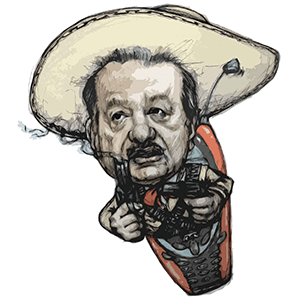
Carlos Slim (b. 1940) is a Mexican businessman, and the richest person in the world, worth more than US$60 billion. He owns the Mexican phone company Telmex, which provides a telephone service to most Mexicans. After graduating, Slim expanded on his father’s ownings of real estate in Mexico City. By age 26, he was worth $40 million. During the 1980s and 1990s, Slim bought several companies that were bankrupt or being privatized. Slim owns about 7% of the New York Times.
The Mexican magnate’s growing fortune has caused a controversy because it has been amassed in a developing country where per capita income does not surpass $14,500 a year, and nearly 17% of the population lives in poverty. Critics claim that Slim is a monopolist, pointing to Telmex’s control of 90% of the Mexican landline telephone market. Slim’s wealth is the equivalent of roughly 5% of Mexico’s annual economic output. Telmex, of which 49.1% is owned by Slim and his family, charges among the highest usage fees in the world, according to the Organisation for Economic Co-operation and Development.
read more »
Posted in Money, Technology, World |
Leave a Comment »
October 29, 2011
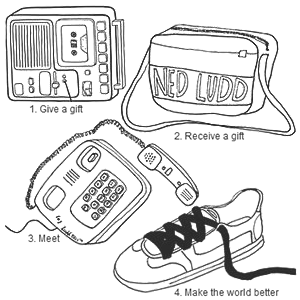
DaruDar is an international community where people give away things, their skills and time to each other for absolutely free requiring nothing in return. The community is based on principles of self-organization. Main condition of participation is following the rules of gift giving and communication set on the site. The global mission of DaruDar is to create a widespread social practice of gift-giving, to make it a daily and routine act. Words like ‘lot,’ ‘exchange,’ ‘freebie,’ ‘junk,’ or ‘crap’ are considered obscene on DaruDar. The service was launched in Russian in 2008. It was created by four friends who had worked with Habrahabr project earlier, a collaborative blog. They were inspired by flashmobs, Russian philosopher Peter Kropotkin and Gandhi.
Darudar users call themselves comembers (‘community members’). DaruDar gift is a thing, skill or service of a comember that he/she wants to give away to someone. In order to offer a gift a comember creates a publication describing what he gives. Other comembers can wish it. Later the gift giver chooses someone to promise their gift. Every gift can be commented, wished, promised and thanked. Only those offers which simultaneously satisfy all three of the following conditions and cannot exist without them should be considered gifts on Darudar: It can be wished; It can be promised; and It can be given.
Posted in Money, Technology, World |
Leave a Comment »
October 29, 2011

CouchSurfing is a corporation based in San Francisco that offer its users hospitality exchange and social networking services. It recently suffered significant criticism from thousands of users after becoming a for-profit corporation after having been been a non-profit for many years. Couchsurfing is a neologism referring to the practice of moving from one friend’s house to another, sleeping in whatever spare space is available, floor or couch, generally staying a few days before moving on to the next house.
The CouchSurfing project was conceived by Casey Fenton in 1999. According to Fenton’s account, the idea arose after finding an inexpensive flight from Boston to Iceland. Fenton randomly e-mailed 1,500 students from the University of Iceland asking if he could stay. He ultimately received more than 50 offers of accommodation. On the return flight to Boston, he began to develop the ideas that would underpin the CouchSurfing project.
read more »
Posted in Money, Technology, World |
Leave a Comment »
October 28, 2011

A freak show is an exhibition of biological rarities, referred to as ‘freaks of nature.’ Typical features would be physically unusual humans, such as those uncommonly large or small, those with both male and female secondary sexual characteristics, people with other extraordinary diseases and conditions, and performances that are expected to be shocking to the viewers. Heavily tattooed or pierced people have sometimes been seen in freak shows, as have attention-getting physical performers such as fire-eating and sword-swallowing acts.
Freak shows were popular in the United States from the mid 19th to mid 20th centuries, and were often, but not always, associated with circuses and carnivals. Some shows also exhibited deformed animals (such as two-headed cows, one-eyed pigs, and four-horned goats) and famous hoaxes, or simply ‘science gone wrong’ exhibits (such as deformed babies).
read more »
Posted in Health, Money |
1 Comment »
October 28, 2011
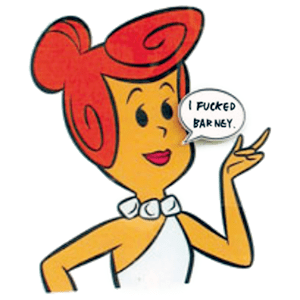
The Bubble Project, as proclaimed by its manifesto, aims to counteract corporate marketing and advertisement messages in public spaces. The project was conceived by Ji Lee, an artist and art director who originally printed 15,000 stickers that look like speech bubbles used in comic strips. He posts these blank speech bubbles on top of advertisements throughout New York City allowing anyone who sees them to write in their comments and thoughts.
By filling in the bubbles people engage in the project and transform ‘the corporate monologue into an open dialogue.’ The comments are photographed and posted on the project’s website. The Bubble Project has quickly gained popularity and independent efforts have sprung up in other parts of the world in countries such as Italy and Argentina.
Posted in Humor, Money, Politics |
Leave a Comment »
October 28, 2011


A status symbol is a perceived visible, external denotation of one’s social position and perceived indicator of economic or social status. Many luxury goods are often considered status symbols. Status symbol is also a sociological term – as part of social and sociological symbolic interactionism – relating to how individuals and groups interact and interpret various cultural symbols. What is considered a status symbol will differ between countries and states, based on the states of their economic and technological development, and common status symbols will change over time. For example, before the invention of the printing press, having a large collection of books was considered a status symbol. After the advent of the printing press, having books was more common among average citizens, and so the possession of books was less of a status symbol. In the past, pearls and jade were major status symbols. Another common status symbol of the past which is still somewhat present today is heraldry, or one’s family name.
Status symbols also indicate the cultural values of a society. For example, in a commercial society, having money or wealth and things that can be bought by wealth, such as cars, houses, or fine clothing, are considered status symbols. In a society that values honor or bravery, a battle scar would be more of a status symbol. The condition of one’s body can be a status symbol. In times past, when workers did physical labor outdoors under the sun and often had little food, being pale and fat was a status symbol, indicating wealth and prosperity (through having enough food and not having to do manual labor). Now that workers usually do less-physical work indoors and find little time for exercise, being tanned and thin is often a status symbol in many cultures. In the 1990s, foreign cigarettes in China, where a pack of Marlboro can cost one day’s salary for some workers, were seen as a status symbol. Cellphone usage in Turkey had been considered a status symbol in early 1990s.
Posted in Money |
Leave a Comment »
October 28, 2011
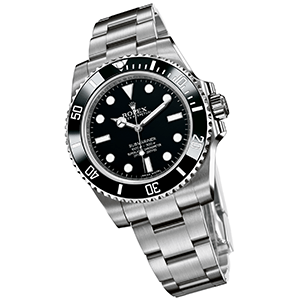
Rolex is a Swiss watchmaking manufacturer of high-quality, luxury wristwatches. Rolex watches are popularly regarded as status symbols. Rolex is also the largest single luxury watch brand, producing about 2,000 watches per day, with estimated revenues of around US$3 billion in 2003. Among the company’s innovations are: the first waterproof wristwatch (Oyster, 1923); the first wristwatch with an automatically changing date on the dial (Rolex Datejust, 1945); the first wristwatch with an automatically changing day and date on the dial (Rolex Day-Date); the first wristwatch case waterproof to 100 m (330 ft) (Rolex Oyster Perpetual Submariner); and the first wristwatch to show two time zones at once (Rolex GMT Master, 1954).
Rolex produced specific models suitable for the extremes of deep-sea diving, mountain climbing and aviation. Early sports models included the Rolex Submariner and the Rolex Oyster Perpetual Date Sea Dweller. The latter watch has a helium release valve, co-invented with Swiss watchmaker Doxa, to release helium gas build-up during decompression. The Explorer and Explorer II were developed specifically for explorers who would navigate rough terrain, such as the world famous Mount Everest expeditions. Another iconic model is the Rolex GMT Master, which was originally developed in 1954 at the request of Pan Am Airways to assist its pilots with the problem of crossing multiple time zones when on transcontinental flights (GMT standing for Greenwich Mean Time).
read more »
Posted in Money, Technology |
Leave a Comment »
October 28, 2011
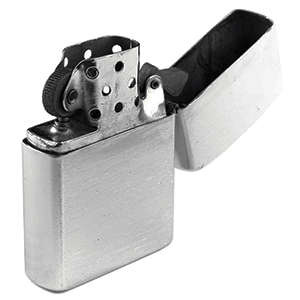
A Zippo lighter is a refillable, metal lighter manufactured by Zippo Manufacturing Company of Pennsylvania. Thousands of different styles and designs have been made in the seven decades since their introduction including military ones for specific regiments. George G. Blaisdell founded Zippo Manufacturing Company in 1932, and produced the first Zippo lighter in early 1933, being inspired by an Austrian cigarette lighter of similar design. It got its name because Blaisdell liked the sound of the word ‘zipper’ and ‘zippo’ sounded more modern.
Zippo lighters became popular in the United States military, especially during World War II when Zippo ceased production of lighters for consumer markets and dedicated all manufacturing to the U.S. military. The Zippo at that time was made of brass, but as this commodity was unobtainable, Zippo used steel during the war years. While the Zippo Manufacturing Company never had an official contract with the military, soldiers and armed forces personnel insisted that Base exchange (BX) stores carry this sought-after lighter. While it had previously been common to have Zippos with authorized badges, unit crests and division insignia, it became popular among the American soldiers of the Vietnam War, to get their Zippos engraved with personal mottos. These lighters are now sought after collectors items and popular souvenirs for visitors to Vietnam.
read more »
Posted in Money, Technology, War |
Leave a Comment »
October 28, 2011
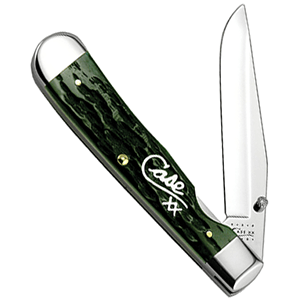
W.R. Case & Sons Cutlery Company is an American manufacturer of traditional pocketknives. The company originated in Little Valley, New York around the turn of the 20th century before relocating to its current home, Bradford, Pennsylvania, in 1905. The company’s namesake, William Russell Case, first made knives with his brothers under the name, Case Brothers Cutlery Company. His son, John Russell (‘Russ’) Case, worked as a salesman for his father’s company before founding W.R. Case & Sons.
The company’s roots extend back to 1889, when the Case brothers – William Russell (W.R.), Jean, John and Andrew Case, formerly of the Cattaraugus Cutlery Company – began selling cutlery from the back of a wagon in various small western New York villages. In January 1900, the brothers incorporated to form Case Brothers Cutlery Company.
read more »
Posted in Games, Money, War |
Leave a Comment »


 The Daily Omnivore