October 28, 2011


A status symbol is a perceived visible, external denotation of one’s social position and perceived indicator of economic or social status. Many luxury goods are often considered status symbols. Status symbol is also a sociological term – as part of social and sociological symbolic interactionism – relating to how individuals and groups interact and interpret various cultural symbols. What is considered a status symbol will differ between countries and states, based on the states of their economic and technological development, and common status symbols will change over time. For example, before the invention of the printing press, having a large collection of books was considered a status symbol. After the advent of the printing press, having books was more common among average citizens, and so the possession of books was less of a status symbol. In the past, pearls and jade were major status symbols. Another common status symbol of the past which is still somewhat present today is heraldry, or one’s family name.
Status symbols also indicate the cultural values of a society. For example, in a commercial society, having money or wealth and things that can be bought by wealth, such as cars, houses, or fine clothing, are considered status symbols. In a society that values honor or bravery, a battle scar would be more of a status symbol. The condition of one’s body can be a status symbol. In times past, when workers did physical labor outdoors under the sun and often had little food, being pale and fat was a status symbol, indicating wealth and prosperity (through having enough food and not having to do manual labor). Now that workers usually do less-physical work indoors and find little time for exercise, being tanned and thin is often a status symbol in many cultures. In the 1990s, foreign cigarettes in China, where a pack of Marlboro can cost one day’s salary for some workers, were seen as a status symbol. Cellphone usage in Turkey had been considered a status symbol in early 1990s.
Posted in Money |
Leave a Comment »
October 28, 2011
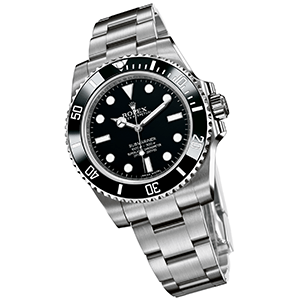
Rolex is a Swiss watchmaking manufacturer of high-quality, luxury wristwatches. Rolex watches are popularly regarded as status symbols. Rolex is also the largest single luxury watch brand, producing about 2,000 watches per day, with estimated revenues of around US$3 billion in 2003. Among the company’s innovations are: the first waterproof wristwatch (Oyster, 1923); the first wristwatch with an automatically changing date on the dial (Rolex Datejust, 1945); the first wristwatch with an automatically changing day and date on the dial (Rolex Day-Date); the first wristwatch case waterproof to 100 m (330 ft) (Rolex Oyster Perpetual Submariner); and the first wristwatch to show two time zones at once (Rolex GMT Master, 1954).
Rolex produced specific models suitable for the extremes of deep-sea diving, mountain climbing and aviation. Early sports models included the Rolex Submariner and the Rolex Oyster Perpetual Date Sea Dweller. The latter watch has a helium release valve, co-invented with Swiss watchmaker Doxa, to release helium gas build-up during decompression. The Explorer and Explorer II were developed specifically for explorers who would navigate rough terrain, such as the world famous Mount Everest expeditions. Another iconic model is the Rolex GMT Master, which was originally developed in 1954 at the request of Pan Am Airways to assist its pilots with the problem of crossing multiple time zones when on transcontinental flights (GMT standing for Greenwich Mean Time).
read more »
Posted in Money, Technology |
Leave a Comment »
October 28, 2011
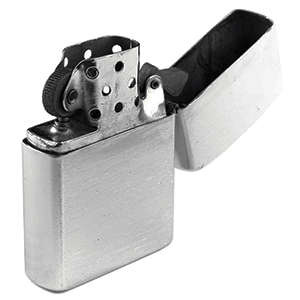
A Zippo lighter is a refillable, metal lighter manufactured by Zippo Manufacturing Company of Pennsylvania. Thousands of different styles and designs have been made in the seven decades since their introduction including military ones for specific regiments. George G. Blaisdell founded Zippo Manufacturing Company in 1932, and produced the first Zippo lighter in early 1933, being inspired by an Austrian cigarette lighter of similar design. It got its name because Blaisdell liked the sound of the word ‘zipper’ and ‘zippo’ sounded more modern.
Zippo lighters became popular in the United States military, especially during World War II when Zippo ceased production of lighters for consumer markets and dedicated all manufacturing to the U.S. military. The Zippo at that time was made of brass, but as this commodity was unobtainable, Zippo used steel during the war years. While the Zippo Manufacturing Company never had an official contract with the military, soldiers and armed forces personnel insisted that Base exchange (BX) stores carry this sought-after lighter. While it had previously been common to have Zippos with authorized badges, unit crests and division insignia, it became popular among the American soldiers of the Vietnam War, to get their Zippos engraved with personal mottos. These lighters are now sought after collectors items and popular souvenirs for visitors to Vietnam.
read more »
Posted in Money, Technology, War |
Leave a Comment »
October 28, 2011
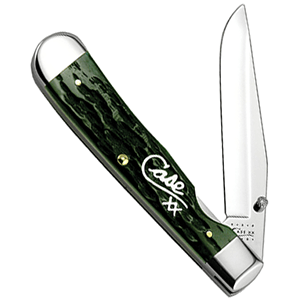
W.R. Case & Sons Cutlery Company is an American manufacturer of traditional pocketknives. The company originated in Little Valley, New York around the turn of the 20th century before relocating to its current home, Bradford, Pennsylvania, in 1905. The company’s namesake, William Russell Case, first made knives with his brothers under the name, Case Brothers Cutlery Company. His son, John Russell (‘Russ’) Case, worked as a salesman for his father’s company before founding W.R. Case & Sons.
The company’s roots extend back to 1889, when the Case brothers – William Russell (W.R.), Jean, John and Andrew Case, formerly of the Cattaraugus Cutlery Company – began selling cutlery from the back of a wagon in various small western New York villages. In January 1900, the brothers incorporated to form Case Brothers Cutlery Company.
read more »
Posted in Games, Money, War |
Leave a Comment »
October 27, 2011

Cocacolonization is a term that refers to globalization or cultural colonization. It is a portmanteau of the name of the multinational soft drink maker Coca-Cola and the word colonization. The term is used to imply either: the importation of Western (particularly American) goods; or, an invasion by Western and especially American cultural values that threatens local culture. While it is possible to use the term benignly, it has been used pejoratively to liken globalization to Westernization or Americanization.
In explaining the role of Coca-Cola as a universal influence of the ‘American way’ in the Cold War period, scholar Richard Kuisel states, ‘Perhaps no commercial product is more thoroughly identified with the United States… Coca Cola was fast becoming a universal drink.’ The dangers of cocacolonization were evoked after World War II by the French press, which regarded Coca-Cola as an American affront to the French culture. A typical cold war joke stated that, following the moon landing, the USSR leapfrogged the U.S. by painting the moon red, whilst the U.S. retaliated by going back and writing Coca-Cola in white on the red background. Seen as ‘too American’ for Communists, Pepsi was the main exported soft drink to Europe for much of the Cold War.
read more »
Posted in Food, Money, World |
Leave a Comment »
October 27, 2011


Megacorporation is a term popularized by science fiction author William Gibson. It has become a term popularly used in cyberpunk literature, referring to a corporation that is a massive conglomerate, holding monopolistic or near-monopolistic control over multiple markets (thus exhibiting both a horizontal and a vertical monopoly). Megacorps are so powerful that they can ignore the law, possess their own heavily-armed (often military-sized) private armies, hold ‘sovereign’ territory, and possibly even act as outright governments. They often exercise a large degree of control over their employees, taking the idea of ‘corporate culture’ to an extreme.
Such organizations are a staple of science fiction long predating cyberpunk, appearing in the works of writers such as Philip K. Dick (‘Do Androids Dream of Electric Sheep?’), Thea von Harbou (‘Metropolis’), and Robert Heinlein (‘Citizen of the Galaxy’).
read more »
Posted in Money, Politics, Technology |
Leave a Comment »
October 26, 2011

Siri is a personal assistant application for Apple iOS. The application uses natural language processing to answer questions, make recommendations, and perform actions by delegating requests to an expanding set of web services. Siri claims that the software adapts to the user’s individual preferences over time and personalizes results, as well as accomplishing tasks such as making dinner reservations and reserving a cab. Siri was acquired by Apple in 2010, and is now an integrated part of iOS 5. It offers conversational interaction with many applications, including reminders, weather, stocks, messaging, email, calendar, contacts, notes, music, clocks, web browser, Wolfram Alpha, and maps. Currently, Siri only supports English (US, UK, and Australian), German and French, and has limited functionality outside of the US. Siri’s actions and answers rely upon a growing ecosystem of partners, including: OpenTable, CitySearch, Yelp, Yahoo Local, StubHub, RottenTomatoes, New York Times, and Google.
Siri is a spin-off from the Stanford Research Institute (SRI) Artificial Intelligence Center, and is an offshoot of the Defense Advanced Research Projects Agency (DARPA)-funded CALO project, described as perhaps the largest artificial-intelligence project ever launched. CALO was an attempted to integrate numerous AI technologies into a cognitive assistant; it is an acronym for ‘Cognitive Assistant that Learns and Organizes.’ The name was inspired by the Latin word ‘alonis,’ which means ‘soldier’s servant.’ Siri has many easter eggs. Most are answers to common catchphrases from popular culture. For example, if asked to ‘Open the pod bay door,’ a question David Bowman asks HAL 9000 in ‘2001: A Space Odyssey,’ the program gives the same response as HAL: ‘I’m sorry (username), I can’t do that.’ If the request is repeated, it draws other responses, such as a threat to report the user to the Intelligent Agents Union.
Posted in Money, Technology |
Leave a Comment »
October 25, 2011

Fringe theatre is theater that is not of the mainstream. The term comes from the Edinburgh Festival Fringe, which was named by Robert Kemp, who described the unofficial companies performing at the same time as the second Edinburgh International Festival (1948) as a ‘fringe,’ writing: ‘Round the fringe of official Festival drama, there seems to be more private enterprise than before.’ The term has since been adopted by the Edinburgh Festival Fringe and thence by alternative theaters and alternative theater festivals.
In London, the Fringe is the term given to small scale theatres, many of them located above pubs, and the equivalent to New York’s Off-Broadway or Off-Off-Broadway theatres. There are also many unjuried theater festivals which are often called fringe festivals. These festivals, such as the Edinburgh Festival Fringe and Adelaide Fringe Festival, permit artists to produce a wide variety of works.
read more »
Posted in Art, Language, Money |
Leave a Comment »
October 24, 2011

In professional wrestling, something that is kayfabe [kay-fayb] is not real, but rather ‘acted out.’ People who believe that kayfabe acts are real are called ‘marks,’ as opposed to ‘smarts.’ Those who know wrestling is scripted but still enjoy the storylines are known as’ smart-marks,’ ‘or smarks.’
Kayfabe in general is the portrayal of events within the industry as ‘real’ or ‘true.’ Specifically, the portrayal of professional wrestling, in particular the competition and rivalries between participants, as being genuine or not of a worked nature. Referring to events or interviews as being a ‘chore’ means that the event/interview has been ‘kayfabed’ or staged, or is part of a wrestling angle (fictional storyline) while being passed off as legitimate.
read more »
Posted in Games, Language, Money |
Leave a Comment »
October 23, 2011
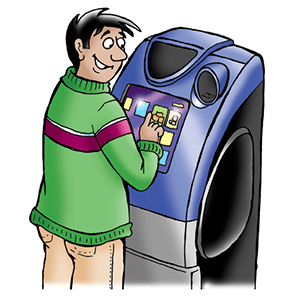
Quiz machine is a term used in the UK for commercial coin-operated video quiz games that offer cash prizes for winning performances. These machines are usually found sited in pubs, bars and other places of entertainment. The term quiz machine is often used interchangeably with the trade term SWP (‘Skill With Prizes’) although not all SWP games are quiz based. The quiz machine first appeared on the scene in the UK in 1985.
The first such machine was called Quizmaster which was made by the Cardiff based now defunct Coinmaster Ltd. This was rapidly followed by quiz machines from other manufacturers. Over the following years quiz machines/SWP’s became a regular feature of the British pub. Leading SWP manufacturers of the 1980s and 1990s were: Coinmaster, JPM, Barcrest, Bell-Fruit, Maygay and Ace-Coin. The themes of many SWP games were (and still are) based on popular TV quiz shows, board games or other aspects of popular culture.
read more »
Posted in Games, Money, Politics |
Leave a Comment »
October 23, 2011

The Independent Investigations Group (IIG) is a volunteer-based organization founded by James Underdown in 2000 at the Center for Inquiry’s Los Angles branch, a non-profit, secular educational organization. The IIG investigates fringe science, paranormal and extraordinary claims from a rational, scientific viewpoint, and disseminates factual information about such inquiries to the public.
IIG offers a $50,000 prize to anyone who can show, under proper observing conditions, evidence of any paranormal, supernatural, or occult power or event. The IIG is involved in designing the test protocol, approving the conditions under which a test will take place, and in administering the actual test. All tests are designed with the participation and approval of the applicant. In most cases, the applicant is asked to perform a simple preliminary demonstration of the claimed ability, which if successful is followed by the formal test. Associates of the IIG usually conduct both tests and preliminary demonstrations at their location in Hollywood or affiliates.
read more »
Posted in Money, Philosophy, Science |
Leave a Comment »
October 21, 2011

Action Comics #1 (June 1938) features the first appearance of Jerry Siegel/Joe Shuster creation Superman. Published on April 18, 1938 by National Allied Publications, a corporate predecessor of DC Comics, it is considered the first true superhero comic; and though today ‘Action Comics’ is a monthly title devoted to Superman, it began, like many early comics, as an anthology. Copies have sold at auction for $1.5 million.
The first issue had a print run of 200,000 copies. Jerry Siegel and Joe Shuster were paid $10 per page, for a total of $130 for their work on this issue. They effectively signed away millions in future rights and royalties payments. Starting in 1978, Siegel and Shuster were provided with a $20,000 a month annuity which was later raised to $30,000. Liebowitz would later say that selecting Superman to run in Action Comics #1 was ‘pure accident’ based on deadline pressure and that he selected a ‘thrilling’ cover, depicting Superman lifting a car over his head. It has been compared ‘Hercules Clubs the Hydra’ by Antonio del Pollaiolo.
read more »
Posted in Art, Language, Money |
Leave a Comment »



 The Daily Omnivore