November 10, 2011

Post scarcity is a hypothetical form of economy or society, in which things such as goods, services and information are free, or practically free. This would be due to an abundance of fundamental resources (matter, energy and intelligence), in conjunction with sophisticated automated systems capable of converting raw materials into finished goods, allowing manufacturing to be as easy as duplicating software.
Scarcity is the fundamental economic problem of having seemingly unlimited human needs and wants, in a world of limited resources. It states that society has insufficient productive resources to fulfill all human wants and needs. Alternatively, scarcity implies that not all of society’s goals can be pursued at the same time; trade-offs are made of one good against others. As such, the term post-scarcity economics may be somewhat paradoxical. To quote a 1932 essay by Lionel Robbins, economics is ‘the science which studies human behavior as a relationship between ends and scarce means which have alternative uses.’
read more »
Posted in Money, Politics, Technology |
Leave a Comment »
November 10, 2011


A vanity label (related to the term ‘vanity press’) is an informal name given to a record label founded as a wholly or partially owned subsidiary of another, larger and better established (at least at the time of the vanity label’s founding) record label, where the subsidiary label is (at least nominally) controlled by a successful recording artist, designed to allow this artist to release music by other artists he or she admires. The parent label handles the production and distribution and funding of the vanity label, but the album is usually released with the vanity label brand name prominent. Usually, the artist/head of the vanity label is signed to the parent label, and this artist’s own recordings will be released under the vanity label’s brand name.
Creating a vanity label can be an attractive idea for the parent label primarily as a ‘perk’ to keep a successful artist on the label’s roster happy, providing an ego boost and a venue to bring fellow artists to the public’s attention. The parent label also hopes that the vanity label’s association with the famous artist will entice that artist’s audience to purchase other records on the vanity label, although only a relatively small number of new artists introduced by vanity labels have gone on to become major successes in their own right.
Posted in Art, Money |
Leave a Comment »
November 10, 2011
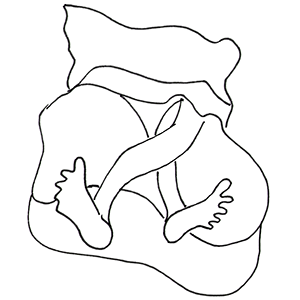
Restless legs syndrome (RLS) or Willis-Ekbom disease is a neurological disorder characterized by an irresistible urge to move one’s body to stop uncomfortable or odd sensations. It most commonly affects the legs, but can affect the arms, torso, and even phantom limbs. Moving the affected body part modulates the sensations, providing temporary relief. RLS sensations can most closely be compared to an itching or tickling in the muscles, like ‘an itch you can’t scratch’ or an unpleasant ‘tickle that won’t stop.’ The sensations typically begin or intensify during quiet wakefulness, such as when relaxing, reading, studying, or trying to sleep.
As with many diseases with diffuse symptoms, there is controversy among physicians as to whether RLS is a distinct syndrome. The U.S. National Institute of Neurological Disorders and Stroke publishes an information sheet characterizing the syndrome but acknowledging it as a difficult diagnosis. Physicians generally consider it a real entity that has specific diagnostic criteria., but many doctors express the view that the incidence of restless leg syndrome is exaggerated by manufacturers of drugs used to treat it. Others believe it is an underrecognized and undertreated disorder.
Posted in Drugs, Health, Money |
Leave a Comment »
November 10, 2011

In popular usage, eccentricity [ek-suhn-tris-i-tee] (also called quirkiness or kookiness) refers to unusual or odd behavior on the part of an individual. This behavior would typically be perceived as unusual or unnecessary, without being demonstrably maladaptive. Eccentricity is contrasted with ‘normal’ behavior, the nearly universal means by which individuals in society solve given problems and pursue certain priorities in everyday life. People who consistently display benignly eccentric behavior are labeled as ‘eccentrics.’
Derived from Greek ekkentros, ‘out of the center,’ the word ‘eccentric’ first appeared in English in 1551 as an astronomical term meaning ‘a circle in which the earth, sun, etc. deviates from its center.’ Five years later, in 1556, an adjective form of the word was added. 129 years later, in 1685, the definition evolved from the literal to the figurative, and eccentric began being used to describe unconventional or odd behavior. A noun form of the word – a person who possesses and exhibits these unconventional or odd qualities/behaviors – didn’t appear until 1832.
read more »
Posted in Health, Language, Money |
1 Comment »
November 10, 2011

Compulsive hoarding (or disposophobia) is the acquisition of possessions (and failure to use or discard them) in excess of socially normative amounts, even if the items are worthless, hazardous, or unsanitary. Compulsive hoarding may impair mobility and interfere with basic activities, including cooking, cleaning, hygiene, sanitation, bathroom use and sleeping. It is not clear whether compulsive hoarding is an isolated disorder, or rather a symptom of another condition, such as obsessive-compulsive disorder.
While there is no clear definition of compulsive hoarding in accepted diagnostic criteria (such as the current DSM), there are several defining features: the acquisition of, and failure to discard, a large number of possessions that appear to be useless or of limited value; living spaces sufficiently cluttered so as to preclude activities for which those spaces were designed; significant distress or impairment in functioning caused by the hoarding; and reluctance or inability to return borrowed items; as boundaries blur, impulsive acquisitiveness could sometimes lead to stealing or kleptomania.
read more »
Posted in Health, Money |
2 Comments »
November 9, 2011

The development of the airliner has had a big effect on the wine business. It has made it easier for individuals to directly supervise viticulture and winemaking in different countries across the globe, rather than exchanging ideas by mail as they have for centuries. This means closer control of the wine, and has seen new technologies such as Drip irrigation, trellis systems, and other developments spread rapidly. This all leads to a homogenous product, influenced more by the winemaker’s background than the local terroir and history.
On the other hand, that ‘history’ often included overoaking and dirty facilities that partly oxidized the wines, which are rapidly fixed by flying winemakers. Many of the early flying winemakers were Australians who had been educated in modern techniques, and used the fact that their autumn was six months ahead of the Northern Hemisphere to ‘moonlight’ when things were quiet at home. They have had some dramatic success in improving the quality of Old World wines, particularly in the South of France and in the former Communist countries.
read more »
Posted in Food, Money, Technology |
Leave a Comment »
November 9, 2011

The term ‘Super Tuscan‘ describes any Tuscan red wine that does not adhere to traditional blending laws for the region. For example, Chianti Classico wines are made from a blend of grapes with Sangiovese as the dominant variety in the blend. Super Tuscans often use other grapes, especially cabernet sauvignon, making them ineligible for classification under the traditional rules.
In 1968 Azienda Agricola San Felice produced the first ever ‘Super Tuscan’ called Vigorello, and in the 1970s Piero Antinori, whose family had been making wine for more than 600 years, also decided to make a richer wine by eliminating the white grapes from the Chianti blend, and instead adding Bordeaux varietals (namely, Cabernet Sauvignon and Merlot).
read more »
Posted in Food, Money, World |
Leave a Comment »
November 8, 2011

A secret society is a club or organization whose activities and inner functioning are concealed from non-members. The society may or may not attempt to conceal its existence. The term usually excludes covert groups, such as intelligence agencies or guerrilla insurgencies, which hide their activities and memberships but maintain a public presence.
The exact qualifications for labeling a group as a secret society are disputed, but definitions generally rely on the degree to which the organization insists on secrecy, and might involve the retention and transmission of secret knowledge, denial of membership in or knowledge of the group, the creation of personal bonds between members of the organization, and the use of secret rites or rituals which solidify members of the group.
read more »
Posted in Games, Language, Money |
Leave a Comment »
November 3, 2011

Blackout usually relates to the broadcasting of sports events, television programming, that is prohibited in a certain media market. The purpose is theoretically to generate more revenue by obliging certain actions from fans, either by making them buy tickets or watch other games on TV.
While financially a logical procedure on the part of those providing the programming, blackouts are frequently unpopular with the affected audience as it will cause some fans to miss the game completely even if they were willing to enter the stadium and pay. A similar term, known as preemption, often refers to stations blacking out a program for other than regulatory or governmental reasons, such as when a local station preempts a television network program for local news or a special program.
read more »
Posted in Games, Money |
Leave a Comment »
November 3, 2011

Since 1973, the NFL has maintained a blackout policy that states that a home game cannot be televised locally if it is not sold out 72 hours prior to its start time. The policy is intended to encourage full attendance. Prior to 1973, all games were blacked out in the home city of origin regardless of whether they were sold out. This policy, dating back to the NFL’s emerging television years, resulted in home-city blackouts even during championship games.
For instance, the 1958 ‘Greatest Game Ever Played’ between the Baltimore Colts and New York Giants was unavailable to New York fans despite the sellout. Many fans rented hotel rooms in Connecticut to watch the game on Hartford TV, a practice that continued for Giants games through 1972. Similarly, all Super Bowl games prior to the seventh edition were unavailable in the host city’s market.
read more »
Posted in Games, Money |
Leave a Comment »
November 3, 2011

The lipstick effect is the theory that when facing an economic crisis consumers will be more willing to buy less costly luxury goods. Instead of buying expensive fur coats, people will buy expensive lipstick. In the time after the 9/11 attacks on the USA lipstick sales rose precipitously.
The underlying assumption is that consumers will buy luxury goods even if there is a crisis. When consumer trust in the economy is dwindling, consumers will buy goods that have less impact on their available funds. Outside the cosmetics market, consumers could be tempted by expensive beer or smaller, less costly gadgets.
Posted in Money |
Leave a Comment »
November 3, 2011

The third-person effect hypothesis states that a person exposed to a persuasive communication in the mass media sees it as having a greater effect on others than on himself or herself. This is known as the perceptual hypothesis, but there is also a behavioral hypothesis predicting that perceiving others as more vulnerable increases support for restrictions on mass media. The third-person effect hypothesis also argues that people are compelled to take action after being exposed to a persuasive message but this action might not be due to the message itself but to the anticipation of the reaction of others. This action is unpredictable and it might be either in conformity with the message or counter to it.
Usually, the effects considered are about general media influence, but type of the message also affects the effect size. Messages implying undesirable consequences increase the effect size and messages with desirable consequences decrease or even reverse the effect, as in someone believing that they are more able than others to follow a promoted healthy diet. The third-person effect, specially its behavioral hypothesis, is important to issues of censorship. Censors seldom admit to having been adversely affected by the information they prohibit even if they have been exposed to it numerous times. Usually, they claim, it is the general public that needs to be protected, not them.
Posted in Money, Science |
1 Comment »



