April 11, 2013
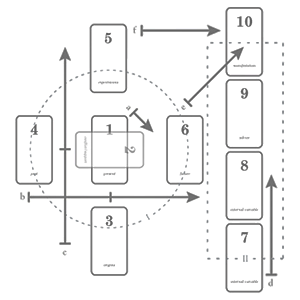
Fortune-telling is the practice of predicting information about a person’s life. The scope of fortune-telling is in principle identical with the practice of divination (‘to foresee, to be inspired by a god’).
The difference is that divination is the term used for predictions considered part of a religious ritual, invoking deities or spirits, while the term fortune-telling implies a less serious or formal setting, even one of popular culture, where belief in occult workings behind the prediction is less prominent than the concept of suggestion, spiritual or practical advisory or affirmation. Historically, fortune-telling grows out of folkloristic reception of Renaissance magic, specifically associated with Gypsies.
read more »
Posted in Money, Philosophy, Politics |
1 Comment »
April 11, 2013
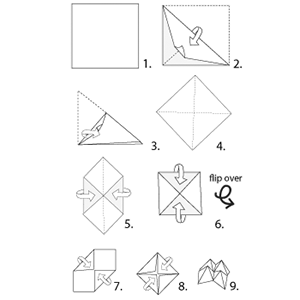
Querent [kweer-ent] as ‘one who seeks’ is derived, according to the Oxford English Dictionary, from the Latin word for ‘to seek, gain, ask.’ Querent denotes ‘a person who questions an Oracle,’ usually for otherworldly advice. This oracle may simply be a divinatory technique, such as the I Ching, that is manipulated by the Querent themselves without recourse to any other human agency. Alternatively it may involve another person, someone perhaps seen as a ‘fortune teller’ — particularly a Practitioner of Tarot reading or other form of Mediumship — from whom advice is sought.
The mindset of a Querent plays a significant role in a reading. Those who approach a reading with heavy skepticism, especially if they are dealing with a human oracle, are often unwilling to engage the Reader at all, which can result in a stifling of the prophetic flow that is required for divination. Conversely, some approach with great respect, as if they predetermine that the Diviner or the system of divination is influence by some kind of higher, even divine, power and thereby will believe virtually anything they are told. A third ideal group will talk freely with a human oracle and accept their advice with a healthy dose of skepticism, yet still remain open minded to the possibility of revelation.
Posted in Language, Philosophy |
Leave a Comment »
April 10, 2013

The Fool or The Jester is one of the 78 cards in a Tarot deck; it is in a suit of 22 trump cards called the ‘Major Acana.’ In many esoteric systems of interpretation, The Fool is usually interpreted as the protagonist of a story, and the Major Arcana is the path he takes through the great mysteries of life and the main human archetypes.
This path is known traditionally in Tarot as the ‘Fool’s Journey,’ and is frequently used to introduce the meaning of Major Arcana cards to beginners. The Fool is considered either the XXII or the 0 card in the suit, the highest or lowest trump). Traditionally, the Major Arcana in Tarot cards are numbered with Roman numerals. The Fool is numbered with the zero, an Arabic numeral.
read more »
Posted in Games, Philosophy |
1 Comment »
March 22, 2013

‘Xavier: Renegade Angel‘ is a 2007 American CGI fantasy-comedy television series created by John Lee, Vernon Chatman, Jim Tozzi and Alyson Levy. Lee and Chatman are also the creators of ‘Wonder Showzen.’ The show was produced by PFFR, with animation by Cinematico. It premiered on Adult Swim on the Cartoon Network. ‘Xavier’ features a style characterized by a nonlinear, incoherent plot following the humorous musings of an itinerant humanoid pseudo-shaman and spiritual seeker named Xavier.
The show is known for its ubiquitous use of ideologically-critical black comedy, surrealist and absurdist humor presented through a psychedelic, New Age lens. The program is also normally rated TV-MA for intense, graphic, often bloody violence (V), as well as strong sexual content, use of racially/ethnically offensive language, grotesque depictions and content that is considered ‘too morbid and too incomprehensible for young viewers.’
read more »
Posted in Art, Humor, Philosophy |
Leave a Comment »
March 20, 2013

Maslenitsa (also known as Butter Week) is an Eastern Slavic religious and folk holiday. It is celebrated during the last week before Great Lent—that is, the seventh week before Eastern Orthodox Pascha (Easter). Maslenitsa corresponds to the Western Christian Carnival, except that Orthodox Lent begins on a Monday instead of a Wednesday, and the Orthodox date of Easter can differ greatly from the Western Christian date.
Maslenitsa has its origins in both pagan and Christian traditions. In Slavic mythology, Maslenitsa is a celebration of the imminent end of the winter. As the culmination of the celebration, on Sunday evening, Lady Maslenitsa is stripped of her finery and put to the flames of a bonfire. Any remaining blintzes are also thrown on the fire and Lady Maslenitsa’s ashes are buried in the snow (to ‘fertilize the crops’).
read more »
Posted in Food, Philosophy, World |
Leave a Comment »
March 20, 2013
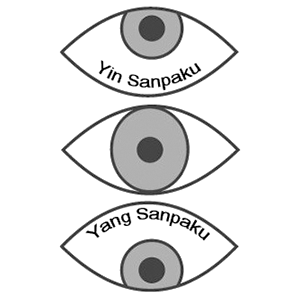
Sanpaku is a Japanese term that means ‘three whites’ and is generally referred to in English as ‘Sanpaku eyes.’ The term refers to the iris being rather small, so that it only covers about two-thirds or less of the vertical axis of the eye; e.g. delineate an eye into four portions; the iris would only occupy one portion of the divided four sections; thus leaving the other three in white, hence ‘three whites.’
When the bottom of the white part of the eye, known as the sclera, is visible it is referred to as ‘Yin Sanpaku’ in Chinese lore. According to the myth, it represents physical imbalance in the body and is claimed to be present in alcoholics, drug addicts and people who overconsume sugar or grain. Conversely when the upper sclera is visible this is called ‘Yang Sanpaku.’ This is said to be an indication of mental imbalance in people such as psychotics, murderers, and anyone rageful. Stress and fatigue may also be a cause.
read more »
Posted in Health, Philosophy, World |
Leave a Comment »
March 10, 2013

Pseudoarchaeology refers to pseudoscientific theories about the past. Some of these revolve around the idea that prehistoric and ancient human societies were aided in their development by intelligent extraterrestrial life, an idea propagated by Swiss author Erich von Däniken in books such as ‘Chariots of the Gods?’ (1968) and Italian author Peter Kolosimo. Others instead hold that there were human societies in the ancient period that were significantly technologically advanced, such as Atlantis, and this idea has been propagated by figures like Graham Hancock in his ‘Fingerprints of the Gods’ (1995).
Many alternative archaeologies have been adopted by religious groups. Academic archaeologists have heavily criticized pseudoarchaeology, with one of the most vocal critics, John R. Cole, characterizing it as relying on ‘sensationalism, misuse of logic and evidence, misunderstanding of scientific method, and internal contradictions in their arguments.’
read more »
Posted in Philosophy |
Leave a Comment »
March 10, 2013

Graham Hancock (b. 1950) is a British writer and journalist specializing in unconventional theories involving ancient civilizations, stone monuments or megaliths, altered states of consciousness, ancient myths and astronomical/astrological data from the past.
One of the main themes running through many of his books is the possible global connection with a ‘mother culture’ from which he believes all ancient historical civilizations sprang. Although his books have sold more than five million copies worldwide and have been translated into twenty-seven languages, his methods and conclusions have found little support among academics, his work being labelled ‘pseudoarchaeology.’
read more »
Posted in Drugs, Philosophy |
Leave a Comment »
March 7, 2013

Mortality salience [sey-lee-uhns] is a term which describes awareness of one’s eventual death. Mortality salience has the potential to cause worldview defense, a psychological mechanism which strengthens people’s connection with their in-group as a defense mechanism. This can lead to feelings of nationalism and racial bigotry being intensified.
Studies also show that mortality salience can also lead people to feel more inclined to punish minor moral transgressions. One such study divided a group of judges into two groups — one which was asked to reflect upon their own mortality, and one group which was not. The judges were then asked to set a bond for an alleged prostitute. The group who had reflected on mortality set an average bond of $455, while the control group’s average bond was $50.
read more »
Posted in Death, Health, Philosophy |
Leave a Comment »
March 7, 2013

‘The Trap: What Happened to Our Dream of Freedom’ is a 2007 BBC documentary series by English filmmaker Adam Curtis, well known for other documentaries including ‘The Century of the Self’ and ‘The Power of Nightmares.’
The series consists of three one-hour programs which explore the concept and definition of freedom, specifically, ‘how a simplistic model of human beings as self-seeking, almost robotic, creatures led to today’s idea of freedom.’
read more »
Posted in Philosophy, Politics, War |
Leave a Comment »
February 19, 2013


Jediism is a religion based on the philosophical and spiritual ideas of the Jedi as depicted in the science fiction film ‘Star Wars.’ It has no founder or central structure, but was the most selected ‘alternative faith’ in a census of England and Wales. Jediism became accepted as a religion following the Jedi census phenomenon in 2001 and the preceding email campaign to put ‘Jedi’ in answer to the census religion classification question.
The phenomenon attracted the attention of sociologist of religion Adam Possamai who analyzed it in the framework of what he dubs ‘hyper-real religion’ (religions inspired by popular culture). Jediism believers align themselves with the moral code demonstrated by the fictional Jedi. According to the Temple of the Jedi Order website, Jediism is a syncretistic religion, incorporating beliefs from various religious philosophies including Christianity, Sufism (Islam), Stoicism, Buddhism, Taoism, and Shintoism.
read more »
Posted in Humor, Philosophy |
Leave a Comment »
February 17, 2013
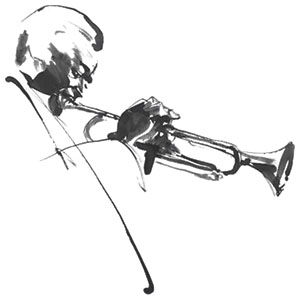
Coolness is an admired aesthetic of attitude, behavior, comportment, appearance and style, influenced by and a product of the Zeitgeist (‘spirit of the age’). Because of the varied and changing connotations of cool, as well its subjective nature, the word has no single meaning.
It has associations of composure and self-control and often is used as an expression of approval. Although commonly regarded as slang, it is widely used among disparate social groups, and has endured in usage for generations. Because there is no single concept of cool, one of its essential characteristics is mutability—what is considered cool changes over time and varies among cultures and generations.
read more »
Posted in Language, Money, Philosophy |
Leave a Comment »


 The Daily Omnivore