February 15, 2013

The Zeitgeist [tsahyt-gahyst] (spirit of the age or spirit of the time) is the intellectual fashion or dominant school of thought that typifies and influences the culture of a particular period in time. For example, the Zeitgeist of modernism typified and influenced architecture, art, and fashion during much of the 20th century. The German word ‘Zeitgeist’ is often attributed to the philosopher Georg Hegel, but he never actually used the word. In his works such as ‘Lectures on the Philosophy of History,’ he uses the phrase ‘der Geist seiner Zeit’ (‘the spirit of his time’)—for example, ‘no man can surpass his own time, for the spirit of his time is also his own spirit.’
Other philosophers who were associated with such ideas include Herder and Spencer and Voltaire. The concept counters the ‘Great Man theory’ popularized by Thomas Carlyle which sees history as the result of the actions of heroes and geniuses.
read more »
Posted in Art, Philosophy, Politics |
Leave a Comment »
February 14, 2013
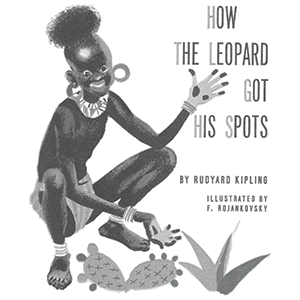
In science and philosophy, a just-so story, also called an ad hoc fallacy, is an unverifiable and unfalsifiable narrative explanation for a cultural practice, a biological trait, or behavior of humans or other animals. The pejorative nature of the expression is an implicit criticism that reminds the hearer of the essentially fictional and unprovable nature of such an explanation. Such tales are common in folklore and mythology (where they are known as ‘origin’ or ‘etiological’ myths).
Published in 1902, Rudyard Kipling’s ‘Just So Stories,’ is a collection of fictional and deliberately fanciful tales for children in which the stories pretend to explain animal characteristics, such as the origin of the spots on the leopard.
read more »
Posted in Philosophy, Science |
Leave a Comment »
February 6, 2013

Marc Quinn (b. 1964) is a British artist and one of a loose group known as the Young British Artists. He is known for ‘Alison Lapper Pregnant’ (a sculpture of Alison Lapper, an English artist who was born without arms) and ‘Self’ (a sculpture of his head made with his own frozen blood). Quinn has used blood, ice, and faeces to make sculptures; his work sometimes refers to scientific developments.
Quinn’s oeuvre displays a preoccupation with the mutability of the body and the dualisms that define human life: spiritual and physical, surface and depth, cerebral and sexual. Quinn’s sculpture, paintings and drawings often deal with the distanced relationship we have with our bodies, highlighting how the conflict between the ‘natural’ and ‘cultural’ has a grip on the contemporary psyche. In 1999, Quinn began a series of marble sculptures of amputees as a way of re-reading the aspirations of Greek and Roman statuary and their depictions of an idealized whole.
read more »
Posted in Art, Money, Philosophy |
Leave a Comment »
February 6, 2013
The God gene hypothesis proposes that a specific gene (VMAT2) predisposes humans towards spiritual or mystic experiences. The idea has been postulated by geneticist Dean Hamer, the director of the Gene Structure and Regulation Unit at the U.S. National Cancer Institute, and author of the 2005 book ‘The God Gene: How Faith is Hardwired into our Genes.’ The God gene hypothesis is based on a combination of behavioral genetic, neurobiological, and psychological studies.
The major arguments of the theory are: (1) spirituality can be quantified by psychometric measurements; (2) the underlying tendency to spirituality is partially heritable; (3) part of this heritability can be attributed to the gene VMAT2; (4) this gene acts by altering monoamine levels; and (5) spiritual individuals are favored by natural selection because they are provided with an innate sense of optimism, the latter producing positive effects at either a physical and psychological level.
read more »
Posted in Health, Philosophy, Science |
1 Comment »
February 5, 2013
Magical thinking is thinking that one’s thoughts by themselves can bring about effects in the world or that thinking something corresponds with doing it. It is a type of causal reasoning or causal fallacy that looks for meaningful relationships of grouped phenomena between acts and events. In religion, folk religion, and superstition, the correlation posited is between religious ritual, such as prayer, sacrifice, or the observance of a taboo, and an expected benefit or recompense.
In clinical psychology, magical thinking is a condition that causes the patient to experience irrational fear of performing certain acts or having certain thoughts because they assume a correlation with their acts and threatening calamities. ‘Quasi-magical thinking’ describes ‘cases in which people act as if they erroneously believe that their action influences the outcome, even though they do not really hold that belief.’
read more »
Posted in Health, Philosophy |
Leave a Comment »
February 3, 2013

Sentiocentrism [sen-tee-oh-sen-triz-uhm] is the belief that sentient individuals are the center of moral concern; all and only sentient beings (animals that feel, including humans) have intrinsic value and moral standing; the rest of the natural world has instrumental value. Both humans and other sentient animals have rights and/or interests that must be considered.
The sentiocentrists consider the discrimination of sentient beings of other species to be speciesism, an arbitrary discrimination. Therefore, the coherent sentiocentrism means taking into consideration and respect all sentient animals, and often living a vegan lifestyle. The utilitarian criterion of moral standing is, therefore, all and only sentient beings (sentiocentrism).
read more »
Posted in Philosophy, Politics |
Leave a Comment »
February 3, 2013

In political theory and theology, to immanentize [im-uh-nuhnt-ize] the eschaton [ess-cah-ton] means trying to bring about the eschaton (the final, heaven-like stage of history) in the immanent world. It has been used by conservative critics as a pejorative reference to certain utopian projects, such as socialism, communism, and transhumanism. In all these contexts it means ‘trying to make that which belongs to the afterlife happen here and now (on Earth)’ or ‘trying to create heaven here on Earth.’
According to conservative columnist Jonah Goldberg, writing in ‘National Review Online’: ‘In modern parlance, the phrase was coined by Eric Voegelin in The New Science of Politics in 1952. In the 1950s and 1960s, thanks largely to William F. Buckley’s popularization of the phrase, Young Americans for Freedom turned it into a political slogan.’ Buckley was the most notable of many US conservative readers of Voegelin’s work. Voegelin, a German-born American political philosopher, identified a number of similarities between ancient Gnosticism and the beliefs held by a number of modernist political theories, particularly Communism and Nazism.
read more »
Posted in Philosophy, Politics, Technology |
Leave a Comment »
January 23, 2013

Neat and scruffy are labels for two different types of artificial intelligence research. ‘Neats’ consider that solutions should be elegant, clear and provably correct. ‘Scruffies’ believe that intelligence is too complicated (or computationally intractable) to be solved with the sorts of homogeneous system such neat requirements usually mandate. Much success in AI came from combining neat and scruffy approaches. For example, there are many cognitive models matching human psychological data built in cognitive architectures Soar and ACT-R.
Both of these systems have formal representations and execution systems, but the rules put into the systems to create the models are generated ad hoc. The distinction was originally made by AI theorist Roger Schank in the mid-1970s to characterize the difference between his work on natural language processing (which represented commonsense knowledge in the form of large amorphous semantic networks) from the work of John McCarthy, Allen Newell, Herbert A. Simon, Robert Kowalski and others whose work was based on logic and formal extensions of logic.
read more »
Posted in Philosophy, Technology |
2 Comments »
January 21, 2013

The concept known as rational irrationality was popularized by economist Bryan Caplan in 2001 to reconcile the widespread existence of irrational behavior (particularly in the realms of religion and politics) with the assumption of rationality made by mainstream economics and game theory. The theory, along with its implications for democracy, was expanded upon by Caplan in his book ‘The Myth of the Rational Voter.’
The original purpose of the concept was to explain how (allegedly) detrimental policies could be implemented in a democracy, and unlike conventional public choice theory, Caplan posited that bad policies were selected by voters themselves. The theory has also been embraced by the ethical intuitionist philosopher Michael Huemer as an explanation for irrationality in politics. The theory has also been applied to explain religious belief.
read more »
Posted in Money, Philosophy, Politics |
Leave a Comment »
January 17, 2013

White Tantrism [tan-triz-uhm] is a form of sexual alchemy which involves a man and a woman making sexual contact then transmuting their sexual energies whilst remaining still throughout the act and withdrawing without orgasm.
It is regarded by its practitioners as an essential spiritual exercise for awakening consciousness rather than purely an act of pleasure. It is currently taught by schools of modern Gnosticism.
read more »
Posted in Philosophy, Sex |
Leave a Comment »
January 17, 2013
Quantum mysticism [mis-tuh-siz-uhm] is a term that has been used to refer to a set of metaphysical beliefs and associated practices that seek to relate consciousness, intelligence, or mystical world-views to the ideas of quantum mechanics and its interpretations. The term originally emerged from the founders of quantum theory in the early twentieth century as they debated the interpretations and implications of their nascent theories, which would later evolve into quantum mechanics, and later after WWII, with publications such as Schrödinger’s and Eugene Wigner’s 1961 paper.
The essential qualities of early quantum theory, and the ontological (related to the nature of being) questions that emerged from it, made a distinction between philosophical and scientific discussion difficult as quantum theory developed into a strong scientific theory. Quantum Mysticism is usually considered pseudoscience. Many of the leading Quantum physicists did however give mystical interpretations to their findings.
read more »
Posted in Philosophy, Science |
Leave a Comment »
January 17, 2013
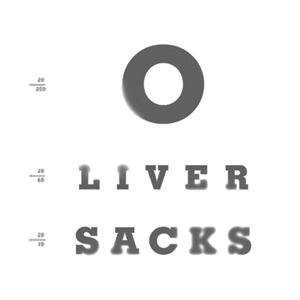
The phrase ‘mind’s eye‘ refers to the human ability for visualization, i.e., for the experiencing of visual mental imagery; in other words, one’s ability to ‘see’ things with the mind. The biological foundation of the mind’s eye is not fully understood. fMRI studies have shown that the lateral geniculate nucleus (in the thalamus) and the V1 area of the visual cortex are activated during mental imagery tasks.
Harvard Medical School psychiatrist John Ratey writes: ‘The visual pathway is not a one-way street. Higher areas of the brain can also send visual input back to neurons in lower areas of the visual cortex… As humans, we have the ability to see with the mind’s eye – to have a perceptual experience in the absence of visual input. For example, PET scans have shown that when subjects, seated in a room, imagine they are at their front door starting to walk either to the left or right, activation begins in the visual association cortex, the parietal cortex, and the prefrontal cortex – all higher cognitive processing centers of the brain.’
read more »
Posted in Health, Language, Philosophy |
Leave a Comment »


 The Daily Omnivore