
The Closing of the American Mind is a 1987 book by American philosopher Allan Bloom. It describes ‘how higher education has failed democracy and impoverished the souls of today’s students.’ He focuses especially upon the ‘openness’ of relativism as leading paradoxically to the great ‘closing’ referenced in the book’s title.
Bloom argues that ‘openness’ and absolute understanding undermines critical thinking and eliminates the ‘point of view’ that defines cultures. According to Bloom: ‘Education in our times must try to find whatever there is in students that might yearn for completion, and to reconstruct the learning that would enable them autonomously to seek that completion.’
read more »
October 21, 2012
The Closing of the American Mind
October 18, 2012
Nomic

Nomic is a game created in 1982 by philosopher Peter Suber in which the rules of the game include mechanisms for the players to change those rules, usually beginning through a system of democratic voting. According to Suber, the primary activity of Nomic is proposing changes in the rules, debating the wisdom of changing them in that way, voting on the changes, deciding what can and cannot be done afterwards, and doing it. Even this core of the game, of course, can be changed.’
The term ‘nomic’ actually refers to a large number of games based on the initial ruleset laid out by Suber in his book ‘The Paradox of Self-Amendment. The game is in some ways modeled on modern government systems. It demonstrates that in any system where rule changes are possible, a situation may arise in which the resulting laws are contradictory or insufficient to determine what is in fact legal. Because the game models (and exposes conceptual questions about) a legal system and the problems of legal interpretation, it is named after ‘nomos,’ the Greek word for ‘law.’
read more »
October 16, 2012
Virus as Life
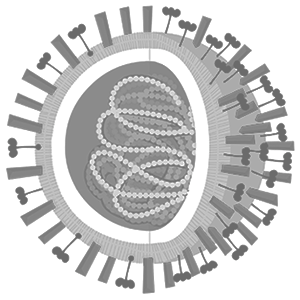
Opinions differ on whether viruses are a form of life, or organic structures that interact with living organisms. They have been described as ‘organisms at the edge of life,’ since they resemble organisms in that they possess genes and evolve by natural selection, and reproduce by creating multiple copies of themselves through self-assembly. Although they have genes, they do not have a cellular structure, which is often seen as the basic unit of life.
Viruses do not have their own metabolism, and require a host cell to make new products. They therefore cannot naturally reproduce outside a host cell (although bacterial species such as chlamydia are considered living organisms despite the same limitation). Accepted forms of life use cell division to reproduce, whereas viruses spontaneously assemble within cells. They differ from autonomous growth of crystals as they inherit genetic mutations while being subject to natural selection. Virus self-assembly within host cells has implications for the study of the origin of life, as it lends further credence to the hypothesis that life could have started as self-assembling organic molecules.
October 13, 2012
Fallibilism

Fallibilism [fal-uh-buhl-iz-uhm] (‘liable to err’) is the philosophical principle that human beings could be wrong about their beliefs, expectations, or their understanding of the world. In the most commonly used sense of the term, this consists in being open to new evidence that would disprove some previously held position or belief, and in the recognition that ‘any claim justified today may need to be revised or withdrawn in light of new evidence, new arguments, and new experiences.’
This position is taken for granted in the natural sciences. In another sense, it refers to the consciousness of ‘the degree to which our interpretations, valuations, our practices, and traditions are temporally indexed’ and subject to (possibly arbitrary) historical flux and change. Such ‘time-responsive’ fallibilism consists in an openness to the confirmation of a possibility that one anticipates or expects in the future.
read more »
October 9, 2012
Conversion Therapy

‘Conversion therapy‘ (also known as ‘Reparative therapy’) is a pseudo-scientific therapy that aims to change sexual orientation. Mainstream American medical and scientific organizations have expressed concern over conversion therapy and consider it potentially harmful. The advancement of conversion therapy may cause social harm by disseminating inaccurate views about sexual orientation. As a result, conversion therapy on minors is illegal in California.
The American Psychiatric Association has condemned psychiatric ‘treatment’ which is ‘based upon the assumption that homosexuality per se is a mental disorder or based upon the a priori assumption that a patient should change his/her sexual homosexual orientation.’ It states that, ‘Ethical practitioners refrain from attempts to change individuals’ sexual orientation.’ And that political and moral debates over the integration of gays and lesbians into the mainstream of American society have obscured scientific data about changing sexual orientation ‘by calling into question the motives and even the character of individuals on both sides of the issue.’
read more »
October 9, 2012
Technopoly
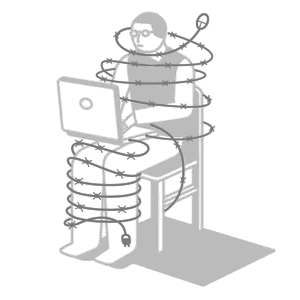
‘Technopoly: The Surrender of Culture to Technology’ is a book by Neil Postman published in 1992 that describes a society in which technology is deified, meaning ‘the culture seeks its authorization in technology, finds its satisfactions in technology, and takes its orders from technology.’ It is characterized by a surplus of information generated by technology, which technological tools are in turn employed to cope with, in order to provide direction and purpose for society and individuals. Postman considers technopoly to be the most recent of three kinds of cultures distinguished by shifts in their attitude towards technology – tool-using cultures, technocracies, and technopolies.
Each, he says, is produced by the emergence of new technologies that ‘compete with old ones…mostly for dominance of their worldviews.’ According to Postman, a tool-using culture employs technologies only to solve physical problems, as spears, cooking utensils, and water mills do, and to ‘serve the symbolic world’ of religion, art, politics and tradition, as tools used to construct cathedrals do. He claims that all such cultures are either theocratic or ‘unified by some metaphysical theory,’ which forced tools to operate within the bounds of a controlling ideology and made it ‘almost impossible for technics to subordinate people to its own needs.’
read more »
October 7, 2012
Negative and Positive Atheism

Positive atheism (also called ‘strong atheism’ and ‘hard atheism’) is the form of atheism that asserts that no deities exist. Negative atheism (also called ‘weak atheism’ and ‘soft atheism’) is any other type of atheism, wherein a person does not believe in the existence of any deities, but does not explicitly assert there to be none.
The terms negative atheism and positive atheism were used by British philosopher Antony Flew in 1976,[1] and appeared again in Boston University philosopher Michael Martin’s writings in 1990. Because of flexibility in the term ‘god,’ it is possible that a person could be a positive/strong atheist in terms of certain conceptions of God, while remaining a negative/weak atheist in terms of others.
read more »
October 7, 2012
Weak Agnosticism
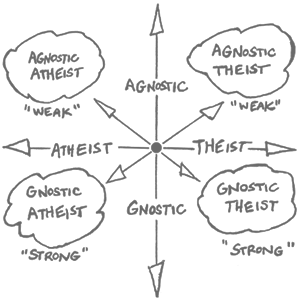
Weak agnosticism is the assertion that, at present, there is not enough information to know whether any deities exist, but that such might become knowable, or that someone may come forward with a conclusive and irrefutable proof for the existence of such deities. It is in contrast to strong agnosticism, which is the belief that the existence of any gods is completely unknowable to humanity. Neither type of agnosticism is fully irreconcilable with theism (belief in a deity or deities) nor atheism (rejecting belief in all deities).
Weak agnostics who also consider themselves theists are likely to acknowledge they have some doubt, though they are not necessarily having a crisis of faith. Weak agnosticism is compatible with weak atheism (wherein a person does not believe in the existence of any deities, but does not explicitly assert there to be none). Weak agnosticism is also referred to as ’empirical agnosticism’ and as ‘negative agnosticism.’ According to Australian philosopher Graham Oppy, weak agnosticism is ‘the view which is sustained by the thesis that it is permissible for reasonable persons to suspend judgement on the question of God’s existence.’
read more »
October 6, 2012
Spiritual Agnosticism

A spiritual agnostic is a subset of traditional agnosticism (the philosophical view that it is unknown -or even, unknowable- whether any deities exist or not) that is distinguished by the acceptance of the value of universal ethics yet rejection of any aspects of religions that seem divisive.
For example, love is the ideal source of motivation, and since many (if not all) religions emphasize love, a spiritual agnostic might participate in the practices of one particular religion while simultaneously rejecting some of the mainstream principles of that religion. Regardless of this possibility, spiritual agnosticism claims that innate morality and common ethics are far more important than differences in beliefs.
read more »
October 2, 2012
Infomorph
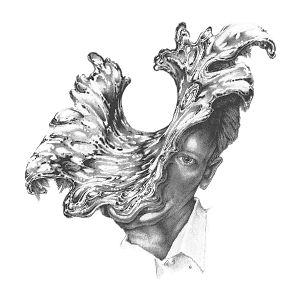
An infomorph is a virtual body of information that can possess emergent features such as personality. The term was first described in Charles Platt’s 1991 novel ‘The Silicon Man,’ where it refers to a single biological consciousness transferred into a computer through a process of mind transfer. In the book, a character refers to an infomorph as ‘intelligence held in a computer memory,’ and an ‘information entity.’
Russian artificial intelligence theorist Alexander Chislenko uses the same word in his 1996 essay ‘Networking in the Mind Age,’ to refer to a software agent that possesses distributed intelligence. Whether the vision shared in Platt’s novel will ever be more than a theory is uncertain, but computing power is still increasing exponentially, and the ‘Future of Humanity Institute’ at Oxford University have considered the philosophical and technical feasibility of this theory at some point in the future.
read more »
October 2, 2012
Mind Uploading


Whole brain emulation or mind uploading (sometimes called mind transfer) is the hypothetical process of transferring or copying a conscious mind from a brain to a non-biological substrate by scanning and mapping a biological brain in detail and copying its state into a computer system or another computational device.
The computer would have to run a simulation model so faithful to the original that it would behave in essentially the same way as the original brain, or for all practical purposes, indistinguishably. The simulated mind is assumed to be part of a virtual reality simulated world, supported by an anatomic 3D body simulation model. Alternatively, the simulated mind could be assumed to reside in a computer inside (or connected to) a humanoid robot or a biological body, replacing its brain.
read more »
October 2, 2012
Posthuman

A posthuman is a concept originating notably in the fields of science fiction, futurology, contemporary art, and philosophy.
These multiple and interactive origins have contributed to profound confusion over the similarities and differences between the posthuman of ‘posthumanism’ (a line of philosophical reasoning) and the posthuman of ‘transhumanism’ (an intermediary form between the human and the hypothetical posthuman).
read more »


 The Daily Omnivore