
The bacchanalia [bak-uh-ney-lee-uh] were wild and mystic festivals of the Greco-Roman god Bacchus (or Dionysus), the wine god. The term has since come to describe any form of drunken revelry.
The bacchanalia were rites originally held in ancient Greece as the Dionysia. The most famous of the Greek Dionysia were in Attica and included a festal procession, a drinking feast, and dramatic performances in the theatre of Dionysus. The rites spread to Rome from the Greek colonies in Southern Italy where they were secret and only attended by women. The festivals occurred in the grove of Simila near the Aventine Hill on March 16 and March 17. Later, admission to the rites was extended to men, and celebrations took place five times a month.
read more »
September 4, 2012
Bacchanalia
August 27, 2012
Free Love

The term free love has been used to describe a social movement that rejects marriage, which is seen as a form of social bondage. The Free Love movement’s initial goal was to separate the state from sexual matters such as marriage, birth control, and adultery. It claimed that such issues were the concern of the people involved, and no one else. Much of the free-love tradition is an offshoot of anarchism, and reflects a libertarian philosophy that seeks freedom from state regulation and church interference in personal relationships.
According to this concept, the free unions of adults are legitimate relations which should be respected by all third parties whether they are emotional or sexual relations. In addition, some free-love writing has argued that both men and women have the right to sexual pleasure. In the Victorian era, this was a radical notion. Later, a new theme developed, linking free love with radical social change, and depicting it as a harbinger of a new anti-authoritarian, anti-repressive sensibility.
read more »
August 26, 2012
Stirpiculture
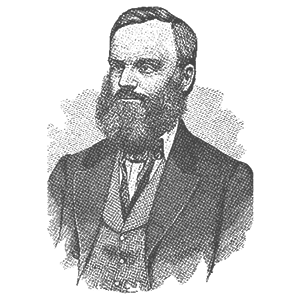
Stirpiculture [stur-pi-kuhl-cher] is a word coined by John Humphrey Noyes, founder of the Oneida Community (a religious commune founded in 1848 in Oneida, New York, which practiced group marriage), to refer to eugenics, or the breeding of humans to achieve desired perfections within the species. Noyes derived stirpiculture from the Latin word ‘stirps,’ which means ‘stock, stem, or root.’
Up until the late 1860s, John Humphrey Noyes believed in only having children with purpose and preparation. In his society, it was not simply about the preparedness of the parents, but rather the preparedness of the community to support a new generation. In the early years of the community, when poverty was an issue, the community did not feel adequately prepared to take on the raising and support of children. Therefore, procreation was discouraged in these early days before the financial successes of trap-building. An ‘accidental’ conception was thought to be a failure in male continence, the act that was meant to prevent unwanted pregnancies through the withholding of male ejaculation during intercourse.
read more »
August 23, 2012
Hebrew National


Hebrew National is a brand of kosher hot dogs and sausages made by ConAgra Foods, Inc. The Hebrew National Kosher Sausage Factory, Inc. was founded on East Broadway, on the Lower East Side of Manhattan in 1905. The company was founded by Theodore Krainin, who emigrated from Russia in the 1880s. In a 1921 article, Alfred W. McCann writing in ‘The Globe and Commercial Advertiser’ citied Hebrew National as having ‘higher standards than the law requires.’
McCann wrote the article during a crusade for commercial food decency standards, in which ‘The Globe’ was prominent. He wrote ‘More power to Krainin and the decency he represents! Such evidence of the kind of citizenship which America should covet is not to be passed by lightly.’ Hebrew National ‘served the Jewish neighborhoods of immigrants from Eastern Europe and Germany and soon developed a favorable reputation among the other Jewish residents of New York City.’
read more »
August 17, 2012
Self-deception

Self-deception is a process of denying or rationalizing away the relevance, significance, or importance of opposing evidence and logical argument. Self-deception involves convincing oneself of a truth (or lack of truth) so that one does not reveal any self-knowledge of the deception. Simple instances of self-deception include common occurrences such as: the alcoholic who is self-deceived in believing that his drinking is under control, the husband who is self-deceived in believing that his wife is not having an affair, the jealous colleague who is self deceived in believing that her colleague’s greater professional success is due to ruthless ambition.
A consensus on the identification of self-deception remains elusive to contemporary philosophers, the result of the term’s paradoxical elements and ambiguous paradigmatic cases. Self-deception also incorporates numerous dimensions, such as epistemology, psychological and intellectual processes, social contexts, and morality. As a result, the term is highly debated and occasionally argued to be an impossible phenomenon.
read more »
August 16, 2012
Tabula Rasa

Tabula rasa [tab-yuh-luh rah-suh] (Latin: ‘blank slate’) is the theory that individuals are born without built-in mental content and that their knowledge comes from experience and perception.
The theory was discussed by Aristotle, but popularized by John Locke (the father of liberalism) in the 17th century: ‘Let us then suppose the mind to be, as we say, white paper void of all characters, without any ideas. How comes it to be furnished? … To this I answer, in one word, from EXPERIENCE.’ Locke thought all knowledge came from sense data (smells, sights, sounds, pain, etc.), and that the mind is empty at birth. Locke’s idea was immediately picked up by others.
read more »
August 15, 2012
Psychological Nativism

In the field of psychology, nativism is the view that certain skills or abilities are ‘native’ or hard wired into the brain at birth. This is in contrast to empiricism, the ‘blank slate’ or tabula rasa view, which states that the brain has inborn capabilities for learning from the environment but does not contain content such as innate beliefs. Some nativists believe that specific beliefs or preferences are hard wired. For example, one might argue that some moral intuitions are innate or that color preferences are innate.
A less established argument is that nature supplies the human mind with specialized learning devices. This latter view differs from empiricism only to the extent that the algorithms that translate experience into information may be more complex and specialized in nativist theories than in empiricist theories. However, empiricists largely remain open to the nature of learning algorithms and are by no means restricted to the historical associationist mechanisms of behaviorism (which argued that the content of consciousness can be explained by the association and reassociation of irreducible sensory and perceptual elements).
read more »
August 15, 2012
Causality
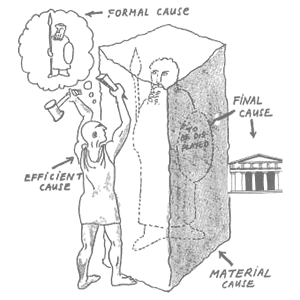
Causality is a way to describe how different events relate to one another. Suppose there are two events A and B. If B happens because A happened, then people say that A is the cause of B, or that B is the effect of A.
Aristotle looked at the problem of causality in his books ‘Posterior analytics’ and ‘Metaphysics’ he wrote: ‘All causes are beginnings; we have scientific knowledge when we know the cause; to know a thing’s nature is to know the reason why it is.’ This can be used to explain causality.
read more »
August 15, 2012
Kurdaitcha

Kurdaitcha [ka-dai-tcha] (or kurdaitcha man) is a ritual ‘executioner’ in Australian Aboriginal culture. The ‘execution’ in this case is a complex ritual similar to voodoo hexes or pagan curses. The kurdaitcha ritual is a nocebo, a negative response to physically harmless stimuli.
Voodoo death, also known as psychosomatic death, is a term coined by Harvard physiologist Walter Cannon in 1942 to describe the phenomenon of sudden death as brought about by a strong emotional shock, such as fear. The word ‘kurdaitcha’ is also used by Europeans to refer to the shoes worn by the Kurdaitcha, woven of feathers and human hair and treated with blood.
read more »
August 15, 2012
Voodoo Death

Voodoo death, a term coined by Harvard physiologist Walter Cannon in 1942 also known as psychogenic or psychosomatic death, is the phenomenon of sudden death as brought about by a strong emotional shock, such as fear. The anomaly is recognized as psychosomatic in that death is caused by an emotional response—often fear—to some suggested outside force.
Voodoo death is particularly noted in native societies, and concentration or prisoner of war camps, but the condition is not specific to any culture or mentality.
read more »
August 9, 2012
What’s the Matter with Kansas?

‘What’s the Matter with Kansas? How Conservatives Won the Heart of America’ (2004) is a book by American journalist and historian Thomas Frank, which explores the rise of populist anti-elitist Conservatism in the United States, centering on the experience of Kansas, Frank’s native state.
In the late 19th century, Kansas was known as a hotbed of the left-wing Populist movement, but in recent decades, it has become overwhelmingly conservative. The book was published in Britain and Australia as ‘What’s the Matter with America?’ According to the book, the political discourse of recent decades has dramatically shifted from the social and economic equality to one in which ‘explosive’ cultural issues, such as abortion and gay marriage, are used to redirect anger towards ‘liberal elites.’
read more »
August 6, 2012
The Two Cultures

The Two Cultures is the title of an influential 1959 Rede Lecture by British scientist and novelist C. P. Snow. Its thesis was that ‘the intellectual life of the whole of western society’ was split into the titular two cultures — namely the sciences and the humanities — and that this was a major hindrance to solving the world’s problems. Snow’s Rede Lecture condemned the British educational system as having, since the Victorian period, over-rewarded the humanities (especially Latin and Greek) at the expense of scientific and engineering education, despite such achievements having been so decisive in winning the Second World War for the Allies.
This in practice deprived British elites (in politics, administration, and industry) of adequate preparation to manage the modern scientific world. By contrast, Snow said, German and American schools sought to prepare their citizens equally in the sciences and humanities, and better scientific teaching enabled these countries’ rulers to compete more effectively in a scientific age. Later discussion of ‘The Two Cultures’ tended to obscure Snow’s initial focus on differences between British systems (of both schooling and social class) and those of competing countries.
read more »


 The Daily Omnivore