September 22, 2010

Sky burial or ritual dissection was once a common funerary practice in Tibet wherein a human corpse is cut in specific locations and placed on a mountaintop, exposing it to the elements (or the mahabhuta) and animals – especially to birds of prey. The location of the sky burial preparation and place of execution are called charnel grounds. In Tibet the practice is known as jhator, which literally means, ‘giving alms to the birds.’
The majority of Tibetans adhere to Buddhism, which teaches rebirth. There is no need to preserve the body, as it is now an empty vessel. Birds may eat it, or nature may let it decompose. So the function of the sky burial is simply the disposal of the remains. In much of Tibet the ground is too hard and rocky to dig a grave, and with fuel and timber scarce, a sky burial is often more practical than cremation.
Posted in Death, Philosophy, World |
Leave a Comment »
September 11, 2010

Strawberry Generation is a Chinese language neologism for Taiwanese people born between 1981 and 1991 who ‘bruise easily’ like strawberries — meaning they can’t withstand social pressure or work hard like their parents’ generation; the term refers to people who are insubordinate, spoiled, selfish, arrogant, and sluggish in work. Persons from this generation have grown up being overprotected by their parents and in an environment of economic prosperity, in a similar manner to how strawberries are grown in protected greenhouses and command a higher price compared to other fruits.
Posted in Philosophy, Politics, World |
Leave a Comment »
September 1, 2010


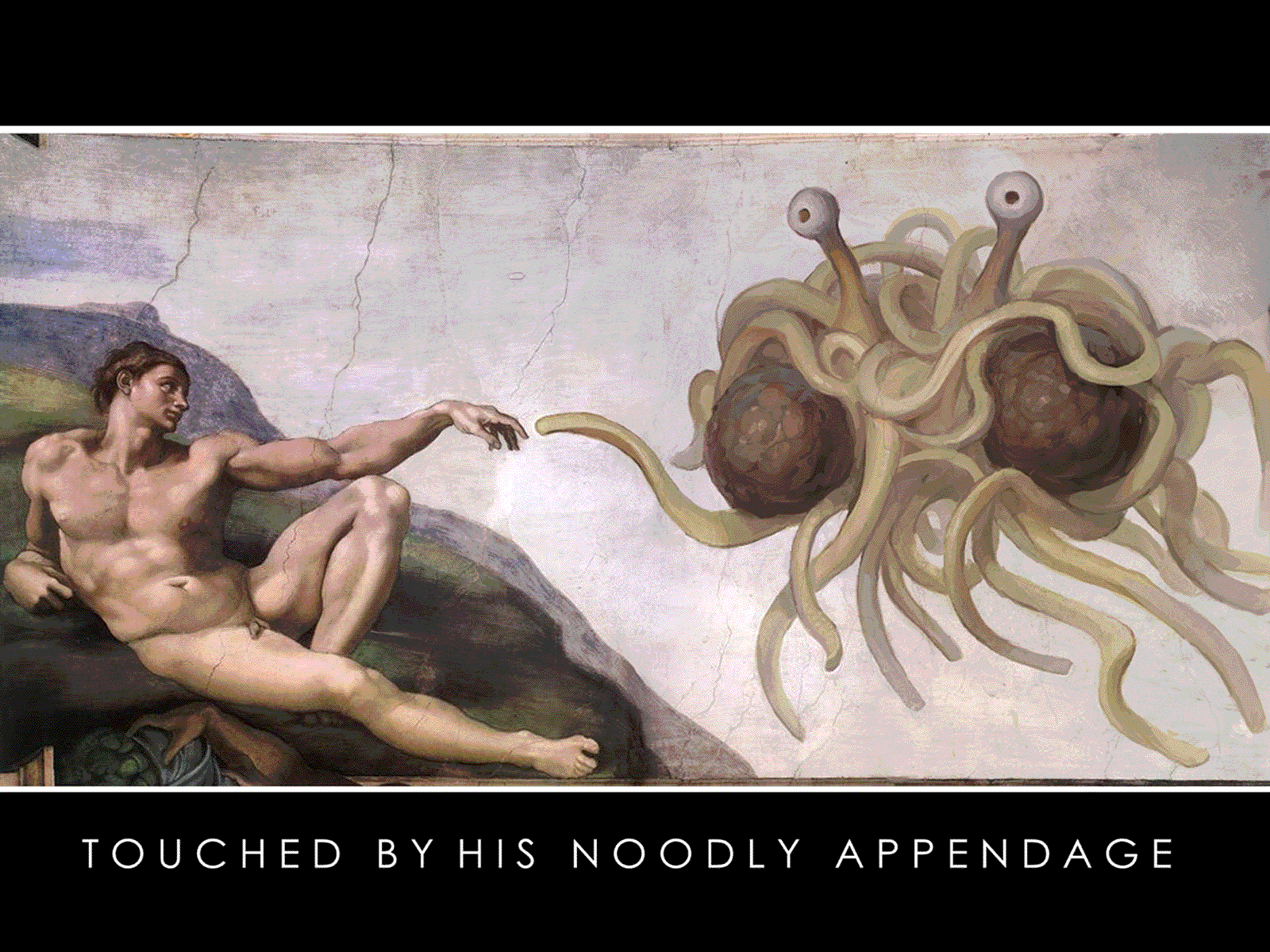
The Flying Spaghetti Monster (FSM) is the deity of the parody religion the Church of the Flying Spaghetti Monster or Pastafarianism, a satirical movement that promotes a light-hearted view of religion and opposes the teaching of intelligent design and creationism in public schools. Created in 2005 by Oregon State physics graduate Bobby Henderson, it was originally intended as a satirical protest against the decision by the Kansas State Board of Education to permit the teaching of intelligent design as an alternative to evolution in public schools. In an open letter, Henderson parodied the concept of intelligent design by professing belief in a supernatural creator which closely resembles spaghetti and meatballs. Henderson further called for his theory of creation to be allotted equal time in science classrooms alongside intelligent design and evolution.
In his letter he wrote, ‘I think we can all look forward to the time when these three theories are given equal time in our science classrooms across the country, and eventually the world; one third time for Intelligent Design, one third time for Flying Spaghetti Monsterism, and one third time for logical conjecture based on overwhelming observable evidence.’
read more »
Posted in Education, Humor, Philosophy |
1 Comment »
September 1, 2010
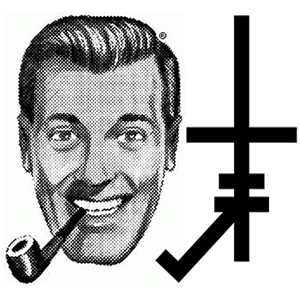
The Church of the SubGenius is a religious organization often seen as a ‘parody religion,’ that satirizes religion, conspiracy theories, Ufology, and popular culture. Originally based in Dallas, Texas, the Church of the SubGenius gained prominence in the 1980s and 1990s subculture and maintains an active presence on the Internet. In 1996 the legal entity SubGenius Foundation was incorporated in Cleveland, Ohio. The Foundation’s president and founder is Ivan Stang. It’s mascot is ‘world’s greatest salesman’ J. R. ‘Bob’ Dobbs. ‘Bob’ is depicted as a cartoon of a Ward Cleaver-like man smoking a pipe. It’s symbol is the ‘Dobb’s Mark,’ a stylized cross with three bars and a pipe, placed in a pattern that matches the eyes, nose, mouth, and pipe of ‘Bob’s’ image.
The central belief in the Church is the pursuit of ‘Slack,’ which generally stands for the sense of freedom, independence, and original thinking that comes when you stop worrying about personal goals. In essence, slack is about finding satisfaction with what you have and who you are, as opposed for searching for satisfaction in accomplishment.
Posted in Humor, Philosophy |
1 Comment »
August 29, 2010
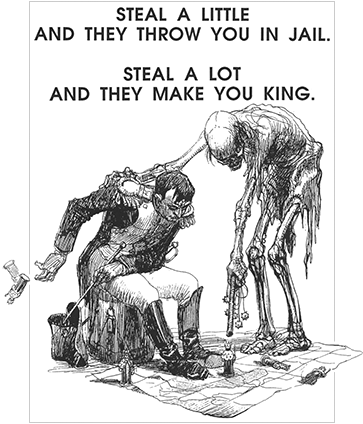
Mammon [mam-uhn] is a term, derived from the Christian Bible, used to describe material wealth or greed, most often personified as a deity.
Posted in Language, Money, Philosophy |
Leave a Comment »
August 25, 2010
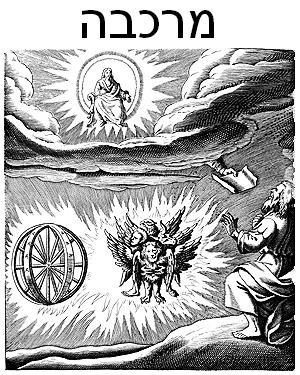
The Hebrew word Merkabah is used in Ezekiel (1:4-26) to refer to the throne-chariot of God, the four-wheeled vehicle driven by four ‘chayot’ (‘living creatures’), each of which has four rings and the four faces of a man, lion, ox, and eagle. Due to the concern of some Torah scholars that misunderstanding these passages as literal descriptions of God’s image might lead to blasphemy and/or idolatry, there was great opposition to studying this topic.
Jewish biblical commentaries emphasize that the imagery of the Merkaba is not meant to be taken literally; rather the chariot and its accompanying angels are analogies for the various ways that God reveals Himself in this world. Hasidic philosophy and Kabbalah discuss at length what each aspect of this vision represents in this world, and how the vision does not imply that God is made up of these forms. Jews customarily read the Biblical passages concerning the Merkaba in their synagogues every year on the holiday of Shavuot, which commemorates the receiving of the Ten Commandments.
Posted in Language, Philosophy |
1 Comment »
August 25, 2010


Xenu [zee-noo] was, according to the founder of Scientology and science fiction writer L. Ron Hubbard, the dictator of the ‘Galactic Confederacy’ who, 75 million years ago, brought billions of his people to Earth in a DC-8-like spacecraft, stacked them around volcanoes and killed them using hydrogen bombs. Official Scientology dogma holds that the essences of these many people remained, and that they form around people in modern times, causing them spiritual harm.
Posted in Humor, Philosophy |
Leave a Comment »
August 25, 2010
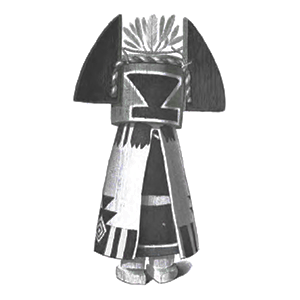
A kachina [kuh-chee-nuh] is a spirit being in the cosmology and religious practices of the Pueblo people of the southwestern U.S.. The term also refers to the kachina dancers, masked members of the tribe who dress up as kachinas for religious ceremonies, and kachina dolls, wooden dolls representing kachinas which are given as gifts to children.
A kachina can represent anything in the natural world or cosmos, from a revered ancestor to an element, a location, a quality, a natural phenomenon, or a concept.
read more »
Posted in Philosophy, World |
Leave a Comment »
August 17, 2010
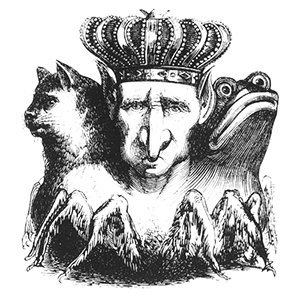
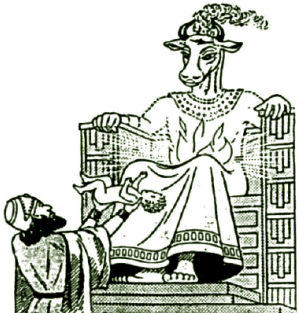
Baal [bahl] is one of the seven princes of Hell. He is mentioned widely in the Old Testament as the primary pagan idol of the Phoenicians, often associated with the heathen goddess Ashtaroth. Baal means ‘The Lord.’ Baal is the son of the god Dagan, another Semitic Cannonite god. While his Semitic predecessor was depicted as a man or a bull, the demon Baal was said to appear in the forms of a man, cat, toad, or combinations thereof.
The idea of Baal as a demon was created when Christianity turned ancient gods into demons and demonology divided the demonic population of Hell in several hierarchies. Baal, the Semitic god, did not escape, becoming a separate entity from Beelzebub. During the English Puritan period, Baal was either compared to Satan or considered his main assistant.
Posted in Philosophy, World |
Leave a Comment »
August 17, 2010
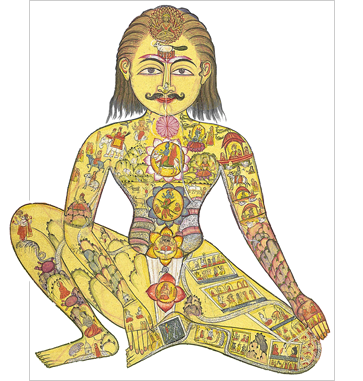
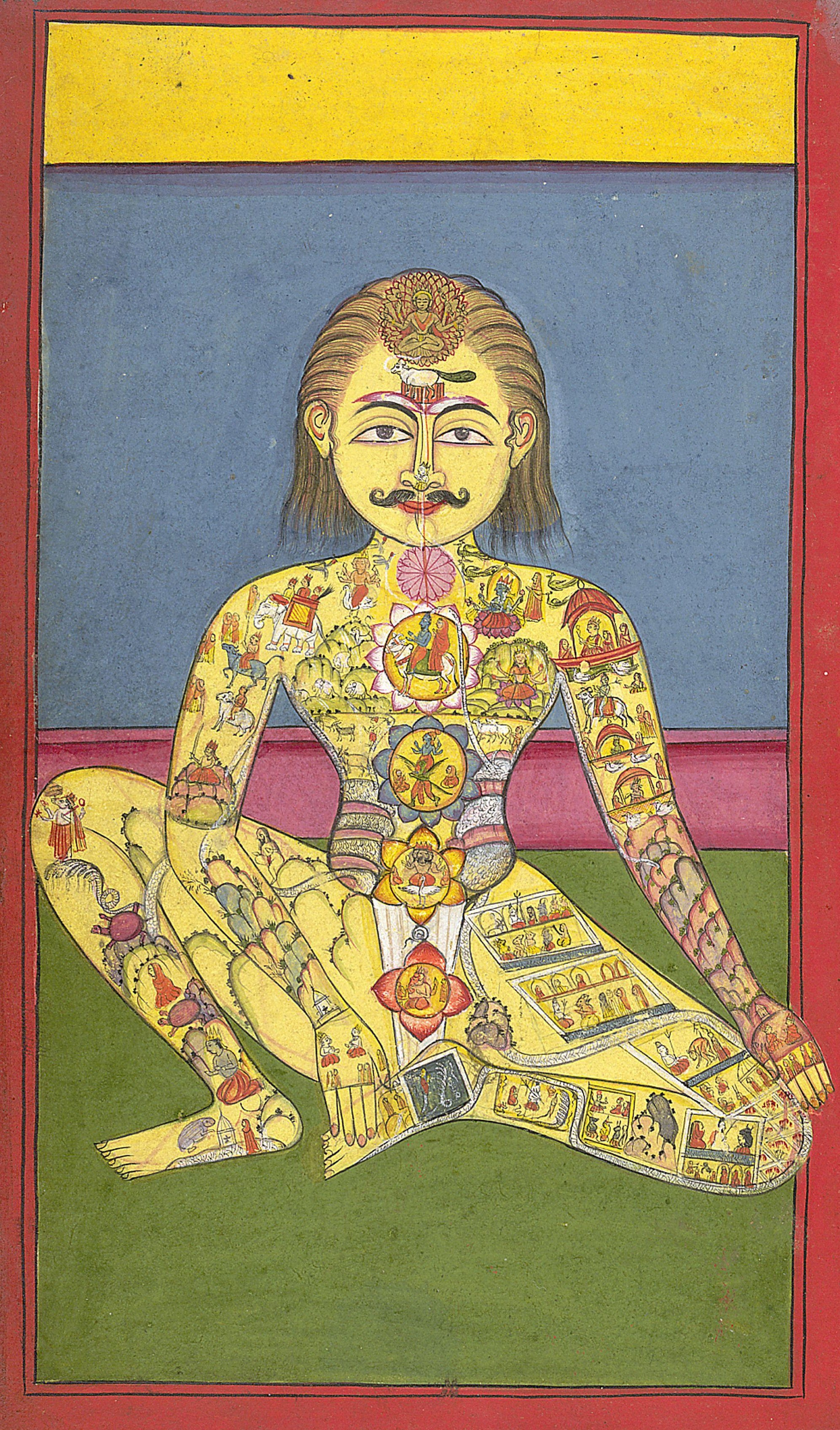
According to various esoteric, occult, and mystical teachings, living beings are constituted of a series of psycho-spiritual subtle bodies, each corresponding to a subtle plane of existence, in a hierarchy or great chain of being that culminates in the physical form. It is known in different spiritual traditions; ‘the most sacred body’ and ‘supracelestial body’ in Sufism, ‘the diamond body’ in Taoism, and ‘the light body’ or ‘rainbow body’ in Buddhism.
Clairvoyants sometimes say that they can see the subtle bodies as an aura. The practice of astral projection is supposed to involve the separation of the subtle body from the physical, but the existence of subtle bodies is unconfirmed by the mainstream scientific community.
Posted in Philosophy |
Leave a Comment »
August 16, 2010

In some Native American legends, a skinwalker is a person with the supernatural ability to turn into any animal he or she desires, though they first must be wearing a pelt of the animal to be able to transform. Similar lore can be found in cultures throughout the world and is often referred to as shapeshifting by anthropologists.
Posted in Philosophy, World |
Leave a Comment »
August 12, 2010
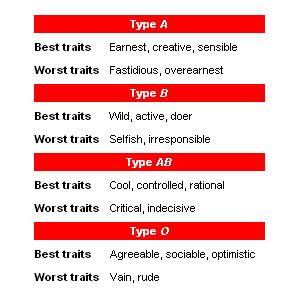

Ketsuekigata is a Japanese pseudoscience based on human blood types. There is a popular belief in Japan that a person’s ABO blood type is predictive of their personality, temperament, and compatibility with others. Ultimately deriving from ideas of historical scientific racism, the popular belief originates with publications by Masahiko Nomi in the 1970s. The scientific community dismisses such beliefs as superstition. Discussion of blood types is widely popular in women’s magazines as a way of gauging relationship compatibility with a potential or current partner. Morning television shows feature blood type horoscopes, and similar horoscopes are published daily in newspapers. In addition, a series of four books that describe people’s character by blood type ranked third, fourth, fifth and ninth on a list of best selling books in Japan in 2008.
Although there is no proven correlation between blood type and personality, it remains popular with the many matchmaking services that cater to blood type. In this way, it is similar to the use of astrological signs in the West, which is also popular in Japan. Asking one’s blood type is common in Japan, and people are often surprised when a non-Japanese does not know his or her own blood type.
Posted in Humor, Philosophy, World |
Leave a Comment »




 The Daily Omnivore