September 21, 2010

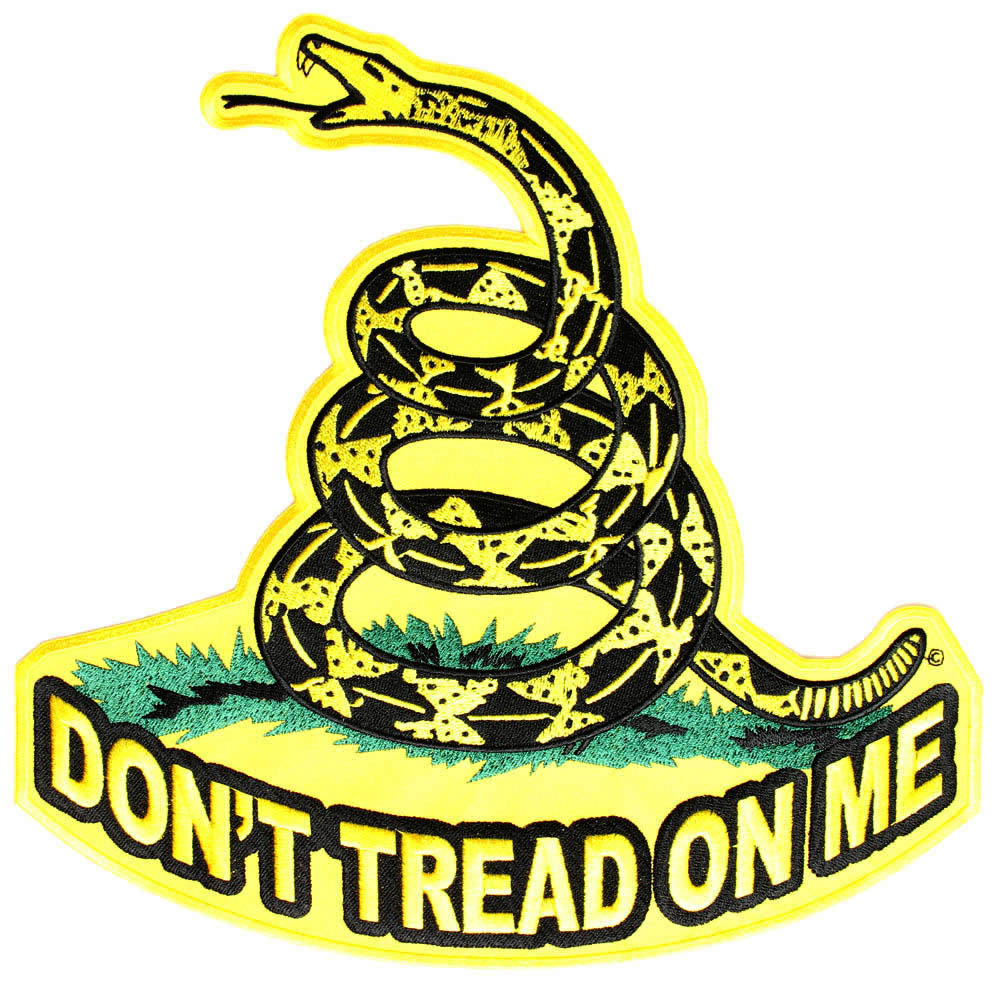
The Gadsden [gadz-duhn] flag is a historical American flag with a yellow field depicting a rattlesnake coiled and ready to strike. Positioned below the snake is the legend ‘DONT TREAD ON ME’ [sic]. The flag was designed by and is named after American general and statesman Christopher Gadsden (1724-1805). It was also used by the United States Marine Corps as an early motto flag.
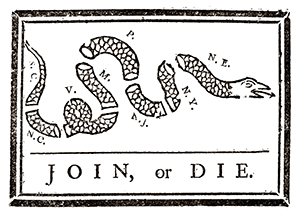
The use of the timber rattlesnake as a symbol of the American colonies can be traced back to the publications of Benjamin Franklin. In 1754, during the French and Indian War, Franklin published his famous woodcut of a snake cut into eight sections. It represented the colonies, with New England joined together as the head and South Carolina as the tail, following their order along the coast. Under the snake was the message ‘Join, or Die.’ This was the first political cartoon published in an American newspaper. Beginning in 2009, the Gadsden Flag has become an adopted symbol of the American Tea Party movement.
Posted in Politics |
Leave a Comment »
September 19, 2010


The Original Whizzinator is a product intended to fraudulently defeat drug tests. The Whizzinator comes as a kit complete with dried urine and syringe, heater packs (to keep the urine at body temperature), a false penis (available in several skin tones including white, tan, latino, brown, and black) and an instruction manual. The company also offered a female version of the Whizzinator, called ‘Number One.’
The device received media coverage in 2005 after Onterrio Smith, a former Minnesota Vikings running back, was caught with one at the Minneapolis-St. Paul International Airport, which resulted in his suspension. Actor Tom Sizemore was also caught with a Whizzinator that year. In 2008, federal prosecutors in Pittsburgh won a 19-count indictment against Puck Technology, maker of the Whizzinator, and its owners for fraud and selling drug paraphernalia. As of 2011, the Whizzinator-XXX is being marketed by Alternative Lifestyle Systems for $139.95 through ‘High Times’ magazine as a strap-on ‘wet sex simulator’ containing ‘synthetic urine,’ ostensibly for synthetic watersports activity.
Posted in Drugs, Politics, Sex |
Leave a Comment »
September 16, 2010
The Anarchist Cookbook, first published in 1971, is a book that contains instructions for the manufacture of explosives, rudimentary telecommunications hacking devices, and other quasi-legal and contraband items.
It was written by William Powell to protest United States involvement in the Vietnam War. Since writing the book, Powell has converted to Anglican Christianity and attempted to have the book removed from circulation.
Posted in Language, Politics, War |
Leave a Comment »
September 13, 2010

A stalking horse is a person who acts on the behalf of an anonymous third party. The expression is generally used in politics and business. The term originally derived from the practice of hunting wildfowl, which flee immediately on the approach of humans, but tolerate the close presence of animals such as horses and cattle. Hunters slowly approach their quarry by walking alongside their horses, keeping out of sight until the flock is within firing range. Animals or devices used for this purpose are called stalking horses.
The phenomenon occurs particularly in politics, where a junior politician acts as the stalking horse to promote the interests of a senior politician who remains unseen in case the actions would damage him or her but nevertheless wants to provoke a debate or challenge to a party colleague. In some cases stalking horses are not working for a particular individual but may wish to provoke a response that leads others to join in. In politics, the truth about the relationship between an individual stalking horse and a candidate may never be known, as both sides may claim that the (alleged) stalking horse acted without the agreement of anyone else.
Posted in Language, Money, Politics |
Leave a Comment »
September 11, 2010

Strawberry Generation is a Chinese language neologism for Taiwanese people born between 1981 and 1991 who ‘bruise easily’ like strawberries — meaning they can’t withstand social pressure or work hard like their parents’ generation; the term refers to people who are insubordinate, spoiled, selfish, arrogant, and sluggish in work. Persons from this generation have grown up being overprotected by their parents and in an environment of economic prosperity, in a similar manner to how strawberries are grown in protected greenhouses and command a higher price compared to other fruits.
Posted in Philosophy, Politics, World |
Leave a Comment »
September 11, 2010

The 386 Generation is a generation of South Koreans born in the 1960s who were very active politically as young adults, and instrumental in the democracy movement of the 1980s. The term refers to the Intel i386 CPU, released in 1985, and used in Korean universities in that era. This was the first generation of South Koreans to grow up free from the poverty that had marked Korea in the recent past.
The broad political mood of the generation was far more left-leaning than that of their parents, or their eventual children. They played a pivotal role in the democratic protests which forced President Chun Doo-hwan to call democratic elections in 1987, marking the transition from military rule to democracy. Members of the 386 Generation now comprise much of the elite of Korean society, including Nobel laureate and former president Kim Dae-jung (1925 – 2009).
Posted in Politics, Technology, World |
Leave a Comment »
September 10, 2010
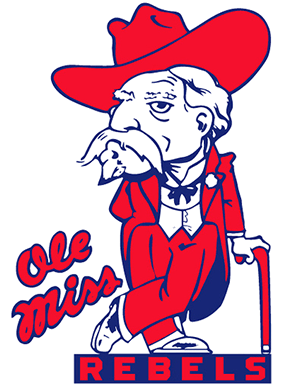
Colonel Reb is the traditional sporting mascot of Ole Miss Rebels, the collegiate athletic teams of the University of Mississippi. Designed in the 1930s, the figure served as the teams’ official or near-official mascot from 1979 until 2003. To some people, he resembles a white antebellum plantation owner, but to others, he simply resembles the ideal of the ‘Southern gentleman’ of the Antebellum Age.
In 2003, the administration eliminated Colonel Reb from the sidelines at Ole Miss athletic events as the on-the-field mascot, though he was allowed at tailgating and other unofficial university functions. In a 2010 vote, Ole Miss students decided to choose a new mascot for the school. An internet campaign to replace Colonel Reb with fictional Star Wars character Admiral Ackbar has gained popular support.
Posted in Education, Games, Politics |
Leave a Comment »
September 10, 2010
The Electronic Frontier Foundation (EFF) is an international non-profit digital rights advocacy and legal organization based in the United States.
EFF provides funds for legal defense in court, defends individuals and new technologies from what it considers baseless or misdirected legal threats, works to expose government malfeasance, provides guidance to the government and courts, organizes political action and mass mailings, supports some new technologies which it believes preserve personal freedoms, maintains a database and web sites of related news and information, monitors and challenges potential legislation that it believes would infringe on personal liberties and fair use, and solicits a list of what it considers patent abuses with intentions to defeat those that it considers without merit.
Posted in Money, Politics, Technology |
Leave a Comment »
September 3, 2010
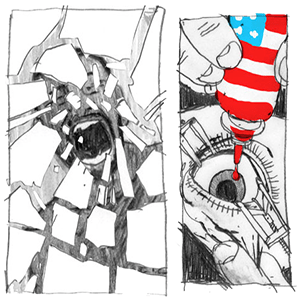
MKULTRA was the code name for a covert, illegal CIA human research program, run by the Office of Scientific Intelligence. This official U.S. government program began in the early 1950s, continuing at least through the late 1960s, and it used U.S. and Canadian citizens as its test subjects.
The published evidence indicates that Project MKULTRA involved the use of many methodologies to manipulate individual mental states and alter brain function, including the surreptitious administration of drugs and other chemicals, sensory deprivation, isolation, and verbal and sexual abuse. The CIA poured millions of dollars into studies examining methods of influencing and controlling the mind, and of enhancing their ability to extract information from resistant subjects during interrogation.
Posted in Politics, Science |
Leave a Comment »
September 2, 2010
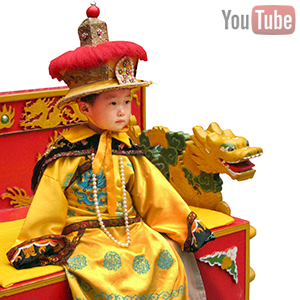
‘Little Emperors‘ is a name that refers to only children in the People’s Republic of China after the one-child policy was implemented. Attributed most frequently to increased spending power within the family unit and the parents’ desire for their child to experience the benefits they were denied, the syndrome results from the children’s sole command of the attention of their parents and grandparents. The Little Emperor effect is primarily an urban phenomenon. The one-child policy is not as rigorously enforced in the countryside as in the urban communities.
Posted in Politics, World |
1 Comment »
August 24, 2010
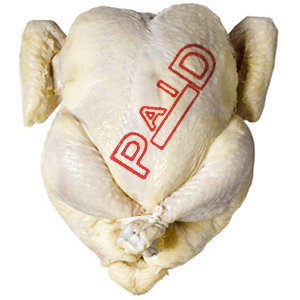
The so-called Chicken tax was a 25% tax on potato starch, dextrin, brandy, and light trucks imposed in 1963 by the United States under President Lyndon B. Johnson as a response to tariffs placed by France and West Germany on importation of U.S. chicken. The period from 1961–1964 of tensions and negotiations surrounding the issue, which took place at the height of Cold War politics, was known as the ‘Chicken War.’
Eventually, the tariffs on potato starch, dextrin, and brandy were lifted, but the light truck tax is still in place. As an unintended consequence, several importers of light trucks have circumvented the tariff via loopholes, including Ford, which currently imports light trucks as ‘passenger vehicles’ to the U.S. from Turkey and immediately shreds portions of their interiors.
Posted in Food, Money, Politics |
Leave a Comment »
August 17, 2010
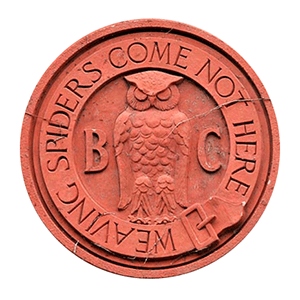
Bohemian Grove is a 2,700-acre campground located at 20601 Bohemian Avenue, in Monte Rio, California, belonging to a private San Francisco-based men’s art club known as the Bohemian Club. In mid-July each year, Bohemian Grove hosts a three-week encampment of some of the most powerful men in the world. The Club motto is ‘Weaving Spiders Come Not Here,’ which implies that outside concerns and business deals are to be left outside.
The Grove is particularly famous for a Manhattan Project planning meeting that took place there in September 1942, which subsequently led to the atomic bomb. Those attending this meeting, apart from Ernest Lawrence and military officials, included the president of Harvard and representatives of Standard Oil and General Electric. Grove members take particular pride in this event and often relate the story to new attendees.
Posted in Money, Politics |
1 Comment »