March 20, 2016

‘You have two cows‘ is a joke comparing political systems that circulated throughout the US since around 1936 under the title ‘Parable of the Isms.’ A column in ‘The Chicago Daily Tribune’ in 1938 attributes a version involving socialism, communism, fascism and New Dealism to an address by lawyer Silas Strawn to the Economic Club of Chicago in 1935.
The joke always begins with ‘You have two cows…’ followed by a political system and its effect on the cows. For example, ‘socialism’ (the government takes one and gives it to your neighbor), ‘communism’ (you give them to the government, and the government then gives you some milk), fascism (you give them to the government, and the government then sells you some milk), and capitalism (you sell one and buy a bull).
Posted in Humor, Money, Politics |
1 Comment »
March 18, 2016

Dog-whistle politics is political messaging employing coded language that appears to mean one thing to the general population but has an additional, different or more specific resonance for a targeted subgroup. The phrase is often used as a pejorative, because of the inherently deceptive nature of the practice and because the messages are frequently coded because they are distasteful to the general populace. The analogy is to a dog whistle, whose high-frequency whistle is heard by dogs but inaudible to humans.
The term can be distinguished from ‘code words’ used in some specialist professions, in that dog-whistling is specific to the political realm. The messaging referred to as the dog-whistle has an understandable meaning for a general audience, rather than being incomprehensible.
read more »
Posted in Language, Politics |
1 Comment »
March 10, 2016

Shoe-throwing (also called shoeing) and showing the sole of one’s shoe as an insult are forms of protest in many parts of the world. Posters of George W. Bush’s face have long appeared through the Middle East with shoes attached to them, and some people have called former Secretary of State Condoleezza Rice ‘kundara,’ meaning ‘shoe.’ Shoeing received widespread attention after Muntadhar al-Zaidi threw his shoes at then President George W. Bush during a 2008 press conference in Baghdad.
‘This is a farewell kiss from the Iraqi people, you dog!’ yelled al-Zaidi in Arabic as he threw his first shoe towards the president. ‘This is for the widows and orphans and all those killed in Iraq!’ he shouted as he threw his second shoe. President Bush ducked twice, avoiding being hit by the shoes. Since the al-Zaidi incident, copycat incidents in Europe, North America, India, China, Hong Kong, Iran, Turkey, and Australia have been reported. Shoes are considered unclean in the Arab World, but Matthew Cassel of ‘The Electronic Intifada’ has expressed the opinion that the Western media overplayed the phenomenon as being ‘Arab’ in particular.’
Posted in Humor, Politics, War |
Leave a Comment »
March 3, 2016
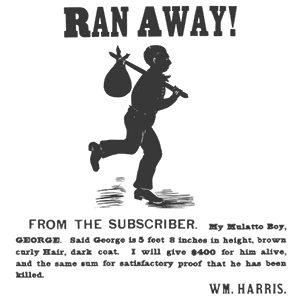
Drapetomania [drah-pay-too-mey-nee-uh] was a supposed mental illness described by American physician Samuel A. Cartwright in 1851 that caused black slaves to flee captivity. Today, drapetomania is considered an example of pseudoscience and part of the edifice of scientific racism. The term derives from the Greek ‘drapetes’ (‘runaway [slave]’) and ‘mania’ (‘madness, frenzy’). In ‘Diseases and Peculiarities of the Negro Race,’ Cartwright points out that the Bible calls for a slave to be submissive to his master, and by doing so, the slave will have no desire to run away.
Cartwright described the disorder – which, he said, was ‘unknown to our medical authorities, although its diagnostic symptom, the absconding from service, is well known to our planters and overseers’– in a paper delivered before the Medical Association of Louisiana that was widely reprinted. He stated that the malady was a consequence of masters who ‘made themselves too familiar with [slaves], treating them as equals.’
read more »
Posted in Health, Politics |
1 Comment »
February 29, 2016

Political parties in the US hold conventions to select the party’s nominee for President, as well as to adopt a statement of party principles and goals known as the ‘platform.’ Since the 1970s, voting has for the most part been perfunctory; the selection of the major parties’ nominees have rarely been in doubt, so a single ballot has always been sufficient.
If there is no single candidate receiving a majority of delegates at the end of the primary season, a scenario called a brokered convention results, where a candidate is selected either at or near the convention, through political horse-trading and lesser candidates compelling their delegates to vote for one of the front runners. The closest to a brokered convention in recent years was at the 1976 Republican National Convention, when neither Gerald Ford nor Ronald Reagan received enough votes in the primary to lock up the nomination. Since then, candidates have received enough momentum to reach a majority through pledged and bound delegates before the date of the convention.
read more »
Posted in Politics |
1 Comment »
February 25, 2016
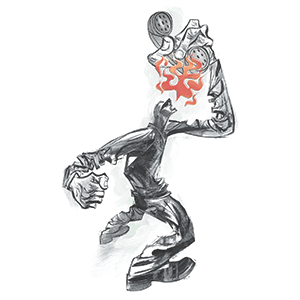
Swatting is the act of deceiving an emergency service into dispatching a police response based on the false report of an ongoing critical incident. The term derives from SWAT (Special Weapons and Tactics), a heavily armored police unit. Swatting has been associated with online harassment campaigns, and episodes range from the deployment of bomb squads and evacuations of schools and businesses, to a single fabricated police report meant to discredit an individual as a prank or personal vendetta.
The action of swatting – linked to the action of ‘doxxing’ (obtaining the address and details of an individual) – has been described as terrorism due to its potential to cause disruption, waste the time of emergency services, divert attention from real emergencies and possibly cause injuries and psychological harm to persons targeted. The act of making false reports to emergency services is punishable by prison sentences in the US and is a crime in many other countries.
read more »
Posted in Politics, Technology |
1 Comment »
January 29, 2016


A Raisin in the Sun is a play by African American playwright Lorraine Hansberry that debuted on Broadway in 1959. The title comes from the poem ‘Harlem’ by Langston Hughes: ‘What happens to a dream deferred? Does it dry up like a raisin in the sun?’ The story tells a black family’s experiences in the Washington Park Subdivision of Chicago’s Woodlawn neighborhood as they attempt to ‘better’ themselves with an insurance payout from the death of the father.
Walter and Ruth Younger, their son Travis, along with Walter’s mother Lena (Mama) and sister Beneatha, live in poverty in a dilapidated two-bedroom apartment on Chicago’s south side. Walter is barely making a living as a limousine driver. Though Ruth is content with their lot, Walter is not and desperately wishes to become wealthy. His plan is to invest in a liquor store in partnership with Willy and Bobo, street-smart acquaintances of Walter’s.
read more »
Posted in Art, Language, Politics |
Leave a Comment »
January 22, 2016


A warrant canary is a method by which a communications service provider aims to inform its users that the provider has not been served with a secret government subpoena. Secret subpoenas, including those covered under the ‘Patriot Act,’ provide criminal penalties for disclosing the existence of the warrant to any third party, including the service provider’s users. A warrant canary may be posted by the provider to inform users of dates that they have not been served a secret subpoena. If the canary has not been updated in the time period specified by the host, users are to assume that the host has been served with such a subpoena.
The intention is to allow the provider to warn users of the existence of a subpoena passively, without disclosing to others that the government has sought or obtained access to information or records under a secret subpoena. Warrant canaries have been found to be legal by the United States Justice Department, so long as they are passive in their notifications.
read more »
Posted in Politics, Technology |
1 Comment »
January 11, 2016
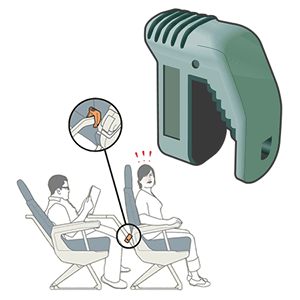
The Knee Defender is a device that an airplane passenger can place on the struts that support his/her drop-down airplane seat tray table to limit the extent to which the seat directly in front of him/her can be reclined. The device was invented by Ira Goldman, and it was first sold to the public in 2003.
In August 2014, on a United Airlines flight from Newark to Denver, an argument developed between a passenger using a Knee Defender and the passenger seated in front of him who wanted to recline. Ultimately the pilot diverted the flight to Chicago and both of those passengers were deplaned.
Posted in Money, Politics, Technology |
Leave a Comment »
January 5, 2016

In rhetoric, parrhesia [puh-reez-ee-uh] refers to speaking candidly or asking forgiveness for so speaking. Its nominal form, is translated from Latin to ‘free speech.’ The term first appears in Greek literature in the tragic plays of ‘Euripides.’ The term is borrowed from the Greek word meaning ‘to speak everything’ and by extension ‘to speak freely,’ ‘to speak boldly,’ or ‘boldness.’ It implies not only freedom of speech, but the obligation to speak the truth for the common good, even at personal risk.
In Ancient Greece, rhetoric and parrhesia were understood to be in opposition of each other through the dialogues written by Plato. There are two major philosophies during this time one being Sophistry and one being Dialectic. Sophistry is most commonly associated with the uses of rhetoric or means of persuasion to teach or persuade an audience. In its opposition is the practice of dialectic, supported by Plato and his mentor Socrates, which practices using dialogue to break apart complex issues in search of absolute truth or knowledge.
read more »
Posted in Language, Philosophy, Politics |
Leave a Comment »
December 17, 2015
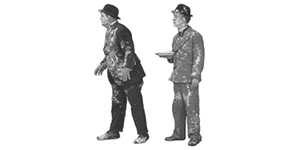
Pieing is the act of throwing a pie at a person or people. This may be a simple practical joke, but can be a political action when the target is an authority figure, politician, or celebrity and can be used as a means of protesting against the target’s political beliefs, or against perceived arrogance or vanity. Perpetrators generally regard the act as a form of ridicule to embarrass and humiliate the victim. In most or all jurisdictions, pieing is punishable as battery, and may constitute assault as well.
In pieing, the goal is usually to humiliate the victim while avoiding actual injury. For this reason the pie is traditionally of the cream variety without a top crust, and is rarely if ever a hot pie. In Britain, a pie in the context of throwing is traditionally referred to as a ‘custard pie.’ An aluminum pie pan or paper plate filled with whipped cream or shaving foam can substitute for a real pie. Pieing and pie fights are a staple of slapstick comedy, and pie ‘tosses’ are also common charity fundraising events, especially in schools.
read more »
Posted in Food, Humor, Politics |
1 Comment »
December 15, 2015


Phreaking is a slang term coined to describe the activity of hobbyists who study, experiment with, or explore, telecommunication systems, such as equipment and systems connected to public telephone networks. ‘Phreak,’ ‘phreaker,’ or ‘phone phreak’ are names used for and by individuals who participate in phreaking. The term first referred to groups who had reverse engineered the system of tones used to route long-distance calls. By re-creating these tones, phreaks could switch calls from the phone handset, allowing free calls to be made around the world.
Electronic tone generators known as ‘blue boxes’ became a staple of the phreaker community, including future Apple Inc. cofounders Steve Jobs and Steve Wozniak. The blue box era came to an end with the ever increasing use of computerized phone systems, which sent dialling information on a separate, inaccessible channel. By the 1980s, much of the system in the US and Western Europe had been converted. Phreaking has since become closely linked with computer hacking.
read more »
Posted in Money, Politics, Technology |
Leave a Comment »


 The Daily Omnivore