August 22, 2015

The moral credential effect is a bias that occurs when a person’s track record as a good egalitarian establishes in them an unconscious ethical certification, endorsement, or license that increases the likelihood of less egalitarian decisions later. This effect occurs even when the audience or moral peer group is unaware of the affected person’s previously established moral credential. For example, individuals who had the opportunity to recruit a woman or African American in one setting were more likely to say later, in a different setting, that a job would be better suited for a man or a Caucasian.
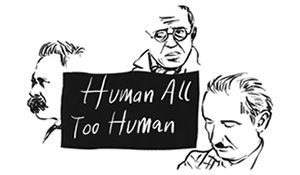
Moral credentials can also be obtained vicariously (i.e., a person may behave as if they themselves have moral credentials after observing someone from a group they identify with making an egalitarian decision). In research that draws on social identity theory it was also found that group membership moderates the effectiveness of moral credentials in mitigating perceptions of prejudice (e.g., displays of moral credentials have more effect between people who share in-group status). In 1878, philosopher Friedrich Nietzsche wrote of ‘innocent corruption’ in ‘Human, All Too Human’: ‘In all institutions that do not feel the sharp wind of public criticism (as, for example, in scholarly organizations and senates), an innocent corruption grows up, like a mushroom.’
Posted in Health, Philosophy, Politics |
Leave a Comment »
August 8, 2015

Extraterrestrial real estate is land on other planets or natural satellites or parts of space that is offered for sale. No such sale has ever been recognized by any authority. Nevertheless, some private individuals and organizations have claimed ownership of celestial bodies, such as the Moon, and are actively involved in ‘selling’ parts of them through certificates of ownership termed ‘Lunar deeds,’ ‘Martian deeds,’ or similar sham legal documents.
The topic of real estate on celestial objects has been present since the 1890s. In 1936, A. Dean Lindsay made claims for all extraterrestrial objects. He sent a letter to the Pittsburgh Notary Public along with a deed and money for establishment of the property. The public sent offers to buy objects from him as well. The UN sponsored 1967 ‘Outer Space Treaty’ established all of outer space as an international commons by describing it as the ‘province of all mankind’ and forbidding all the nations from claiming territorial sovereignty.
read more »
Posted in Money, Politics, World |
Leave a Comment »
July 30, 2015

Battered person syndrome is a physical and psychological condition of a person who has suffered (usually persistent) emotional, physical, or sexual abuse from another person. The condition is the basis for the battered spouse defense that has been used in cases of spouses who have killed their abusers. The condition was first researched extensively by American psychologist Lenore E. Walker, founder of the Domestic Violence Institute, who used psychologist Martin Seligman’s ‘learned helplessness’ theory to explain why abused spouses stayed in destructive relationships.
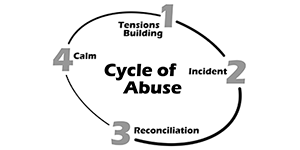
The syndrome develops in response to a three-stage cycle found in domestic violence situations. First, tension builds in the relationship. Second, the abusive partner releases tension via misconduct while blaming the victim for having caused the event. Third, the abusive partner makes gestures of contrition, but does not find solutions to avoid another phase of tension building and release so the cycle repeats. The repetition of the cycle despite the abuser’s attempts to ‘make nice’ results in the abused partner feeling at fault for not preventing recurrences. However, since the victim is not at fault and the violence is internally driven by the abuser’s need to control, this self-blame results in feelings of helplessness rather than empowerment.
read more »
Posted in Health, Politics, Sex |
Leave a Comment »
July 15, 2015
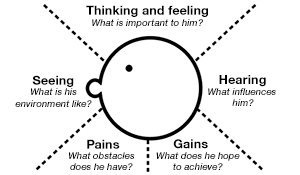

Perspective-taking is the process by which an individual views a situation from another’s point-of-view. It can occur visually in that one changes their physical location to see things as someone else does, or cognitively in that one mentally simulates the point-of-view of another’s cognitive state. For instance, one can visualize the viewpoint of a taller individual (physical state) or reflect upon another’s point-of-view on a particular concept (cognitive state).
In other words, perspective-taking is the process of temporarily suspending one’s own point-of-view in an attempt to view a situation as someone else might. This process does not necessitate any form of affinity, compassion, or emotional identification with the other (i.e. empathy). Therefore, as an other-oriented activity, perspective-taking can be used to gain an understanding of a given physical state and/or situation after which a determination of appropriate action can be selected (e.g., empathy).
read more »
Posted in Health, Money, Politics |
Leave a Comment »
July 13, 2015

‘The Truth Machine‘ is a 1996 science fiction novel by James L. Halperin about an infallible lie detector. Soon, every citizen must pass a thorough test under a Truth Machine to get a job or receive any sort of license. Eventually, people begin wearing them all the time, thus eliminating dishonesty in all parts of human interaction, including most crime, terrorism and a great deal of general social problems.
The novel focuses on the life story of the machine’s inventor, Pete Armstrong, a child prodigy whose life has been defined by the tragic murder of his younger brother, Leonard, by an ex-convict who was believed to be capable of committing violent crimes again, but who could not be incarcerated on mere suspicions. Armstrong claimed that as long as it was employed universally (and not just by government officials), the ‘truth machine’ could revolutionize humanity and take it to that next evolutionary step. However, the protagonist places a back door in the device, allowing him to avoid detection when he repeats fragments of Walt Whitman’s poem ‘O Captain! My Captain!’ in his mind.
Posted in Language, Politics, Technology |
Leave a Comment »
June 13, 2015

Tokenism [toh-kuh-niz-uhm] is the policy and practice of making a perfunctory gesture towards the inclusion of members of minority groups. The effort of including a token employee to a workforce usually is intended to create the appearance of social inclusiveness and diversity (racial, religious, sexual, etc.), and so deflect accusations of discrimination.
Employment tokenism misrepresents the person possessing inferior intellect, job skills, and work capacity, relative to the other workers of the group, as well as a superficial personality that is sufficiently bland and inoffensive to not affront the sensibility of superiority inherent to white privilege. Alternatively, the differences of the token person might be over-emphasized and made either exotic or glamorous, or both, which are extraordinary conditions that maintain the Otherness that isolates the token worker from the group.
read more »
Posted in Money, Politics, World |
Leave a Comment »
June 10, 2015


Benevolent prejudice is a superficially positive type of prejudice, opinions formed before becoming aware of relevant facts, (e.g. ‘Asians are good at math,’ ‘African Americans are athletic,’ ‘Jews are good with money’).
Though this type of prejudice associates supposedly good things with certain groups, it still has the result of keeping the group members in inferior positions in society. Benevolent prejudices can help justify any hostile prejudices a person has toward a particular group and act as a wedge keeping outsiders from assimilating into the mainstream.
read more »
Posted in Politics, World |
Leave a Comment »
May 14, 2015


The Third Wave was an experimental social movement created by high school history teacher Ron Jones to demonstrate the appeal of fascism and explain how the German populace could accept the actions of the Nazi regime. Over the course of five days, Jones conducted a series of exercises in his classroom emphasizing discipline and community, intended to model certain characteristics of the Nazi movement.
As the movement grew outside his class and began to number in the hundreds, Jones began to feel that the experiment had spiraled out of control. He convinced the students to attend a rally where he claimed the announcement of a Third Wave presidential candidate would be televised. Upon their arrival, the students were presented with a blank channel and told the true nature of the movement, and shown a short film discussing the actions of Nazi Germany. The psychology involved has been extensively studied in terms of youth gang behavior and peer pressure, of which this experiment was a variant.
read more »
Posted in Health, Politics, War |
Leave a Comment »
May 8, 2015

Card counting is a casino card game strategy used primarily in blackjack to determine whether the next hand is likely to give a probable advantage to the player or to the dealer. Card counters are a class of advantage players, who attempt to decrease the house edge by keeping a running tally of all high and low valued cards seen by the player.
Card counting allows players to bet more with less risk when the count gives an advantage as well as minimize losses during an unfavorable count. Card counting also provides the ability to alter playing decisions based on the composition of remaining cards. Card counting (sometimes called ‘card reading’) is also used in trick-taking games such as contract bridge or spades to optimize the winning of tricks (rounds of play).
read more »
Posted in Games, Money, Politics |
Leave a Comment »
April 30, 2015


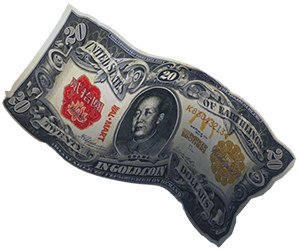
World currency normally refers to a currency that is transacted internationally, with no set borders, but an alternative definition refers to a hypothetical single global currency or supercurrency, such as the proposed ‘terra’ or the ‘DEY’ (Dollar Euro Yen), produced and supported by a central bank which is used for all transactions around the world, regardless of the nationality of the entities (individuals, corporations, governments, or other organizations) involved in the transaction.
Advocates of a global currency, notably famed economist John Maynard Keynes, have argued that such a currency would not suffer from inflation, which, in extreme cases, has had disastrous effects for economies. In addition, many argue that a single global currency would make conducting international business more efficient and would encourage foreign direct investment.
read more »
Posted in Money, Politics, World |
1 Comment »
April 29, 2015

The United Federation of Planets, usually referred to as ‘the Federation,’ is an interstellar federal republic composed of planetary sovereignties depicted in the ‘Star Trek’ science fiction franchise. Formed in 2161, the planetary governments voluntarily exist semi-autonomously under a single central government based on the Utopian principles of universal liberty, rights, and equality, and to share their knowledge and resources in peaceful cooperation and space exploration.
The Federation is described a post-capitalist, libertarian, constitutional republic, which was composed of more than 150 member planets and thousands of colonies spread across some 6,000,000 cubic light years of the Milky Way Galaxy by 2373. The social structure within the Federation is classless and operates within a moneyless ‘New World Economy.’ It is described as stressing, at least nominally, the values of universal liberty, equality, justice, peace, and cooperation. The Federation also maintains its own quasi-militaristic and scientific exploratory agency, known as ‘Starfleet’ which handles many other governmental processes, sometimes with no other agency’s influence, such as border defense and diplomatic relations.
read more »
Posted in Art, Money, Politics |
Leave a Comment »
April 27, 2015


Satyagraha [suht-yuh-gruh-huh] is a term coined by Mahatma Gandhi to describe his particular philosophy and practice within the broader overall category generally known as nonviolent resistance or civil resistance. It loosely translates as ‘insistence on truth’ (Sanskrit: ‘satya’ ‘truth’; ‘agraha’ ‘polite insistence,’ or ‘holding firmly to’) or ‘truth force.’
He deployed satyagraha in the Indian independence movement and also during his earlier struggles in South Africa for Indian rights. Satyagraha theory influenced Nelson Mandela’s struggle in South Africa under apartheid, Martin Luther King, Jr.’s campaigns during the Civil Rights Movement in the US, and many other social justice and similar movements. Someone who practices satyagraha is a ‘satyagrahi.’
read more »
Posted in Philosophy, Politics, War |
Leave a Comment »


 The Daily Omnivore