July 15, 2015
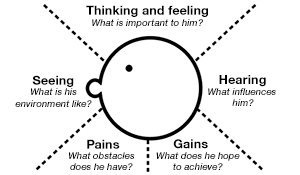

Perspective-taking is the process by which an individual views a situation from another’s point-of-view. It can occur visually in that one changes their physical location to see things as someone else does, or cognitively in that one mentally simulates the point-of-view of another’s cognitive state. For instance, one can visualize the viewpoint of a taller individual (physical state) or reflect upon another’s point-of-view on a particular concept (cognitive state).
In other words, perspective-taking is the process of temporarily suspending one’s own point-of-view in an attempt to view a situation as someone else might. This process does not necessitate any form of affinity, compassion, or emotional identification with the other (i.e. empathy). Therefore, as an other-oriented activity, perspective-taking can be used to gain an understanding of a given physical state and/or situation after which a determination of appropriate action can be selected (e.g., empathy).
read more »
Posted in Health, Money, Politics |
Leave a Comment »
July 13, 2015

‘The Truth Machine‘ is a 1996 science fiction novel by James L. Halperin about an infallible lie detector. Soon, every citizen must pass a thorough test under a Truth Machine to get a job or receive any sort of license. Eventually, people begin wearing them all the time, thus eliminating dishonesty in all parts of human interaction, including most crime, terrorism and a great deal of general social problems.
The novel focuses on the life story of the machine’s inventor, Pete Armstrong, a child prodigy whose life has been defined by the tragic murder of his younger brother, Leonard, by an ex-convict who was believed to be capable of committing violent crimes again, but who could not be incarcerated on mere suspicions. Armstrong claimed that as long as it was employed universally (and not just by government officials), the ‘truth machine’ could revolutionize humanity and take it to that next evolutionary step. However, the protagonist places a back door in the device, allowing him to avoid detection when he repeats fragments of Walt Whitman’s poem ‘O Captain! My Captain!’ in his mind.
Posted in Language, Politics, Technology |
Leave a Comment »
June 13, 2015

Tokenism [toh-kuh-niz-uhm] is the policy and practice of making a perfunctory gesture towards the inclusion of members of minority groups. The effort of including a token employee to a workforce usually is intended to create the appearance of social inclusiveness and diversity (racial, religious, sexual, etc.), and so deflect accusations of discrimination.
Employment tokenism misrepresents the person possessing inferior intellect, job skills, and work capacity, relative to the other workers of the group, as well as a superficial personality that is sufficiently bland and inoffensive to not affront the sensibility of superiority inherent to white privilege. Alternatively, the differences of the token person might be over-emphasized and made either exotic or glamorous, or both, which are extraordinary conditions that maintain the Otherness that isolates the token worker from the group.
read more »
Posted in Money, Politics, World |
Leave a Comment »
June 10, 2015


Benevolent prejudice is a superficially positive type of prejudice, opinions formed before becoming aware of relevant facts, (e.g. ‘Asians are good at math,’ ‘African Americans are athletic,’ ‘Jews are good with money’).
Though this type of prejudice associates supposedly good things with certain groups, it still has the result of keeping the group members in inferior positions in society. Benevolent prejudices can help justify any hostile prejudices a person has toward a particular group and act as a wedge keeping outsiders from assimilating into the mainstream.
read more »
Posted in Politics, World |
Leave a Comment »
May 14, 2015


The Third Wave was an experimental social movement created by high school history teacher Ron Jones to demonstrate the appeal of fascism and explain how the German populace could accept the actions of the Nazi regime. Over the course of five days, Jones conducted a series of exercises in his classroom emphasizing discipline and community, intended to model certain characteristics of the Nazi movement.
As the movement grew outside his class and began to number in the hundreds, Jones began to feel that the experiment had spiraled out of control. He convinced the students to attend a rally where he claimed the announcement of a Third Wave presidential candidate would be televised. Upon their arrival, the students were presented with a blank channel and told the true nature of the movement, and shown a short film discussing the actions of Nazi Germany. The psychology involved has been extensively studied in terms of youth gang behavior and peer pressure, of which this experiment was a variant.
read more »
Posted in Health, Politics, War |
Leave a Comment »
May 8, 2015

Card counting is a casino card game strategy used primarily in blackjack to determine whether the next hand is likely to give a probable advantage to the player or to the dealer. Card counters are a class of advantage players, who attempt to decrease the house edge by keeping a running tally of all high and low valued cards seen by the player.
Card counting allows players to bet more with less risk when the count gives an advantage as well as minimize losses during an unfavorable count. Card counting also provides the ability to alter playing decisions based on the composition of remaining cards. Card counting (sometimes called ‘card reading’) is also used in trick-taking games such as contract bridge or spades to optimize the winning of tricks (rounds of play).
read more »
Posted in Games, Money, Politics |
Leave a Comment »
April 30, 2015

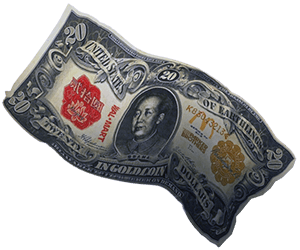
World currency normally refers to a currency that is transacted internationally, with no set borders, but an alternative definition refers to a hypothetical single global currency or supercurrency, such as the proposed ‘terra’ or the ‘DEY’ (Dollar Euro Yen), produced and supported by a central bank which is used for all transactions around the world, regardless of the nationality of the entities (individuals, corporations, governments, or other organizations) involved in the transaction.
Advocates of a global currency, notably famed economist John Maynard Keynes, have argued that such a currency would not suffer from inflation, which, in extreme cases, has had disastrous effects for economies. In addition, many argue that a single global currency would make conducting international business more efficient and would encourage foreign direct investment.
read more »
Posted in Money, Politics, World |
1 Comment »
April 29, 2015

The United Federation of Planets, usually referred to as ‘the Federation,’ is an interstellar federal republic composed of planetary sovereignties depicted in the ‘Star Trek’ science fiction franchise. Formed in 2161, the planetary governments voluntarily exist semi-autonomously under a single central government based on the Utopian principles of universal liberty, rights, and equality, and to share their knowledge and resources in peaceful cooperation and space exploration.
The Federation is described a post-capitalist, libertarian, constitutional republic, which was composed of more than 150 member planets and thousands of colonies spread across some 6,000,000 cubic light years of the Milky Way Galaxy by 2373. The social structure within the Federation is classless and operates within a moneyless ‘New World Economy.’ It is described as stressing, at least nominally, the values of universal liberty, equality, justice, peace, and cooperation. The Federation also maintains its own quasi-militaristic and scientific exploratory agency, known as ‘Starfleet’ which handles many other governmental processes, sometimes with no other agency’s influence, such as border defense and diplomatic relations.
read more »
Posted in Art, Money, Politics |
Leave a Comment »
April 27, 2015


Satyagraha [suht-yuh-gruh-huh] is a term coined by Mahatma Gandhi to describe his particular philosophy and practice within the broader overall category generally known as nonviolent resistance or civil resistance. It loosely translates as ‘insistence on truth’ (Sanskrit: ‘satya’ ‘truth’; ‘agraha’ ‘polite insistence,’ or ‘holding firmly to’) or ‘truth force.’
He deployed satyagraha in the Indian independence movement and also during his earlier struggles in South Africa for Indian rights. Satyagraha theory influenced Nelson Mandela’s struggle in South Africa under apartheid, Martin Luther King, Jr.’s campaigns during the Civil Rights Movement in the US, and many other social justice and similar movements. Someone who practices satyagraha is a ‘satyagrahi.’
read more »
Posted in Philosophy, Politics, War |
Leave a Comment »
April 22, 2015


The StingRay is an IMSI-catcher (International Mobile Subscriber Identity), a controversial cellular phone surveillance device, manufactured by the Harris Corporation. Initially developed for the military and intelligence community, the StingRay and similar Harris devices are in widespread use by local and state law enforcement agencies across the US. Stingray has also become a generic name to describe these kinds of devices.
The StingRay has with both passive (digital analyzer) and active (cell site simulator) capabilities. When operating in active mode, the device mimics a wireless carrier cell tower in order to force all nearby mobile phones and other cellular data devices to connect to it. The devices can be mounted on cars, airplanes, helicopters, and unmanned aerial vehicles, as well as carried by hand. They are primarily used for surveillance, but can also conduct denial of service attacks (radio jamming).
read more »
Posted in Politics, Technology, War |
Leave a Comment »
April 17, 2015

Terry Gross (b. 1951) is the host and co-executive producer of ‘Fresh Air,’ an interview format radio show produced by ‘WHYY-FM,’ the flagship National Public Radio (NPR) station in Philadelphia. The show is broadcast nationally by NPR. Gross has won praise over the years for her low-key and friendly yet often probing interview style and for the diversity of her guests. She has a reputation for researching her guests’ work largely the night before an interview, often asking them unexpected questions about their early careers.
Gross grew up in a Jewish family in Sheepshead Bay, Brooklyn. She earned a bachelor’s degree in English and a master’s degree in communications from SUNY, Buffalo. She began a teaching career, but said that she was ‘totally unequipped’ for the job, and was fired after only six weeks. Gross began her radio career in 1973 at ‘WBFO,’ a public radio station in Buffalo, where she had been volunteering. In 1975, she moved to WHYY-FM in Philadelphia to host and produce ‘Fresh Air,’ which was a local interview program at the time. In 1985, the show went national, being distributed weekly by NPR. It became a daily program two years later.
read more »
Posted in Art, Language, Politics |
1 Comment »
April 16, 2015


‘The Mosquito’ or Mosquito alarm is an electronic device used to deter loitering by young people by emitting sound at high frequency that older people have lost the ability to hear. It has two frequency settings, one of approximately 17.4 kHz that can generally be heard only by young people, and another at 8 kHz that can be heard by most people. The maximum potential output sound pressure level is stated by the manufacturer to be 108 decibels. The range of the sound is 140 feet with the sound baffle, and 200 feet without.
The sound can typically only be heard by people below 25 years of age, as the ability to hear high frequencies deteriorates with age (a phenomenon known as presbycusis). Crafty teenagers turned the sounds into a mobile phone ringtone, which could not be heard by older teachers if the phone rang during a class. Mobile phone speakers are capable of producing frequencies above 20 kHz. This ringtone became informally known as ‘Teen Buzz’ or ‘the Mosquito ringtone’ and has since been sold commercially.
read more »
Posted in Health, Politics, Technology |
Leave a Comment »