November 11, 2014
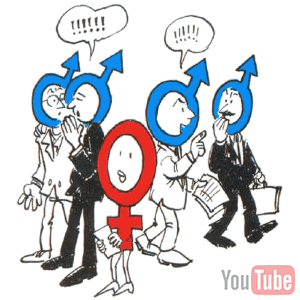
The Master suppression techniques (also known as domination techniques), articulated in 1945 by Norwegian psychologist and philosopher Ingjald Nissen, is an outline of ways to indirectly suppress and humiliate opponents. In the late 1970s the framework was popularized by Norwegian social psychologist Berit Ås, who reduced Nissen’s original nine means to five, and claimed this was a technique mostly used in the workplace by men against women. Master suppression techniques are defined as strategies of social manipulation by which a dominant group maintains such a position in a (established or unexposed) hierarchy. They are very prominent in Scandinavian scholarly and public debate.
The five master suppression techniques are: Making Invisible (silencing or otherwise marginalizing persons in opposition by ignoring them), Ridiculing (portraying opponents and their arguments as absurd and worthy of mocking), Withholding Information (excluding opponents from the decision making process, or limiting their access to information so as to make them less able to make an informed choice), Double Binding (punishing or otherwise belittling the actions of opponents, regardless of how they act), and Blaming and Shaming (embarrassing opponents by insinuating that they are themselves to blame for their position).
read more »
Posted in Language, Politics, World |
Leave a Comment »
November 11, 2014


Master–slave morality is a central theme of German philosopher Friedrich Nietzsche’s works, in particular the first essay of ‘On the Genealogy of Morality,’ his 1887 book ‘on the origin of our moral prejudices.’ Nietzsche argued that there were two fundamental types of morality: ‘Master morality’ and ‘slave morality’. Slave morality values things like kindness, humility and sympathy, while master morality values pride, strength, and nobility.
Master morality weighs actions on a scale of good or bad consequences unlike slave morality which weighs actions on a scale of good or evil intentions. What he meant by ‘morality’ deviates from common understanding of this term. For Nietzsche, a particular morality is inseparable from the formation of a particular culture. This means that its language, codes and practices, narratives, and institutions are informed by the struggle between these two types of moral valuation.
read more »
Posted in Philosophy, Politics |
Leave a Comment »
November 9, 2014
Imagination inflation refers to the finding that imagining an event which never happened can increase confidence that it actually occurred. This effect is relevant to the study of memory and cognition, particularly false memory. Imagination inflation is one way that techniques intended to retrieve repressed memories (e.g. recovered memory therapy) may lead to the development of false or distorted memories.
Imagination inflation also has implications for the criminal justice system, in particular interrogation and interviewing procedures, as it supports the claim that interrogators who ask suspects to repeatedly imagine committing a crime may risk making them more confident that they are the perpetrators, ultimately producing false confessions from innocent suspects. In one case in the US in 1990s, a man who initially denied accusations of raping his daughters was given an intense police interrogation. He confessed to abusing his children and leading a satanic cult which sacrificed babies, even admitting to crimes that were denied by his accusers.
read more »
Posted in Health, Politics, Science |
Leave a Comment »
November 9, 2014


‘The Caine Mutiny‘ is a 1951 Pulitzer Prize-winning novel by American author Herman Wouk. The book grew out of Wouk’s personal experiences aboard a destroyer-minesweeper in the Pacific in World War II and deals with, among other things, the moral and ethical decisions made at sea by the captains of ships. The mutiny of the title is legalistic, not violent, and takes place during a historic typhoon in December 1944. The court-martial that results provides the dramatic climax to the plot.
The story is told through the eyes of Willis Seward ‘Willie’ Keith, an affluent, callow young man who signs up for midshipman school with the Navy to avoid being drafted into the Army during World War II. After barely surviving a series of misadventures that earn him the highest number of demerits in the history of the school, he is commissioned and assigned to the destroyer minesweeper USS Caine, an obsolete warship converted from a World War I-era destroyer.
read more »
Posted in Art, Politics, War |
Leave a Comment »
November 7, 2014
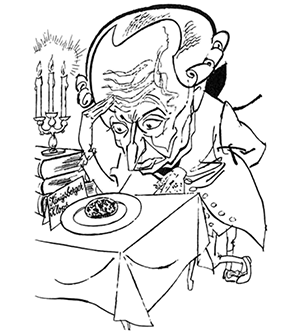
In sociology, taste is an individual’s personal and cultural patterns of choice and preference. It is drawing qualitative distinctions between things such as styles, manners, consumer goods, and works of art. Aesthetic preferences and attendance to various cultural events are associated with education and social origin. Different socioeconomic groups are likely to have different tastes, and social class is one of the most prominent factors structuring taste. The concept of aesthetics has been the interest of philosophers such as Plato, Hume and Kant, who understood it as something pure and searched for the ‘essence of beauty,’ the ontology of taste. But it was not until the beginning the early 19th century that the question was problematized in its social context.
In his aesthetic philosophy, Kant denies any standard of a good taste, which would be the taste of the majority or any social group. For Kant, beauty is not a property of an object, but a judgement based on a subjective feeling. He claims that even if a universal, non-relativistic ‘good taste’ does exist, it can not be empirically identified, or found in any standards or generalizations, and the validity of a judgement is not the general view of the majority or some specific social group. Taste is both personal and beyond reasoning, and therefore disputes over matters of taste never reach a finite conclusion. Kant stresses that our preferences, even on generally liked things, do not justify our judgements.
read more »
Posted in Art, Money, Politics |
Leave a Comment »
November 5, 2014


Cover your ass (CYA) describes activity, usually in a work-related or bureaucratic context, done by an individual to protect himself or herself from possible subsequent legal penalties or criticism. According to lexicographer William Safire, it describes the bureaucratic technique of ‘deflecting responsibility in advance,’ that is, diffusing responsibility for one’s actions as a form of insurance against possible negative repercussions. It can denote a type of institutional risk-averse mentality which works against accountability and responsibility, often characterized by excessive paperwork and documentation (red tape), which can be harmful to the institution’s overall effectiveness.
The activity, sometimes seen as instinctive, is generally unnecessary towards accomplishing the goals of the organization, but helpful to protect a particular individual’s career within it, and it can be seen as a type of institutional corruption working against individual initiative. In a slightly different sense, it can be used to describe rightful steps to protect oneself properly while in a difficult situation, such as what steps to take to protect oneself after being fired (due diligence).
read more »
Posted in Humor, Language, Politics |
Leave a Comment »
October 28, 2014
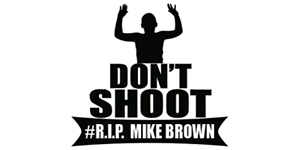
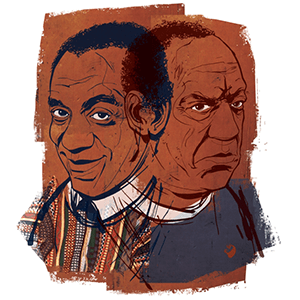
The ‘Pound Cake speech‘ was an address given by comedian Bill Cosby in May 2004 during an NAACP awards ceremony in Washington, D.C., to commemorate the 50th anniversary of the ‘Brown v. Board of Education Supreme Court’ decision which desegregated US schools. In it, Cosby was highly critical of members of subsets of the black community. He criticized the use of ebonics (African American Vernacular English), the prevalence of single-parent families, the emphasis on frivolous and conspicuous consumption at the expense of necessities, lack of responsibility, and other behaviors.
Cosby accused the African American community of treating people who had robbed convenience stores like political activists: ‘But these people, the ones up here in the balcony fought so hard. Looking at the incarcerated, these are not political criminals. These are people going around stealing Coca-Cola. People getting shot in the back of the head over a piece of pound cake! And then we all run out and are outraged, ‘The cops shouldn’t have shot him.’ What the hell was he doing with the pound cake in his hand? I wanted a piece of pound cake just as bad as anybody else, and I looked at it and I had no money. And something called parenting said, ‘If you get caught with it you’re going to embarrass your mother.’ Not ‘You’re going to get your butt kicked.’ No. ‘You’re going to embarrass your family.”
read more »
Posted in Language, Politics |
1 Comment »
October 25, 2014

LOVEINT is the practice of intelligence service employees making use of their extensive monitoring capabilities to spy on their love interest or spouse. The term was coined in resemblance to intelligence terminology such as SIGINT (signals intelligence) or HUMINT (human intelligence). The term originated at the NSA, where at least one incident is reported every year. They are the lion’s share of unauthorized accesses reported by the NSA. Most incidents are self-reported, for example during a polygraph test.
The NSA sanctions include administrative action, up to termination of employment. In five of the cases, the NSA employee resigned, preempting any administrative action. In two other cases, they retired. The worst administrative sanction handed out was a ‘a reduction in pay for two months, a reduction in grade, and access to classified information being revoked.’ One case was forwarded to the Department of Justice, which however declined to prosecute.
Posted in Love, Politics, Technology |
1 Comment »
October 22, 2014


Slacktivism (‘slacker activism’) is a sometimes pejorative term that describes ‘feel-good’ measures, in support of an issue or social cause, that have little or no practical effect other than to make the person doing it take satisfaction from having contributed. The underlying assumption being promoted by the term is that these low cost efforts substitute for more substantive actions rather than supplementing them, although this assumption has not been borne out by research.
Proponents argue that slacktivism plays a significant role in repressive and authoritarian regimes. Journalist Courtney C. Radsch argues that low level engagement was an important form of activism for Arab youth during the Arab Spring because it was an outlet for free speech and sparked mainstream media coverage. She contends that when a hashtag becomes ‘a trending topic [it] helps generate media attention, even as it helps organize information. The power of social media to help shape the international news agenda is one of the ways in which they subvert state authority and power.’
read more »
Posted in Money, Politics |
1 Comment »
October 21, 2014


Handwaving is a pejorative label applied to the action of displaying the appearance of doing something, when actually doing little, or nothing. It is often used in working situations where results are expected, but no work is actually accomplished. Handwaving can be an idiomatic term, and it can also be a literal descriptive term for the use of excessive body language gestures that may be perceived as lacking productivity in communication or other effort. If the opponent in a debate uses the term, it is meant as a shorthand way to accuse the proponent of having committed an informal fallacy. In this sense, it is also as if a participant is waving their hands as to discourage an insect that is flying around their head, so are they waving away questions. The superlative expressions for the term, such as ‘vigorous handwaving’ or ‘furious handwaving,’ are used to imply that the handwaver lacks confidence in the information being conveyed, and cannot actually convey the essence or core of his argument.
Handwaving arguments often include order-of-magnitude estimates and dimensional analysis. Competent well-intentioned researchers and professors rely on handwaving when, given a limited time, a large result must be shown and minor technical details cannot be given much attention. ‘Back-of-the-envelope’ calculations are approximate ways to get an answer by over-simplification and are compatible with handwaving. By extension, handwaving is used in speculative fiction criticism to refer to a plot device (e.g., a scientific discovery, a political development, or rules governing the behavior of a fictional creature) that is left unexplained or sloppily explained because it is convenient to the story, with the implication that the writer is aware of the logical weakness but hopes the reader will not notice or will suspend disbelief. The fictional material ‘handwavium’ is sometimes referred to in situations where the solution requires access to a substance that is physically impossible to create as it defies physics but is convenient to solving a problem in the story.
Posted in Language, Politics |
Leave a Comment »
September 29, 2014

‘Under the Banner of Heaven: A Story of Violent Faith’ is a 2003 investigative nonfiction book by Jon Krakauer. It is a juxtaposition of two stories: the origin and evolution of The Church of Jesus Christ of Latter-day Saints (LDS Church), and a modern double murder committed in the name of God by brothers Ron and Dan Lafferty, who subscribed to a fundamentalist version of Mormonism.
The title is drawn from an 1880 address by John Taylor, the third president of the LDS Church, defending the practice of plural marriage: ‘God is greater than the United States, and when the Government conflicts with heaven, we will be ranged under the banner of heaven against the Government. The United States says we cannot marry more than one wife. God says different…’
read more »
Posted in Language, Philosophy, Politics |
Leave a Comment »
September 12, 2014
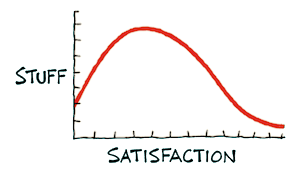

In economics, ‘utility’ is the amount of satisfaction received from consuming (using) goods and services, and ‘marginal’ refers to a small change, starting from some baseline level. Marginal utility describes the change in utility from consuming more or less of a product. Economists sometimes speak of a law of ‘diminishing marginal utility,’ meaning that consuming the first unit usually has a higher utility than every other unit. When the number of units that are consumed increases, their marginal utility decreases (and vice versa).
As 20th century English economist Philip Wicksteed explained the term, ‘Marginal considerations are considerations which concern a slight increase or diminution of the stock of anything which we possess or are considering.’ ‘Marginal cost’ is the cost of producing one more unit of a good. The ‘marginal decision rule’ states that a good or service should be consumed at a quantity at which the marginal utility is equal to the marginal cost (i.e. at a cost that justifies the satisfaction derived from the product).
read more »
Posted in Money, Politics |
Leave a Comment »



