May 3, 2014


A cognitive radio is a transceiver that dynamically switches between optimal wireless channels in its vicinity. It automatically detects available channels, then accordingly changes its transmission or reception parameters to allow more concurrent wireless communications in a given spectrum band at one location. This process is a form of dynamic spectrum management.
The cognitive engine is capable of configuring waveform, protocol, operating frequency, and networking parameters. Units can exchange information about the environment with the networks it accesses and other cognitive radios (CRs). A CR ‘monitors its own performance continuously,’ in addition to ‘reading the radio’s outputs’; it then uses this information to ‘determine the RF environment, channel conditions, link performance, etc.’, and adjusts the ‘radio’s settings to deliver the required quality of service subject to an appropriate combination of user requirements, operational limitations, and regulatory constraints.’
read more »
Posted in Politics, Technology, World |
Leave a Comment »
April 29, 2014

An unconditional basic income (also called basic income, basic income guarantee, universal basic income, universal demogrant, or citizen’s income) is a proposed system of social security in which all citizens or residents of a country regularly receive an unconditional sum of money, either from a government or some other public institution, in addition to any income received from elsewhere.
A basic income is typically intended to be only enough for a person to survive on, so as to encourage people to engage in economic activity. A basic income of any amount less than the social minimum is sometimes referred to as a ‘partial basic income.’ On the other hand, it should be high enough so as to facilitate any socially useful activity someone could not afford to engage in if dependent on working for money to earn a living.
read more »
Posted in Money, Politics, World |
1 Comment »
April 28, 2014
A wealth tax is a levy based on the aggregate value of all household assets (e.g. owner-occupied housing; cash, bank deposits, money funds, and savings in insurance and pension plans; investment in real estate and unincorporated businesses; and corporate stock, financial securities, and personal trusts). A wealth tax is a tax on the accumulated stock of purchasing power, in contrast to income tax, which is a tax on the flow of assets (a change in stock).
Some governments require declaration of the taxpayer’s balance sheet (assets and liabilities), and from that ask for a tax on net worth (assets minus liabilities), as a percentage of the net worth, or a percentage of the net worth exceeding a certain level. The tax is in place for both natural persons and, in some cases, legal persons such as corporations. In France, the net worth tax on natural persons is called the ‘solidarity tax on wealth.’ In other places, the tax may be called a ‘capital tax,’ an ‘equity tax,’ a ‘net worth tax,’ a ‘net wealth tax,’ or just a ‘wealth tax.’
read more »
Posted in Money, Politics, World |
Leave a Comment »
April 9, 2014
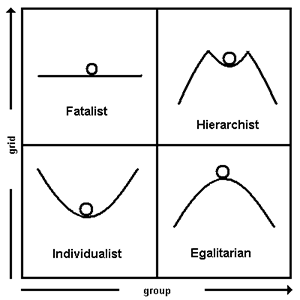
Risk perception is the subjective judgment that people make about the characteristics and severity of a risk. The phrase is most commonly used in reference to natural hazards and threats to the environment or health, such as nuclear power. Several theories have been proposed to explain why different people make different estimates of the dangerousness of risks. Three major families of theory have been developed: psychology approaches (heuristics and cognitive), anthropology/sociology approaches (cultural theory) and interdisciplinary approaches (social amplification of risk framework).
The study of risk perception arose out of the observation that experts and lay people often disagreed about how risky various technologies and natural hazards were. The mid 1960s saw the rapid rise of nuclear technologies and the promise for clean and safe energy. However, fears of both longitudinal dangers to the environment as well as immediate disasters creating radioactive wastelands turned the public against this new technology. The governmental communities asked why public perception was against the use of nuclear energy when all of the scientific experts were declaring how safe it really was. The problem, from the perspectives of the experts, was a difference between scientific facts and an exaggerated public perception of the dangers.
read more »
Posted in Health, Politics, Science |
Leave a Comment »
April 1, 2014

The Robin Hood tax commonly refers to a package of financial transaction taxes (FTT) proposed by a campaigning group of civil society non-governmental organizations (NGOs). Campaigners have suggested the tax could be implemented globally, regionally or unilaterally by individual nations.
Conceptually similar to the Tobin tax (a small tax on spot currency conversions), it would affect a wider range of asset classes including the purchase and sale of stocks, bonds, commodities, unit trusts, mutual funds, and derivatives such as futures and options. The Tobin tax was proposed for foreign currency exchange only.
read more »
Posted in Money, Politics, Technology |
Leave a Comment »
April 1, 2014
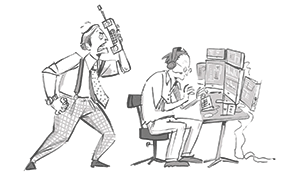
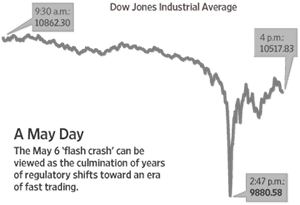
Flash trading, otherwise known as a flash order, is defined by industry trade publication ‘Traders Magazine’ as ‘a marketable order sent to a market center that is not quoting the industry’s best price or that cannot fill that order in its entirety. The order is then flashed to recipients of the venue’s proprietary data feed to see if any of those firms wants to take the other side of the order. This practice enables the market center to try to keep the trade.’ Under an exception to Rule 602 of Regulation NMS, flash orders are currently legal.
Bloomberg states: ‘Flash systems trace their roots as far back as 1978 to efforts by exchanges to electronically replicate how a trader might yell an order to floor brokers before entering it into the system that displays all bids and offers. Markets have evolved since the days of floor brokers’ dominance, with computer algorithms now buying and selling shares 1,000 times faster than the blink of an eye.’
read more »
Posted in Money, Politics, Technology |
Leave a Comment »
March 13, 2014

Satoshi Nakamoto is the person or group that created the Bitcoin protocol and reference software, Bitcoin-Qt. It is not known whether the name is real or a pseudonym. In 2008, Nakamoto published a paper on ‘The Cryptography Mailing’ list at metzdowd.com describing his digital currency. In 2009, he released the first Bitcoin software that launched the network and the first units currency, called bitcoins. Nakamoto is said to have continued to contribute to his Bitcoin software release with other developers until contact with his team and the community gradually began to fade in mid-2010.
Near this time, he handed over control of the source code repository and alert key functions of the software to Gavin Andresen, chief scientist at the Bitcoin Foundation (a non-profit founded in 2012 to promote Bitcoin). Also around this same time, he handed over control of the Bitcoin.org domain and several other domains to various prominent members of the Bitcoin community. Nakamoto is believed to be in possession of roughly one million bitcoins. At one point in December 2013, this was the equivalent of US$1.1 billion.
read more »
Posted in Money, Politics, Technology |
Leave a Comment »
March 10, 2014

Taser safety issues include cardiac arrhythmia (irregular heartbeat) in susceptible subjects, possibly leading to heart attack or death in minutes by ventricular fibrillation, which leads to cardiac arrest and—if not treated immediately—to sudden death. People susceptible to this outcome are sometimes healthy and unaware of their susceptibility.
Although the medical conditions or use of illegal drugs among some of the casualties may have been the proximate cause of death, the electric shock of the Taser can significantly heighten such risk for subjects in an at-risk category. In some cases however, death occurred after Taser use coupled with the use of force alone, with no evidence of underlying medical condition and no use of drugs.
read more »
Posted in Death, Politics, Technology |
Leave a Comment »
February 17, 2014
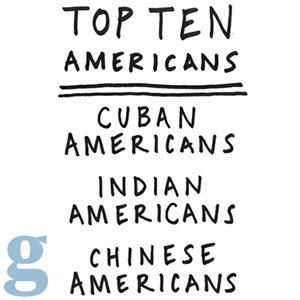
Middleman minority (also known as market-dominant minorities) is any minority population that, while subject to discrimination, does not hold an ‘extreme subordinate’ status in society. There are numerous examples of such groups gaining eventual prosperity in their adopted country despite discrimination. Often, they will take on roles between producer and consumer, such as trading and moneylending.
Famous examples such as Jews throughout Europe even at times when the discrimination against them was at their peak such as during World War II they still had great success in some parts of Europe, Chinese throughout Southeast Asia, Parsis in India, Igbos in Nigeria, Indians in East Africa, people from the Soviet Blocs in the USA during the Cold War, and many others.
read more »
Posted in Money, Politics, World |
Leave a Comment »
February 13, 2014

The phrase Potemkin [poh-tem-kin] villages was originally used to describe a fake village, built only to impress. According to the story, Russian statesman Grigory Potemkin erected fake settlements along the banks of the Dnieper River in order to fool Empress Catherine II during her visit to Crimea in 1787.
The phrase is now used, typically in politics and economics, to describe any construction (literal or figurative) built solely to deceive others into thinking that some situation is better than it really is. Some modern historians claim the original story is exaggerated.
read more »
Posted in Money, Politics, World |
Leave a Comment »
February 11, 2014

A woonerf [voh-nairf] is a living street where pedestrians and cyclists have legal priority over motorists as implemented in the Netherlands and in Flanders. Techniques include shared space, traffic calming, and low speed limits. Under Article 44 of the Dutch traffic code, motorized traffic in a woonerf or ‘recreation area’ is restricted to walking pace.
The word literally translates as ‘living yard.’ In 1999 the Netherlands had over 6000 woonerven. Today around 2 million Dutch people are living in woonerven. The benefits of the woonerf are promoted by woonERFgoed, a network of professionals and residents. In the UK these are called ‘home zones.’ In the US ‘complete streets’ are a similar concept where equal priority is given to all modes of transportation including automobiles, bicycles, and pedestrians.
Posted in Politics, World |
Leave a Comment »
February 6, 2014

A wardrobe malfunction is accidental exposure of intimate parts. It is different from indecent exposure or flashing, as the latter ones imply a deliberate exposure. There has been a long history of such incidents, though the term itself was coined in the mid-2000s and has become one of the most common fashion faux pas. In everyday context it often happens as a ‘nipple slip’ to women and is relatively common, but wardrobe malfunction suggests a public event or performance, particularly when there are allegations that it was deliberately staged for publicity reasons.
The American Dialect Society defines it as ‘an unanticipated exposure of bodily parts.’ Global Language Monitor, which tracks usage of words on the internet and in newspapers worldwide, identified the term as the top Hollywood contribution to English in 2004, surpassing words like ‘girlie men’ and ‘Yo!’
read more »
Posted in Humor, Politics, Sex |
Leave a Comment »


 The Daily Omnivore