May 30, 2013

A facial is a term for the sexual activity in which a man ejaculates semen onto the face of one or more sexual partners. A facial is a form of non-penetrative sex, though it is generally performed after some other means of sexual stimulation. Facial cum shots are currently regularly portrayed in pornographic films and videos, often as a way to close a scene.
Many sex experts consider the act demeaning and do not promote it. In response to an inquiry from a reader, sex columnist Dan Savage wrote: ‘Facials are degrading—and that’s why they’re so hot.’
read more »
Posted in Health, Politics, Sex |
1 Comment »
May 30, 2013

Post-feminism is a reaction against some perceived contradictions and absences of second-wave feminism (a period of feminist activity that first began in the early 1960s in the United States, and eventually spread throughout the Western world). The term post-feminism is ill-defined and is used in inconsistent ways.
However, it generally connotes the belief that feminism has succeeded in its goal of ameliorating sexism, making it fundamentally opposed to the third-wave intention of broadening feminist struggle by focusing on diversity and change.
read more »
Posted in Language, Politics, Sex |
1 Comment »
May 29, 2013

The Labia pride movement is a feminist activist movement that attempts to raise awareness for the normal anatomical appearance of the female vulva and defy a perceived growing trend towards cosmetic genital surgery (labiaplasty, also known as ‘designer vagina’). It is supported by several independent feminist groups and based on diverse channels of communication such as cyberfeminism, protest marches and advocating boycotts against physicians and clinics that make use of deceptive advertising.
The London-based feminist group UK feminista organized a protest march through London’s Harley Street, that is known for its high density of upscale medical providers, in late 2011. More than 320 women paraded the street, with slogans like: ‘Keep your mits off our bits!’, ‘There’s nothing finer than my vagina!’, and ‘Harley Street puts my chuff in a huff.’
read more »
Posted in Politics, Sex |
1 Comment »
May 29, 2013

Wank Week was a controversial season of television programming that was due to be broadcast in the United Kingdom by Channel 4, expected to consist of a series of three documentary programs about masturbation. However, plans to broadcast it in 2007 came under public attack from senior television figures, and the planned broadcasts were pulled amid claims of declining editorial standards and controversy over the channel’s public service broadcasting credentials.
While ‘Wank Week’ itself has been cancelled, the films it was meant to showcase may yet be broadcast by the channel at a later date.
read more »
Posted in Politics, Sex, World |
Leave a Comment »
May 29, 2013
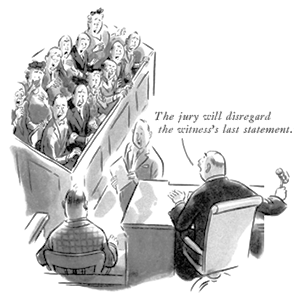
In law, unring the bell is an analogy used to suggest the difficulty of forgetting information once it is known. When discussing jury trials, the phrase is sometimes used to describe the judge’s instructions to the jury to ignore inadmissible evidence or statements they have heard. It may also be used if inadmissible evidence has been brought before a jury and the judge subsequently declares a mistrial.
Commenting on Court TV about the pre-trial release of nearly 200 pages of documents from a hearing on the sexual activities of the accuser in the Kobe Bryant sexual assault case, jury consultant Idgi D’Andrea said, ‘It’s really hard to unring the bell, once that bell has been rung, and ask people to forget what they’ve heard.’ In a more recent case, judge Reggie Walton said that he could not ‘unring the bell’ when he declared a mistrial in the Roger Clemens perjury trial.
read more »
Posted in Language, Politics |
1 Comment »
May 24, 2013

Reaganomics or ‘voodoo economics’ is a negative term which critics use to criticize supply-side economics. The term originated from George H.W. Bush, who criticized Ronald Reagan’s plan for the economy during the Republican presidential primaries in 1980. Reagan’s attitude towards the Federal Government Budget was to drastically reduce taxes – primarily for the wealthy – while greatly increasing spending – primarily for the military. Bush Sr. and others recognized that this could not possibly produce a balanced budget, and would result in great national debt.
The four pillars of Reagan’s economic policy were to reduce the growth of government spending, reduce the federal income tax and capital gains tax, reduce government regulation, and control the money supply in order to reduce inflation.
read more »
Posted in Language, Money, Politics |
2 Comments »
May 24, 2013

Abenomics [ah-bey-nom-iks] refers to the economic policies advocated by Shinzō Abe, the current Prime Minister of Japan. It consists of monetary policy, fiscal policy, and economic growth strategies to encourage private investment.
The detailed policies includes inflation targeting at a 2% annual rate, correction of the excessive yen appreciation, setting negative interest rates, radical quantitative easing (printing money), expansion of public investment, buying operations of construction bonds by Bank of Japan (BOJ), and revision of the Bank of Japan Act.
read more »
Posted in Money, Politics, World |
Leave a Comment »
May 23, 2013


Morphological freedom refers to a proposed civil right of a person to either maintain or modify his or her own body, on his or her own terms, through informed, consensual recourse to, or refusal of, available therapeutic or enabling medical technology.
The term may have been coined by strategic philosopher Max More in his 1993 article, ‘Technological Self-Transformation: Expanding Personal Extropy,’ where he defined it as ‘the ability to alter bodily form at will through technologies such as surgery, genetic engineering, nanotechnology, uploading.’ The term was later used by science debater Anders Sandberg as ‘an extension of one’s right to one’s body, not just self-ownership but also the right to modify oneself according to one’s desires.’
read more »
Posted in Health, Politics, Technology |
Leave a Comment »
May 22, 2013
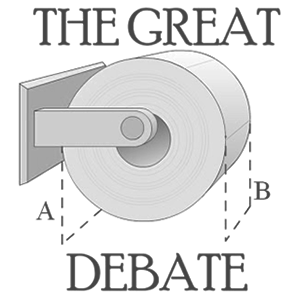
The concept of irreconcilable differences (sometimes called irremediable breakdown, irretrievable breakdown, or incompatibility) provides possible grounds for divorce in a number of jurisdictions. Australian family law uses a no-fault divorce approach, and irreconcilable differences is the sole grounds for divorce, with adequate proof being that the estranged couple have been separated for more than 12 months. In the United States, this is one of several possible grounds.
Often, it is used as justification for a no-fault divorce. In many cases, irreconcilable differences were the original and only grounds for no-fault divorce, such as in California, which enacted America’s first purely no-fault divorce law in 1969. California now lists one other possible basis, ‘incurable insanity,’ on its divorce petition form.
Posted in Humor, Language, Politics |
Leave a Comment »
May 20, 2013

Paper bag parties are African-American social events at which only individuals with complexions at least as light as the color of a brown paper bag were admitted.
Hosts at many churches, fraternities and nightclubs would take a brown paper bag and hold it against a person’s skin. People whose skin was not lighter than a brown paper bag were denied entry The term also refers to larger issues of class and caste within the African-American population.
read more »
Posted in Politics |
Leave a Comment »
May 20, 2013

Racial passing refers to a person classified as a member of one racial group attempting to be accepted as a member of a different racial group.
The term was used especially in the U.S. to describe a person of mixed-race heritage assimilating into the white majority during times when legal and social conventions of hypodescent classified the person as a minority, subject to racial segregation and discrimination.
read more »
Posted in Politics, World |
Leave a Comment »
May 17, 2013

When a person receives unfair treatment or alienation due to a social stigma, the effects can be detrimental. Social stigmas are defined as any aspect of an individual’s identity that is devalued in a social context. These stigmas can be categorized as visible or invisible, depending on whether the stigma is readily apparent to others. Visible stigmas refer to characteristics such as race, age, gender, physical disabilities, or deformities; whereas invisible stigmas refer to characteristics such sexual orientation, gender identity, religious affiliation, early pregnancy, certain diseases, or mental illnesses.
When individuals possess invisible stigmas, they must decide whether or not to reveal their association with a devalued group to others. This decision can be an incredibly difficult one, as revealing one’s invisible stigma can have both positive and negative consequences depending on several situational factors. In contrast, a visible stigma requires immediate action to diminish communication tension and acknowledge a deviation from the norm. People possessing visible stigmas often use compensatory strategies to reduce potential interpersonal discrimination that they may face.
read more »
Posted in Health, Money, Politics |
Leave a Comment »



