April 11, 2013
Fortune-telling is the practice of predicting information about a person’s life. The scope of fortune-telling is in principle identical with the practice of divination (‘to foresee, to be inspired by a god’).
The difference is that divination is the term used for predictions considered part of a religious ritual, invoking deities or spirits, while the term fortune-telling implies a less serious or formal setting, even one of popular culture, where belief in occult workings behind the prediction is less prominent than the concept of suggestion, spiritual or practical advisory or affirmation. Historically, fortune-telling grows out of folkloristic reception of Renaissance magic, specifically associated with Gypsies.
read more »
Posted in Money, Philosophy, Politics |
1 Comment »
April 8, 2013

The Shouting Hill is a hill in the Israeli controlled portion of the Golan Heights. During the Six Day War, Israel captured the majority of the heights. The Shouting Hill is located close to the ceasefire line that separates Syrian controlled territory and the territory occupied by Israel. The hill is situated near the Druze village of Majdal Shams; community members were separated after the war.
Very few visits were allowed between the families from both sides of the ceasefire line. Israel and Syria are still in an official state of war. There is also no telecommunications or mail allowed between the sides. As a result families come to the hill from both sides of the border to see and talk (actually shout into megaphones) to their relatives on the other side. However, with the advent of mobile phones, people don’t do this as often, except on special occasions like weddings or when they want to see each other and they use binoculars.
Posted in Politics, War, World |
1 Comment »
April 8, 2013

A black bloc is a tactic for protests and marches where individuals wear black clothing, scarves, sunglasses, ski masks, motorcycle helmets with padding, or other face-concealing and face-protecting items. The clothing is used to conceal marchers’ identities, allow them to appear as one large unified mass, and promote solidarity.
The tactic was developed in the 1980s in the European autonomist movement’s protests against squatter evictions, nuclear power, and restrictions on abortion among other things. Black blocs gained broader media attention outside Europe during the 1999 Seattle WTO protests, when a black bloc damaged property of GAP, Starbucks, Old Navy, and other multinational retail locations in downtown Seattle.
read more »
Posted in Money, Politics, World |
Leave a Comment »
April 7, 2013

Leaderless resistance, or phantom cell structure, is a political resistance strategy in which small, independent groups (covert cells), including individuals (solo cells), challenge an established adversary such as a government. Leaderless resistance can encompass anything from non-violent disruption and civil disobedience to bombings, assassinations and other violent agitation. Leaderless cells lack bidirectional, vertical command links and operate without hierarchical command.
Given the simplicity of the strategy, as well as the fact that it is difficult to stamp out, leaderless resistance has been employed by a wide-range of movements, from terrorist and hate groups, advocating on a range of issues like animal-liberation, radical environmentalism, anti-corporatism, anti-abortion activism, and resistance to military invasion or colonialism.
read more »
Posted in Politics, War |
Leave a Comment »
April 3, 2013

Copwatch is a network of activist organizations that observe and document police activity. They believe that monitoring police activity on the streets is a way to prevent police brutality. The stated goal of at least one Copwatch group is to engage in monitoring and videotaping police activity in the interest of holding the police accountable in the events involving assaults or police misconduct.
Copwatch groups also hold ‘Know Your Rights’ forums to educate the public about their legal and human rights when interacting with the police, and some groups organize events to highlight problems of police abuse in their communities. Copwatch was first started in Berkeley, California in 1990.
read more »
Posted in Politics |
Leave a Comment »
April 2, 2013

The Zabbaleen (Egyptian Arabic: ‘Garbage people’) are teenagers and adults who have served as Cairo’s informal garbage collectors for the past 70 to 80 years. They are also known as ‘Zarraba’ (‘pig-pen operators’).
Spread out among seven different settlements scattered in the Greater Cairo Urban Region, the Zabbaleen population is between 50,000 and 70,000. The largest settlement is Mokattam village, nicknamed ‘Garbage City,’ located at the foot of the Mokattam Mountains, next to Manshiyat Naser, a slum settlement on the outskirts of Cairo. The Zabbaleen community in Mokattam Village has a population of around 20,000 to 30,000, over 90 percent of which are Coptic Christians.
read more »
Posted in Money, Politics, World |
Leave a Comment »
April 2, 2013

Food Not Bombs is a loose-knit group of independent collectives, serving free vegan and vegetarian food to others. Food Not Bombs’ ideology is that myriad corporate and government priorities are skewed to allow hunger to persist in the midst of abundance.
To demonstrate this (and to reduce costs), a large amount of the food served by the group is surplus food from grocery stores, bakeries and markets that would otherwise go to waste. This group exhibits a form of franchise activism. The organization was founded in 1980 in Cambridge, Massachusetts by anti-nuclear activists. One of the co founders was C.T. Lawrence Butler.
Posted in Food, Politics, War |
Leave a Comment »
April 1, 2013

American pop singer Lady Gaga wore a dress made of raw beef, which was commonly referred to by the media as the meat dress, to the 2010 MTV Video Music Awards. Designed by Argentine designer Franc Fernandez and styled by Nicola Formichetti, the dress was condemned by animal rights groups, and named by ‘Time’ as the top fashion statement of 2010. The press speculated on the originality of the meat dress idea, with comparisons made to similar images found in contemporary art and popular culture. Architects Diller Scofidio + Renfro, for example, had designed a meat dress in 2006.
As with her other dresses, it was archived, but went on display in 2011 at the Rock and Roll Hall of Fame after being preserved by taxidermists as a type of jerky. Gaga explained following the awards ceremony that the dress was a statement about one’s need to fight for what one believes in, and highlighted her distaste for the US military’s don’t-ask-don’t-tell policy.
read more »
Posted in Food, Politics |
Leave a Comment »
March 31, 2013

‘Pirates and Emperors, Old and New: International Terrorism in the Real World’ is a book by political theorist Noam Chomsky, titled after an observation by St. Augustine in ‘City of God,’ proposing that what governments coin as ‘terrorism’ in the small simply reflects what governments utilize as ‘warfare’ in the large. Yet, governments coerce their populations to denounce the former while embracing the latter.
In the ‘City of God,’ St. Augustine tells the story of a pirate captured by Alexander the Great, who asked him ‘how dare he molest the sea.’ ‘How dare you molest the whole world’ the pirate replied. ‘Because I do it with a little ship only, I am called a thief; you, doing it with a great navy, are called an emperor.’ The book inspired a humorous short web animation titled ‘Pirates & Emperors (or, Size Does Matter),’ illustrating Chomsky’s thesis.
Posted in Money, Politics, War |
Leave a Comment »
March 29, 2013
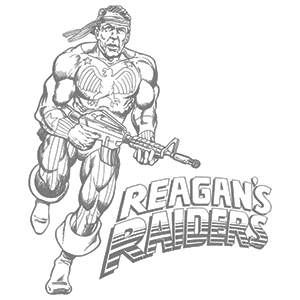
The American Monomyth is a 1977 book by Robert Jewett and John Shelton Lawrence arguing for the existence and cultural importance of an ‘American Monomyth,’ a variation on the classical monomyth (the hero’s journey, a theme found in narratives from around the world) as proposed by Joseph Campbell. The hero ventures from the normal world into a supernatural one, winning a decisive victory there and returning with a ‘boon.’
In contrast, Jewett and Lawrence define the American monomyth as: ‘A community in a harmonious paradise is threatened by evil; normal institutions fail to contend with this threat; a selfless superhero emerges to renounce temptations and carry out the redemptive task; aided by fate, his decisive victory restores the community to its paradisiacal condition; the superhero then recedes into obscurity.’
Posted in Language, Politics, World |
Leave a Comment »
March 29, 2013

The American way of life is an expression that refers to the lifestyle of people living in the United States of America. It is an example of a behavioral modality, developed from the 17th century until today.
It refers to a nationalist ethos that purports to adhere to principles of ‘life, liberty and the pursuit of happiness.’ It has some connection to the concept of American exceptionalism and the American Dream.
read more »
Posted in Language, Politics, World |
Leave a Comment »
March 29, 2013

How to Read Donald Duck (‘Para leer al Pato Donald’) is a political analysis by Chilean activists Ariel Dorfman and Armand Mattelart, published in 1972. It is a pioneering work on cultural imperialism. Written in the form of essay (or, in the authors’ words, a ‘decolonization manual’), the book is an analysis of mass literature, specifically the Disney comics published for the Latin American market.
It is one of the first social studies of entertainment and the leisure industry from a political-ideological angle, and the book deals extensively with the political role of children’s literature. The book’s thesis is that Disney comics are not only a reflection of the prevailing ideology at the time (capitalism), but that they are also aware of this, and are active agents in spreading the ideology.
read more »
Posted in Money, Politics, World |
Leave a Comment »



