December 3, 2012

Mind control (also known as brainwashing, coercive persuasion, or menticide) refers to the use of unethically manipulative methods to persuade others to conform to the wishes of the manipulator(s), often to the detriment of the person being manipulated. The term has been applied to any tactic, psychological or otherwise, which can be seen as subverting an individual’s sense of control over their own thinking, behavior, emotions or decision making.
Theories of brainwashing and of mind control were originally developed to explain how totalitarian regimes appeared to succeed systematically in indoctrinating prisoners of war through propaganda and torture techniques. These theories were later expanded and modified by psychologists including Margaret Singer, to explain a wider range of phenomena, especially conversions to cults (new religious movements, NRMs). A third-generation theory proposed by sociologist Ben Zablocki focused on the utilization of mind control to retain members of NRMs.
read more »
Posted in Health, Philosophy, Politics |
1 Comment »
November 30, 2012

The South Butt, LLC was a clothing and accessories company founded in 2007 by Jimmy Winkelmann, a then 16-year-old student at Chaminade College Preparatory School. The company dissolved in 2011.
Winkelmann claimed the company was a parody of the The North Face, an American outdoor product company.
read more »
Posted in Humor, Money, Politics |
Leave a Comment »
November 29, 2012

The tragedy of the anticommons is a type of coordination breakdown, in which a single resource has numerous rightsholders who prevent others from using it, frustrating what would be a socially desirable outcome. It is a mirror-image of the older concept of tragedy of the commons, in which numerous rightsholders’ combined use exceeds the capacity of a resource and depletes or destroys it.
The concept covers a range of coordination failures including patent thickets, submarine patents, and nail houses. Overcoming these breakdowns can be difficult, but there are assorted means, including eminent domain, laches, patent pools, or other licensing organizations.
read more »
Posted in Money, Politics, Technology |
Leave a Comment »
November 29, 2012

In economics, the tragedy of the commons is the depletion of a shared resource by individuals, acting independently and rationally according to each one’s self-interest, despite their understanding that depleting the common resource is contrary to their long-term best interests.
In 1968, ecologist Garrett Hardin explored this social dilemma in ‘The Tragedy of the Commons,’ published in the journal ‘Science.’ Central to Hardin’s article is an example (first sketched in an 1833 pamphlet by William Forster Lloyd) involving medieval land tenure in Europe, of herders sharing a common parcel of land, on which they are each entitled to let their cows graze.
read more »
Posted in Money, Politics, World |
Leave a Comment »
November 29, 2012

A detection dog or sniffer dog is a dog that is trained to and works at using its senses (almost always the sense of smell) to detect substances such as explosives, illegal drugs, or blood. Hunting dogs that search for game and search dogs that search for missing humans are generally not considered detection dogs.
There is some overlap, as in the case of human remains detection dogs (sometimes called cadaver dogs), trained to detect human remains. They are also used for drug raids to find where the drugs are. In the state of California, dogs are trained to detect the Quagga Mussel on boats at public boat ramps, as it is a invasive species.
read more »
Posted in Drugs, Politics, War |
Leave a Comment »
November 28, 2012

Sergei Eisenstein (1898 – 1948) was a pioneering Soviet Russian film director and film theorist, often considered to be the ‘Father of Montage.’
He is noted in particular for his silent films ‘Strike’ (1924), ‘Battleship Potemkin’ (1925), and ‘October’ (1927), as well as the historical epics ‘Alexander Nevsky’ (1938) and ‘Ivan the Terrible’ (1944).
read more »
Posted in Art, Politics, World |
Leave a Comment »
November 20, 2012

A memory hole is any mechanism for the alteration or disappearance of inconvenient or embarrassing documents, photographs, transcripts, or other records, such as from a web site or other archive, particularly as part of an attempt to give the impression that something never happened.
The concept was first popularized by George Orwell’s dystopian novel ‘Nineteen Eighty-Four,’ in which the memory hole is a small chute leading to a large incinerator used for censorship.
read more »
Posted in Language, Politics |
2 Comments »
November 17, 2012

The Feminist Sex Wars, were acrimonious debates among feminists in the late 1970s and early 1980s. The sides were characterized by anti-porn and pro-sex groups with disagreements regarding sexuality, sexual representation, pornography, sadomasochism, the role of transwomen in the lesbian community, and other sexual issues.
The debate pitted anti-pornography feminism against sex-positive feminism, and the feminist movement was deeply divided as a result. The Feminist Sex Wars are sometimes viewed as part of the division that led to the end of the second-wave feminist era.
read more »
Posted in Politics, Sex |
Leave a Comment »
November 17, 2012

Sex-positive feminism is a movement that began in the early 1980s to promote sexual freedom as an essential component of women’s freedom. Some became involved in the sex-positive feminist movement in response to efforts by anti-pornography feminists, such as Catharine MacKinnon and Andrea Dworkin, to put pornography at the center of a feminist explanation of women’s oppression.
This period of intense debate and acrimony between sex-positive and anti-pornography feminists during the early 1980s is often referred to as the ‘Feminist Sex Wars.’ Other less academic sex-positive feminists became involved not in opposition to other feminists but in direct response to what they saw as patriarchal control of sexuality.
read more »
Posted in Philosophy, Politics, Sex |
2 Comments »
November 17, 2012

Feminist pornography is pornography produced by and with feminist women. It is a small but growing segment of the pornography industry. Since 2006, there has been a Feminist Porn Awards held annually in Toronto, sponsored by a local feminist sex toy shop, Good for Her.
They have three guiding criteria: A woman had a hand in the production, writing, direction, etc. of the work; It depicts genuine female pleasure; and It expands the boundaries of sexual representation on film and challenges stereotypes that are often found in mainstream porn.
read more »
Posted in Money, Politics, Sex |
Leave a Comment »
November 11, 2012


Appropriation [uh-proh-pree-ey-shuhn] in the arts is the use of pre-existing objects or images with little or no transformation applied to them. The use of appropriation has played a significant role in the history of the arts (literary, visual, and musical).
Appropriation can be understood as ‘the use of borrowed elements in the creation of a new work.’ In the visual arts, to appropriate means to properly adopt, borrow, recycle, or sample aspects (or the entire form) of man-made visual culture. Most notable in this respect are the ‘Readymades’ of Marcel Duchamp (are ordinary manufactured objects that the artist selected and modified, as an antidote to what he called ‘retinal art’).
read more »
Posted in Art, Money, Politics |
Leave a Comment »
November 10, 2012
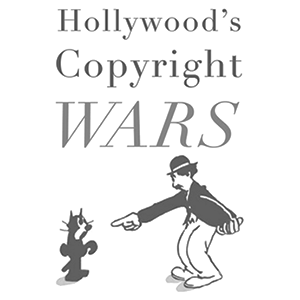
Scène à faire (French for ‘scene to be made’ or ‘scene that must be done’) is a scene in a book or film which is almost obligatory for a genre of its type. In the U.S. it also refers to a principle in copyright law in which certain elements of a creative work are held to be not protected when they are mandated by or customary to the genre.
For example, a spy novel is expected to contain elements such as numbered Swiss bank accounts, a femme fatale, and various spy gadgets hidden in wristwatches, belts, shoes, and other personal effects. These elements are not protected by copyright, though specific sequences and compositions of them can be.
read more »
Posted in Art, Money, Politics |
Leave a Comment »



 The Daily Omnivore