November 8, 2012
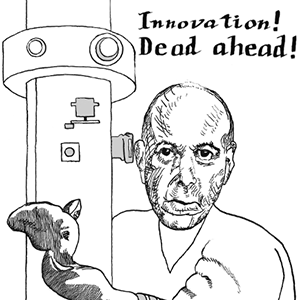
A submarine patent is a patent whose issuance and publication are intentionally delayed by the applicant for a long time, such as several years. This strategy requires a patent system where, first, patent applications are not published, and, second, patent term is measured from grant date, not from priority/filing date. In the United States, patent applications filed before November 2000 were not published and remained secret until they were granted. Analogous to a submarine, therefore, submarine patents could stay ‘under water’ for long periods until they ’emerged’ and surprised the relevant market. Persons or companies making use of submarine patents are sometimes referred to as patent pirates.
Submarine patent practice was possible previously under the United States patent law, but is no longer practical since the U.S. signed the TRIPS agreement of the WTO: since 1995, patent terms (20 years in the U.S.) are measured from the original filing or priority date, and not the date of issuance. A few potential submarine patents may result from pre-1995 filings that have yet to be granted and may remain unpublished until issuance. Submarine patents are considered by some, including the US Federal Courts, as a procedural laches (a delay in enforcing one’s rights, which may cause the rights to be lost).
Posted in Money, Politics, Technology |
Leave a Comment »
November 8, 2012

The Anti Security Movement (also written as antisec and anti-sec) is a movement opposed to the computer security industry. Antisec is against full disclosure of information relating to but not limited to: software vulnerabilities, exploits, exploitation techniques, hacking tools, attacking public outlets, and distribution points of that information. The general thought behind this is that the computer security industry uses full disclosure to profit and develop scare-tactics to convince people into buying their firewalls, anti-virus software, and auditing services. As recently as 2009, attacks against security communities such as ‘Astalavista’ and ‘milw0rm,’ as well as the popular image-host ‘ImageShack,’ have given the movement worldwide media attention.
The ‘anti-security movement” as it is understood today was coined a document which was initially an index on the anti.security.is website: ‘The purpose of this movement is to encourage a new policy of anti-disclosure among the computer and network security communities. The goal is not to ultimately discourage the publication of all security-related news and developments, but rather, to stop the disclosure of all unknown or non-public exploits and vulnerabilities. In essence, this would put a stop to the publication of all private materials that could allow script kiddies from compromising systems via unknown methods.’
Posted in Money, Politics, Technology |
Leave a Comment »
November 8, 2012


A grey hat in the hacking community refers to a skilled hacker whose activities fall somewhere between white hat (lawful) and black hat (unlawful) hackers on a variety of spectra.
They usually do not hack for personal gain or have malicious intentions, but may be prepared to technically commit crimes during the course of their technological exploits in order to achieve better security. Whereas white hat hackers will tend to advise companies of security exploits quietly, grey hat hackers are prone to ‘advise the hacker community as well as the vendors and then watch the fallout.’
read more »
Posted in Money, Politics, Technology |
Leave a Comment »
November 7, 2012

‘Our Dumb Century: The Onion Presents 100 Years of Headlines from America’s Finest News Source’ is a satirical humor book written by the staff of ‘The Onion’ and published in 1999. The chief editor of the book was Scott Dikkers, with specific sections edited by Robert D. Siegel, Maria Schneider, and John Krewson.
The book, spun off from ‘The Onion’ weekly-newspaper format of dryly satirizing current events, features mocked-up newspaper front pages from the entire 20th century, presented as though ‘The Onion’ had been continuously in print since before 1900. The publication of the book is in itself a parody of other end of the century retrospectives that had been published in 1999, notably ‘Time’ magazine and ‘The New York Times.’
read more »
Posted in Humor, Language, Politics |
Leave a Comment »
November 6, 2012

‘Poison pill’ is sometimes used more broadly to describe other types of takeover defenses that involve the target taking some action.
Although the broad category of takeover defenses (more commonly known as ‘shark repellents‘) includes the traditional shareholder rights plan poison pill. Other anti-takeover protections include: Limitations on the ability to call special meetings or take action by written consent; Supermajority vote requirements to approve mergers; and Supermajority vote requirements to remove directors.
read more »
Posted in Money, Politics |
Leave a Comment »
November 6, 2012

A wedge issue is a social issue, often of a divisive or controversial nature, which splits apart a population or political group. Wedge issues can be advertised or publicly aired in an attempt to weaken the unity of a population; with the goal of enticing polarized individuals to give support to an opponent. The use of wedge issues gives rise to wedge politics. Wedge issues are also known as ‘hot button’ or ‘third rail’ issues.
Political campaigns use wedge issues to exploit tension within a targeted population. A wedge issue may often be a point of internal dissent within an opposing party, which that party attempts to suppress or ignore discussing because it divides ‘the base.’ Typically, wedge issues have a cultural or populist theme, relating to matters such as crime, national security, sexuality (e.g. gay marriage), or race. A party may introduce a wedge issue to an opposing population, while aligning itself with the dissenting faction of the opposition.
read more »
Posted in Politics, Sex, World |
1 Comment »
November 5, 2012

A shareholder rights plan, colloquially known as a ‘poison pill,’ is a type of defensive tactic used by a corporation’s board of directors against a takeover. There are a number of such tactics, referred to as ‘shark repellents’ generally. In the field of mergers and acquisitions, shareholder rights plans were devised in the early 1980s as a way for directors to prevent takeover bidders from negotiating a price for sale of shares directly with shareholders, and instead forcing the bidder to negotiate with the board.
Shareholder rights plans are unlawful without shareholder approval in many jurisdictions such as the United Kingdom, frowned upon in others such as throughout the European Union, and lawful if used ‘proportionately’ in others, including Delaware in the United States. They are controversial because they hinder an active market for corporate control. Further, giving directors the power to deter takeovers puts directors in a position to enrich themselves, as they may effectively ask to be compensated for the price of consenting to a takeover.
read more »
Posted in Games, Money, Politics |
Leave a Comment »
November 5, 2012
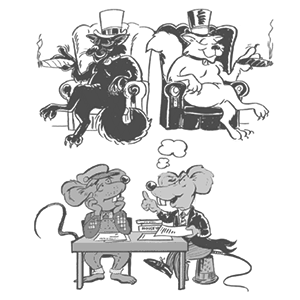
The Story of Mouseland was first told first by Canadian politician Clarence Gillis, and later and most famously by Tommy Douglas, leader of the Saskatchewan Co-operative Commonwealth Federation and, later, the New Democratic Party of Canada, both social democratic parties.
It was a political fable expressing the CCF’s view that the Canadian political system was flawed in offering voters a false dilemma: the choice of two parties, neither of which represented their interests. The mice voted in black cats, which represented the Progressive Conservative Party, and then they found out how hard life was. So they voted in the white cats, which symbolized the Liberal Party.
read more »
Posted in Humor, Politics, World |
Leave a Comment »
November 5, 2012
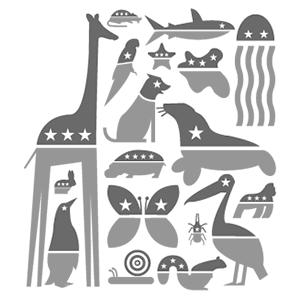
In political science, Duverger’s law is a principle which asserts that a plurality rule election system (voters vote for one candidate, and the candidate with the most votes wins) tends to favor a two-party system. This is one of two hypotheses proposed by French sociologist and politician Maurice Duverger, the second stating that ‘the double ballot majority system and proportional representation tend to multipartism.’
Duverger observed the effect and recorded it in several papers published in the 1950s and 1960s. In the course of further research, other political scientists began calling the effect a ‘law’ or principle.
read more »
Posted in Politics, World |
Leave a Comment »
November 5, 2012

The moralistic fallacy is in essence the reverse of the naturalistic fallacy (defining the term ‘good’ in terms of one or more natural properties). The moralistic fallacy is the formal fallacy of assuming that what is desirable is found or inherent in nature. It presumes that what ought to be—something deemed preferable—corresponds with what is or what naturally occurs. What should be moral is assumed a priori to also be naturally occurring.
Cognitive scientist Steven Pinker writes that ‘The naturalistic fallacy is the idea that what is found in nature is good. It was the basis for Social Darwinism, the belief that helping the poor and sick would get in the way of evolution, which depends on the survival of the fittest. Today, biologists denounce the Naturalistic Fallacy because they want to describe the natural world honestly, without people deriving morals about how we ought to behave — as in: If birds and beasts engage in adultery, infanticide, cannibalism, it must be OK.’
read more »
Posted in Philosophy, Politics, Science |
1 Comment »
November 1, 2012

Social Darwinism is an ideology of society that seeks to apply biological concepts of Darwinism or of evolutionary theory to sociology and politics, often with the assumption that conflict between groups in society leads to social progress as superior groups outcompete inferior ones.
It is a modern name given to the various theories of society that emerged in England and the United States in the 1870s, which, it is alleged, sought to apply biological concepts to sociology and politics. The term social Darwinism gained widespread currency when used in 1944 to oppose these earlier concepts.
read more »
Posted in Philosophy, Politics, Science |
1 Comment »
November 1, 2012

Science for the People is a left-wing organization that emerged from the antiwar culture of the United States in the 1970s. A similar organization of the same name was founded in 2002.
The original group was composed of professors, students, and other concerned citizens who sought to end potential oppression brought on by pseudoscience, or by what it considered the misuse of science. ‘Science for the People’ generated much controversy in the 1970s for the radical tactics of some of its members.
read more »
Posted in Politics, Science |
Leave a Comment »



