October 28, 2012

‘Vril, the Power of the Coming Race’ is an 1871 novel by Edward Bulwer-Lytton, originally printed as ‘The Coming Race.’ Many readers believe that its account of a superior subterranean master race and the energy-form called ‘Vril’ is accurate, to the extent that some theosophists accepted the book as truth. A popular book, ‘The Morning of the Magicians’ (1960) suggested that a secret Vril Society existed in pre-Nazi Berlin.
The novel centers on a young, independently wealthy traveler (the narrator), who accidentally finds his way into a subterranean world occupied by beings who seem to resemble angels and call themselves Vril-ya. The hero soon discovers that the Vril-ya are descendants of an antediluvian civilization who live in networks of subterranean caverns linked by tunnels.
read more »
Posted in Philosophy, Politics, War |
Leave a Comment »
October 24, 2012

Harm reduction refers to a range of public health policies designed to reduce the harmful consequences associated with human behaviors, even if those behaviors are risky or illegal. Examples of behaviors targeted for harm reduction policies include recreational drug use and prostitution. Criticism of harm reduction typically centers on concerns that tolerating risky or illegal behavior sends a message to the community that these behaviors are acceptable.
In the case of recreational drug use, harm reduction is put forward as a useful perspective alongside the more conventional approaches of demand and supply reduction. Many advocates argue that prohibitionist laws criminalize people for suffering from a disease and cause harm, for example by obliging drug addicts to obtain drugs of unknown purity from unreliable criminal sources at high prices, increasing the risk of overdose and death.
read more »
Posted in Drugs, Politics, Sex |
Leave a Comment »
October 23, 2012


Psychedelic therapy refers to therapeutic practices involving the use of psychedelic drugs, particularly serotonergic psychedelics such as LSD, psilocybin, DMT, and 2C-B. As an alternative to synonyms such as ‘hallucinogen,’ ‘entheogen,’ ‘psychotomimetic’ and other functionally constructed names, the use of the term ‘psychedelic’ (‘mind-manifesting’) emphasizes that those who use these drugs as part of a therapeutic practice believe these drugs can facilitate beneficial exploration of the psyche.
Proponents of psychedelic therapy also believe psychedelics enhance or unlock key psychoanalytic abilities, and so make it easier for conventional psychotherapy to take place. Psychedelic therapy, in the broadest possible sense of the term, undoubtedly dates from prehistoric knowledge of hallucinogenic plants. Though usually viewed as predominantly spiritual in nature, elements of psychotherapeutic practice can be recognized in the entheogenic or shamanic rituals of many cultures. Shamans have historically been well known throughout the world to mix two or more substances to produce synergistic effects.
read more »
Posted in Drugs, Health, Politics |
Leave a Comment »
October 22, 2012

The Gin Craze was a period in the first half of the 18th century when the consumption of gin increased rapidly in Great Britain, especially in London. Many people overconsumed and the city had a virtual epidemic of extreme drunkenness; this provoked moral outrage and a legislative backlash that some compare to the modern drug wars.
Parliament passed five major Acts, in 1729, 1736, 1743, 1747 and 1751, designed to control the consumption of gin. Though many similar drinks were available, and alcohol consumption was considerable at all levels of society, it was gin (otherwise known as ‘Mother’s Ruin’ or ‘Madam Geneva,’ a misspelling of the original drink called ‘jenever’) which caused the greatest public concern.
read more »
Posted in Drugs, Money, Politics |
Leave a Comment »
October 21, 2012
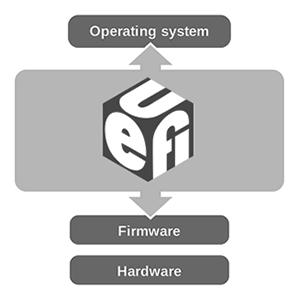
The Unified Extensible Firmware Interface (UEFI) is a specification that defines a software interface between an operating system and platform firmware. UEFI is meant as a replacement for the Basic Input/Output System (BIOS) firmware interface, present in all IBM PC-compatible personal computers. In practice, most UEFI images have legacy support for BIOS services.
It can be used to allow remote diagnostics and repair of computers, even without another operating system. The original EFI (Extensible Firmware Interface) specification was developed by Intel. Some of its practices and data formats mirror ones from Windows. The BIOS is limited to a 16-bit processor mode and 1 MB of addressable space due to the design being based on the IBM 5150 which used the 16-bit Intel 8088. In comparison, the UEFI processor mode can be either 32-bit (x86-32, ARM) or 64-bit (x86-64 and Itanium).
read more »
Posted in Money, Politics, Technology |
Leave a Comment »
October 21, 2012

Sociocybernetics is an independent chapter of science in sociology based upon Systems Theory (a framework to analyze a group of objects that work in concert to produce some result) and cybernetics (the study of control and communication systems in animals and machines). It also has a basis in Organizational Development (OD) consultancy practice and in Theories of Communication, theories of psychotherapies, and computer sciences. The ‘International Sociological Association’ has a specialist research committee in the area, which publishes the (electronic) ‘Journal of Sociocybernetics.’
The study of society as a system can be traced back to the origin of sociology when the emergent idea of functional differentiation was applied for the first time to society by Auguste Comte. From his viewpoint, the principal feature of modern society was the increased process of system differentiation as a way of dealing with the complexity of the environment. This is accomplished through the creation of subsystems in an effort to copy within a system the difference between it and the environment.
read more »
Posted in Politics, Science, Technology |
Leave a Comment »
October 21, 2012

Compared to other diseases or other cancers, breast cancer receives a disproportionate share of resources and attention. In 2001 MP Ian Gibson, chairman of the House of Commons of the United Kingdom all party group on cancer stated ‘The treatment has been skewed by the lobbying, there is no doubt about that. Breast cancer sufferers get better treatment in terms of bed spaces, facilities and doctors and nurses.’
Breast cancer also receives significantly more media coverage than other, equally prevalent cancers, with a study by Prostate Coalition showing 2.6 breast cancer stories for each one covering cancer of the prostate. Ultimately there is a concern that favoring sufferers of breast cancer with disproportionate funding and research on their behalf may well be costing lives elsewhere. Partly because of its relatively high prevalence and long-term survival rates, research is biased towards breast cancer. Some subjects, such as cancer-related fatigue, have been studied in little except women with breast cancer.
read more »
Posted in Health, Money, Politics |
Leave a Comment »
October 21, 2012

The Closing of the American Mind is a 1987 book by American philosopher Allan Bloom. It describes ‘how higher education has failed democracy and impoverished the souls of today’s students.’ He focuses especially upon the ‘openness’ of relativism as leading paradoxically to the great ‘closing’ referenced in the book’s title.
Bloom argues that ‘openness’ and absolute understanding undermines critical thinking and eliminates the ‘point of view’ that defines cultures. According to Bloom: ‘Education in our times must try to find whatever there is in students that might yearn for completion, and to reconstruct the learning that would enable them autonomously to seek that completion.’
read more »
Posted in Education, Philosophy, Politics |
Leave a Comment »
October 18, 2012

Nomic is a game created in 1982 by philosopher Peter Suber in which the rules of the game include mechanisms for the players to change those rules, usually beginning through a system of democratic voting. According to Suber, the primary activity of Nomic is proposing changes in the rules, debating the wisdom of changing them in that way, voting on the changes, deciding what can and cannot be done afterwards, and doing it. Even this core of the game, of course, can be changed.’
The term ‘nomic’ actually refers to a large number of games based on the initial ruleset laid out by Suber in his book ‘The Paradox of Self-Amendment. The game is in some ways modeled on modern government systems. It demonstrates that in any system where rule changes are possible, a situation may arise in which the resulting laws are contradictory or insufficient to determine what is in fact legal. Because the game models (and exposes conceptual questions about) a legal system and the problems of legal interpretation, it is named after ‘nomos,’ the Greek word for ‘law.’
read more »
Posted in Games, Philosophy, Politics |
Leave a Comment »
October 18, 2012

Metagaming is a broad term usually used to define any strategy, action or method used in a game which transcends a prescribed ruleset, uses external factors to affect the game, or goes beyond the supposed limits or environment set by the game. Another definition refers to the game universe outside of the game itself. In simple terms, it is the use of out-of-game information or resources to affect one’s in-game decisions.
The term metagame arose in mathematics, passed to military use, and then to politics to describe actions or events that may have been originally thought of as outside the bounds of the situation in question, but that in fact play an important role in its outcome. For example, a specific military operation could be thought of as a game, with the political ramifications of that operation on the war in general as the metagame.
read more »
Posted in Games, Money, Politics |
Leave a Comment »
October 17, 2012

Virtual crime or in-game crime refers to a virtual criminal act that takes place in a massively multiplayer online game (MMOG), usually an MMORPG. The huge time and effort invested into such games can lead online ‘crime’ to spill over into real world crime, and even blur the distinctions between the two.
Some countries have introduced special police investigation units to cover such ‘virtual crimes.’ South Korea is one such country and looked into 22,000 cases in the first six months of 2003. Several interpretations of the term ‘virtual crime’ exist. Some legal scholars opt for a definition based on a report on what was the first prominent case, a ‘rape in cyberspace.’
read more »
Posted in Games, Politics, Technology |
Leave a Comment »
October 17, 2012
Gold farming is playing a massively multiplayer online game to acquire in-game currency that other players purchase in exchange for real-world money. People in China and in other developing nations have held full-time employment as gold farmers.
While most game operators expressly ban the practice of selling in-game currency for real-world cash, gold farming is lucrative because it takes advantage of economic inequality and the fact that much time is needed to earn in-game currency. Rich, developed country players, wishing to save many hours of playing time, may be willing to pay substantial sums to the developing country gold farmers. In 2009 the global market for gold farming was valued at around $3 billion annually.
read more »
Posted in Games, Money, Politics |
Leave a Comment »



