November 19, 2011

Hacktivism (a portmanteau of hack and activism) is the use of computers and computer networks as a means of protest to promote political ends. The term was first coined in 1998 by a member of the Cult of the Dead Cow hacker collective. If hacking as ‘illegally breaking into computers’ is assumed, then hacktivism could be defined as ‘the nonviolent use of illegal or legally ambiguous digital tools in pursuit of political ends.’ These tools include web site defacements, redirects, denial-of-service (DoS) attacks, information theft, web site parodies, virtual sit-ins, typosquatting, and virtual sabotage.
If hacking as ‘clever computer usage/programming’ is assumed, then hacktivism could be understood as the writing of code to promote political ideology: promoting expressive politics, free speech, human rights, and information ethics through software development. Acts of hacktivism are carried out in the belief that proper use of code will be able to produce similar results to those produced by regular activism or civil disobedience.
read more »
Posted in Humor, Politics, Technology |
Leave a Comment »
November 19, 2011

Patriot hacking is a term for computer hacking or system cracking in which citizens or supporters of a country, traditionally industrialized Western countries but increasingly developing countries, attempts to perpetrate attacks on, or block attacks by, perceived enemies of the state. Recent media attention has focused on efforts related to terrorists and their own attempts to conduct an online or electronic intifada – cyberterrorism.
Patriot hacking is illegal in countries such as the United States yet is on the rise elsewhere. ‘”The FBI said that recent experience showed that an increase in international tension was mirrored in the online world with a rise in cyber activity such as web defacements and denial of service attacks,’ according to the BBC. At the onset of the War in Iraq in 2003, the FBI was concerned about the increase in hack attacks as the intensity of the conflict grew. Since then, it has been becoming increasingly popular in the North America, Western Europe and Israel, the countries which have the greatest threat to Islamic terrorism and its aforementioned digital version.
Posted in Politics, Technology, War |
Leave a Comment »
November 18, 2011

‘The Man‘ is a slang phrase that may refer to the government or to some other authority in a position of power. In addition to this derogatory connotation, it may also serve as a term of respect and praise. The phrase ‘the Man is keeping me down’ is commonly used to describe oppression. The phrase ‘stick it to the Man’ encourages resistance to authority, and essentially means ‘fight back’ or ‘resist,’ either openly or via sabotage.
The term ‘the Man’ in the American sense dates back to the late 19th Century. In the Southern U.S. states, the phrase came to be applied to any man or any group in a position of authority, or to authority in the abstract. From about the 1950s the phrase was also an underworld code word for police, the warden of a prison or other law enforcement or penal authorities.
read more »
Posted in Humor, Language, Politics |
Leave a Comment »
November 17, 2011
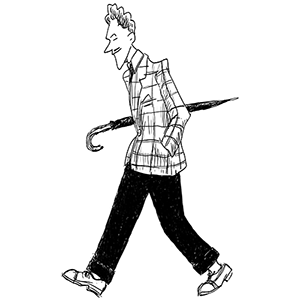
The Zazous were a subculture in France during World War II. They were young people expressing their individuality by wearing big or garish clothing (similar to the zoot suit fashion in America a few years before) and dancing wildly to swing jazz and bebop. Men wore large striped lumber jackets, while women wore short skirts, striped stockings and heavy shoes, and often carried umbrellas.
During the German occupation of France, the Vichy regime, in collaboration with the Nazis, and fascist itself in policies and outlook, had an ultra-conservative morality and started to use a whole range of laws against a youth that was restless and disenchanted. These young people expressed their resistance and nonconformity through aggressive dance competitions, sometimes against soldiers from the occupying forces.
read more »
Posted in Politics, War, World |
Leave a Comment »
November 17, 2011

Pocho [poh-choh] is a term used by native-born Mexicans to describe Chicanos who are perceived to have forgotten or rejected their Mexican heritage to some degree. Typically, pochos speak English and lack fluency in Spanish.
Among some pochos, the term has been embraced to express pride in having both a Mexican and an American heritage asserting their place in the diverse American culture. The word derives from the Spanish word ‘pocho,’ used to describe fruit that has become rotten or discolored.
read more »
Posted in Language, Politics, World |
Leave a Comment »
November 17, 2011
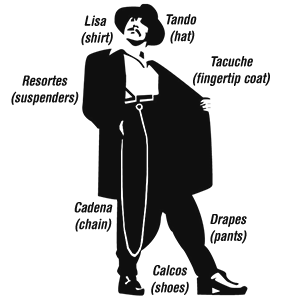
Pachucos [puh-choo-koh] are Chicano youths who developed their own subculture during the 1930s and 1940s in the Southwestern United States. They wore distinctive clothing (such as zoot suits) and spoke their own dialect of Mexican Spanish, called Caló or Pachuco. Due to their double marginalization stemming from their youth and ethnicity, there has always been a close association and cultural cross-pollination between the Pachuco subculture and gang subculture.
The Pachuco style originated in El Paso, Texas, and Ciudad Juárez, Mexico, and moved westward, following the line of migration of Mexican railroad workers (‘traqueros’) into Los Angeles, where it developed further. The word ‘pachuco’ originated, probably early in the 20th century, in a Mexican Spanish slang term for a resident of the cities of El Paso and Juárez. Even today, El Paso and Juárez are the ‘El Chuco’ or ‘El Pasiente’ by some.
read more »
Posted in Language, Politics, World |
1 Comment »
November 17, 2011
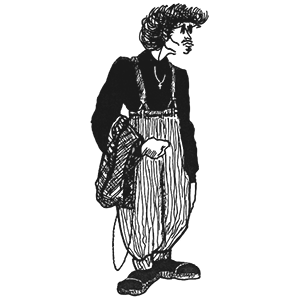
The Zoot Suit Riots were a series of riots in 1943 during World War II that erupted in Los Angeles between white sailors and Marines stationed throughout the city and Latino youths, who were recognizable by the zoot suits they favored. While Mexican Americans and military servicemen were the main parties in the riots, African American and Filipino/Filipino American youth were also involved.
The Zoot Suit Riots were in part the effect of the infamous Sleepy Lagoon murder which involved the death of a young Latino man in a barrio near Los Angeles. The incident triggered similar attacks against Latinos in Beaumont, Chicago, San Diego, Detroit, Evansville, Philadelphia, and New York.
read more »
Posted in Politics, War |
Leave a Comment »
November 17, 2011

A zoot suit is a suit with high-waisted, wide-legged, tight-cuffed, pegged trousers, and a long coat with wide lapels and wide padded shoulders. This style of clothing was popularized by African, Mexican, and Italian Americans during the late 1930s and the 1940s. It started during the Jazz Age in Harlem and slowly spread throughout other ethnic-neighborhoods across America. Malcolm X was known to have loved zoot suits in his early days as Detroit Red, a Harlem drug dealer, racketeer, and pimp. In Britain the bright-colored suits with velvet lapels worn by Teddy Boys (young men wearing clothes inspired by dandies) bore a slight resemblance to zoot suits in the length of the jacket. Often zoot suiters wear a felt hat with a long feather and pointy, French-style shoes. A young Malcolm X described the zoot suit as: ‘a killer-diller coat with a drape shape, reet pleats and shoulders padded like a lunatic’s cell.’ Zoot suits usually featured a watch chain dangling from the belt to the knee or below, then back to a side pocket.
The amount of material and tailoring required made them luxury items, so much so that the U.S. War Production Board said that they wasted materials that should be devoted to the World War II war effort. This extravagance, which many considered unpatriotic in wartime, was a factor in the Zoot Suit Riots, a series of riots in 1943 that erupted in Los Angeles between white sailors and Marines stationed throughout the city and Latino youths, who were recognizable by the zoot suits they favored. Wearing the oversized suit was a declaration of freedom and self-determination, even rebelliousness. The word zoot probably comes from a reduplication of suit. The creation and naming of the zoot suit have been variously attributed to Harold C. Fox, a Chicago clothier and big-band trumpeter; Louis Lettes, a Memphis tailor; and Nathan (Toddy) Elkus, a Detroit retailer. Zoot suits were initially called drapes.
Posted in Art, Money, Politics |
Leave a Comment »
November 17, 2011

A euphemism is the substitution of an uncontroversial phrase for a more frank expression that might offend or otherwise suggest something unpleasant to the audience. Euphemisms often evolve over time into taboo words, through a process described by American philosopher W.V.O. Quine, and more recently dubbed the ‘euphemism treadmill‘ by cognitive scientist Steven Pinker, and discussed in his books ‘The Blank Slate’ (2003) and ‘The Stuff of Thought’ (2007).
This is the well-known linguistic process known as ‘pejoration’ or ‘semantic change.’ Words originally intended as euphemisms may lose their euphemistic value, acquiring the negative connotations of their referents. In some cases, they may be used mockingly and become the opposite of euphemisms, ‘dysphemisms.’ Euphemisms related to disabilities have been prone to this. In his remarks on the ever-changing London slang, made in ‘Down and Out’ in Paris and London, George Orwell mentioned both the euphemism treadmill and the dysphemism treadmill. He did not use these now-established terms, but observed and commented on the respective processes as early as in 1933.
Posted in Humor, Language, Politics |
Leave a Comment »
November 17, 2011

Reappropriation [ree-uh-proh-pree-eyt] is the cultural process by which a group reclaims terms or artifacts that were previously used in a way disparaging of that group. For example, since the early 1970s, much terminology referring to homosexuality—such as gay, queer, and (to a lesser extent) faggot—has been reappropriated. Another example of reappropriation would be an African American collecting lawn jockeys or other artifacts of darky iconography. The term reappropriation can also extend to counter-hegemonic re-purposing, such as citizens with no formal authority seizing unused public or private land for community use.
The term reappropriation is an extension of the term appropriation or cultural appropriation used in anthropology, sociology and cultural studies to describe the hegemonic action of reabsorbing subcultural styles and forms, or those from other cultures, into mass culture through a process of commodification: the mass-marketing of alternate lifestyles, practices, and artifacts.
read more »
Posted in Language, Politics, Sex |
Leave a Comment »
November 17, 2011

Allophilia [al-oh-fil-ee-u] is having a positive attitude for a group that is not one’s own. The term derived from Greek words meaning ‘liking or love of the other.’ It is a framework for understanding effective intergroup leadership and is conceptualized as a measurable state of mind with tangible consequences. The term was coined by Harvard sociologist Todd L. Pittinsky in 2006, after he was unable to find an antonym for prejudice in any dictionary. Studied by social scientists, allophilia is the antonym of negative prejudices and the antonym of a host of ‘–isms’ (e.g. ageism, sexism, racism), ‘-phobias’ (e.g. homophobia, islamophobia, xenophobia), and ‘anti-s’ (e.g. anti-communism, anti-intellectualism).
Allophilia has five statistical factors: affection, comfort, engagement, enthusiasm, kinship. The Allophilia Scale measures each of these factors. The typical remedy for prejudice is to bring conflicting groups into a state of tolerance. However, tolerance is not the logical antithesis of prejudice, but rather is the midpoint between negative feelings and positive feelings toward others. Allophilia enhancement should serve as complement to prejudice reduction. In one study, symhedonia (empathic joy) has been shown to be more closely associated with allophilia, while sympathy (empathic sorrow) has been shown to be more strongly associated with prejudice.
Posted in Philosophy, Politics, World |
Leave a Comment »
November 16, 2011
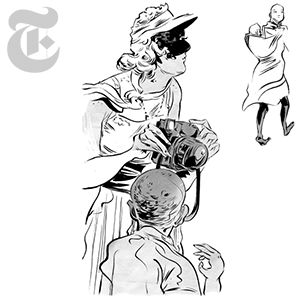
Slum tourism is a type of tourism that involves visiting impoverished areas, which has become increasingly prominent in several developing countries like India, Brazil, Kenya, and Indonesia. The Oxford English Dictionary found the first use of the word ‘slumming’ in 1884. In London, people visited neighborhoods such as Whitechapel or Shoreditch to see how the poor lived. In 1884 the concept moved to New York City to the Bowery and the Five Points area of the Lower East Side were visited to see ‘how the other half lives.’ In the 1980s in South Africa ‘township tours’ were organized to educate local governments on how the black population lived. It then attracted international tourists that wanted to support and learn more about apartheid. Prior to the release of ‘Slumdog Millionaire’ in 2008, Mumbai was a slum tourist destination.
Critics say slum tourism, like poorism, is likened to a kind of voyeurism, exploiting people less fortunate, snapping pictures and leaving nothing in return. Some tours do use portions of the profits to help out however. They have also courted controversy because of disputes about their safety, and fears that they misrepresent local culture.
Posted in Money, Politics, World |
Leave a Comment »


 The Daily Omnivore