December 1, 2011
Corporate-owned life insurance (COLI), also known as dead peasant life insurance, or janitors insurance, is life insurance on employees’ lives that is owned by the employer, with benefits payable to the employer. When the employer is a bank, it is known as a bank owned life insurance (BOLI).
COLI was originally purchased on the lives of key employees and executives by a company to hedge against the financial cost of losing key employees to unexpected death, the risk of recruiting and training replacements of necessary or highly-trained personnel, or to fund corporate obligations to redeem stock upon the death of an owner. This use is commonly known as ‘key man'” or ‘key person’ insurance.
read more »
Posted in Money, Politics |
Leave a Comment »
December 1, 2011

‘Pink Box: Inside Japan’s Sex Clubs’ is a book by photojournalist Joan Sinclair, chronicling her exploration of the secret world of fuzoku (prostitution) in Japan. Sinclair was joined by contributor James Farrer, a British sociologist who attempted to ‘place[s] the images in the context of contemporary Japanese culture.’
The book was published in 2006. Sinclair, a lawyer, describes being triggered to write the book by a comment she overheard ten years earlier, when she spent a year teaching English in Japan. Sinclair describes encountering, and overcoming, difficulties researching and getting access to the clubs—usually reserved for Japanese born patrons.
Posted in Politics, Sex, World |
Leave a Comment »
November 30, 2011
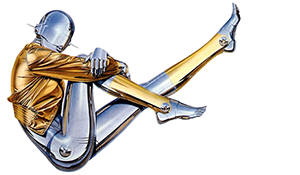

A gynoid refers to female robots. Android is a gender neutral term for humanoid robots, but which has male connotations. The term ‘gynoid’ was used by Gwyneth Jones in her 1985 novel ‘Divine Endurance’ to describe a robot slave in a futuristic China, that is judged by her beauty.
The tongue-in-cheek portmanteau ‘fembot’ (female robot) was used in the ‘Austin Powers films,’ a cultural play on the fembots originating in the TV series ‘The Bionic Woman.’ Robotess is the oldest gender-specific term, originating in 1921 from the same source as robot, a 1920 Czech play: ‘R.U.R. (Rossum’s Universal Robots).’
read more »
Posted in Politics, Sex, Technology |
Leave a Comment »
November 30, 2011

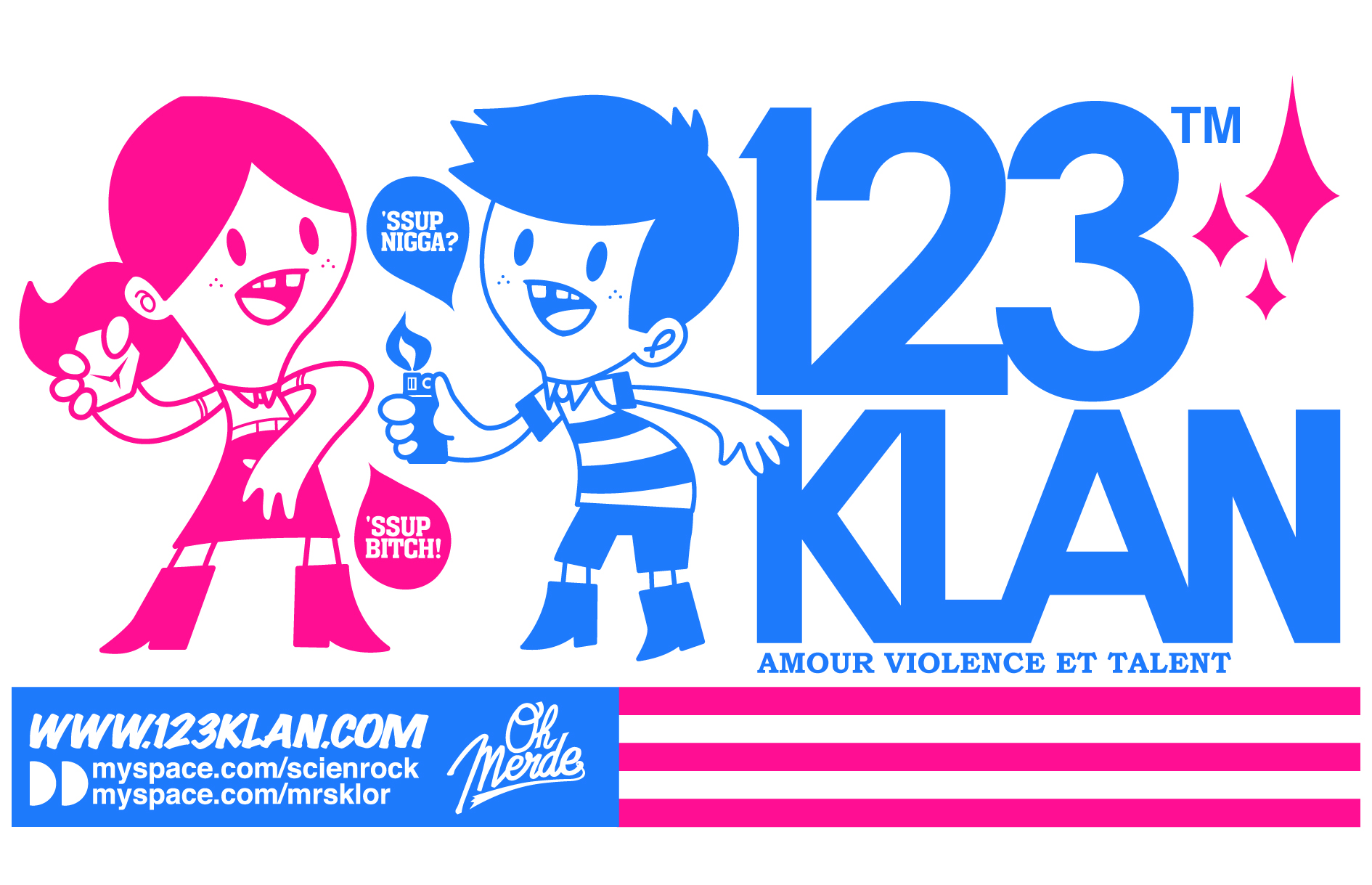
123Klan is a French graffiti crew, founded in 1992 by husband and wife Scien and Klor. Since 1994 the crew have also worked in graphic design, inspired by the work of English graphic designer Neville Brody, and started to apply it to their graffiti (and vice versa). They describe their art as ‘when street knowledge meets technology and graffiti melds with graphic design.’
Scien has said, ‘The great thing about graffiti is its impact on the streets. But most of people don’t like graffiti, simply because they don’t understand it. In a city you have probably less graffiti than advertising, and most of it is certainly uglier than certain graffiti pieces – so to come up with something that gets an impact on people in this visual jungle, it is a real challenge.’
Posted in Art, Money, Politics |
Leave a Comment »
November 29, 2011

A Drunkard’s cloak was a type of pillory used in various jurisdictions to punish miscreants. An early description of the drunkard’s cloak appears in Ralph Gardiner’s ‘England’s Grievance Discovered,’ first published in 1655. A John Willis claimed to have travelled to Newcastle and seen ‘men drove up and down the streets, with a great tub, or barrel, opened in the sides, with a hole in one end, to put through their heads, and to cover their shoulders and bodies, down to the small of their legs, and then close the same, called the new fashioned cloak, and so make them march to the view of all beholders; and this is their punishment for drunkards, or the like.’
Drunkenness was first made a civil offence in England by the Ale Houses Act 1551; the drunkard’s cloak became a common method of punishing recidivists, especially during the Commonwealth of England. From 1655 Oliver Cromwell suppressed many of England’s alehouses, particularly in Royalist areas, and the authorities made regular use of the cloak.
Posted in Drugs, Humor, Politics |
Leave a Comment »
November 29, 2011


Tetrahydrocannabinol [te-truh-hahy-druh-kuh-nab-uh-nawl] (THC), also known as delta-9-tetrahydrocannabinol (Δ9-THC), is the main chemical psychoactive substance found in the cannabis plant. It was first isolated in 1964. In pure form, it is a glassy solid when cold, and becomes viscous and sticky if warmed. An organic chemical (specifically an aromatic terpenoid), with very low solubility in water, but good solubility in most organic solvents (e.g. alcohol, acetone, and butane).
Like most pharmacologically-active plants, THC in cannabis is assumed to be involved in self-defense, perhaps against herbivores. THC also possesses high UV-B absorption properties, which, it has been speculated, could protect the plant from harmful UV radiation exposure. Dronabinol is the generic name of a THC isomer (it has the same number and type of atoms as THC but in a different configuration); it is sold as Marinol (a registered trademark of Solvay Pharmaceuticals).
read more »
Posted in Drugs, Health, Politics |
Leave a Comment »
November 25, 2011

Nabiximols (trade name Sativex) is a cannabinoid mouth spray developed by the UK company GW Pharmaceuticals for multiple sclerosis (MS) patients, who can use it to alleviate neuropathic pain, spasticity, overactive bladder, and other symptoms. Nabiximols is also being developed in Phase III trials as a potential treatment to alleviate pain due to cancer. It has also been researched in various models of peripheral and central neuropathic pain.
Nabiximols is distinct from all other pharmaceutically produced cannabinoids currently available because it is derived from cannabis plants, rather than a solely synthetic process. The drug is a pharmaceutical product standardized in composition, formulation, and dose, although it is still effectively a tincture of the cannabis plant. Its principal active cannabinoid components are the cannabinoids: tetrahydrocannabinol (THC) and cannabidiol (CBD). The product is formulated as an oromucosal spray which is administered into the mouth. Each spray delivers a fixed dose of 2.7 mg THC and 2.5 mg CBD.
Posted in Drugs, Health, Politics |
Leave a Comment »
November 25, 2011
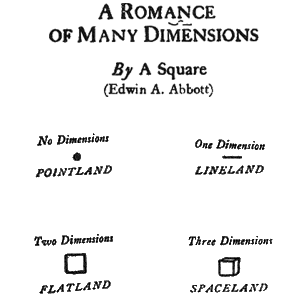
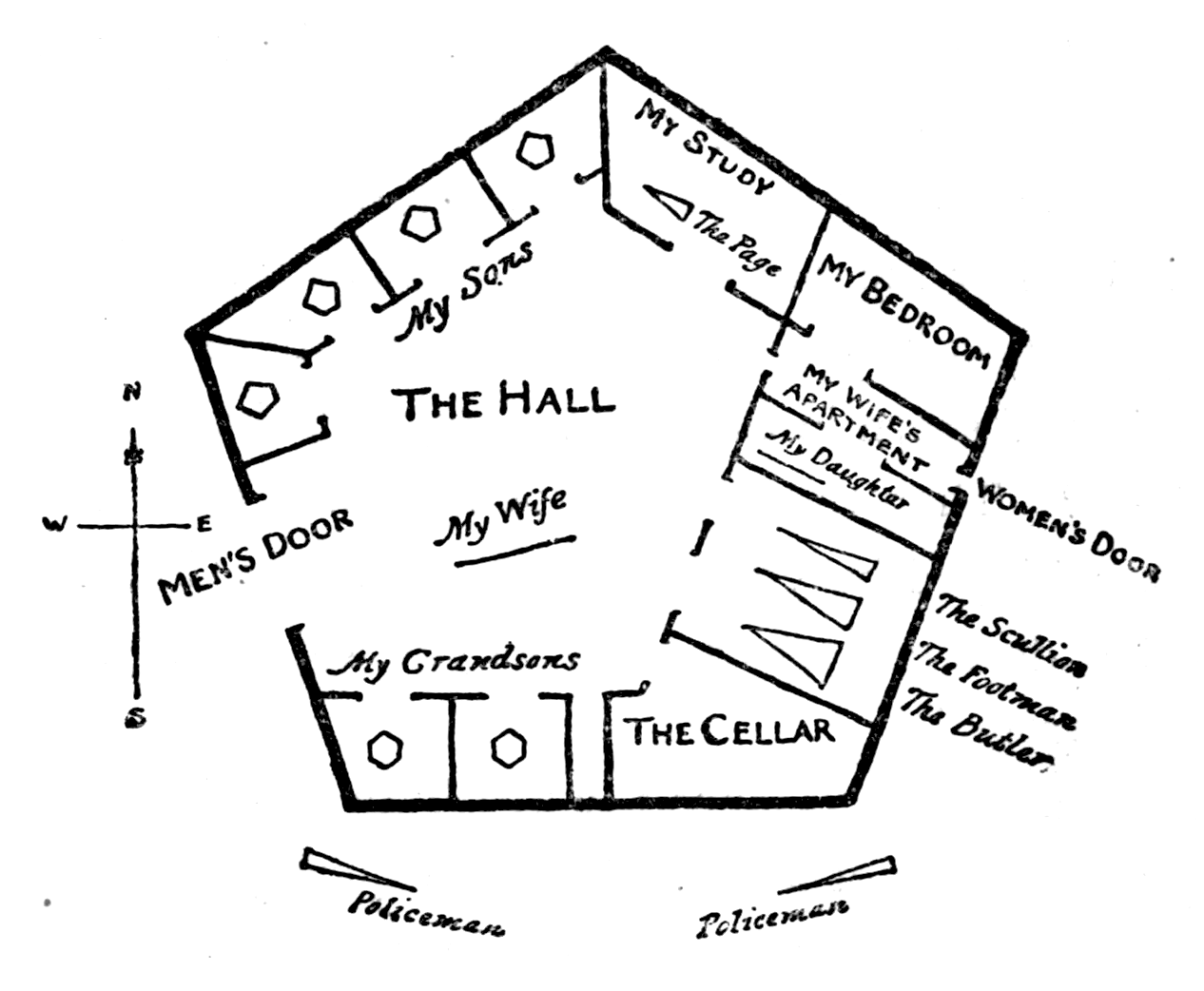
‘Flatland: A Romance of Many Dimensions’ is an 1884 satirical novella by the English schoolmaster Edwin Abbott Abbott. Writing pseudonymously as ‘A Square,’ Abbott used the fictional two-dimensional world of Flatland to offer pointed observations on the social hierarchy of Victorian culture.
However, the novella’s more enduring contribution is its examination of dimensions, for which the novella is still popular amongst mathematics, physics, and computer science students.
read more »
Posted in Art, Language, Politics |
2 Comments »
November 25, 2011
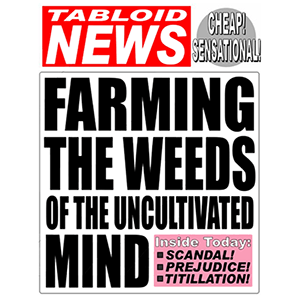
Junk food news is a sardonic term for news stories that deliver ‘sensationalized, personalized, and homogenized inconsequential trivia,’ especially when such stories appear at the expense of serious investigative journalism.
It implies a criticism of the mass media for disseminating news that, while not very nourishing, is ‘cheap to produce and profitable for media proprietors.’
read more »
Posted in Language, Money, Politics |
1 Comment »
November 25, 2011

Deviancy amplification spiral is a media hype phenomenon defined by media critics as a cycle of increasing numbers of reports on a category of antisocial behavior or some other ‘undesirable’ event, leading to a moral panic. The term was coined in 1972 by Stanley Cohen in his book, ‘Folk Devils and Moral Panics.’ According to Cohen the spiral starts with some ‘deviant’ act. Usually the deviance is criminal, but it can also involve lawful acts considered morally repugnant by a large segment of society.
With the new focus on the issue, hidden or borderline examples that would not themselves have been newsworthy are reported, confirming the ‘pattern.’ Reported cases of such ‘deviance’ are often presented as just ‘the ones we know about’ or the ‘tip of the iceberg,’ an assertion that is nearly impossible to disprove immediately. For a variety of reasons, the less sensational aspects of the spiraling story that would help the public keep a rational perspective (such as statistics showing that the behavior or event is actually less common or less harmful than generally believed) tends to be ignored by the press.
read more »
Posted in Language, Money, Politics |
Leave a Comment »
November 24, 2011
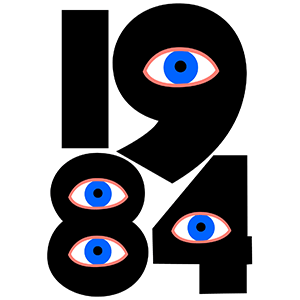
A dystopia [dis-toh-pee-uh] is the idea of a society in a repressive and controlled state, often under the guise of being utopian, as characterized in books like ‘Brave New World’ and ‘Nineteen Eighty-Four.’
Dystopian societies feature different kinds of repressive social control systems, various forms of active and passive coercion. Ideas and works about dystopian societies often explore the concept of humans abusing technology and humans individually and collectively coping, or not being able to properly cope with technology that has progressed far more rapidly than humanity’s spiritual evolution. Dystopian societies are often imagined as police states, with unlimited power over the citizens.
read more »
Posted in Language, Politics, Technology |
Leave a Comment »
November 24, 2011
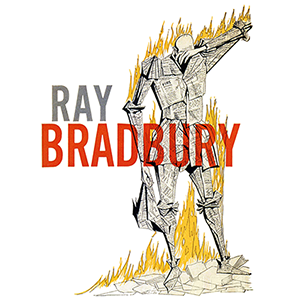
Fahrenheit 451 is a 1953 dystopian novel by Ray Bradbury. The novel presents a future American society where reading is outlawed and firemen start fires to burn books. Written in the early years of the Cold War, the novel is a critique of what Bradbury saw as issues in American society of the era. In 1947, Bradbury wrote a short story titled ‘Bright Phoenix’ (later revised for publication in a 1963 issue of ‘The Magazine of Fantasy & Science Fiction’). Bradbury expanded the basic premise of “Bright Phoenix” into ‘The Fireman,’ a novella published in a 1951 issue of ‘Galaxy Science Fiction.’ First published in 1953 by Ballantine Books, Fahrenheit 451 is twice as long as ‘The Fireman.’ A few months later, the novel was serialized in the March, April, and May 1954 issues of Playboy. Bradbury wrote the entire novel on a pay typewriter in the basement of UCLA’s Powell Library.
The novel has been the subject of various interpretations, primarily focusing on the historical role of book burning in suppressing dissenting ideas. Bradbury has stated that the novel is not about censorship, but a story about how television destroys interest in reading literature, which leads to a perception of knowledge as being composed of factoids, partial information devoid of context.
read more »
Posted in Language, Politics, Technology |
Leave a Comment »