November 16, 2011


Wigger [wig-er] is a pejorative slang term for a white person who emulates mannerisms, language, and fashions associated with African-American culture, particularly hip hop in the United States or the Grime/Garage scene in Britain. The term is a portmanteau of either wannabe or white and n****r. The term is considered derogatory, reflecting stereotypes of African-American or Black British culture, and can be used pejoratively, because of its connotations of cultural appropriation. It is also often used in a racist manner, not only belittling the person perceived as acting black, but also demeaning black people and culture by proxy. Some, however, use the term neutrally, or as a light joke, without any racism intended.
The phenomenon of white people adopting stereotypical black mannerisms, speech, and apparel – which in the general case is called allophilia – has appeared in several generations since slavery was abolished in the western world. The concept has been documented in the United States, Canada, United Kingdom, Australia and other white-majority countries. An early form of this was the ‘white negro’ in the jazz and swing music scenes of the 1920s and 1930s; as examined in the 1957 Norman Mailer essay, ‘The White Negro.’ It was later seen in the Zoot suiter of the 1930s and 1940s; the hipster of the 1940s; and the beatnik and rock and roller of the 1950s.
Posted in Language, Politics, World |
1 Comment »
November 16, 2011

Plastic Paddy is a slang term used to describe some members of the Irish diaspora, or those with no ancestral connection to Ireland, who appropriate (often stereotypical) Irish customs and identity. A Plastic Paddy may know little of actual Irish culture, but nevertheless assert an Irish identity. The term is pejoratively used to refer to people on the basis of their perceived lack of authenticity as Irish.
People who were not born in Ireland, and who did not grow up in Ireland, but nonetheless possess Irish citizenship and an Irish passport are often labelled as Plastic Paddies. The term came into common use in the 1980s when it was frequently employed as a term of abuse by recently-arrived middle class Irish migrants to London. It ‘became a means of distancing themselves from established Irish communities.’ And the use was a part of the process by which the second-generation Irish are positioned as inauthentic within the two identities, of Englishness and Irishness.
read more »
Posted in Language, Politics, World |
Leave a Comment »
November 16, 2011
Cultural appropriation is the adoption of some specific elements of one culture by a different cultural group. It describes acculturation, the exchange of cultural features that results when different cultures come into continuous first hand contact; or assimilation, the process of integration where members of an ethno-cultural group, typically immigrants, or other minority groups, are ‘absorbed’ into an established, generally larger community.
It can include the introduction of forms of dress or personal adornment, music and art, religion, language, or social behavior. These elements, once removed from their indigenous cultural contexts, can take on meanings that are significantly divergent from, or merely less nuanced than, those they originally held.
read more »
Posted in Language, Politics, World |
Leave a Comment »
November 13, 2011

The Stardust was a casino resort located on the Las Vegas Strip, which opened in 1958, although most of the modern casino complex (including the main 32-story tower) was built in 1991. The Stardust officially closed in 2006, after operating continuously for 48 years. It was imploded a year later, and was the youngest undamaged high-rise building to ever be demolished at the time. Construction started immediately for Echelon Place, which was planned to replace The Stardust, but development was suspended in 2008, and remains suspended as 2011.
The famed Stardust sign became a symbol of Las Vegas. Young Electric Sign Company was hired to fabricate the sign. Kermit Wayne’s design was selected for both the façade and the roadside signs. Although Moe Dalitz (bootlegger, racketeer, and philanthropist who was one of the major figures who helped shape Las Vegas), who took over from original developer Tony Cornero upon his death, said it was from his original plans, the sign was really part of Cornero’s original concept.
read more »
Posted in Games, Money, Politics |
1 Comment »
November 10, 2011

Microblogging is a broadcast medium in the form of blogging. A microblog differs from a traditional blog in that its content is typically smaller in both actual and aggregate file size. Microblogs ‘allow users to exchange small elements of content such as short sentences, individual images, or video links.’ As with traditional blogging, microbloggers post about topics ranging from the simple, such as ‘what I’m doing right now,’ to the thematic, such as ‘sports cars.’ Commercial microblogs also exist, to promote websites, services and/or products, and to promote collaboration within an organization. Some microblogging services offer features such as privacy settings, which allow users to control who can read their microblogs, or alternative ways of publishing entries besides the web-based interface. These may include text messaging, instant messaging, E-mail, or digital audio.
The first microblogs were known as tumblelogs. The term was coined by ‘why the lucky stiff’ in a blog post in 2005, while describing Christian Neukirchen’s Anarchaia: ‘Blogging has mutated into simpler forms (specifically, link- and mob- and aud- and vid- variant), but I don’t think I’ve seen a blog like Chris Neukirchen’s Anarchaia, which fudges together a bunch of disparate forms of citation (links, quotes, flickrings) into a very long and narrow and distracted tumblelog.’
read more »
Posted in Money, Politics, Technology |
1 Comment »
November 10, 2011

Weibo is the Chinese word for ‘microblog.’ It usually refers to one or all of the Twitter-like, China-based microblogging services, or one’s account at these services. Among the weibo services, Sina Weibo is the most visited one. Sina has used the domain name weibo.com for the service since 2011. Sometimes, the own published news of Sina.com and some other media use directly ‘Weibo’ to refer to Sina Weibo. However generally, when mentioning ‘Weibo,’ it may refer to one or all of the China-based microblogging services. After the 2009 Urumqi riots, China shut down most of the domestic weibo services, and many popular non China-based microblogging services like Twitter, Facebook, and Plurk have been blocked since then.
This led to the creation of services like Sina Weibo, operated by large Chinese Internet companies under the government’s control. Due to the Internet censorship in China, all of the China-based weibo services today is now controlled by various self-censorship policies and methods. They usually have blacklisted keywords list to be automatically checked, sometimes administrators check manually. Posts on sensitive topics forbidden in China (e.g. Human right, Liu Xiaobo) will be deleted and the user’s account may be blocked. However, compared to other Chinese media formats, weibo services are considered freer. Weibos are thought as influential tools that impact and change China. Some scandals and controversies such as Li Gang incident are made known to the public through weibos.
Posted in Politics, Technology, World |
Leave a Comment »
November 10, 2011

Artificial scarcity describes the scarcity of items even though the technology and production capacity exists to create an abundance. The term is aptly applied to non-rival resources, i.e. those that do not diminish due to one person’s use, although there are other resources which could be categorized as artificially scarce. The most common causes are monopoly pricing structures, such as those enabled by intellectual property rights or by high fixed costs in a particular marketplace. The inefficiency associated with artificial scarcity is formally known as a deadweight loss.
An example of artificial scarcity is often used when describing proprietary, or closed-source, computer software. Any software application can be easily duplicated billions of times over for a relatively cheap production price (an initial investment in a computer, an internet connection, and any power consumption costs; and these are already fixed costs in most environments). On the margin, the price of copying software is next to nothing, costing only a small amount of power and a fraction of a second. Things like serial numbers, license agreements, and intellectual property create artificial scarcity, and give monetary value to otherwise free copies. Technocrats argue that if the price system were removed, there would be no personal incentive to artificially create scarcity in products, and thus something similar to the open source model of distribution would dominate.
read more »
Posted in Money, Politics, Technology |
Leave a Comment »
November 10, 2011

Post scarcity is a hypothetical form of economy or society, in which things such as goods, services and information are free, or practically free. This would be due to an abundance of fundamental resources (matter, energy and intelligence), in conjunction with sophisticated automated systems capable of converting raw materials into finished goods, allowing manufacturing to be as easy as duplicating software.
Scarcity is the fundamental economic problem of having seemingly unlimited human needs and wants, in a world of limited resources. It states that society has insufficient productive resources to fulfill all human wants and needs. Alternatively, scarcity implies that not all of society’s goals can be pursued at the same time; trade-offs are made of one good against others. As such, the term post-scarcity economics may be somewhat paradoxical. To quote a 1932 essay by Lionel Robbins, economics is ‘the science which studies human behavior as a relationship between ends and scarce means which have alternative uses.’
read more »
Posted in Money, Politics, Technology |
Leave a Comment »
November 9, 2011
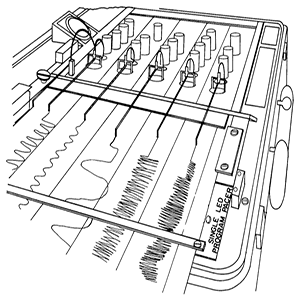
A polygraph (popularly referred to as a lie detector) measures and records several physiological indices such as blood pressure, pulse, respiration, and skin conductivity while the subject is asked and answers a series of questions. The belief is that deceptive answers will produce physiological responses that can be differentiated from those associated with non-deceptive answers. The polygraph was invented in 1921 by John Augustus Larson, a medical student at the University of California at Berkeley and a police officer of the Berkeley Police Department.
Many members of the scientific community consider polygraphy to be pseudoscience. Nonetheless, in some countries polygraphs are used as an interrogation tool with criminal suspects or candidates for sensitive public or private sector employment. US federal government agencies such as the FBI and the CIA and many police departments use polygraph examinations to interrogate suspects and screen new employees. Within the US federal government, a polygraph examination is also referred to as a psychophysiological detection of deception (PDD) examination.
read more »
Posted in Politics, Technology |
1 Comment »
November 9, 2011

Thought identification refers to the empirically verified use of technology to, in some sense, read people’s minds. Recent research using Neuroimaging has provided some early demonstrations of the technology’s potential to recognize high-order patterns in the brain. In some cases, this provides meaningful (and controversial) information to investigators.
With brain scanning technology becoming increasingly accurate, experts predict important debates over how and when it should be used. One potential area of application is criminal law. Haynes explains that simply refusing to use brain scans on suspects also prevents the wrongly accused from proving their innocence.
read more »
Posted in Health, Politics, Technology |
1 Comment »
November 8, 2011

Urban exploration (often shortened as urbex or UE) is the examination of the normally unseen or off-limits parts of urban areas or industrial facilities. It is also commonly referred to as ‘infiltration,’ although that term is be more closely associated with the exploration of active or inhabited sites. It may also be referred to as ‘draining’ (when exploring drains) ‘urban spelunking,’ ‘urban caving,’ or ‘building hacking.’
The nature of this activity presents various risks, including both physical danger and the possibility of arrest and punishment. Many, but not all, of the activities associated with urban exploration could be considered trespassing or other violations of local or regional laws, including—but not limited to—invasion of privacy and certain broadly-interpreted anti-terrorism laws.
read more »
Posted in Games, Politics |
Leave a Comment »
November 8, 2011

Hazing is a term used to describe various ritual and other activities involving harassment, abuse or humiliation used as a way of initiating a person into a group. Hazing is seen in many different types of groups, including in gangs, clubs, sports teams, military units, and workplaces. In the United States it is often associated with fraternities and sororities.
Hazing is often prohibited by law and may be either physical (violent) or mental (degrading) practices. It may also include nudity or sexually oriented activities. Hazing often serves a deliberate purpose, of building solidarity. Persons who go through a great deal of trouble or pain to attain something tend to value it more highly than persons who attain the same thing with a minimum of effort.
read more »
Posted in Education, Games, Politics |
Leave a Comment »


 The Daily Omnivore