October 28, 2011

A child beauty pageant is a beauty contest featuring contestants including and younger than 18 years of age. Divisions include talent, interview, sportswear, casual wear, swim wear, western wear, theme wear, outfit of choice, decade wear, and evening wear, typically wearing makeup as well as elaborate hairstyles. The contestants wear custom fitted and designed outfits to present their routines on stage.
Some pageants do their best to make every child feel like a winner. There is a queen for every age division and there are Ultimate Grand Supreme awards, Mini supreme queens for certain blocks of age divisions (0-5, 6-11, 12-16, 17 and up). There are also side awards and overall side awards. Pageants may cater to the ‘natural’ contestant (who typically wears minimal makeup, only her own hair, no false teeth, no spray tan, and unmanicured nails) and/or the ‘high glitz’ contestant (who typically uses any and all of the above listed techniques to enhance her appearances).
read more »
Posted in Health, Politics, Sex |
14 Comments »
October 28, 2011
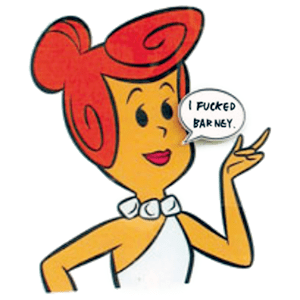
The Bubble Project, as proclaimed by its manifesto, aims to counteract corporate marketing and advertisement messages in public spaces. The project was conceived by Ji Lee, an artist and art director who originally printed 15,000 stickers that look like speech bubbles used in comic strips. He posts these blank speech bubbles on top of advertisements throughout New York City allowing anyone who sees them to write in their comments and thoughts.
By filling in the bubbles people engage in the project and transform ‘the corporate monologue into an open dialogue.’ The comments are photographed and posted on the project’s website. The Bubble Project has quickly gained popularity and independent efforts have sprung up in other parts of the world in countries such as Italy and Argentina.
Posted in Humor, Money, Politics |
Leave a Comment »
October 27, 2011
The evil empire is a term which was used by the US president Ronald Reagan to describe the Soviet Empire in 1983, which consisted of the republics of the Soviet Union and the Council for Mutual Economic Assistance (Comecon). Members of this council were satellite states, which where formally independent, but were steered by the Soviet Union with military pressure, if they considered it as necessary.
Reagan, took an aggressive, hard-line stance that favored matching and exceeding the Soviet Union’s strategic and global military capabilities, in calling for a rollback strategy that would, in his words, write the final pages of the history of the Soviet Union. The characterization demeaned the Soviet Union and angered Soviet leaders; it represented the rhetorical side of the escalation of the Cold War.
read more »
Posted in Politics, War, World |
Leave a Comment »
October 27, 2011


Megacorporation is a term popularized by science fiction author William Gibson. It has become a term popularly used in cyberpunk literature, referring to a corporation that is a massive conglomerate, holding monopolistic or near-monopolistic control over multiple markets (thus exhibiting both a horizontal and a vertical monopoly). Megacorps are so powerful that they can ignore the law, possess their own heavily-armed (often military-sized) private armies, hold ‘sovereign’ territory, and possibly even act as outright governments. They often exercise a large degree of control over their employees, taking the idea of ‘corporate culture’ to an extreme.
Such organizations are a staple of science fiction long predating cyberpunk, appearing in the works of writers such as Philip K. Dick (‘Do Androids Dream of Electric Sheep?’), Thea von Harbou (‘Metropolis’), and Robert Heinlein (‘Citizen of the Galaxy’).
read more »
Posted in Money, Politics, Technology |
Leave a Comment »
October 23, 2011

Quiz machine is a term used in the UK for commercial coin-operated video quiz games that offer cash prizes for winning performances. These machines are usually found sited in pubs, bars and other places of entertainment. The term quiz machine is often used interchangeably with the trade term SWP (‘Skill With Prizes’) although not all SWP games are quiz based. The quiz machine first appeared on the scene in the UK in 1985.
The first such machine was called Quizmaster which was made by the Cardiff based now defunct Coinmaster Ltd. This was rapidly followed by quiz machines from other manufacturers. Over the following years quiz machines/SWP’s became a regular feature of the British pub. Leading SWP manufacturers of the 1980s and 1990s were: Coinmaster, JPM, Barcrest, Bell-Fruit, Maygay and Ace-Coin. The themes of many SWP games were (and still are) based on popular TV quiz shows, board games or other aspects of popular culture.
read more »
Posted in Games, Money, Politics |
Leave a Comment »
October 23, 2011


Secularism [sek-yuh-luh-riz-uhm] is the idea of something being not religious or not connected to a church. An example in government is the First Amendment (which guarantees, among other things, Separation of Church and State). This means that anyone can choose to practice or not practice any religion they want, and the government cannot make them be a part of a religion.
In one sense, secularism may assert the right to be free from religious rule and teachings, and the right to freedom from governmental imposition of religion upon the people within a state that is neutral on matters of belief. In another sense, it refers to the view that human activities and decisions, especially political ones, should be unbiased by religious influence.
read more »
Posted in Philosophy, Politics, World |
Leave a Comment »
October 20, 2011
The SlutWalk protest marches began in 2011, in Toronto, Canada, and became a movement of rallies across the world. Participants protest against explaining or excusing rape by referring to any aspect of a woman’s appearance. The rallies began when Constable Michael Sanguinetti, a Toronto Police officer, suggested that to remain safe, ‘women should avoid dressing like sluts.’
The protest takes the form of a march, mainly by young women, where some dress in ordinary clothing and others dress provocatively, like ‘sluts.’ There are also speaker meetings and workshops. Some objectors have remarked that this approach is an example of women defining their sexuality in male terms.
read more »
Posted in Politics, Sex |
1 Comment »
October 20, 2011


Tactical frivolity is a form of public protest involving humor, often including peaceful non-compliance with authorities, carnival and whimsical antics. Humor has played a role in political protests at least as far back as the Classical period in ancient Greece. Yet it is only since the 1990s that the term tactical frivolity has gained common currency for describing the use of humor in opposing perceived political injustice.
There is no universally agreed definition as to which sorts of humorous protest count as tactical frivolity. Generally the term is used for a whimsical, non confrontational approach rather than aggressive mocking or cutting jokes.
read more »
Posted in Humor, Money, Politics |
1 Comment »
October 20, 2011

Occupy Wall Street (OWS) is an ongoing series of demonstrations in New York City based in Zuccotti Park in the Wall Street financial district. Initiated by the Canadian activist group Adbusters, the protests were inspired by the Arab Spring movement, especially Cairo’s Tahrir Square protests, and the Spanish Indignants. The participants’ slogan ‘We are the 99%’ refers to the difference in wealth between the top 1% and the other citizens of the United States.
They are mainly protesting social and economic inequality, corporate greed, and the power and influence of corporations, particularly from the financial service sector, and of lobbyists, over government. The protest began in September, and by October similar demonstrations were either ongoing or had been held in 70 major cities in the US. Internationally, other ‘Occupy’ protests have modeled themselves after Occupy Wall Street, in over 900 cities worldwide.
read more »
Posted in Money, Politics |
Leave a Comment »
October 20, 2011

We are the 99% is a political solidarity slogan and implicit economic claim that emerged from the ‘Occupy’ protests in 2011. It is a reference to the difference in wealth between the top 1% and all the remaining citizens of the United States. It started as a tumblr blog and became an Internet meme that went viral, showing a picture of a person holding a piece of paper with their story on it, ending with the phrase, ‘We are the 99%.’ New York times columnist Anne-Marie Slaughter described pictures on the ‘We are the 99’ website as as ‘page after page of testimonials from members of the middle class who took out loans to pay for education, took out mortgages to buy their houses and a piece of the American dream, worked hard at the jobs they could find, and ended up unemployed or radically underemployed and on the precipice of financial and social ruin.’
In 2006, filmmaker and Johnson & Johnson heir Jamie Johnson filmed a documentary called ‘The One Percent’ about the growing wealth gap between America’s wealthy elite compared to the overall citizenry. The film’s title referred to the top one percent of Americans in terms of wealth, who controlled 38% of the nation’s wealth in 2001. The 1% percent in the United States starts with household annual incomes of greater than $593,000.
Posted in Money, Politics |
Leave a Comment »
October 20, 2011


Corporatocracy [kawr-prit-tok-ruh-see], in social theories that focus on conflicts and opposing interests within society, denotes a system of government that serves the interest of, and may be run by, corporations and involves ties between government and business. Where corporations, conglomerates, and/or government entities with private components, control the direction and governance of a country, including carrying out economic planning (notwithstanding the ‘free market’ label).
The concept of corporatocracy is that corporations, to a significant extent, have power over governments, including those governments nominally elected by the people. They exercise their power via corporate monopolies and mergers, and through their subsequent capacity to leverage broad economic interests, which allows them the luxury of being declared ‘too big to fail’; this is accomplished by legal mechanisms (i.e., lobbyists, campaign contributions to office holders and candidates, threats to leave the state or country for another with less oversight and/or more personally beneficial subsidies, etc.), which renders them immune to vague accusations and prosecution.
Posted in Language, Money, Politics |
Leave a Comment »
October 18, 2011
Cool “Disco” Dan is the pseudonym of graffiti artist Dan Hogg (b. 1969). His standard mark, a particularly styled rendering of his name, has proliferated in the Washington metropolitan area, notably on surfaces along the route of the Washington Metro Red Line.
He has been spraying his tag since 1984. Part of the Go-Go scene of the 80’s in Washington; he managed to avoid being jailed or killed unlike a lot of his contemporaries by devoting himself to graffiti rather than becoming involved with drugs or gangs. The pervasiveness of his mark was reported frequently in the local press.
Posted in Art, Politics |
Leave a Comment »



