August 11, 2011

Pinko is a term for a person regarded as sympathetic to communism, though not necessarily a Communist Party member. The term has its origins in the notion that pink is a lighter shade of red, the color associated with communism. The word was coined by Time magazine in 1925 as a variant on the noun and adjective pink, which had been used along with ‘parlor pink’ since the beginning of the 20th century to refer to those of leftish sympathies, usually with an implication of ‘effeteness.’
In the 1920s, for example, a Wall Street Journal editorial described supporters of the progressive politician Robert La Follette as ‘visionaries, ne’er do wells, parlor pinks, reds, hyphenates [Americans with divided allegiance], soft handed agriculturalists and working men who have never seen a shovel.’
read more »
Posted in Language, Politics |
Leave a Comment »
August 9, 2011

Taqwacore [tok-wah-kor] is a genre of punk music dealing with Islam and its culture, originally conceived in Michael Muhammad Knight’s 2003 novel, ‘The Taqwacores.’ The name is a portmanteau of hardcore and the Arabic word Taqwa, which is usually translated as ‘piety’ or the quality of being ‘God-fearing,’ and thus roughly denotes fear and love of the divine. The scene is composed mainly of young Muslim artists living in the US and other western countries, many of whom openly reject traditionalist interpretations of Islam.
Although Muslim punk music dates at least to the 1979 founding of British band Alien Kulture, and in the 90’s, Nation Records act Fun-Da-Mental and Asian Dub Foundation, this is the first example of US Muslim generated punk. Knight’s novel was instrumental in encouraging the growth of a contemporary North American Muslim punk movement. There is not a definitive ‘taqwacore sound,’ and the scene is much more diverse now than the fictional one portrayed in Knight’s novel, with artists incorporating various styles, ranging from punk to hip-hop, and musical traditions from the Muslim world; the Kominas describe their sound as ‘Bollywood punk,’ Sagg Taqwacore Syndicate is rap and techno inspired, and Al-Thawra uses the term ‘raicore,’ based on Arabic Raï music.
Posted in Art, Philosophy, Politics |
Leave a Comment »
August 9, 2011

Keynesian economics is a school of macroeconomic thought based on the ideas of 20th-century English economist John Maynard Keynes. Most economists today are primarily Keynesian-influenced. According to the theory, there exists a cycle in the economy, in which there are years of growth, followed by years of depression or recession, called the business cycle. Keynes′ theory suggested that active government policy could be effective in managing the economy.
Rather than seeing unbalanced government budgets as wrong, Keynes advocated what has been called countercyclical fiscal policies, that is, policies that acted against the tide of the business cycle: deficit spending when a nation’s economy suffers from recession or when recovery is long-delayed and unemployment is persistently high—and the suppression of inflation in boom times by either increasing taxes or cutting back on government outlays.
read more »
Posted in Money, Politics |
Leave a Comment »
August 4, 2011
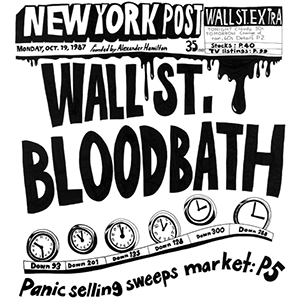
A stock market crash is a sudden dramatic decline of stock prices across a significant cross-section of a stock market, resulting in a significant loss of paper wealth. Crashes are driven by panic as much as by underlying economic factors. They often follow speculative stock market bubbles.
Stock market crashes are social phenomena where external economic events combine with crowd behavior and psychology in a positive feedback loop where selling by some market participants drives more market participants to sell. Generally speaking, crashes usually occur under the following conditions: a prolonged period of rising stock prices and excessive economic optimism, a market where P/E ratios exceed long-term averages, and extensive use of margin debt and leverage by market participants.
read more »
Posted in Money, Politics, Science |
1 Comment »
August 4, 2011

Recession shapes are used by economists to describe different types of recessions. There is no specific academic theory or classification system for recession shapes; rather the terminology is used as an informal shorthand to characterize recessions and their recoveries. The most commonly used terms are V-shaped, U-shaped, W-shaped, and L-shaped recessions. The letters can also be applied referring to the recoveries (ie ‘V-shaped recovery’).
In a V-shaped recession, the economy suffers a sharp but brief period of economic decline with a clearly defined trough, followed by a strong recovery. V-shapes are the normal shape for recession: ‘There is a strong historical ‘snap back’ relationship between the strength of economic recovery and the severity of the preceding recession. Thus, recessions and their recoveries have a tendency to trace out a ‘V’ shape.’
read more »
Posted in Money, Politics |
Leave a Comment »
August 4, 2011

Jack Herer (1939 – 2010) was an American cannabis activist and the author of ‘The Emperor Wears No Clothes,’ a book which has been used in efforts to decriminalize cannabis. A former Goldwater Republican, he believed that the cannabis plant should be decriminalized because it has been shown to be a renewable source of fuel, food, and medicine that can be grown in virtually any part of the world. A specific strain of cannabis has been named after Herer that has won several awards, including the 7th High Times Cannabis Cup. He ran for US President twice, in 1988 (1,949 votes) and 1992 (3,875 votes) as the Grassroots Party candidate. In July 2000, he suffered a minor heart attack and a major stroke, resulting in difficulties speaking and moving the right side of his body. He mostly recovered, and claimed in 2004 that treatment with amanita muscaria, a psychoactive mushroom had cured him. He died six years later, aged 70.
European experts on hemp, like Dr. Hayo Van der Werf and Dr. Ivan Bûcsa, criticized Herer’ for making unrealistic claims regarding the potential of hemp, for example: Herer claimed that hemp produces higher yields than other crops. Van der Werf argue that is simply wrong. Under most favorable growing conditions, other crops such as maize, sugar beet or potato produced similar dry matter yields. Herer also claimed that hemp hurds, which make up 60 to 80 % of the stem dry weight, contain 77 % cellulose. Van der Werf argue that is wrong. Cellulose content of hemp hurds has been found to vary between 32 and 38 %. Possibly, Herer confused the hurds, which form the woody core of the hemp stem, with the bark, which forms the outer layer of the hemp stem. The bark contains the long bast fibers which are used in textile manufacturing.
Posted in Drugs, Money, Politics |
1 Comment »
July 28, 2011
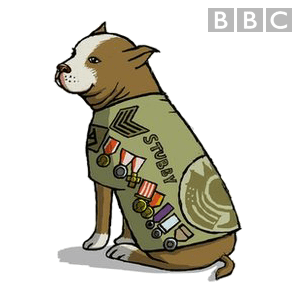
Sergeant Stubby was the most decorated war dog of World War I and the only dog to be promoted to sergeant through combat. While training for combat on the fields of Yale University in 1917, Private J. Robert Conroy found a brindle puppy with a short tail. He named him ‘Stubby,’ and soon the dog became the mascot of the 102nd Infantry, 26th Yankee Division. He learned the bugle calls, the drills, and even a modified dog salute as he put his right paw on his right eyebrow when a salute was executed by his fellow soldiers. Stubby had a positive effect on morale, and was allowed to remain in the camp, even though animals were forbidden.
When the division shipped out for France aboard the SS Minnesota, Private Conroy smuggled Stubby aboard. Hidden in the coal bin until the ship was far at sea, Stubby was brought out on deck where the sailors were soon won over by the canine soldier. Stubby was once again smuggled off the ship and was soon discovered by Pvt. Conroy’s commanding officer. The CO allowed Stubby to remain after Stubby gave him a salute.
read more »
Posted in Humor, Politics, War |
Leave a Comment »
July 27, 2011

Captain America is a superhero that appears in Marvel Comics. The character first appeared in 1941, from Marvel Comics’ predecessor, Timely Comics, and was created by Joe Simon and Jack Kirby. For nearly all of the character’s publication history, Captain America was the alter ego of Steve Rogers, a sickly young man who was enhanced to the peak of human perfection by an experimental serum in order to aid the United States war effort. Captain America wears a costume that bears an American flag motif, and is armed with an indestructible shield that can be thrown as a weapon.
An intentionally patriotic creation who was often depicted fighting the Axis powers of World War II, Captain America was Timely Comics’ most popular character during the wartime period. After the war ended, the character’s popularity waned and he disappeared by the 1950s. He was reintroduced during the Silver Age of comics when he was revived from suspended animation by the superhero team the Avengers in 1964.
read more »
Posted in Art, Politics, War |
Leave a Comment »
July 25, 2011

Idiocracy is a 2006 American film, a satirical science fiction comedy, directed by Mike Judge. The film tells the story of two ordinary people who are taken into a top-secret military hibernation experiment which goes awry, and awaken 500 years in the future. They discover that the world has degenerated into a dystopia where advertising, commercialism, and cultural anti-intellectualism run rampant and dysgenic pressure has resulted in a uniformly stupid human society devoid of intellectual curiosity, social responsibility and coherent notions of justice and human rights. Rather, this future society emphasizes popularity, sexual attraction, and hedonism.
During the prologue, a narrator explains that in our modern society, natural selection does not favor the intelligent (who are very selective and careful in how they have children) and that less-intelligent people procreate freely and easily out-breed the intelligent. This, combined with a general celebration of the cultural ‘lowest common denominator’ and general anti-intellectual cultural mores result in a world that has degenerated into a barely functioning society held together by a rapidly crumbling, mostly automated technological infrastructure that was created by intelligent individuals many years (perhaps centuries) earlier that few, if any, of the members of 26th Century society know how to operate or fix.
Posted in Art, Humor, Politics |
Leave a Comment »
July 24, 2011


Security theater is a term that describes security countermeasures intended to provide the feeling of improved security while doing little or nothing to actually improve security. The term was coined by computer security specialist and writer Bruce Schneier, but has gained currency in security circles, particularly for describing airport security measures.
Security theater typically involves restricting certain aspects of people’s behavior in very visible ways, that could involve potential restrictions of personal liberty and privacy, ranging from negligible (where bottled water can be purchased) to significant (prolonged screening of individuals to the point of harassment).
read more »
Posted in Politics, War |
Leave a Comment »
July 22, 2011

Sexploitation describes a class of independently produced, low budget feature films generally associated with the 1960s, and serving largely as a vehicle for the exhibition of non-explicit sexual situations and gratuitous nudity. Sexploitation films were generally exhibited in urban grindhouse theatres, the precursor to the adult movie theaters of the 1970s and ’80s that featured hardcore content. The term soft-core is often used to designate non-explicit sexploitation films after the general legalization of hardcore content.
A series of United States Supreme Court rulings in the late 50s and 60s had enabled increasingly explicit sex films to be distributed.There were initially three broad types; ‘nudie cuties’ such as ‘The Immoral Mr. Teas’ (1959), films set in nudist camps like ‘Daughter of the Sun’ (1962), and somewhat more ‘artistic’ foreign pictures such as ‘The Twilight Girls’ (1961). Nudie cuties were popular in the early 60s, and were a development from the nudist camp films of the 50s.
read more »
Posted in Art, Politics, Sex |
Leave a Comment »
July 22, 2011
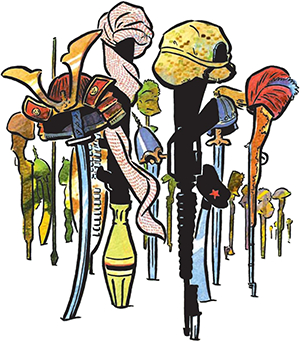

The Clash of Civilizations is a theory, proposed by political scientist Samuel P. Huntington, that people’s cultural and religious identities will be the primary source of conflict in the post-Cold War world. This theory was originally formulated in a 1992 lecture at the American Enterprise Institute, which was then developed in a 1993 ‘Foreign Affairs article’ titled ‘The Clash of Civilizations?,’ in response to Francis Fukuyama’s 1992 book, ‘The End of History and the Last Man.’ Huntington later expanded his thesis in a 1996 book ‘The Clash of Civilizations and the Remaking of World Order.’
The phrase itself was first used by American historian, Bernard Lewis in an article in a 1990 issue of ‘The Atlantic Monthly’ titled ‘The Roots of Muslim Rage.’
read more »
Posted in Politics, War, World |
Leave a Comment »




