July 18, 2011

A tiger team is a group of experts assigned to investigate and/or solve technical or systemic problems. The term may have originated in aerospace design but is also used in other settings, including information technology and emergency management. It has been described as ‘a team of undomesticated and uninhibited technical specialists, selected for their experience, energy, and imagination, and assigned to track down relentlessly every possible source of failure in a spacecraft subsystem.’ In security work, a tiger team is a specialized group that tests an organization’s ability to protect its assets by attempting to circumvent, defeat, or otherwise thwart that organization’s internal and external security. The term originated within the military to describe a team whose purpose is to penetrate security of ‘friendly’ installations to test security measures. It now more generally refers to any team that attacks a problem aggressively.
Many tiger teams are informally constituted through managerial edicts. One of these was set up in NASA circa 1966 to solve the ‘Apollo Navigation Problem. Technology at the time was unable to navigate Apollo at the level of precision mandated by the mission planners. Tests using radio tracking data were revealing errors of 2000 meters instead of the 200 that the mission required to safely land Apollo when descending from its lunar orbit. Five tiger teams were set up to find and correct the problem, one at each NASA center, from CalTech JPL in the west to Goddard SFC in the east. The Russians via Luna 10 were also well aware of this problem. The JPL found a solution in 1968; the problem was caused by the unexpectedly large local gravity anomalies on the moon arising from large ringed maria, mountain ranges and craters on the moon. This also led to the construction of the first detailed gravimetric map of a body other than the earth and the discovery of the lunar mass concentrations.
Posted in Language, Politics, Technology |
Leave a Comment »
July 15, 2011

Lysenkoism [li-seng-koh-iz-uhm] is used colloquially to describe the manipulation or distortion of the scientific process as a way to reach a predetermined conclusion as dictated by an ideological bias, often related to social or political objectives. The word is derived from a set of political and social campaigns in science and agriculture by the director of the Soviet Lenin All-Union Academy of Agricultural Sciences, Trofim Lysenko and his followers, which began in the late 1920s and formally ended in 1964.
In 1928, Trofim Lysenko, a previously unknown plant scientist, claimed to have developed an agricultural technique, termed vernalization, which tripled or quadrupled crop yield by exposing wheat seed to high humidity and low temperature. While cold and moisture exposure are a normal part of the life cycle of fall-seeded winter cereals, the vernalization technique claimed to enhance yields by increasing the intensity of exposure, in some cases planting soaked seeds directly into the snow cover of frozen fields. In reality, the technique was neither new (it had been known since 1854, and was extensively studied during the previous twenty years), nor did it produce the yields he promised.
read more »
Posted in Politics, Science, World |
1 Comment »
July 15, 2011


Antiscience is a position that rejects science and the scientific method. People holding antiscientific views are generally skeptical that science is an objective method, as it purports to be, or that it generates universal knowledge.
They also contend that scientific reductionism (reducing complex things to the interactions of their parts, or to simpler or more fundamental things) is a limited means of reaching understanding of the complex world we live in. Antiscience proponents also criticize what they perceive as the unquestioned privilege, power and influence science seems to wield in society, industry and politics; they object to what they regard as an arrogant or closed-minded attitude amongst scientists.
read more »
Posted in Philosophy, Politics, Science |
Leave a Comment »
July 14, 2011


Transhumanism, often abbreviated as H+, is an international intellectual and cultural movement that affirms the possibility and desirability of fundamentally transforming the human condition by developing and making widely available technologies to eliminate aging and to greatly enhance human intellectual, physical, and psychological capacities.
Transhumanist thinkers study the potential benefits and dangers of emerging technologies that could overcome fundamental human limitations, as well as study the ethical matters involved in developing and using such technologies. They predict that human beings may eventually be able to transform themselves into beings with such greatly expanded abilities as to merit the label ‘posthuman.’ Transhumanism is therefore viewed as a subset of philosophical ‘posthumanism.’
read more »
Posted in Philosophy, Politics, Technology |
Leave a Comment »
July 12, 2011
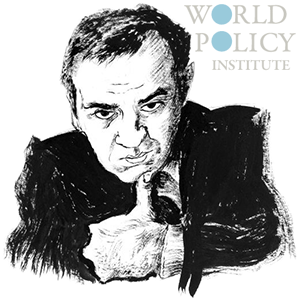
Garry Kasparov (b. 1963) is a Russian chess grandmaster, a former World Chess Champion, writer, political activist, and one of the greatest chess players of all time. Kasparov became the youngest ever undisputed World Chess Champion in 1985 at the age of 22. He held the official FIDE world title until 1993, when a dispute with FIDE led him to set up a rival organization, the Professional Chess Association. He continued to hold the ‘Classical’ World Chess Championship until his defeat by Vladimir Kramnik in 2000. He is also widely known for being the first world chess champion to lose a match to a computer under standard time controls, when he lost to IBM’s Deep Blue in 1997.
After his retirement from chess in 2005, Kasparov turned to politics and created the United Civil Front, a social movement whose main goal is to ‘work to preserve electoral democracy in Russia.’ He has vowed to ‘restore democracy’ to Russia by ousting Vladimir Putin, of whom he is an outspoken critic.
read more »
Posted in Games, Politics, World |
Leave a Comment »
July 12, 2011

Southland Tales is a 2006 science fiction dark comedy-drama film, written and directed by Richard Kelly. The title refers to the Southland, a name used by locals to refer to Southern California and Greater Los Angeles. Set in the then near future of an alternate history, the film is a portrait of Los Angeles and a comment on the military-industrial news-tainment complex. The film features an ensemble cast. Original music for the film was provided by Moby. The film was a critical and financial failure.
The film opens on El Paso and Abilene, Texas, both of which fall victim to twin nuclear attacks on July 4, 2005—a catastrophe of unimaginable proportions which launches America into World War III. The PATRIOT Act has extended authority to a new agency known as US-IDent, which keeps constant tabs on citizens and heavily censors the media and the Internet.
read more »
Posted in Art, Humor, Politics |
Leave a Comment »
July 11, 2011


Addiction medicine is a medical specialty that deals with the treatment of addiction. The specialty often crosses over into other areas, since various aspects of addiction fall within the fields of public health, psychology, social work, psychiatry, and internal medicine, among others. Incorporated within the specialty are the processes of detoxification, rehabilitation, harm reduction, abstinence-based treatment, individual and group therapies, oversight of halfway houses, treatment of withdrawal-related symptoms, acute intervention, and long term therapies designed to reduce likelihood of relapse. Some specialists, primarily those who also have expertise in family medicine or internal medicine, also provide treatment for disease states commonly associated with substance use, such as hepatitis and HIV infection.
Physicians specializing in the field are in general agreement concerning applicability of treatment to those with addiction to drugs, such as alcohol and heroin, and often also to gambling, which has similar characteristics and has been well described in the scientific literature. There is less agreement concerning definition or treatment of other so-called addictive behavior such as sexual addiction and internet addiction, such behaviors not being marked generally by physiologic tolerance or withdrawal.
Posted in Drugs, Health, Politics |
Leave a Comment »
July 11, 2011


Alexander Shulgin (b. 1925), known as Sasha, is an American pharmacologist. Shulgin is credited with the popularization of MDMA, commonly known as ecstasy, in the late 1970s and early 1980s, especially for psychopharmaceutical use and the treatment of depression and post-traumatic stress disorder. In subsequent years, Shulgin discovered, synthesized, and bioassayed over 230 psychoactive compounds.
In 1991 and 1997, he and his wife Ann Shulgin authored the books ‘PiHKAL’ and ‘TiHKAL’ on the topic of psychoactive drugs. Shulgin discovered many noteworthy phenethylamines including the 2C family. Additionally, Shulgin performed seminal work into the descriptive synthesis of compounds based on the organic compound tryptamine.
read more »
Posted in Drugs, Health, Politics |
1 Comment »
July 11, 2011

Designer drug is a term used to describe drugs which are created (or marketed, if they had already existed) to get around existing drug laws, usually by modifying the molecular structures of existing drugs to varying degrees, or less commonly by finding drugs with entirely different chemical structures that produce similar subjective effects to illegal recreational drugs.
The term ‘designer drug’ was first coined by law enforcement in the 1980s, and has gained widespread use. However the first appearance of what would now be termed designer drugs occurred well before this, in the 1920s. Following the passage of the second International Opium Convention in 1925 which specifically banned morphine and the diacetyl ester of morphine, heroin, a number of alternative esters of morphine quickly started to be manufactured and sold.
read more »
Posted in Drugs, Health, Politics |
Leave a Comment »
July 11, 2011

Synthetic cannabis is a psychoactive herbal and chemical product which, when consumed mimics the effects of cannabis. It is best known by the brand names K2 and Spice, both of which have largely become genericized trademarks used to refer to any synthetic cannabis product. A type of synthetic cannabis sold in Australasia is known as Kronic.
Professor John W. Huffman who first synthesized many of the cannabinoids used in synthetic cannabis is quoted as saying, ‘People who use it are idiots. You don’t know what it’s going to do to you.’ Heavy Spice users who cut back are known to experience withdrawal symptoms, similar to those associated with withdrawing from the use of narcotics. The lack of an antipsychotic chemical, similar to cannabidiol found in natural cannabis, may make synthetic cannabis more likely to induce psychosis than natural cannabis.
read more »
Posted in Drugs, Health, Politics |
Leave a Comment »
July 11, 2011
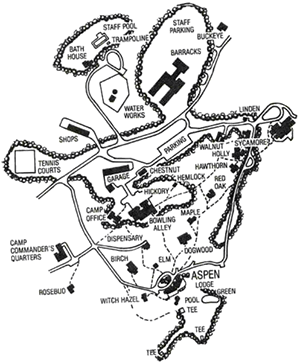
Camp David is the country retreat of the President of the United States and his guests. It is located in low wooded hills about 100 km (60 mi) northwest of Washington, D.C., on the property of Catoctin Mountain Park in Maryland. It is officially known as Naval Support Facility Thurmont and technically a military installation; staffing is primarily provided by the Navy and Marine Corps.
It was originally built as a camp for federal government agents and their families, by the Works Progress Administration, starting in 1935. In 1942, it was converted to a presidential retreat by Franklin D. Roosevelt and renamed Shangri-La. Camp David received its present name from Dwight D. Eisenhower, in honor of his father and grandson, both named David.
read more »
Posted in Politics, War |
Leave a Comment »
July 8, 2011

A perverse incentive is an incentive that has an unintended and undesirable result which is contrary to the interests of the incentive makers. Perverse incentives are a type of unintended consequences. For example, 19th century palaeontologists traveling to China used to pay peasants for each fragment of dinosaur bone (dinosaur fossils) that they produced. They later discovered that the peasants dug up the bones and then smashed them into many pieces, greatly reducing their scientific value, to maximise their payments. In Hanoi, under French colonial rule, a program paying people a bounty for each rat pelt handed in was intended to exterminate rats. Instead, it led to the farming of rats. Funding fire departments by the number of fire calls made is intended to reward the fire departments that do the most work. However, it may discourage them from fire-prevention activities, which reduce the number of fires.
In 1696, the English Parliament adopted a tax under which dwellings were to be assessed according their number of windows. Although the tax was intended to be progressive in that it exempted houses with fewer than ten windows from the bulk of the assessment, in operation it exacerbated the gap in living conditions between rich and poor as landlords were incentivized to brick up tenement windows to reduce their tax liability, leaving working-class tenants with insufficient light and ventilation. In 2007, the Bangkok, Thailand police switched to punitive pink armbands adorned with the cute Hello Kitty cartoon character when the tartan armbands that had been intended to be worn as a badge of shame for minor infractions were instead treated as collectibles by offending officers forced to wear them.
Posted in Language, Money, Politics |
Leave a Comment »




