July 11, 2011

Synthetic cannabis is a psychoactive herbal and chemical product which, when consumed mimics the effects of cannabis. It is best known by the brand names K2 and Spice, both of which have largely become genericized trademarks used to refer to any synthetic cannabis product. A type of synthetic cannabis sold in Australasia is known as Kronic.
Professor John W. Huffman who first synthesized many of the cannabinoids used in synthetic cannabis is quoted as saying, ‘People who use it are idiots. You don’t know what it’s going to do to you.’ Heavy Spice users who cut back are known to experience withdrawal symptoms, similar to those associated with withdrawing from the use of narcotics. The lack of an antipsychotic chemical, similar to cannabidiol found in natural cannabis, may make synthetic cannabis more likely to induce psychosis than natural cannabis.
read more »
Posted in Drugs, Health, Politics |
Leave a Comment »
July 11, 2011
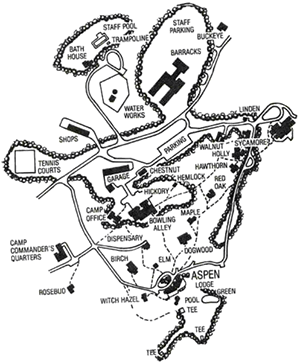
Camp David is the country retreat of the President of the United States and his guests. It is located in low wooded hills about 100 km (60 mi) northwest of Washington, D.C., on the property of Catoctin Mountain Park in Maryland. It is officially known as Naval Support Facility Thurmont and technically a military installation; staffing is primarily provided by the Navy and Marine Corps.
It was originally built as a camp for federal government agents and their families, by the Works Progress Administration, starting in 1935. In 1942, it was converted to a presidential retreat by Franklin D. Roosevelt and renamed Shangri-La. Camp David received its present name from Dwight D. Eisenhower, in honor of his father and grandson, both named David.
read more »
Posted in Politics, War |
Leave a Comment »
July 8, 2011

A perverse incentive is an incentive that has an unintended and undesirable result which is contrary to the interests of the incentive makers. Perverse incentives are a type of unintended consequences. For example, 19th century palaeontologists traveling to China used to pay peasants for each fragment of dinosaur bone (dinosaur fossils) that they produced. They later discovered that the peasants dug up the bones and then smashed them into many pieces, greatly reducing their scientific value, to maximise their payments. In Hanoi, under French colonial rule, a program paying people a bounty for each rat pelt handed in was intended to exterminate rats. Instead, it led to the farming of rats. Funding fire departments by the number of fire calls made is intended to reward the fire departments that do the most work. However, it may discourage them from fire-prevention activities, which reduce the number of fires.
In 1696, the English Parliament adopted a tax under which dwellings were to be assessed according their number of windows. Although the tax was intended to be progressive in that it exempted houses with fewer than ten windows from the bulk of the assessment, in operation it exacerbated the gap in living conditions between rich and poor as landlords were incentivized to brick up tenement windows to reduce their tax liability, leaving working-class tenants with insufficient light and ventilation. In 2007, the Bangkok, Thailand police switched to punitive pink armbands adorned with the cute Hello Kitty cartoon character when the tartan armbands that had been intended to be worn as a badge of shame for minor infractions were instead treated as collectibles by offending officers forced to wear them.
Posted in Language, Money, Politics |
Leave a Comment »
July 8, 2011


The cobra effect occurs when the solution to a problem, makes the problem worse. The term is used to illustrate the causes of wrong stimulation in economy and politics. The term stems from an anecdote set at the time of British rule of colonial India. The British government was concerned about the number of venomous cobra snakes. The Government therefore offered a reward for every dead snake. Initially this was a successful strategy as large numbers of snakes were killed for the reward. Eventually however the Indians began to breed cobras for the income.
When this was realized the reward was canceled, but the cobra breeders set the snakes free and the wild cobras consequently multiplied. The apparent solution for the problem made the situation even worse. A similar incident occurred in Hanoi, under French colonial rule, where a program paying people a bounty for each rat pelt handed in was intended to exterminate rats. Instead, it led to the farming of rats.
Posted in Humor, Money, Politics |
1 Comment »
July 8, 2011
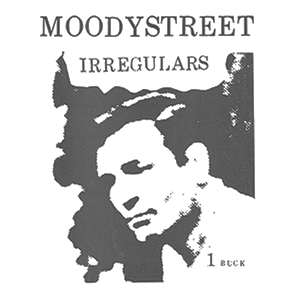
Beatnik [beet-nik] was a media stereotype of the 1950s and early 1960s that displayed the more superficial aspects of the Beat Generation literary movement of the 1950s and violent film images, along with a cartoonish misrepresentation of the real-life people and the spirituality found in Jack Kerouac’s autobiographical fiction. Kerouac spoke out against this detour from his original concept.
Kerouac introduced the phrase ‘Beat Generation’ in 1948, generalizing from his social circle to characterize the underground, anti-conformist youth gathering in New York at that time. The name came up in conversation with the novelist John Clellon Holmes who published an early Beat Generation novel, ‘Go’ (1952), along with a manifesto in The New York Times Magazine: ‘This Is the Beat Generation.’
read more »
Posted in Language, Money, Politics |
Leave a Comment »
July 8, 2011


Counterculture is a term used in psychology and sociology to describe a set of views that are not of the mainstream. It is a neologism attributed to American historian Theodore Roszak. Although distinct countercultural undercurrents have existed in many societies, here the term refers to a more significant, visible phenomenon that reaches critical mass and persists for a period of time.
A countercultural movement expresses the ethos, aspirations, and dreams of a specific population during an era—a social manifestation of zeitgeist. The term came to prominence in the news media, as it was used to refer to the social revolution that swept North America, Western Europe, Japan, Australia, and New Zealand during the 1960s and early 1970s.
read more »
Posted in Language, Politics, Sex |
Leave a Comment »
July 5, 2011

Anonymous is an Internet meme that originated in 2003 on the imageboard 4chan, representing the concept of many online community users simultaneously existing as an anarchic, digitized global hive mind. It is also generally considered to be a blanket term for members of certain Internet subcultures, a way to refer to the actions of people in an environment where their actual identities are not known.
In its early form, the concept has been adopted by a decentralized online community acting anonymously in a coordinated manner, usually toward a loosely self-agreed goal, and primarily focused on entertainment. Beginning with 2008, the Anonymous collective has become increasingly associated with collaborative, international hacktivism, undertaking protests and other actions, often with the goal of promoting internet freedom and freedom of speech. Actions credited to ‘Anonymous’ are undertaken by unidentified individuals who apply the Anonymous label to themselves as attribution.
read more »
Posted in Language, Politics, Technology |
Leave a Comment »
July 5, 2011

Lulz Security, commonly abbreviated as LulzSec, was a computer hacker group that claimed responsibility for several high profile attacks, including the compromise of user accounts from Sony Pictures in 2011. The group has been described as a ‘cyber terrorism group’ by the Arizona Department of Public Safety after their systems were compromised and information leaked.
It has gained attention due to its high profile targets and the sarcastic messages it has posted in the aftermath of its attacks. LulzSec released a statement claiming to to disband on June 26, 2011. The ’50 days of lulz’ statement, which they claimed to be their final release, confirming that LulzSec consisted of six members, and that their website is to be taken down.
read more »
Posted in Money, Politics, Technology |
Leave a Comment »
July 4, 2011

La Malinche (c. 1496 – 1529) was an indigenous woman from the Mexican Gulf Coast, who played a role in the Spanish conquest of Mexico, acting as interpreter, advisor, lover and intermediary for Hernán Cortés. She was one of twenty slaves given to Cortés by the natives of Tabasco in 1519. Later she became a mistress to Cortés and gave birth to his first son, Martín, who is considered one of the first Mestizos (people of mixed European and indigenous American ancestry).
The historical figure of Marina has been intermixed with Aztec legends. Her reputation has been altered over the years according to changing social and political perspectives, especially after the Mexican Revolution, when she was portrayed in dramas, novels, and paintings as an evil or scheming temptress. In Mexico today, La Malinche remains iconically potent. She is understood in various and often conflicting aspects, as the embodiment of treachery, the quintessential victim, or simply as symbolic mother of the new Mexican people. Her sexual relationship to Cortés gave rise to the pejorative term La Chingada (‘the fucked one’). The term ‘malinchista’ refers to a disloyal Mexican.
read more »
Posted in Language, Politics, World |
Leave a Comment »
July 4, 2011
Cultural cringe, in cultural studies and social anthropology, is an internalized inferiority complex which causes people in a country to dismiss their own culture as inferior to the cultures of other countries.
It is closely related, although not identical, to the concept of colonial mentality, and is often linked with the display of anti-intellectual attitudes towards thinkers, scientists and artists who originate from a colonial or post-colonial nation. It can also be manifested in individuals in the form of ‘cultural alienation.’ In many cases, cultural cringe, or an equivalent term, is an accusation made by a fellow-national, who decries the inferiority complex and asserts the merits of the national culture.
read more »
Posted in Politics, Science, World |
Leave a Comment »
July 4, 2011


Subvertising is a portmanteau of subvert and advertising. It refers to the practice of making spoofs or parodies of corporate and political advertisements. Subvertisements may take the form of a new image or an alteration to an existing image or icon, often in a satirical manner. A subvertisement can also be referred to as a meme hack and can be a part of social hacking or culture jamming.
According to AdBusters, a Canadian magazine and a proponent of counter-culture and subvertising, ‘A well produced ‘subvert’ mimics the look and feel of the targeted ad, promoting the classic ‘double-take’ as viewers suddenly realize they have been duped. Subverts create cognitive dissonance. It cuts through the hype and glitz of our mediated reality and, momentarily, reveals a deeper truth within.’
Posted in Humor, Money, Politics |
2 Comments »
July 3, 2011

Manqué [mahng-key] (feminine, manquée) is a term used in reference to a person who has failed to live up to a specific expectation or ambition. It is usually used in combination with a profession: for example, a career civil servant with political prowess who nonetheless never attained political office might be described as a ‘politician manqué.’
It can also be used relative to a specific role model; a second-rate method actor might be referred to as a ‘Marlon Brando manqué.’ The term derives from the past participle of the French verb manquer (‘to miss’). In English, it is used in the manner of a French adjective: coming after the noun it is modifying instead of before.
Posted in Language, Politics, World |
Leave a Comment »




 The Daily Omnivore