July 3, 2011

Almost 30 years after its release, the plot for the movie ‘Trading Places’ was part of the inspiration for new regulations on the financial markets. In March of 2010 Commodity Futures Trading Commission chief Gary Gensler stated, in testimony he gave to the 111th Congress, ‘We have recommended banning using misappropriated government information to trade in the commodity markets. In the movie, starring Eddie Murphy, the Duke brothers intended to profit from trades in frozen concentrated orange juice futures contracts using an illicitly obtained and not yet public Department of Agriculture orange crop report.
The ‘Eddie Murphy Rule,’ as it came to be known, later came into effect as part of the Wall Street Transparency and Accountability Act of the Dodd-Frank Wall Street Reform and Consumer Protection Act, which dealt with insider trading.
Posted in Humor, Money, Politics |
Leave a Comment »
June 30, 2011

‘100,000,000 Guinea Pigs: Dangers in Everyday Foods, Drugs, and Cosmetics’ is a book written by Arthur Kallet and F.J. Schlink first released in 1933. Its central argument propounds that the American population is being used as guinea pigs in a giant experiment undertaken by the American producers of food stuffs and patent medicines and the like. Kallet and Schlink premise the book as being ‘written in the interest of the consumer, who does not yet realize that he is being used as a guinea pig…’
The book’s key proposition is that a great deal of products sold to the public – particularly pharmaceuticals and food products – are released with little regard or knowledge of how these products adversely impact the consumer. Corporations, often knowingly, release products which either do not do what they purport to, or have dangerous side effects or defects. Furthermore, many officials and government departments, namely the U.S. Food and Drug Administration, have fallen victim to regulatory capture (control by industry it is charged with regulating).
read more »
Posted in Health, Money, Politics |
Leave a Comment »
June 30, 2011

The last meal is a customary part of a condemned prisoner’s last day. The day before the appointed time of execution, the prisoner receives the meal, as well as religious rites, if they desire. As a general rule, inmates may not ask for an alcoholic drink. In many countries the prisoner may select what the last meal will be (within reason), and the authorities do their best to satisfy the request. Although the history of this tradition is difficult to trace, most modern governments that execute prisoners subscribe to it.
Serial killer, John Wayne Gacy, requested a dozen deep-fried shrimp, a bucket of original recipe chicken from KFC, French fries, and a pound of strawberries. Domestic terrorist, Timothy ate two pints of mint chocolate-chip ice cream as his last meal.
read more »
Posted in Death, Food, Politics |
Leave a Comment »
June 29, 2011


The ‘veil of ignorance‘ and the ‘original position’ (state of nature) are concepts introduced by Hungarian economist, John Harsanyi, and later appropriated by American Philosopher, John Rawls, in ‘A Theory of Justice.’
It is a method of determining the morality of a certain issue (e.g. slavery) based upon the following principle: imagine that societal roles were completely re-fashioned and redistributed, and that from behind the veil of ignorance, one does not know what role they will be reassigned. Only then can one truly consider the morality of an issue.
read more »
Posted in Philosophy, Politics |
1 Comment »
June 29, 2011

A ghost bike or ghostcycle is a bicycle set up as a roadside memorial in a place where a cyclist has been killed or severely injured (usually by a motor vehicle). Apart from being a memorial, it is usually intended as a reminder to passing motorists to share the road.
Ghost bikes are usually junk bicycles painted white, sometimes with a placard attached, and locked to a suitable object close to the scene of the accident. The original idea of painting bikes white reportedly goes back to Amsterdam in the 1960s as an anarchist project to liberate two-wheel transport—white bikes were free, help yourself and then leave it for someone else.
Posted in Death, Politics |
Leave a Comment »
June 29, 2011

Samizdat [sah-miz-daht] (Russian for ‘self-published’) was a key form of dissident activity across the Soviet bloc in which individuals reproduced censored publications by hand and passed the documents from reader to reader.
This grassroots practice to evade officially-imposed censorship was fraught with danger as harsh punishments were meted out to people caught possessing or copying censored materials.
read more »
Posted in Language, Politics, World |
Leave a Comment »
June 29, 2011

Musopen is an online music library of copyright-free (public domain) music. Musopen’s mission is to record or obtain recordings that have no copyrights so that its visitors may listen, re-use, or in any way enjoy music, and ‘to set music free.’ In 2008, Musopen released newly-commissioned recordings of the 32 Beethoven piano sonatas into the public domain.
In 2010, the site organized a fundraiser via Kickstarter to commission recordings of a larger repertoire. Musopen is a nonprofit charity, operating out of Palo Alto, California, created by Aaron Dunn in 2005.
Posted in Art, Money, Politics |
Leave a Comment »
June 28, 2011

The Digital Millennium Copyright Act (DMCA) is a US copyright law that implements two 1996 treaties of the World Intellectual Property Organization. It criminalizes production and dissemination of technology, devices, or services intended to circumvent measures (commonly known as digital rights management or DRM) that control access to copyrighted works. It also criminalizes the act of circumventing an access control, whether or not there is actual infringement of copyright itself. In addition, the DMCA heightens the penalties for copyright infringement on the Internet.
Passed in 1998 by a unanimous vote in the United States Senate and signed into law by President Bill Clinton, the DMCA amended Title 17 of the United States Code to extend the reach of copyright, while limiting the liability of the providers of on-line services for copyright infringement by their users. The law is currently unsettled with regard to websites that contain links to infringing material; however, there have been a few lower-court decisions which have ruled against linking in some narrowly prescribed circumstances. One is when the owner of a website has already been issued an injunction against posting infringing material on their website and then links to the same material in an attempt to circumvent the injunction.
Posted in Money, Politics, Technology |
Leave a Comment »
June 28, 2011

Penguin sweaters, also known as penguin jumpers, are sweaters which are knitted for penguins that are caught in oil slicks. When an oil spill affects penguins they are dressed in knitted sweaters to stop them preening their feathers and to keep them warm, since the spilled oil destroys their natural oils. This prevents them from poisoning themselves by ingesting the oil.
The sweaters are removed and discarded as soon as the penguins can be washed. The original project is completed, but the knitting pattern is still available on-line. A similar penguin wetsuit has been made for a penguin who lost his feathers, and similar garments are being made for battery cage chicken rehabilitation.
Posted in Politics, Technology |
Leave a Comment »
June 28, 2011

Contempt of cop is law enforcement jargon in the United States for behavior by citizens towards law enforcement officers that the officers perceive as disrespectful or insufficiently deferential. The phrase is associated with arbitrary arrest and detention and is often discussed in connection to police misconduct such as use of excessive force or even police brutality as a reaction to disrespectful behavior rather than for any legitimate law enforcement purpose.
A similar idiom is ‘disturbing the police,’ a play on ‘disturbing the peace.’ It has also been referred to as ‘flunking the attitude test.’ In some areas it is called P.O.P. or ‘Pissing Off the Police.’
read more »
Posted in Politics |
1 Comment »
June 28, 2011
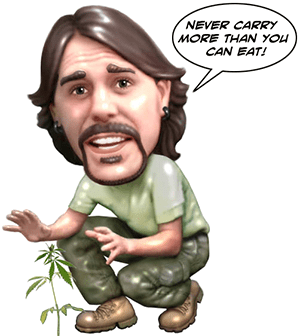
Barry Cooper (b. 1969) is an anti-drug-war lecturer known for his DVD series, ‘Never Get Busted’ and his reality show, KopBusters. Cooper formerly served as a law enforcement officer. Before his career in law enforcement, he trained dogs in obedience, hunting, and working with livestock. He was later hired by the Big Sandy Police Department as an interdiction officer in East Texas and trained his own narcotic detection dog.
As a law enforcement officer, Cooper confiscated large amounts of illegal narcotics and drug money. Cooper cited that he began to notice that people who were arrested for possession of marijuana were nonviolent and cooperative in contrast to the people that were arrested for violations while intoxicated on alcohol who ‘[…] would fight and scream and act crazy.’ He also noted being deeply affected by the emotional trauma he witnessed while participating in home narcotic raids with other officers attired in raid gear and ‘more guns than we would ever need.’ Cooper also stated, ‘We’re sending the kids to the department of human services, we’re sending the parents to jail over marijuana. Well, I knew some of these people and I knew they weren’t gangsters. I knew they were nonviolent people.’ He quit law enforcement soon after.
Posted in Drugs, Politics |
1 Comment »
June 28, 2011

Stop Snitchin’ refers to a controversial 2004 campaign launched in Baltimore, United States to persuade criminal informants to stop ‘snitching,’ or informing, to law enforcement. Public officials, activists and media outlets say that it is a campaign used by criminals to frighten people with information from reporting their activities to the police.
Some Stop Snitching activists say they are not opposed to concerned citizens going to the police with accurate information and don’t consider them snitches. They say that snitches are people who give the government favorable testimony in exchange for a plea bargain, money, or some other kind of reward.
read more »
Posted in Politics |
Leave a Comment »


 The Daily Omnivore