April 21, 2011

A parahuman is a human-animal hybrid or chimera. Scientists have done extensive research into the mixing of genes or cells from different species, e.g. adding human (and other animal) genes to bacteria and farm animals to mass-produce insulin and spider silk proteins, and introducing human cells into mouse embryos. There is no scientific field of parahuman research. Ethical, moral, and legal issues of parahuman research are speculative extensions of existing issues that arise in actual research.
There are several reasons for which parahumans or chimeras might be created. The current forms of chimera exist for medical and industrial purposes. Other experiments aim to reveal knowledge about the function of the human body, e.g., by creating mice with a human-like immune system to study AIDS or with a brain incorporating human nerve cells. Restrictions on cloning and stem cell research have made chimera research an attractive alternative.
Posted in Politics, Science, Technology |
Leave a Comment »
April 21, 2011

The Great Ape Project (GAP), founded in 1994, is an international organization of primatologists, anthropologists, ethicists, and other experts who advocate a UN ‘Declaration of the Rights of Great Apes’ that would confer basic legal rights on non-human great apes: chimpanzees, bonobos, gorillas, and orangutans. The rights suggested are the right to life, the protection of individual liberty, and the prohibition of torture. The organization also monitors individual great ape activity in the US through a census program. Once rights are established, GAP would demand the release of great apes from captivity; currently 3,100 are held in the U.S., including 1,280 in biomedical research.
The project is founded on the principle that great apes possess rationality and self-consciousness, and the ability to be aware of themselves as distinct entities with a past and future. Documented conversations (in sign languages) with individual great apes are the basis for this tenet. However, their biological similarity with humans is also key to the traits for which they are valuable as research subjects. For example, testing of antibody treatments can not be done in species less similar to humans than chimpanzees.
Posted in Philosophy, Politics, Science |
Leave a Comment »
April 20, 2011

The Cannabis Buyers Club was the first public medical marijuana dispensary. It opened in February 1994 at 194 Church Street in San Francisco, founded by the Proposition 215 coauthors, a California law concerning the use of medical cannabis.
194 Church had previously been established in 1990 as a lower profile medicinal marijuana retail location by a small collective of people, and mostly to help those suffering from AIDS. The Cannabis Buyers Club, prior to being legalized under California law, was at Ford and Sanchez Street in San Francisco, 1993. Still subject to legal hassles after that date, it eventually changed its name to ‘Cannabis Cultivators Club.’
Posted in Drugs, Health, Politics |
Leave a Comment »
April 20, 2011

A speakeasy, also called a blind pig or blind tiger, is an establishment that illegally sells alcoholic beverages. Such establishments came into prominence. The term ‘blind pig’ originated in the United States in the 19th century; it was applied to lower-class establishments that sold alcoholic beverages illegally. The operator of an establishment (such as a saloon or bar) would charge customers to see an attraction (such as an animal) and then serve a ‘complimentary’ alcoholic beverage, thus circumventing the law.
The difference between a speakeasy and a blind pig was that a speakeasy was usually a higher-class establishment that offered food and entertainment. In large cities, some speakeasies even required a coat and tie for men, and evening dress for women. But a blind pig was usually a low-class dive where only beer and liquor were offered. Blind pigs continue to exist in the United States. Some people sell alcoholic beverages for off-site consumption from their homes during hours when legal sellers are closed by law, and some people operate bars illegally.
Posted in Drugs, Money, Politics |
Leave a Comment »
April 20, 2011
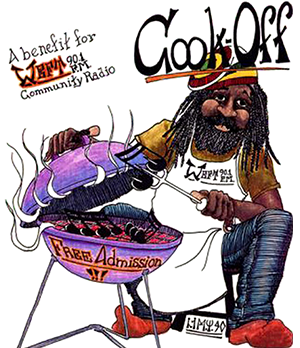
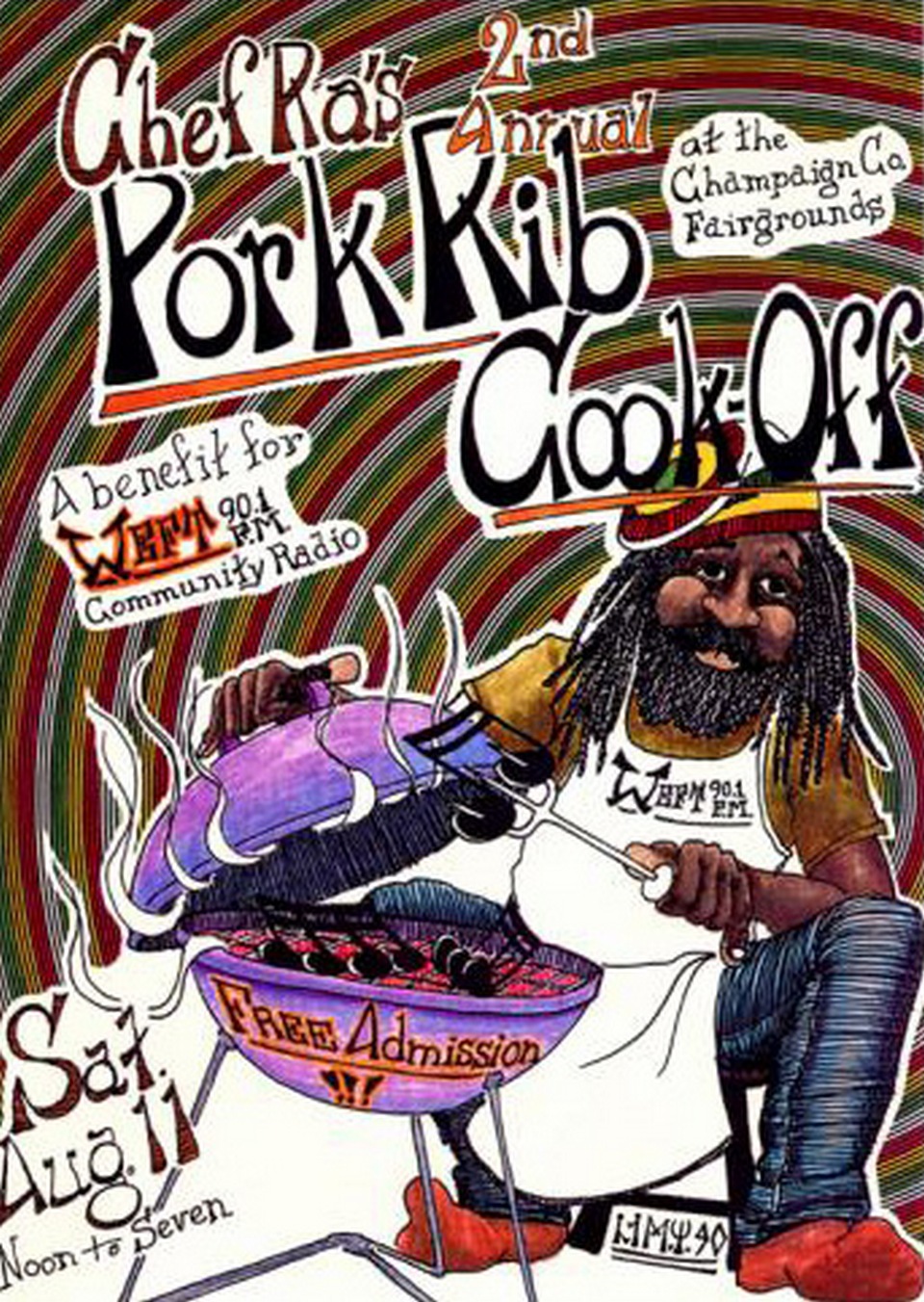
Chef Ra (1950 – 2006), born Jim Wilson, Jr., was an marijuana advocate, author, and cook in the United States. After gaining notoriety as a ganja gourmet, he began writing his High Times column, ‘Chef Ra’s Psychedelic Kitchen,’ in 1988 at the request of editor Steve Hager.
Ra was a fixture of Ann Arbor’s Hash Bash, speaking out about the benefits of cannabis for 19 consecutive years.
Posted in Drugs, Food, Politics |
Leave a Comment »
April 20, 2011
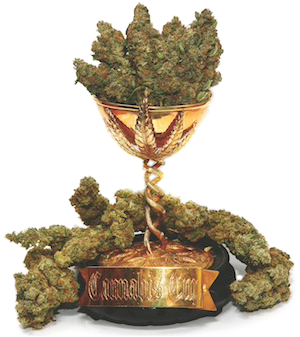
High Times is a New York-based monthly magazine founded in 1974 by American journalist, Tom Forcade. The publication is devoted to, and advocates the legalization of, marijuana. It is the largest cannabis-related magazine in the world.
High Times has long been considered the publication of record for the counterculture. Past contributors include Charles Bukowski, William S. Burroughs, Truman Capote, Hunter S. Thompson and Andy Warhol.
read more »
Posted in Drugs, Money, Politics |
Leave a Comment »
April 20, 2011

Hash Bash is an annual event held in Ann Arbor, Michigan, on the first Saturday of April at high noon on the University of Michigan Diag (a large open space in the middle of the university’s Central Campus). A collection of speeches, live music, street vending and occasional civil disobedience are centered on the goal of reforming federal, state, and local marijuana laws. The first Hash Bash was held on Saturday, April 1 1972 in response to the March 9th 1972 decision by Michigan Supreme Court declaring unconstitutional the law used to convict cultural activist John Sinclair for possession of two marijuana joints.
Ann Arbor has very lenient laws regarding the possession of marijuana, it is a civil infraction rather than a criminal offense. Even so, the campus of the University of Michigan sits upon state property, and so anyone caught with marijuana on any campus location is subject to the more strict state marijuana laws. In addition, since state law takes precedence over municipal law, many people are prosecuted under state law regardless of where in Ann Arbor they are located.
Posted in Drugs, Humor, Politics |
1 Comment »
April 20, 2011

The Global Marijuana March is an annual rally held at different locations across the planet. It refers to cannabis-related events that occur on the first Saturday in May, and feature marches, rallies, concerts, and festivals. It began in 1999, and around 600 different cities worldwide have signed up since. Local names for the event include J-Day, the Million Marijuana March, World Cannabis Day, and Cannabis Liberation Day.
The Global Marijuana March is a celebration embracing cannabis culture as a personal lifestyle choice. Participants unite to discuss, promote, entertain and educate both consumers and non-consumers alike.
read more »
Posted in Drugs, Politics, World |
Leave a Comment »
April 20, 2011


420 (pronounced four-twenty) refers to cannabis subculture. April 20th has evolved into a counterculture holiday, where people gather to celebrate and consume cannabis. Some events have a political nature to them, advocating for the decriminalization of non-medical cannabis. The term was allegedly coined by a group of teenagers in California in 1971. Calling themselves the Waldos, because their chosen hang-out spot was a wall outside the school,’ the group first used the term in connection to a plan to search for an abandoned cannabis crop that they had learned about. They designated the Louis Pasteur statue on the grounds of San Rafael High School as their meeting place, and 4:20 p.m. as their meeting time.
The Waldos referred to this plan with the phrase ‘4:20 Louis.’ Multiple failed attempts to find the crop eventually shortened their phrase to simply ‘4:20,’ which ultimately evolved into a codeword the teens used to mean pot-smoking in general. ‘High Times’ Creative Director Steven Hager was the first person to track down the Waldos and publish their account of the origins of the term. In 1998, Hager wrote ‘Are You Stoner Smart or Stoner Stupid?’ in which he called for 4:20 p.m. to be the socially accepted hour of the day to consume cannabis. ‘I believe 420 is a ritualization of cannabis use that holds deep meaning for our subculture,’ wrote Hager. ‘It also points us in a direction for the responsible use of cannabis.’
Posted in Drugs, Humor, Politics |
Leave a Comment »
April 14, 2011


The Geneva Conventions are a set of four treaties of international law. They were formulated in Geneva, Switzerland. All of the four treaties are about humanitarian issues. The first treaty was the product of Swiss activist, Henri Dunant in 1859. The documents require that all states who sign them create national laws to make violations of the Geneva Conventions a crime.
The first Convention, adopted in 1864, was devoted to care for the injured in battle, and required medical teams on the battlefield to provide aid to enemy combatants. The Second Convention, adopted in 1949, expanded the scope of the first treaty to marine battles. The Third Convention, adopted in 1929, addressed the treatment of prisoners of war. The Fourth Convention, adopted in 1949, expanded the scope of the third convention to include civilians. Later conferences have added text that forbids certain methods of warfare.
Posted in Politics, War, World |
Leave a Comment »
April 11, 2011

‘Harrison Bergeron‘ is a satirical, dystopian science fiction short story written by Kurt Vonnegut and first published in 1961. The story is set in the year 2081. Due to the 211th, 212th and 213th Amendments to the Constitution of America, all Americans are mandated equal.
‘They were not only equal before God and the law. They were equal every which way.’ In America no one is more intelligent than anyone else, no one is better looking or more athletic than anyone else. In order to stop any sort of competition in society these measures are enforced by the United States Handicapper General.
read more »
Posted in Art, Humor, Politics |
Leave a Comment »
April 11, 2011


The Amethyst Initiative is an organization made up of U.S. college presidents and chancellors that in 2008 launched a movement calling for the reconsideration of U.S. drinking age laws, particularly the minimum age of 21 as established nationally by the National Minimum Drinking Age Act of 1984. The initiative is currently supported by 135 college presidents.
According to Greek and Roman legend, amethysts protected their owners from drunkenness.
Posted in Drugs, Health, Politics |
Leave a Comment »