September 12, 2013

Ailanthus altissima, commonly known as tree of heaven is a deciduous tree originating from China known for its ability to thrive in inhospitable urban environments; it has acquired the derisive nicknames of ‘ghetto palm,’ ‘stink tree,’ and ‘tree of Hell.’ The tree grows rapidly and is capable of reaching heights of 49 ft in 25 years. However, the species is also short lived and rarely lives more than 50 years.
In has become an invasive species due to its ability both to colonize disturbed areas quickly, including areas of rubble in war-torn Afghanistan, and to suppress competition with allelopathic chemicals. It is considered a noxious weed in Australia, the United States, New Zealand and several countries in southern and eastern Europe. The tree also resprouts vigorously when cut, making its eradication difficult and time consuming.
read more »
Posted in Language, Science, World |
Leave a Comment »
September 6, 2013

Julian L. Simon and Paul Ehrlich entered in a famous scientific wager in 1980, betting on a mutually agreed-upon measure of resource scarcity over the decade leading up to 1990. Simon had Ehrlich choose five commodity metals. Copper, chromium, nickel, tin, and tungsten were chosen and Simon bet that their prices would decrease, while Ehrlich bet they would increase. Ehrlich lost the bet, as all five commodities that were bet on declined in price from 1980 through 1990, the wager period.
In 1968, Ehrlich published ‘The Population Bomb,’ which argued that mankind was facing a demographic catastrophe with the rate of population growth quickly outstripping growth in the supply of food and resources. Simon was highly skeptical of such claims, so proposed a wager, telling Ehrlich to select any raw material he wanted and select ‘any date more than a year away,’ and Simon would bet that the commodity’s price on that date would be lower than what it was at the time of the wager.
read more »
Posted in Money, Science, World |
Leave a Comment »
September 5, 2013
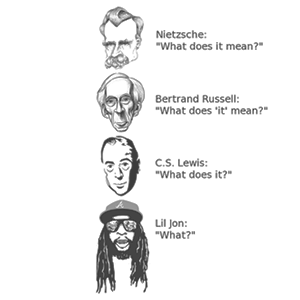
In historiography (the study of historical methods) and the philosophy of history, progress (from Latin ‘progressus,’ ‘an advance’) is the idea that the world can become increasingly better in terms of science, technology, modernization, liberty, democracy, quality of life, etc.
Although progress is often associated with the Western notion of change in a straight, linear fashion, alternative conceptions exist, such as the cyclic theory of eternal return (the belief that the universe has been recurring, and will continue to recur, in a self-similar form an infinite number of times across infinite time or space), or the ‘spiral-shaped’ dialectic progress of Hegel, Marx, et al.
read more »
Posted in Philosophy, Science, Technology |
Leave a Comment »
September 4, 2013

The ‘Stoned Ape‘ theory of human evolution was proposed by American psychonaut Terence Mckenna in his book ‘Food of the Gods’ to explain the rapid development of the human neocortex.
McKenna proposed that the transformation from humans’ early ancestors Homo erectus to the species Homo sapiens mainly had to do with the addition of the mushroom Psilocybe cubensis in its diet – an event which according to his theory took place about 100,000 BCE. One of the effects that comes about from the ingestion of low doses is improved visual acuity. According to McKenna, this would infer an evolutionary advantage to early human hunters.
read more »
Posted in Drugs, Philosophy, Science |
2 Comments »
September 4, 2013
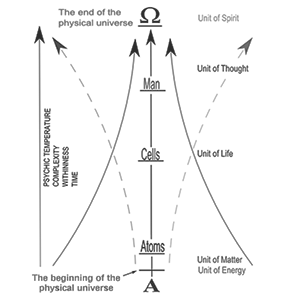
The Law of Complexity/Consciousness is the tendency in matter to become more complex over time and at the same time to become more conscious. The law was first formulated by 20th century Jesuit priest and paleontologist Pierre Teilhard de Chardin, who held that at all times and everywhere, matter is endeavoring to complexify upon itself, as observed in the evolutionary history of the Earth.
Matter complexified from inanimate matter, to plant life, to animal-life, to human-life. Or, from the geosphere, to the biosphere, to the noosphere (of which humans represented, because of their possession of a consciousness which reflects upon themselves). As evolution rises through the geosphere, biosphere, and noosphere, matter continues to rise in a continual increase of both complexity and consciousness.
read more »
Posted in Philosophy, Science, World |
3 Comments »
August 14, 2013

‘Bad Science‘ is a 2008 book by British physician and science writer Ben Goldacre, criticizing mainstream media reporting on health and science issues. The book contains extended and revised versions of many of his ‘Guardian’ columns.
The book discusses topics such as detoxification (Aqua Detox, ear candles etc.) that can easily be shown to be bogus by simple experiments, and discusses the ‘detox phenomenon’ and purification rituals. He also addresses the claims for Brain Gym, a program of specific physical exercises that its commercial promoters claim can create new pathways in the brain. The uncritical adoption of this program by sections of the British school system is derided.
read more »
Posted in Health, Language, Science |
Leave a Comment »
July 30, 2013

‘The evolution of cooperation‘ is the title of a 1981 paper by political scientist Robert Axelrod and evolutionary biologist W. D. Hamilton on the emergence and persistence of cooperation (also known as cooperation theory) as elucidated by application of game theory.
Three years later, Axelrod discussed the topic at length in a similarly titled book. He was interested in how game theory and computer modeling were illuminating certain aspects of moral and political philosophy, particularly the role of individuals in groups, the ‘biology of selfishness and altruism,’ and the evolutionary advantages of cooperation.
read more »
Posted in Games, Language, Science |
Leave a Comment »
July 25, 2013


Sheng-Hung (Sam) Wang (b. 1967) is an American professor, neuroscientist and author known for the books ‘Welcome to Your Brain’ and ‘Welcome to Your Child’s Brain,’ as well as for the Princeton Election Consortium psephology (study of elections) web site. Wang was raised in California.
His parents emigrated from Taiwan to the United States in the 1960s. He attended the California Institute of Technology and graduated in 1986 with a B.S. in physics with honors at the age of 19, making him the youngest member of his graduating class. He went on to earn a Ph.D. in neuroscience at Stanford University.
read more »
Posted in Politics, Science |
1 Comment »
July 23, 2013

The term ‘media ecology‘ was formally introduced in 1968 by cultural critic Neil Postman (who would later become well known for his 1985 book about television, ‘Amusing Ourselves to Death’), but the concept was originally proposed four years earlier by Canadian philosopher of communication theory Marshall McLuhan. Media ecology theory centers on the principles that technology not only profoundly influences society, it also controls virtually all walks of life. It is a study of how media and communication processes affect human perception and understanding.
To strengthen this theory, McLuhan and graphic designer Quentin Fiore claim that it is the media of the epoch that defines the essence of the society by presenting four epochs, inclusive of Tribal Era, Literate Era, Print Era, and Electronic Era, which corresponds to the dominant mode of communication of the time respectively. McLuhan argues that media act as extensions of the human senses in each era, and communication technology is the primary cause of social change.
read more »
Posted in Language, Science, Technology |
Leave a Comment »
July 1, 2013
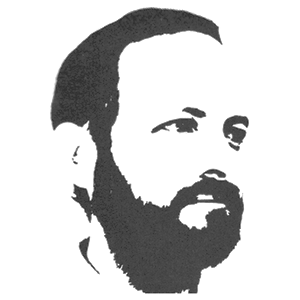
‘A Deepness in the Sky‘ is a novel by mathematician and science fiction author Vernor Vinge. Published in 1999, the novel is a loose prequel (set twenty thousand years earlier) to his 1992 novel ‘A Fire Upon the Deep’ (set thousands of years into the future). The title is coined by one of the story’s main characters in a debate, in a reference to the hibernating habits of his species and to the vastness of space.
The plot begins with the discovery of an intelligent alien species on a planet orbiting an anomalous star, dubbed ‘On/Off’ because for 215 of every 250 years it is dormant, releasing almost no energy. During this period, the planet freezes and its fauna go into hibernation.
read more »
Posted in Language, Science |
Leave a Comment »
June 27, 2013

Pseudorationalism [soo-doh-rash-uh-nl-iz-uhm] was the label given by economist and philosopher Otto Neurath to a school of thought that he was heavily critical of, throughout many of his writings but primarily in his 1913 paper ‘The lost wanderers of Descartes and the auxiliary motive’ and later to a lesser extent in his 1935 ‘Pseudorationalismus der Falsifikation,’ a review of and attack on philosopher of science Karl Popper’s first book, ‘Logik der Forschung’ (‘The Logic of Scientific Discovery’), contrasting this approach with his own view of what rationalism should properly be.
Neurath aimed his criticism at a Cartesian belief that all actions can be subject to rational analysis, saying that: ‘Once reason has gained a certain influence, people generally show a tendency to regard all their actions as reasonable. Ways of action which depend on dark instincts receive reinterpretation or obfuscation.’
read more »
Posted in Money, Philosophy, Science |
Leave a Comment »
June 26, 2013
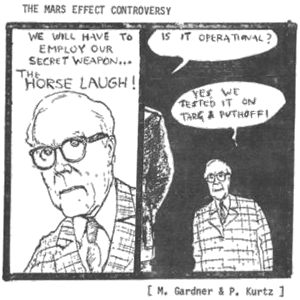
Pseudoskepticism [soo-doh-skep-tuh-siz-uhm] refers to a philosophical or scientific position which appears to be that of skepticism or scientific skepticism but which in reality fails to be so, for whatever reason.
The term is usually used pejoratively.
read more »
Posted in Language, Philosophy, Science |
Leave a Comment »


 The Daily Omnivore